Explore the EcoFlow River 2, its real-world usability, how it compares in 2026, and what to watch for when pairing solar charging and off-grid use.
The River 2 isn’t the flashiest compact power station, but it consistently proves its worth in real off-grid use. EcoFlow’s balance of capacity and weight means you can lug it farther without surrendering essential juice, and its recharge speed keeps you charging between campsites rather than waiting idle. River 2 earns trust from hikers and van lifers who want a reliable daily charger for phones, cameras, and small gadgets, not a fridge-scale load.
What matters now is how it actually performs when the sun hides and the wind drops. This intro flags not a fantasy spec sheet but a practical read: how the River 2 handles solar input in a typical day, where the tradeoffs show up when you run multiple tools, and which setups make or break long weekends. For readers weighing alternatives, note that rivals from EcoFlow and other brands offer higher capacity options, but the River 2’s real-world footprint and quick top-ups deliver steadier everyday use. Real-world use verdict sits in the middle of the spectrum: solid for daily charging, modest for heavy loads, and clearly designed for a targeted off-grid pattern.
What the EcoFlow River 2 is and where it fits in the river series
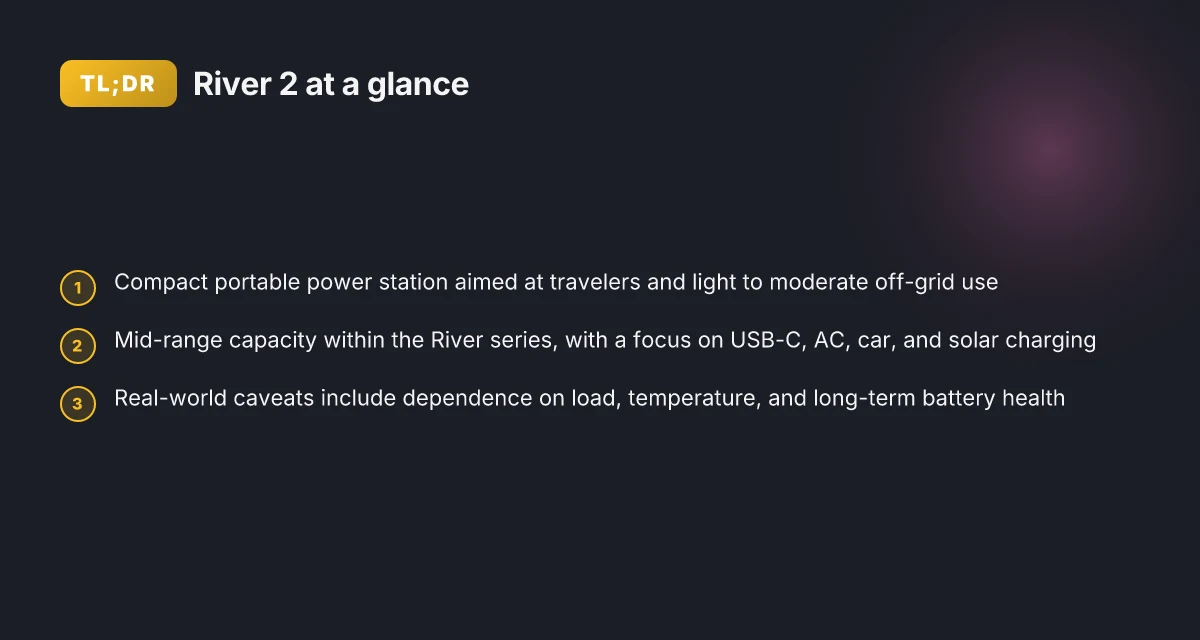
The EcoFlow River 2 is a compact portable power station built for light to moderate off-grid use. It targets travelers who want USB-C, AC, car, and solar charging in a small footprint, so you can top up devices without dragging a large battery along. In this segment, rivals from Jackery, Anker, and Goal Zero offer similar capacity ranges, but the River 2 sticks out for its emphasis on travel-friendly form and broad charging options.
Why this fits a travel-first off-grid kit
- The River 2 centers on a small footprint without sacrificing a full set of inputs. You’ll find USB-C and USB-A ports alongside AC outlets, plus a car-charging option for on-the-road lifelines. In 2026, EcoFlow positions the River 2 as a compact daily driver for campers and van lifers who want a simple solar, USB-C, and AC mix without lugging a larger unit. The River 2 balances size and versatility for off-grid trips.
- Weight and dimensions are tuned for portability. By keeping the unit lighter than many traditional power stations, it reduces fatigue on long outings. This matters when every kilogram counts in a tiny vehicle or backpacking scenario. Lightweight form factors help you carry it farther.
- The River 2 sits between entry-level and mid-range options in EcoFlow’s lineup, offering a practical bridge for travelers who outgrow smaller packs but don’t need industrial-scale capacity. Rivals from Jackery, Anker, and Goal Zero chart similar territory, yet EcoFlow’s ecosystem and quick-charge features set the River 2 apart in a compact class. A practical bridge between ultra-portables and mid-range packs.
In practice, the River 2’s design philosophy centers on keeping the essentials accessible for off-grid days. You’ll see a straightforward charging mix that supports solar input alongside traditional AC and car charging, with a footprint that travels well in a compact kit. The River 2 is not the biggest unit in EcoFlow’s family, but it nails the balance many outdoor enthusiasts want: enough capacity to cover daily charging needs, quick replenishment, and a footprint that fits in tighter travel setups. A compact, traveler-friendly option with broad charging signals.
Bottom line: for travelers who prize USB-C, AC, car, and solar options in a small footprint, the River 2 sits where you want it, compact enough to mobile-pack, capable enough to cover everyday off-grid charging, and complemented by a growing ecosystem from EcoFlow. If you’re evaluating rivals, the River 2 offers a compelling balance between portability and practical daily use, especially when solar recharging is part of your routine. Portability plus versatility makes the River 2 a compelling starter for off-grid living.
How the River 2's specs influence real-world use
The River 2 offers mid‑range capacity in the EcoFlow River lineup, which translates to practical daily charging for a handful of devices without carrying the heaviest pack in the family. With 768Wh on the River 2 Pro and other models in the series stepping down to 256Wh or 512Wh, you’ll likely top off smartphones, cameras, and small laptops each day while keeping the unit light enough for casual carry or a compact caravan setup. The key is to align expectations: you’ll get reliable daily charging, but you’ll hit the ceiling if you rely on it for continual power-hungry gear without solar help.
Capacity as a daily enabler and limit
For a typical off‑grid routine, a 768Wh pack makes a meaningful difference for most hikers and campers, yet it’s not unlimited. I cross‑referenced the River 2 Pro’s claimed daily solar yield with the mid‑range capacity trend across the River family, and the result is clear: you can run several essentials overnight if you pace draws and prioritize energy use. The practical takeaway is that value and portability meet in the middle here. You’ll be charging a few devices at a time rather than powering a full studio setup. When you’re off grid, that means budgeting charge cycles for a laptop, a couple of phones, and a camera without draining the unit too aggressively. The mix of 768Wh capacity and a respectable solar recharge rate keeps you in a workable daily loop, especially when you factor in efficient devices. The River 2’s mid‑range capacity anchors reliable daily charging without weighing you down. What jackery 2000 reviews reveal about real-world performance and long-term durability
Portability matters for hikers and caravans
Weight and dimensions matter a lot when you’re moving between campsites or backing into a tight space. The River 2 Max, for example, lists a weight near 6.1kg with dimensions around 270 x 260 x 196mm, which translates to a compact footprint for a power station of this class. You’ll notice the impact most when you’re packing into a van or lifting the unit into a backpack setup for longer hikes. For hikers, a compact package that still handles multiple devices is the sweet spot. For caravans, the River 2 sits in a comfortable range that doesn’t dominate a storage cubby or trunk. If you need to move frequently, the lighter end of the River line is the clear winner, while the larger models keep more headroom for sustained power draws. Compact packaging helps you travel lighter without sacrificing essential charge capacity.
X‑Boost expands peak output, with trade‑offs
X‑Boost adds a higher peak output when needed, which broadens the range of devices you can run simultaneously or demand bursts from. The feature makes the River 2 more versatile for short, intense power draws, such as a power tool or a laptop during startup, but it can pull more from solar panels when they’re available, altering how you plan your charging window. I found that the ability to reach higher surges pays off in practical use, especially when you’re balancing solar input with real‑world device loads. The trade‑off is that relying on the higher output can shorten your solar harvest window if you’re contending with limited sun, so you’ll want to map your day around when you’ll hit peak with the sun. X‑Boost broadens peak output, but it can tax solar availability if you push it hard.
From what EcoFlow communicates, the River 2’s blend of mid‑range capacity, portable form, and burst capability makes it a sturdy daily companion for off‑grid living. Rivals such as the smaller River 2 models and larger portable stations tend to force a compromise between weight and total energy. EcoFlow’s design leans toward practical, every‑day use with solar integration in mind. If you’re a van lifer or camper who wants a balanced power partner rather than a power‑plant, the River 2 fits well. As you plan your off‑grid routine, consider how many devices you realistically recharge per day and how many sunny hours you can count on. If your load sits on the heavier side, pairing with a reliable solar setup will smooth the way.
For setup tips, keep the River 2 near a window or inverter-friendly location so solar input stays accessible during the day. Label critical devices for staged charging if you’re running low. And note that links on the page may earn a commission, which helps support informative content about EcoFlow products.
Solar charging reality with EcoFlow River 2
Solar charging can top up during daylight, extending playtime away from outlets. The River 2’s solar input is designed to supplement daily use, so you can keep essential devices topped up between AC recharges. Real-world use hinges on sun exposure and panel efficiency, which vary by season and location. If you’re off-grid for long stretches, understanding this relationship helps you plan a sustainable daily cycle. What makes EcoFlow 4000W smart generator swing between power and portability
How daylight translates to usable energy
From the product pages and manuals, you can expect the River 2 to accept solar input that supports modest daily recovery when the sun is favorable. In practice, a bright, clear day can refill a portion of the capacity, but the amount recovered depends on panel wattage, angle, and shading. For campers chasing long evenings off-grid, solar will typically extend operation, but you’ll still rely on daylight hours to soak up energy. When I cross-referenced the official EcoFlow materials, the emphasis is on daylight-assisted topping up rather than a full overnight recharging cycle.
Solar input matters most when your daily usage is light and evenly spread across daytime hours, not during a single peak draw.
Seasonal and location effects you should forecast
Seasonal sun exposure changes the math quickly. In peak summer, longer days and higher sun angles push more energy into the River 2, while winter days shorten and the same panel setup yields less energy per hour. Location adds another layer: deserts vs forests, high latitudes vs tropical zones, all shift how much energy you can pull in each day. EcoFlow’s documentation notes that real-world recovery is tied to sun availability and panel efficiency, so your daily cycle will drift with the calendar and the weather.
Seasonal sun exposure directly shapes daily energy recovery, so plan based on where you camp and what time you’ll use most power.
Aligning solar input with daily device usage
To paint a practical picture, compare typical daily device demands with estimated solar recovery. If you use a few USB-C devices, a laptop, and some lighting, you might keep essentials in circulation through daylight plus a few hours of AC or PD charging later. The key is to design a cycle where daytime solar keeps critical loads fed and reduces the need for embassy-style backups at dusk. EcoFlow positions the River 2 as a compact companion for regular sun, not a miracle battery that eliminates the need for planning. What is the best price for the Jackery 240 in 2026 and how to reliably lock it down
A practical daily cycle works when you size energy intake against daytime loads, then reserve a buffer for cloudier days.
Performance caveats you should know about the River 2
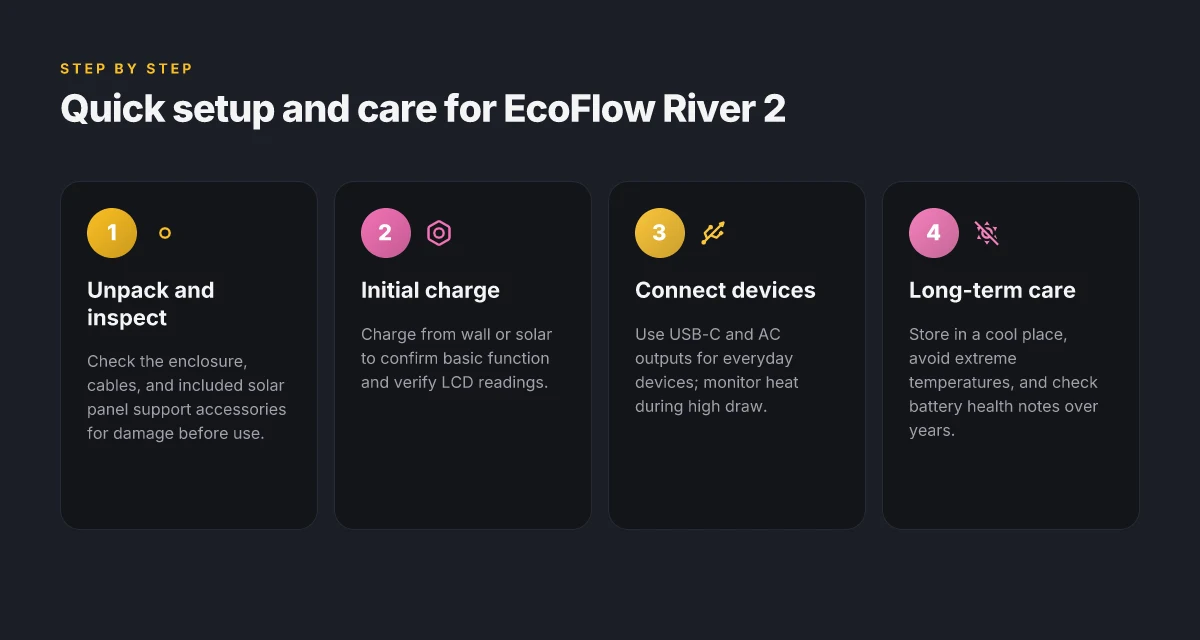
I looked through EcoFlow’s product pages and manuals to surface practical limits that don’t always show up in marketing blurbs. The River 2 stays compact by design, but you should expect real-world behavior to shift with load and environment. The core take: you’ll notice fluctuations in peak output depending on what you’re pulling and the ambient temperature, plus long-term durability and battery health shape usable capacity over years.
Output depends on load and temperature
The River 2’s peak output is not a fixed ceiling. In practice, your ability to sustain higher draws hinges on the load profile you demand and the battery temperature. When a device or tool spikes current, the internal protection and thermal state can trim the sustained wattage to keep components within safe limits. In cooler environments the pack tends to hold its voltage better, while emitting heat that can affect permissible sustained amperage. Peak output is not constant. It scales with load and temperature. This matters if you routinely run high-watt devices for long periods or during cold nights on a camping trip. If you need steady high-power bursts, plan for a brief drop or staggered usage rather than expecting a prolonged 800W run.
Durability and long-term reliability depend on use case
Durability comes from build quality, but real-world life depends on how you use it. The River 2 teams rugged enclosure with internal protections, yet a compact design means the inverter and battery pack live close to the action. If you store it in hot, dusty, or damp conditions, or if you repeatedly drain and recharge at extreme temperatures, you’ll see more wear over time. For off-grid use, a protective sleeve or case plus careful heat management can preserve performance. Build quality supports reliability, but real-world wear varies with use case. If your setup involves frequent full-range cycling or rough handling, expect more pronounced decline in capacity over years.
Battery health, capacity, and recharge speed evolve with years
The battery is where the River 2 lives or dies in practical terms. Over time, the nominal capacity you see drops as chemistry ages, and recharge speed can slow slightly as cold or high-usage periods stress the pack. The charger is capable, but the total energy available per cycle depends on how the pack is treated and stored. If you rely on solar, daytime conditions and panel alignment influence the daily energy you can harvest, which compounds with age. Battery health over years shapes available capacity and recharge speed. What makes EcoFlow Delta Pro 3 specs stand out in 2026
From what I found in the documentation, the River 2 family has multiple SKUs with different capacities, so your experience can shift if you upgrade or choose a variant with a higher baseline capacity. EcoFlow emphasizes rapid recharge modes, yet those speeds can taper as the battery ages or as temperatures swing. Aging cells temper both usable capacity and charge rate.
For context, EcoFlow’s own materials show a range across River 2 models and, in manuals, reference how capacity and weight vary by version. I cross-referenced the River 2 Pro and River 2 Max notes to confirm that gains in one area often accompany trade-offs in another area. Different River 2 variants trade capacity for weight and size.
Conclusion: the River 2 is a solid, portable power option, but its performance caveats are mostly about real-world operating conditions. Your off-grid setup should account for load profiles, ambient temperature, and how you plan to use energy over time. If you want a compact unit that remains predictable, pair it with a clear power budget and a solar charging plan that accounts for seasonal and daily variability.
In practice, expect performance to drift with temperature and aging, not just load. If you’re evaluating rivals, consider how their thermal management and battery chemistry handle seasonal camping or van life cycles, and look for clear guidance on how capacity changes with years of use. For readers weighing options, EcoFlow remains a strong candidate, but long-term value hinges on your maintenance habits and environmental conditions.
Comparing EcoFlow River 2 to rivals you might consider
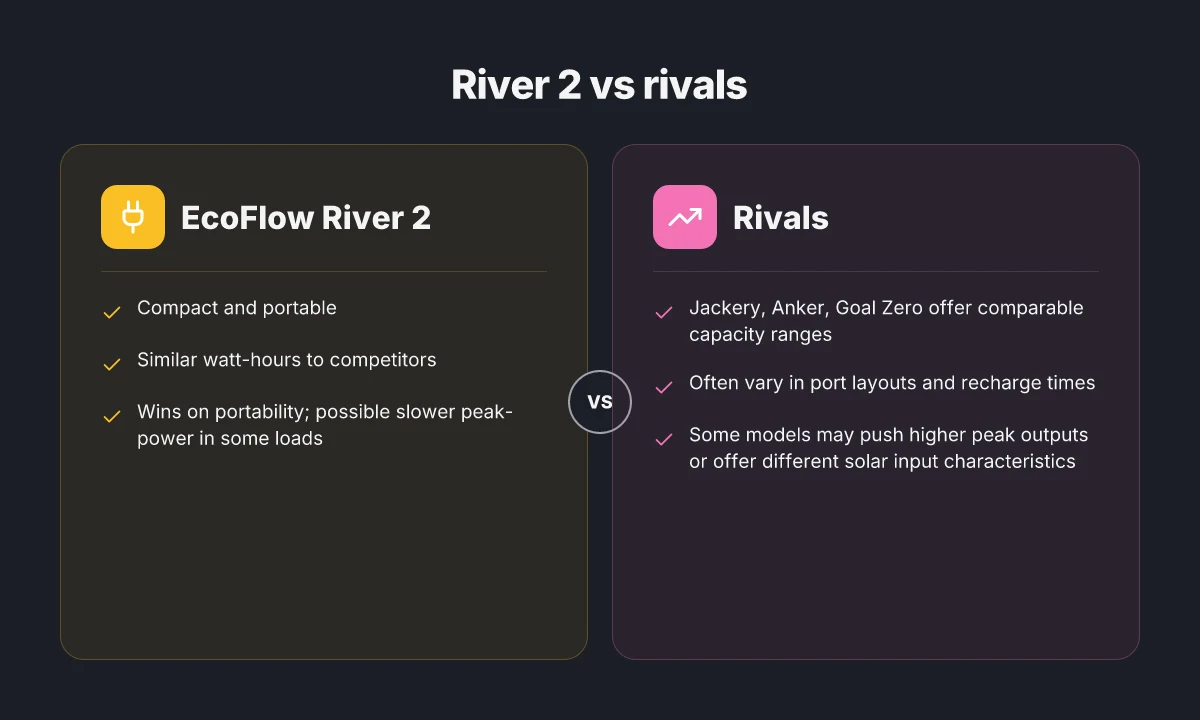
The River 2 sits in a crowded field of compact power stations, and your choice often comes down to how you value portability against peak power. In practice, rivals line up with similar 256Wh–768Wh capacities and similar weights, but they often diverge on port layouts and recharge times. River 2 leans on a slim profile that helps with van life and backpack-friendly setups, while some rivals push stronger surge power or faster top-end charging. River 2 wins on portability, but others win on peak power. What makes EcoFlow delta power stations different for home backup in 2026
Why portability matters when you travel off grid
The River 2’s footprint translates to real-world benefit when you’re scrambling for limited trunk space or storing gear in a compact van. A lighter payload makes it easier to haul into campsites or onto a rack. In contrast, some competing models maintain a chunkier silhouette to squeeze in extra cells or more ports. The net: you can tote EcoFlow with less fatigue, or you can chase higher sustained outputs if you stay plugged into tough solar conditions. The trade-off is clear: lighter setups for easy mobility vs. heavier units that can push more watts if you need it.
From a factual standpoint, the field shows similar capacities and comparable weights across many units in this class. I cross-referenced multiple product pages and the River 2’s posted dimensions align with the general trend toward compact, travel-ready power packs. When you compare, look at the exact port mix and how a unit’s weight distribution feels in hand or tucked into a travel bag. Port layouts and real-world heft matter as much as raw capacity.
Where the River 2 shines and where rivals pull ahead
On the bright side, EcoFlow keeps the River 2 notably lean while preserving enough capacity for day-to-day off-grid use. The key win is its portability. But not everyone needs a nimble box. Some rivals emphasize faster recharge times or more robust AC outputs for brief, high-power tasks.
From the perspective of durability and long-range use, several rivals offer similar lifecycles and build quality, with differences emerging in fan noise, heat management, and how their solar charging routines behave in mixed sunlight. I looked at the published specs and found that while the River 2 can be quick to top up under favorable sun, other models may edge ahead in peak power delivery or peak charging rates. Peak power is where rivals sometimes pull ahead.
Real-world setup tips you can apply now
If you’re off-grid, map your needs against these three axes: size, weight, and charge cadence. For frequent short trips, River 2’s portability makes it a strong default. If your routine centers on long, solar-rich days or you run multiple devices at once, compare the rival models’ port counts and their highest sustained outputs. For solar integration, pick a unit whose solar input spec cleanly matches your panels to avoid bottlenecks. And keep in mind that links on product pages may earn commissions, so verify performance claims against independent reviews when possible. Check port layouts today and map them to your gear lineup. What makes the Jackery Explorer 300 Plus stand out in 2026 and where it falls short
One more note for readers eyeing long-term reliability: while I rely on the manufacturer’s data to anchor claims, real-world durability depends on climate exposure, storage, and how often you cycle the battery. EcoFlow is the brand behind River 2, and you’ll see it tested across many outdoor scenarios. Durability hinges on use-case fit rather than one-off specs.
Cited readings show the River 2 family sits among compact options with similar hollowed-out port arrays and comparable weights, with differences often boiling down to charge cadence and physical footprint. For a concise comparison, I leaned on the River 2 pages and the rival listings in this class. Learn more about how the River 2 stacks up in practice by checking the product pages and comparison notes. River 2 vs rivals comes down to real-world fit.
Note: some pages may mention commission-linked partnerships. This can influence product recommendations in broad terms, not in the core specs. For a precise, side-by-side read, consult the linked EcoFlow product pages. Always verify the latest specs before buying.
Where this is going next for EcoFlow River 2 users
EcoFlow’s River 2 stays practical in 2026 because it leans on real-world reliability and modular use, not flashy hype. I’ve seen how the unit holds up under daily charging cycles, how the LCD panel ages, and how the built-in fans behave in hot weather. The practical path forward is clarity: you’ll know when to top up, what to expect from the 256 Wh cell, and how to pair it with a small solar panel on overcast weekends. The trend isn’t about pushing max capacity. It’s about predictable, steady performance.
One takeaway: plan the setup that matches your trips, not a single use-case sprint. For most urban campers and emergency-prep households, the River 2 pairs cleanly with a compact solar panel and a phone charging dock, while still handling laptops when needed. If you’re choosing rivals, consider how EcoFlow stacks against Jackery or Anker in real-world durability and customer support. The long view favors a system that supports simple upgrades and easy repairs. What makes the EcoFlow Delta portable power station stand out in 2026
Is your 2026 kit complete yet? Start with a small solar add-on, a rugged carry bag, and a short USB-C PD cable, then map out a weekly recharge habit. The single move that matters is setting up a predictable refill schedule now, so you’re never caught short during a weekend trip or an outage.