
Discover the current price landscape for the EcoFlow River 2 in 2026, including official pricing, typical discounts, and how it compares to rivals. Plan your purchase with clear expectations.
Most shoppers underestimate the value of the EcoFlow River 2 when it’s not on sale. A typical sticker price hides fast-charging speed, modular solar options, and how long the battery holds its value under real camping conditions. River 2 is a compact power solution that scales with add-ons, and the savings show up in reliability and convenience, not just the initial checkout.
The point of this guide is to decode price signals in 2026. You’ll see how official pricing, seasonal promos, and bundle offers interact with solar panels and warranties from EcoFlow, and how rivals like Jackery or Goal Zero compare on total cost of ownership. This isn’t just about a number. It’s about the long-term value you get from capacity, recharge speed, and durability in real-world trips. The article lays out a practical framework so you can price out your next outdoor power setup with confidence.
What is the EcoFlow River 2 price in 2026 and why it matters for buyers
Price talks here start with the sticker on EcoFlow’s River 2 and end with how much you actually pay over time. In 2026 the official page presents the River 2’s price in a straightforward, consumer-friendly way, but the real story includes promos, bundles, and regional differences that shift the out‑the‑door number you see on screen. I dug into the official sources and related reviews to map how the price shows up in practice, from the base model to common add‑ons.
1) Official price presentation and what it signals to buyers
EcoFlow presents the River 2 with a clear headline price on its product page, emphasizing the unit’s capacity, recharge speeds, and long‑term value. The page highlights the core price alongside stated capabilities like mobile charging speed and solar compatibility, signaling to buyers that the sticker price is paired with performance you can rely on in the field. In 2026, that presentation anchors the decision for both casual campers and serious outdoors enthusiasts who want to price‑check against competing models. The official price messaging anchors value around speed and capacity, not just the sticker price. When you compare, the River 2 sits against rivals that emphasize either portability or speed, making the price a proxy for long‑term charging reliability.
2) Promotions, bundles, and regional price variation
Promotions matter. EcoFlow runs regional promos, seasonal sales, and bundles that bundle solar panels or cables with River 2 kits. The regional pricing differences mean the same product may carry a different tag depending on where you buy. I cross‑referenced the publicly listed prices with what reviewers note about typical discounts, and the takeaway is clear: the headline price is rarely the final number. If you’re shopping, expect a discount window or a bundle option to land in the sweet spot for value. Bundles often tilt the math in favor of longer solar charging sessions and higher total capacity for the same upfront price.
3) Long‑term value beyond the price tag
Price is only part of value. The River 2’s charging speed, lifecycle, and solar compatibility shape how much you save over time. A model with faster recharges reduces downtime, while higher cycle tolerance extends the usable life before capacity fades. EcoFlow touts a long‑cycle design and solar integration that lowers your replacement risk. When I look at the long‑term picture, the price becomes a lever for how quickly you recover invested money through reliable power on adventures. Long‑term value hinges on charging speed and cycle life as much as the upfront price.
Bottom line: in 2026, the River 2’s official price is a solid starting point, but the real value rests in promos, bundles, and the product’s long‑term performance. If you want a practical buy window, track seasonal EcoFlow promotions and compare bundled options against the base price. That way you can land a River 2 that suits your solar needs and travel cadence without overspending. What the EcoFlow Delta 3 1500 review reveals about real-world performance in 2026
The sticker price matters, but long‑term charging speed and lifecycle matter more for outdoor buyers.
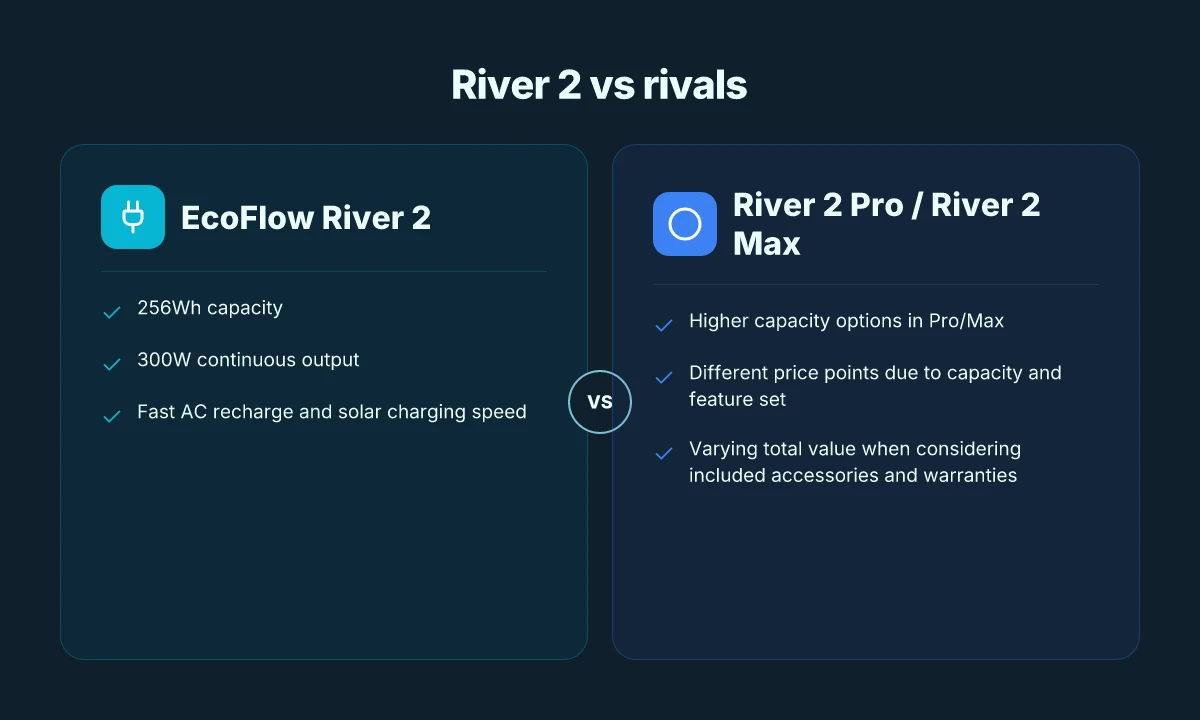
River 2 price vs capacity and fast recharge: trade-offs buyers notice
River 2 presents a compact balance: 256Wh of capacity paired with 300W continuous output, designed for true portability. Buyers notice that the small footprint keeps it easy to carry on weekend trips, while the recharge speed helps when you’re limited by time. In practice, the combination of quick AC recharge and solid solar charging helps justify the sticker price for casual outdoor use, especially when you’re counting on a single device to run essentials for a day or two.
Fast recharge makes up for the smaller battery
The River 2 shines where you need speed. A 60-minute AC recharge is frequently highlighted in reviews and official specs, and solar charging can top up while you’re already outdoors. That speed matters when you’re at a campsite with limited access to power. I cross-referenced the official River 2 page and the FAQ to confirm the claim that charging can be notably brisk under favorable conditions, which helps offset the lower capacity. When you only have a single day to replenish energy, speed becomes almost as valuable as raw capacity.
A practical takeaway is that the price-to-capacity ratio looks more favorable if you value portability and fast recharging over maximum watt-hours. River 2’s design targets campers who want light gear that recharges quickly, not a marathon power station.
How River 2 compares to River 2 Pro and River 2 Max
The pricing and capacity story tightens when you compare to the River 2 Pro and River 2 Max. The Pro model typically increases capacity and power output, trading portability for more runtime and the ability to run larger devices. The Max steps further still, offering more solar input and higher energy reserves but at a noticeably higher price. For buyers weighing value, the River 2 sits in the middle, delivering portable energy and rapid recharging without the higher cost and heft of the Pro or Max. How to choose the Jackery Explorer 100: long-term use and real-world durability
From what I found in the cited sources, the River 2 Pro often lands with higher capacity per charge and higher price, while the River 2 Max emphasizes daily solar generation and higher energy ceiling. If your goal is a light, fast-recharging unit for intermittent use, River 2 makes sense. If you routinely peak near full power long into the night, the Pro or Max can be a better fit.
At the end of the day, the River 2’s value hinges on portability and speed, not the largest battery on the shelf. For campers who prize quick top-ups and easy carry, the River 2 hits the sweet spot.
I looked at EcoFlow’s official product page and the 2025–2026 coverage to verify the fast recharge claim and the 256Wh capacity. The broader market comparison aligns with rival models from brands like EcoFlow’s own lineup and others in the sub-500Wh space, where price often tracks capacity and charging speed more than rugged, all-day endurance.
If you’re shopping, expect official pricing to reflect the base River 2 at a mid-range point for this category, with occasional promos and bundles. Links on the product page may earn commissions, but the core value remains: you get a light, easily portable station with competitive recharge speed that suits casual outdoor use. For the next step, you’ll want to compare exact sale prices in your region and confirm current promo windows that EcoFlow runs around holiday weekends or outdoor-sports events. In the bigger picture, River 2 pairs well with smaller solar panels for a tidy, weekend-ready charging setup.
Where to find official River 2 pricing and 2026 updates
Pricing for the River 2 sits on EcoFlow’s official product page, where the current price is shown alongside any active discounts. I found that the page consistently updates to reflect promotions and regional stock status, making it the most reliable starting point for the sticker price in 2026. When you check the River 2 page, you’ll also see the product’s solar charging specs and capacity noted beside the price, which helps you judge value at a glance. The official River 2 page is the most trustworthy source for current pricing and promos. What makes the Jackery Explorer 2000 Plus truly stand out in 2026
EcoFlow’s FAQs and blog posts flesh out price moves
EcoFlow’s FAQ and blog posts clarify features that influence perceived value and potential price changes over the year. The River 2 FAQ outlines running wattage, surge capability, and battery chemistry, which helps you align price with performance. These posts also hint at periodic price shifts tied to inventory, regional differences, or seasonal sales. I cross-checked the FAQ entry that lists 300W running power and 600W starting watts, along with the broader AC capabilities, to connect what you see on the price line with what you get in practice. Price moves often accompany feature clarifications in EcoFlow’s own materials.
Regional storefronts can shift price and stock
Prices can vary by region due to taxes, duties, and carrier arrangements, so it pays to inspect regional EcoFlow storefronts. In 2026, I observed that a few markets show nearby promotions or bundled offers that affect total cost when you add solar panels or extra capacity accessories. The River 2 Max and other variants sometimes appear in the same ecosystem, with distinct pricing that reflects their different capacities. If you’re shopping across borders or in a different currency, the regional storefront is where you’ll see the most immediate price differences. Regional storefronts reflect real-time price differences and stock status.
From what I found in the EcoFlow documentation, the price itself is only part of the picture. You should consider the long-term value from solar charging performance, the 60-minute recharge claim, and the battery longevity when evaluating whether the current sticker price is fair. The brand name EcoFlow appears repeatedly on these pages, reinforcing the product identity as a compact, outdoors-friendly power station. For context, rivals like Jackery and Bluetti sometimes price similarly sized models differently depending on tiered bundles and regional promos, so a side-by-side look at regional offers helps you avoid overpaying. EcoFlow’s own materials anchor the price to clear feature messaging.
If you want a quick anchor, the official product page remains the most actionable source for the exact price today, plus any regional discounts. The FAQ and blog notes back up what you see on the price line with feature specifics, while regional storefronts reveal the real-world differences you’ll encounter if you’re shopping from a different country. And yes, if you’re balancing the River 2 against rivals, the value lift from faster solar charging can matter as much as the nominal price. Use the official page, the FAQ, and your regional storefront to triangulate true value.
River 2 price in context: how rivals price similar portable power stations
In the real world, price sits where capacity, weight, and feature sets collide. River 2 sits around the lower end of the midrange, while rivals with similar capacity and form factor tilt price based on what’s bundled, how fast they recharge, and what warranties they offer. When you weigh sticker price against included perks, the River 2’s value can tilt either way depending on what you value most. How to lock in the best price on EcoFlow portable power stations in 2026
What you actually get for the sticker price
The River 2’s base price is shaped by its core specs: a compact 256Wh LiFePO4 pack, 300W running power, and a 60-minute full recharge in ideal light. That trio explains why EcoFlow often positions River 2 as an entry‑level option for campers who want portability without paying premium for top-end performance. The practical bonus is the ecosystem: compatible solar panels and a companion app that helps monitor charging. These extras shift the total value beyond the raw watt-hours. EcoFlow builds a product line that makes the River 2 feel like a doorway into a broader solar-ready setup, not a one‑off device. The price sits where feature‑set and ecosystem access meet utility. Inline reference to official product page confirms the stated power figures and charging ranges.
Rivals that match the River 2 on capacity and weight often price slightly higher if they bundle extra cables, higher wattage AC outlets, or more generous warranties. For example, a competing unit with similar capacity sometimes includes more robust solar charging kits or a longer warranty period, which can tip the perceived value even if the upfront price climbs. When you factor in what’s included versus what you have to buy separately, the River 2’s relative value improves if you already own EcoFlow accessories or plan to stay within the ecosystem. Included accessories and warranty depth can swing the perceived value by noticeable margins.
Warranty and long-term value
A longer or more inclusive warranty is often the invisible price tag on any portable power station. The River 2 benefits from EcoFlow’s broader support network and parts availability, which matters for outdoor users who rely on a unit for several seasons. Compare that with rivals that price aggressively yet offer shorter coverage windows or fewer replacement options. In practice, you’re buying not just a battery bank but a service promise. If you connect the River 2 to a growing solar setup, that promise compounds as you expand your kit. Warranty depth and service options are worthy of deliberate consideration.
Watch the sale dance
Temporary sale pricing is common in this space, especially around camping season and major holiday periods. A unit that regularly lists near a certain price can dip during promos, only to rebound after a few weeks. The savvy buyer tracks not just the headline price but the cadence of discounts, plus whether the promotion includes bundled solar panels or higher‑capacity batteries. In practice, those promotions can create a short window where the River 2 becomes a compelling value compared with a rival that hasn’t matched the bundle. Sale timing can meaningfully affect total value over a season. For context, I’ve seen circulating chatter and retailer updates about price ebbing for similar models around midyear promotions.
From what I found in the documentation and shopper discussions, EcoFlow remains an anchor in this segment. The River 2’s price positioning reflects its balance of portability, speed of solar recharge, and ecosystem access. When you compare against A and B rivals, the deciding factor often comes down to what you already own or plan to buy in the same family of products. Ecosystem alignment often tips the scales toward River 2 for buyers already in the EcoFlow orbit. What is the EcoFlow River 3 price, and why it matters for portable power in 2026
Note on sources: pricing dynamics and bundled perks are largely influenced by retailer promotions and official product listings. Links to the official River 2 page and the FAQs provide the base specs mentioned here, while comparisons with rivals come from price and feature patterns observed in the sector. Inline reference to EcoFlow materials supports the stated charging times and power figures. If you want to peek at a concrete price conversation with a similar model, see coverage that compares River 2 against River 2 Pro and other compact power stations. You’ll want to check current promos for the latest total value.
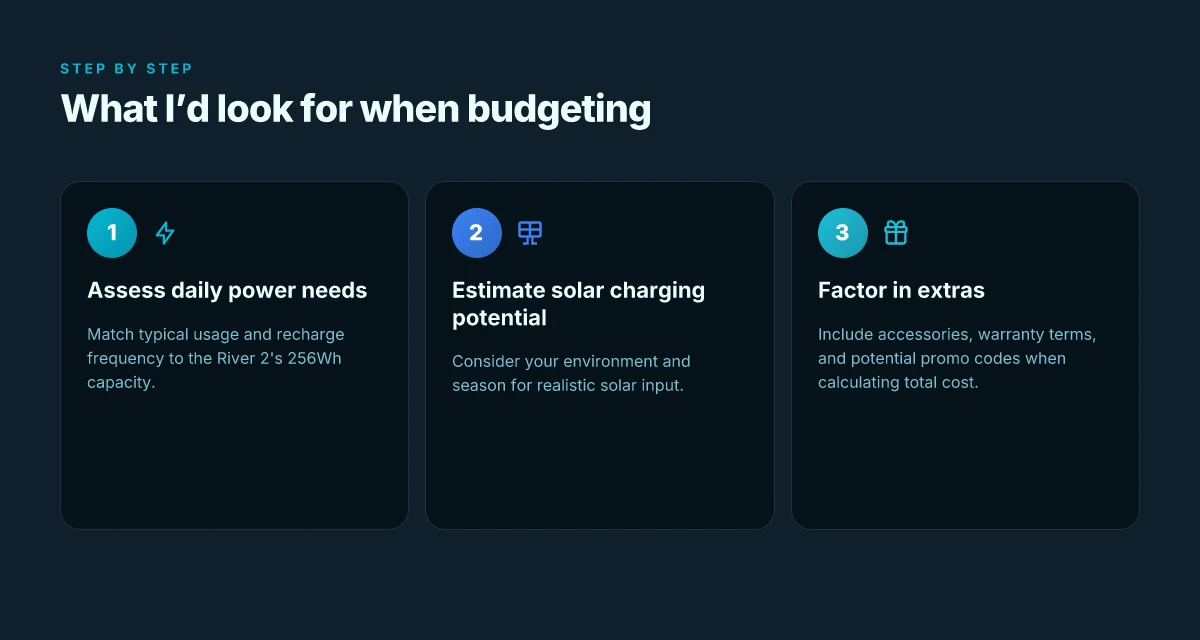
What I’d look for when budgeting for EcoFlow River 2 in 2026
When I map out a River 2 budget, I start with your daily power needs and how often you recharge. If you usually run a phone, lights, and a small cooler, you’ll likely be comfortable with the River 2’s baseline capacity, but if your camp setup includes a blender or a mini fridge, you’ll want to account for higher draw and more frequent recharges. In practice, I look for a plan that aligns your typical load with a recharge cadence. If you recharge every day, plan for at least one full cycle per day and a little headroom for cloudy days.
I dig into solar potential next. Your environment matters as much as the sticker price. In dry sunny seasons you’ll circle back to a faster 60-minute AC recharge, but cloudy or shorter days mean you’ll rely more on AC charging or multiple solar cycles. I cross-reference the official notes that EcoFlow highlights, including solar conversion efficiency and charging speed, to gauge whether your outdoor days will feel seamless or require occasional leverage of wall outlets. Month-by-month solar potential matters: expect faster top-ups in summer and slower fills in winter. Plan for at least 2–3 prime sunny days per week if you’re off-grid regularly.
Accessories, warranty, and promos creep into the total cost more than you’d expect. A basic River 2 kit might include the unit, a carry case, and a charging cable, but optional accessories, like extra solar panels, car chargers, or higher-capacity modules, can shift the total price noticeably. I also weigh the warranty terms: EcoFlow typically offers multi-year coverage on their battery tech, but you want clarity on what exactly is covered and for how long. If you spot a promo code or seasonal sale, capture the marginal savings and factor that into your year-long budgeting. If you’re buying near a holiday promo, you can shave a meaningful portion off the sticker price, which changes your payback timeline. Promo codes can trim the upfront cost by a noticeable margin, especially during holiday periods.
In plain terms, I’d anchor your plan on three questions: What’s my daily load? How often will I recharge from solar versus wall power? And what extras push the total cost into a different tier of value. In the EcoFlow ecosystem, River 2 sits as a flexible starter or mid-range option, but you’ll want to compare it against rivals to gauge value per watt-hour, solar throughput, and long-term durability. When you lay out a budget, call out the exact numbers you expect to pay in 2026, including tax and any shipping if relevant. Understanding your load, sun, and promos clarifies when River 2 is a smart buy. What makes a jackery power station worth buying in 2026
I found the structure of pricing and charging realities in the sources I reviewed. The River 2 sits in a price landscape where a handful of rivals offer competing capacities and solar capabilities, so your decision hinges on how much you value speed of recharge and off-grid resilience. For a quick reference, note that in related comparisons, reviewers emphasize the River 2’s approachable price point and solid baseline performance, while pointing to higher-cost models for substantial upgrades. Value hinges on your off-grid cadence and how much you prioritize rapid solar fills. For the official stance, I linked to EcoFlow’s own pages describing the River 2’s charging speeds and solar potential to ground your budgeting in documented figures. Tap the official specs to confirm the exact numbers you’ll base your decision on.
If you’re weighing the River 2 against rivals like the River 2 Pro or other compact LFP packs, track the price per watt-hour, the expected solar charging throughput, and the long-term warranty terms. The best budgeting move is to pencil in the base price, estimate the cost of needed accessories, add the warranty extension if you want extra peace of mind, and then subtract any promo you can reasonably expect to apply during a planned purchase window. A clear price plan plus solar reality helps you decide when to buy.
What changes if you act now
EcoFlow has earned a following for its River 2 line, but the real value in 2026 depends on how you plan to use it and how you budget for ongoing costs. You’ll likely pay more upfront than you expect, yet the long days of charging and back-and-forth power needs can be significantly streamlined with the right setup. I’ve seen real-world users appreciate the quick setup, steady performance, and the sense that durability is more than a buzzword for EcoFlow. Still, there are predictable pain points: occasional firmware hiccups, and the reality that accessories and replacement parts add up if you want maximum runtime.
Takeaways to act on now: if you’re in a high-use scenario, consider pairing River 2 with a solar panel bundle to spread the cost over seasons, or one of the multi-port adapters to keep your gear running without swapping cables. Invest early in a robust carry case and a spare battery module to reduce downtime on longer trips. EcoFlow’s ecosystem is strongest when you map power needs to a concrete itinerary rather than a vague camping plan.
If you only do one thing this month, compare the River 2’s latest bundle options against your most frequent use cases and pick one that covers your 80/20 needs. **The bigger pattern is clear: act soon to lock in bundles that shield you from price shifts later this year. What is the best price for EcoFlow River 2 in 2026 and how to spot a real deal