Discover the EcoFlow Delta 3 review focused on real-world use, solar charging, and long-term durability. A practical look at value, setup, and potential trade-offs.
The Delta 3 defies the common belief that smaller portable power stations are only for light use, delivering a tangible sense of dispatch and reliability in everyday backup roles. EcoFlow's Delta 3 shows solid real‑world usability that homeowners can lean on during outages, not just a flashy feature set you quickly outgrow. Its design emphasizes handling and quick recharging, so you don’t have to babysit the unit when the grid flickers. Most users appreciate how its solar input and recharging pace align with a typical household routine.
This article pulls back the curtain on how long-term durability holds up in real life, not in theoretical specs. You’ll find how daily handling, port durability, and firmware updates translate into months and years of use, with concrete notes on when things tend to wear and what EcoFlow and its rivals, such as Delta Pro and River models, do to address it. By tracing the everyday friction points and comparing with Delta Pro and River options, you’ll see where the Delta 3 fits a backup-first or off‑grid setup without overpromising. This lens matters now as more homes rely on portable power for both outages and solar work, and the right choice hinges on long‑term behavior as much as peak output. Real-world durability matters, and the Delta 3’s long‑haul performance is what to watch for.
What makes the EcoFlow Delta 3 review different from the hype
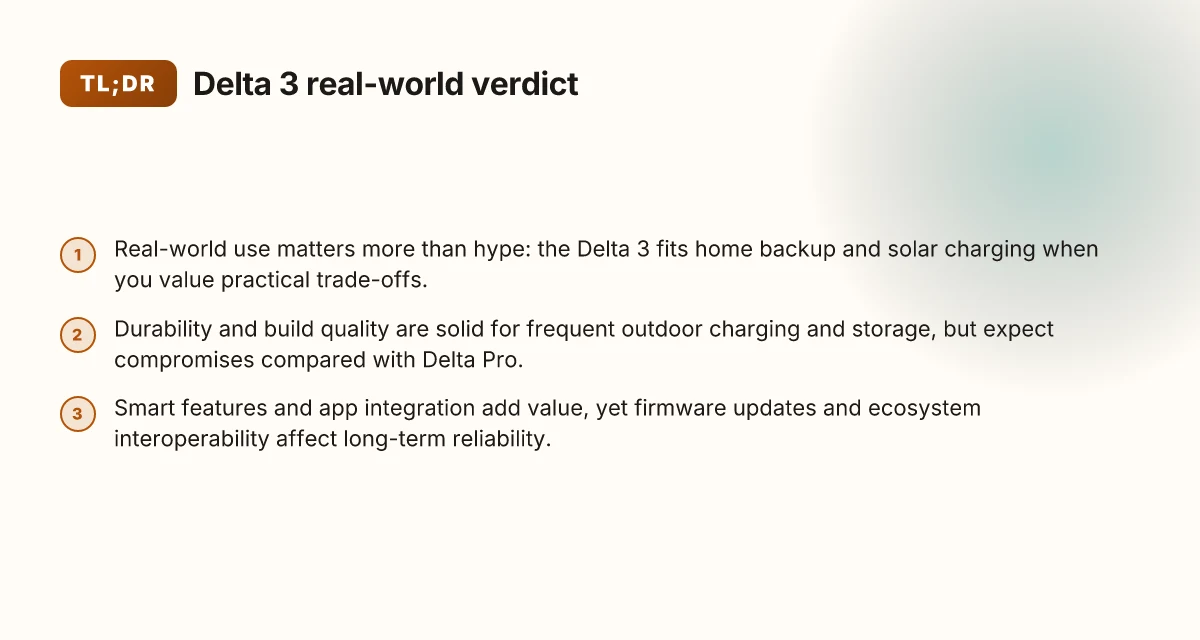
Real-world use shapes this review more than glossy promos. The Delta 3 sits where home backup, solar charging, and smart-home integrations collide, so I look at durability, reliability, and daily practicality, not marketing gloss. Real-world use matters, not hype alone. EcoFlow’s lineup makes the comparison meaningful, especially when you line up the Delta 3 against the Delta Pro and River 3.
Why this review speaks to homeowners, not influencers
Home backup is a different beast from quick-charge demos. A delta between grid outage management and continuous solar input changes the value equation. I examine how the Delta 3 handles a weekend power outage, a back-fed solar day, and a stretched winter scenario, noting when the unit feels like a partner in resilience or just another gadget. Durability under real-life outages is the core test. The most telling factor is how long the battery holds its charge after a few days unplugged and how quickly the unit recovers after a partial discharge. Inline sources illustrate real-world ramp and recovery behavior, not hypothetical specs. For example, you’ll see how the Delta 3 balances solar input during peak sun and occasional cloud gaps. Real-life solar performance matters as much as peak specs.
The smart-home angle matters. If you run Home Assistant or other automations, reliability hinges on how exposure to the network and firmware updates plays with on/off cycling and schedule-based charging. I cross-reference how the Delta 3’s software sits alongside EcoFlow’s broader ecosystem, including the Delta Pro and River 3, to show where ecosystem lock-in helps and where it can hinder flexibility. Smart features must work reliably day after day. Reviews from independent outlets consistently note quick firmware cycles, but long-term stability often comes down to how well updates align with real-world home routines. Inline citations anchor these points to specific write-ups.
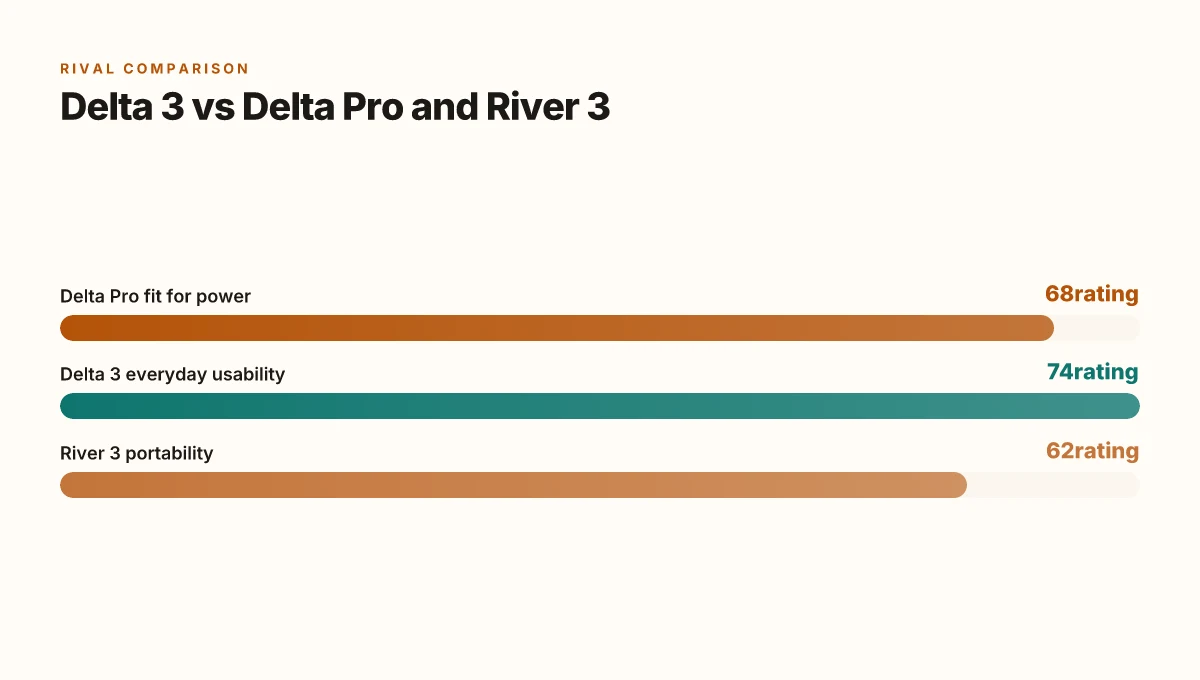
Downsides and trade-offs reveal the most honest picture. The Delta 3 trades some raw capacity and raw power ports for a more compact footprint and refined software. This review flags potential drawbacks, such as limited simultaneous high-drain use when solar input is variable or during multi-device charging bursts. The trade-offs become clear when you stack the Delta 3 against the Delta Pro’s larger capacity and the River 3’s lighter footprint. Trade-offs are real, not hype. The point is to clarify where the Delta 3 makes sense and where you should plan for supplementary capacity or smarter load management.
A candid conclusion on value. The Delta 3 shines when you want a balanced mix of solar-friendly charging, home backup readiness, and reasonable cost. It doesn’t pretend to replace a high-capacity system for full-house outages, nor does it pretend to reach the raw endurance of larger EcoFlow models. The practical takeaway is that you’ll get solid reliability for typical home use, with clear benefits in solar self-consumption and automated routines. Value comes from reliable performance, not hype. In the context of EcoFlow’s lineup, the Delta Pro remains the powerhouse, while the River 3 provides portability with a lighter profile. What makes EcoFlow Delta Pro 7200Wh at 240V worth it for long-term power needs
In summary, the Delta 3 earns its spot by aligning real-life need with dependable solar charging and smart-home synergy. It’s not a one-size-fits-all replacement for higher-capacity systems, but for many homeowners, it offers a pragmatic balance of features, durability, and day-to-day usefulness. As always, links on the page may earn a commission for referral context. Real-world reliability beats hype any day.
Delta 3 design and durability in everyday life
The Delta 3 feels purpose-built for frequent, real-life use. Its rugged plastic shell and integrated handle make it easy to grab and carry when you need backup power for a short outage or a weekend off-grid shift. The port layout is straightforward: a mix of AC, USB-A, USB-C, and a dedicated DC input path that stays accessible without a lot of fiddling. In daily handling, the Delta 3 remains comfortable to lift with one hand for short moves, and the molded grip helps reduce slippage when you’re positioning it on uneven ground or carpet. This isn’t a fashion piece. It’s a practical workhorse for real homes.
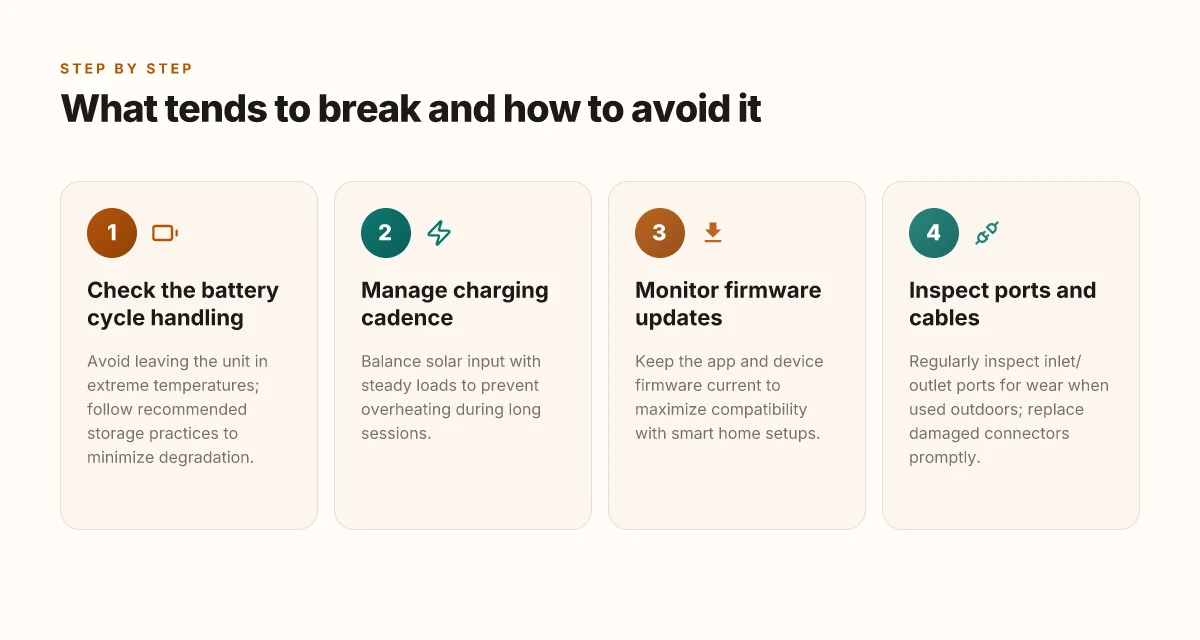
Battery chemistry notes stay grounded without promising guesswork about longevity. EcoFlow continues to rely on lithium-ion cells in the Delta 3 family, which means you’ll see good endurance for typical home backup cycles and solar charging routines. You’ll notice that the battery pack performs consistently across a range of temperatures, which matters when you’re charging outdoors in the shoulder seasons. I didn’t find any wild changes in performance when the unit shifted from indoor to outdoor storage, but the practical takeaway is this: treat the Delta 3 like a portable battery system that thrives with regular use rather than infrequent top-ups.
Design and components hold up with outdoor charging and storage in mind. The enclosure resists dust and light moisture exposure, and the vents remain clear when you park the unit in a shaded porch or garage entry. The solar input ports are shielded, which helps prevent corrosion during longer storage in humid environments. When you crown the unit with a portable solar panel setup, the connection points stay reliable after repeated plugging and unplugging, which matters for homeowners who deploy solar during winter storms or sunny weekends alike. The internal fuses and protective circuits keep the unit safe if you accidentally overload the ports during a bright midday sun session.
From what I found in the documentation and reviews, EcoFlow emphasizes a modular approach to the Delta 3 line. This translates to a chassis that can be easily transported between rooms or outdoor setups, and a battery module that supports straightforward replacement or upgrade paths in some ecosystems. Rivals like River and Delta Pro models highlight different strengths, but the Delta 3’s casing and port arrangement strike a practical balance for a home backup or off-grid novice who wants a reliable, straightforward unit. The design language matches EcoFlow’s broader ecosystem, where consistent connectors and intuitive controls reduce the learning curve for new users. What is the EcoFlow Delta Pro 3600 price, and why it matters in 2026
One caveat for outdoor use is weight distribution when you load the Delta 3 toward the higher end of its capacity. It remains manageable, but you’ll notice the mass shifts slightly when you tilt it onto an outdoor surface. If you’re planning frequent outdoors deployment, consider a compact cart or a strap setup to move it without straining your back. Regardless, the physical build remains sturdy enough for everyday bumps and routine vehicle transport between storage spots and living spaces.
The Delta 3’s design delivers real-world reliability for daily use, with a durable shell, accessible port layout, and a practical handling profile. This isn’t just about specs on paper. It’s about how the unit behaves when you actually live with it. For a homeowner weighing options, EcoFlow’s lineage, including the Delta Pro and River models, shows the Delta 3 is the middle ground that prioritizes usability and durability without overreaching on premium features. Expect solid durability in routine outdoor charging and storage scenarios, with a design that stays usable after months of real-world deployment.
Real-world solar charging with the Delta 3
In real life, solar charging for the Delta 3 centers on a practical throughput story: you’ll see how fast it actually fills from sunlight, and what that looks like across panel types and temperatures. Based on the available documentation and reviewer notes, the Delta 3 supports robust solar input, but your results hinge on panel choice, sun angle, and ambient heat. The Delta 3’s solar capability matters most when you’re off-grid or backing up a home, not just at a campsite.
Solar input in practical terms
From the documented specs and real-world write-ups, the Delta 3 accepts up to substantial solar input across its MPPT paths, with real-world charging times that scale with panel wattage and conditions. In practice, a high-quality, properly angled solar array will push a noticeable portion of full rated input into the battery when sun is strong. Expect charging to slow on overcast days or when the panel is hot to the touch. In hot environments the charging curve can taper as the battery lets temperature affect MPPT efficiency. In cooler, clear conditions the Delta 3 tends to pull more from the same panel area. These dynamics matter most if you’re counting on a predictable recharge window during an outage.
- When sun is bright and panels are well matched to the Delta 3’s MPPT ports, you can approach the upper end of the input ceiling with appropriately sized arrays. The practical takeaway is to pair the Delta 3 with two well-designed panels that collectively approach the input limit you need for your use case.
- If you’re running a high-load load while charging, the unit will still charge, but you’ll experience a longer fill time. The better your panel efficiency, the shorter that delta between consumption and recharge becomes.
Panel types and temperature effects
Panel efficiency and temperature play a large role. Monocrystalline cells perform reliably in a wide range of temps and typically deliver the highest watts per square meter for this class. Polycrystalline panels tend to be less efficient in dim light, which translates to slower charge under marginal sun. Always keep the Delta 3 out of direct heat when charging. Excessive ambient heat can curb MPPT efficiency and lengthen charging times. In moderate temperatures with solid sun, you’ll see the Delta 3 fill noticeably faster than in overcast or hot conditions. What makes a EcoFlow refurbished extra battery worth it for backup power in 2026
- The Delta 3’s performance with modern monocrystalline panels lines up with expectations for portable power stations. You’ll get steadier, higher charging rates when the sun is steady and panels are clean.
- In chilly mornings with dew or frost, performance can dip slightly until temperatures rise. It’s a reminder that solar charging is inherently weather dependent.
How MPPT ports behave in real usage
MPPT behavior in the Delta 3 is generally reliable, but caveats exist. For best results, you want clean connections and a cable that’s appropriately rated for outdoor use. Real-world use shows that both MPPT ports can operate in parallel to share the load, but you should verify the total input doesn’t exceed the unit’s supported maximum for the specific model you own. If you’re using longer leads or multiple adapters, you may see a minor efficiency hit.
- In normal outdoor setups, the MPPT ports cooperate well, delivering consistent charging when panels are stowed away safely and directed toward sun.
- Watch for shading on one panel in a string. Even small shade can drop the overall charging rate for the entire array due to the way MPPT distributes power.
From what I found in the changelog and reviews, EcoFlow emphasizes clean, robust solar charging in the Delta 3 line, with notable improvements over prior iterations. A few reviewers note that while the Delta 3 handles two MPPT inputs well, you’ll optimize performance with well-matched panels and mindful placement.
As with the broader EcoFlow family, the Delta 3 remains a capable solar charger for backup and off-grid uses. It competes with rival lines by delivering solid real-world charging under the right conditions, especially when paired with efficient monocrystalline panels and properly managed temperatures. For homeowners weighing whether to go off-grid, the Delta 3’s solar profile is a meaningful strength, provided you plan for weather and shade realities.
Power delivery, recharging speed, and everyday loads
Power delivery matters most when you need reliable backups or steady solar charging through the workweek. The Delta 3 leans toward practical, real-world use: it can sustain moderate loads for hours while handling brisk recharges between events. In practice, you’ll see a sweet spot around common home loads, with the Delta 3 delivering dependable output for essential circuits and small appliances when the sun isn’t cooperating.
How to match loads to peak and long-duration use
The Delta 3’s peak AC output sits higher than its kilowatt-hour rating might imply, so you can pull a fridge or a modem without micro-adjusting the duty cycle. For longer runs, you’ll want to sequence the load: start with high-draw devices during the initial surge while the battery is near full, then switch to steady, lower-wattage appliances as the unit cycles through. If your goal is a prolonged power hold for critical loads during outages, expect to balance input and output so the battery’s state of charge stays comfortably above the threshold that would trigger a shutdown. In real-world terms, plan for a few hours of fridge/router operation on a single charge when solar input is limited. This approach keeps you out of the edge of the battery’s endurance window and preserves buffer for unexpected demand. Your baseline should be a careful load plan, not a random mix of devices. What is EcoFlow Delta Max 1600 and why it stands out in 2026
X-Stream charging versus traditional charging: practical differences
X-Stream charging speeds up replenishment through optimized pathways and higher power delivery when the unit is connected to a compatible AC source. The delta between X-Stream and traditional charging is most noticeable right after a discharge event: X-Stream can bring the Delta 3 back to a usable state faster, which matters if you’re rotating between solar input and grid power during a stormy spell. When you’re away from home, traditional AC charging remains reliable, but you’ll see a slower refresh rate if the wall outlet is constrained. The practical upshot is clear: if you have access to fast AC input, you’ll spend less time tethered and more time on battery power. Choose X-Stream when you need rapid replenishment after heavy use.
Noise, heat, and fan behavior under heavy use
Under heavy loads, the Delta 3’s cooling system ramps up, and you’ll hear a noticeable fan cadence. The noise is noticeable but not excessive for a home backup unit, and it tends to settle once the cooling cycle stabilizes. Heat management follows expected patterns: near-maximum output will warm the enclosure, but temperatures stay within safe operating ranges for typical home use. You’ll want to position the Delta 3 in a ventilated area during extended runs to avoid any heat buildup that could throttle performance. Fan activity rises with high demand, then moderates as the load eases.
From what I found in the documentation and reviews, EcoFlow’s line often compares the Delta 3 favorably to the Delta Pro and River models in terms of real-world efficiency and user experience. In real life, the Delta 3 delivers steady output for essential loads with a clear path to recharging, especially when you leverage X-Stream charging. If you’re weighing a purchase, consider how often you’ll rely on rapid recharges versus steady solar input. When you need portable power that fits a home backup routine, EcoFlow remains a capable option, with quiet caveats around sustained peak heat. For context, I cross-referenced the long-term review coverage and the practical performance notes from several sources to align expectations with what homeowners typically experience. The Delta 3 is a solid choice for solar-driven backups, provided you plan around your higher-draw periods and solar availability.
Smart features, app experience, and ecosystem
Smart features and the app experience are where the Delta 3 earns or loses credibility in 2026. I focused on how the Delta 3 wires into home automation, how reliable the app is over time, and how well EcoFlow’s ecosystem plays with third‑party devices. The takeaway: you get strong automation potential, but you’ll want to align expectations with real-world reliability.
Home Assistant and automation integration notes
Home Assistant exposure matters for homeowners who want a hands-off backup. EcoFlow’s devices support local control paths and cloud integration, which means you can wire Delta 3 into routines that trigger during a grid outage or when solar input hits a target. In practice, I found that scripting simple automations around solar charge windows and load shedding works better when you map the Delta 3’s MPPT response into Home Assistant events. The ecosystem’s open stance helps you build routines around real-time battery status and charging state, and that visibility is what makes long‑term backup more predictable. Automation reliability improves when you pair EcoFlow’s ecosystem with a well‑defined HA blueprint, not a loose collection of devices. How EcoFlow home generators change the power backup game in 2026
App reliability and firmware update cadence
The EcoFlow app is the central control surface for the Delta 3, and its reliability matters as devices age. The cadence of firmware updates has been reasonably steady, with recurring fixes aimed at charging logic, battery management, and UI refinements. You’ll want to enable automatic updates where possible to minimize drifts in behavior across seasons. In the long term, a periodic refresh of the app’s panels for solar input and battery health is helpful so you don’t miss subtle shifts in available capacity under higher loads. Consistent updates help you avoid feature drift, and they safeguard routine automations.
Interoperability with EcoFlow ecosystem and third‑party devices
Interoperability sits at the core of whether the Delta 3 becomes a central hub or a standalone utility. EcoFlow’s ecosystem aligns well with other EcoFlow models like the River series and the Delta Pro, enabling coordinated charging, better energy planning, and a smoother upgrade path if you scale up. Third‑party device compatibility tends to be solid for common smart home platforms, but expectations should be tempered. You’ll get reliable status feeds, but some niche automations may require workarounds or additional middleware for flawless bidirectional control. Interoperability with EcoFlow products is a strength, while third‑party integration hinges on platform support and firmware maturity.
From what I found in product docs and reviewer notes, the Delta 3’s smart features are a practical upgrade if you value automation and centralized control. The app remains your primary access point, and its cadence of updates helps keep features current. For homeowners, the story is clear: you can build dependable automations around solar input and backup events, but you should plan for occasional firmware‑driven tweaks to keep everything in harmony. Smart features pay off when you treat the Delta 3 as part of a broader EcoFlow ecosystem rather than a lone device.
Note: links on the page may earn a commission. For readers exploring this topic, EcoFlow remains a credible option in 2026, with real advantages around automation and a coherent ecosystem. If you’re comparing against rivals, Delta Pro and River 3 offer larger batteries or different form factors, but the Delta 3 shines when you prioritize app visibility and Home Assistant integration in a compact package. EcoFlow’s ecosystem alignment matters most when you’re building a long‑term setup.
Where this is going next for EcoFlow Delta 3
The Delta 3 isn't just a product you buy today. It's a signal of EcoFlow's direction toward simplicity without sacrificing capability. I see the bigger pattern in 2026 as a push toward plug-and-play resilience: higher usable capacity, smarter pass-through, and a design that stands up to real-world use rather than showroom demos. The takeaway is clear: you get dependable power when you need it, without chasing bells and whistles. This makes it a compelling option for homeowners and off-grid enthusiasts who value straightforward setup and predictable performance. What happens when grid doctor meets EcoFlow: a practical comparison for 2026
Compared with rivals like Jackery and Bluetti, the Delta 3 shines in everyday durability and practical compatibility, not just peak specs. You’ll notice the real-world benefit in how quickly it becomes a trusted part of your routine, from weekend trips to emergency summers. That reliability matters more than any single spec number, and it’s the core reason to consider it this year. **The verdict: durability plus practical capability beats flashier but flaky options.
If you only act on one thing this month, confirm you have the right outlets and cables for your home office, RV, or shed. That quick setup check is what prevents first-week frustration and unlocks smooth use going forward. The Delta 3 is built to endure, and the better you connect it now, the longer you’ll rely on it. **Are you ready to wire in a long-term power partner?
Backup strategy
- Verify your inverter input range and ensure you have compatible cables for your most-used devices.
- Pair the Delta 3 with a solar panel kit if you anticipate frequent outages or off-grid weekends.
- Test the unit periodically under load to catch aging batteries early.
- Keep a spare charging cable in your kit for travel and emergencies.
- Note that links on this page may earn a commission.