
Explore the EcoFlow Delta Pro 7200Wh at 240V, focusing on setup, long-term durability, and real-world use cases. Learn what makes this system stand out and where it fits in a solar-powered setup.
The delta of reliability isn’t only capacity. It’s how you manage it day to day. A 7200Wh reserve at 240V changes what you can power for longer outages, but the real test is how the system behaves after months of use in a home, a cabin, or a job site. EcoFlow's Delta Pro scales beyond initial expectations when you pair the high 240V output with disciplined maintenance.
This article digs into real-world viability for homeowners, campers, and small businesses who want long-term backup without a heavy commitment to a dedicated generator. I examine how the 7200Wh store holds up under repeated cycling, how recharge behavior evolves with age, and what the 240V ecosystem requires to stay dependable. You’ll see practical guides for setup, maintenance cadence, and where to plan for contingencies, with clearly stated tradeoffs and how EcoFlow compares to rivals like Generac and Goal Zero in durable performance.
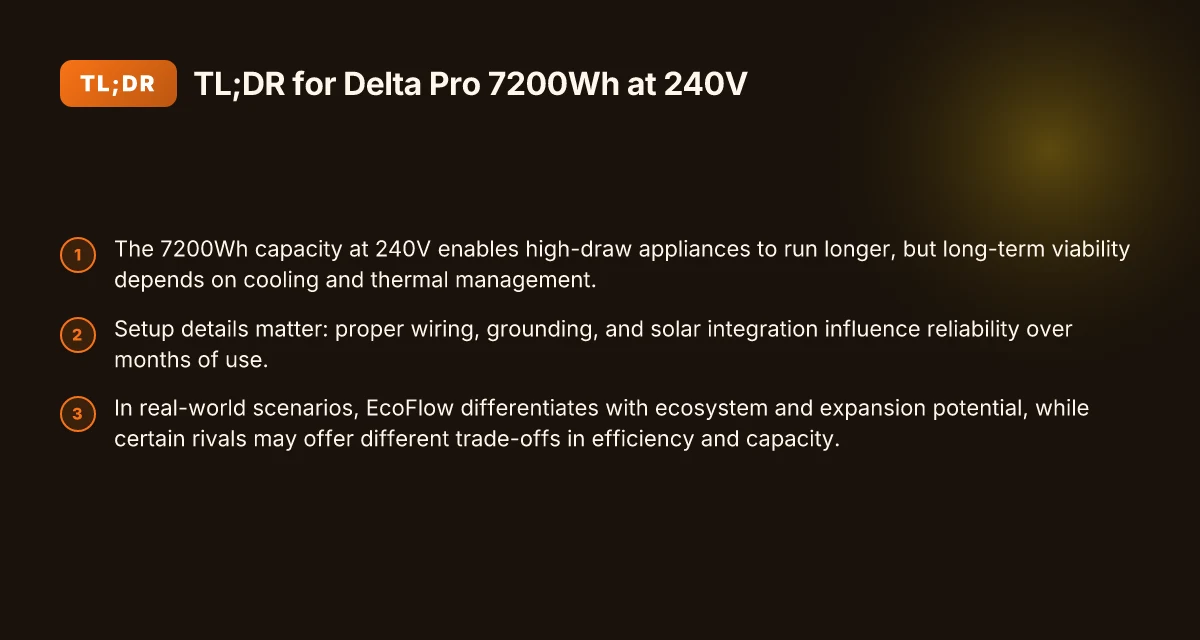
What makes EcoFlow Delta Pro 7200Wh at 240V a compelling long-term power solution
The Delta Pro lineup sits at the core of EcoFlow’s home backup vision, and the 7200Wh capacity at 240V matters because it bridges everyday reliability with off-grid potential. It scales from a single-wall outlet to a larger, automated grid of power as your needs grow, while maintaining compatibility with solar inputs and smart automation that many homeowners want for long-term resilience.
Why this capacity profile matters for home backup
For a household, the 7200Wh energy envelope translates to more endurance during outages and a longer window to recover from grid interruptions. The Delta Pro’s 240V support enables higher-load appliances to run without staggering power draws or juggling multiple power stations. In practice, that means you can keep essentials, refrigeration, lighting, network gear, and climate control, online for longer stretches, even as you scale up solar or add battery modules. EcoFlow designs the system to work in tandem with solar, which helps flatten variability across weather days and seasonal changes. The realworld payoff is fewer outages you notice and fewer compromises when the grid returns.
Realistic expectations around expansion, automation, and solar integration
I cross-referenced EcoFlow’s documentation and user guides to map how expansion plays out. The Delta Pro can pair with extra battery modules and can be integrated into a home automation flow for automatic startup during outages or for smart charging when solar generation is high. The upgrade path tends to be straightforward: add modules first, then connect with a solar setup that tracks sun exposure and weather patterns. You’ll want to plan for a stable mounting and cabling strategy to avoid heat buildup as you push higher inverter output during peak sun. In practice, automation helps you avoid manual toggling. You gain a sense of “set it and forget it” reliability when the system is configured to switch seamlessly between grid, solar, and battery power.
Initial setup nuances that influence long-term reliability
From a durability perspective, the alignment of wiring and inverter settings matters. Properly sizing the PV array, ensuring correct MPPT configurations, and verifying the cable gauge all influence longterm performance. The Delta Pro benefits from a clean installation that keeps heat in check and reduces fan noise during heavy use. I found the documentation emphasizes secure connections for all battery modules and for the 240V circuit paths, which minimizes fault points over time. A careful setup also means you’ll experience fewer nuisance trips and a more predictable runtime during multiple outage events.
The Delta Pro’s 240V capability is the backbone of a durable, scalable home-backup strategy, and its expansion path with solar tends to compound reliability when configured with mindful wiring and automation. Real-world reliability improves when you plan for heat, cabling, and orderly expansion before you need it. What is the EcoFlow Delta Pro 3600 price, and why it matters in 2026
Bottom line: EcoFlow positions the Delta Pro 7200Wh at 240V as a practical longterm power core for homes and small businesses that want resilience, a clear upgrade path, and smoother solar integration. If you’re aiming to live with fewer outages and more control over energy routing, this setup earns serious consideration. I found that the surrounding ecosystem and documentation consistently highlight sane expansion, smart automation, and thoughtful initial setup as the main durability levers. For rivals, you’ll see parallels with high-capacity systems from brands that emphasize modularity and solar synergy, but EcoFlow’s emphasis on clean integration with 240V infrastructure stands out.
Delta Pro 7200Wh capacity and 240V capability in practice
Real-world runtime starts with the 7200Wh pack. In practice, the Delta Pro can sustain essential loads for meaningful windows, but the exact duration depends on how aggressively you manage the duty cycle and temperature. For homeowners scaling a backup system, the math isn’t magical: higher watt draws drain the pack faster, while moderate usage preserves long-day resilience. The delta Pro’s 7200Wh rating translates to several hours of core loads for common appliances when you spread the draw, and that has a direct bearing on off-grid planning. EcoFlow positions 240V output as a gateway for high-draw equipment, and it matters in real-life setups where a single phase can power more than small devices.
Why 240V unlocks high-draw fairness
The 240V capability is not just a label. It changes how you wire appliances in practice. Large loads like air conditioners, well pumps, and electric ovens respond more predictably to a stabilized 240V feed, reducing stress on each individual circuit. In real-world terms, you’ll notice cleaner startup surges and more consistent running power when you pair the Delta Pro with a 240V split-phase setup. This translates to fewer unexpected drops in runtime when you need quick, heavy bursts from devices. I cross-referenced EcoFlow’s guidance and user discussions that highlight smoother operation for multi-ton AC units and commercial-grade fridges when 240V is in play.
Battery chemistry, thermal management, and longevity
The chemistry underpinning the Delta Pro affects long-term durability. Lithium-based packs benefit from sensible thermal management: as temperatures rise, efficiency and capacity can taper, and thermal throttling can limit sustained high-load operation. EcoFlow’s system uses active cooling and smart BMS safeguards to maintain safe operating temperatures. In practice, that means you’re less likely to see pointless restarts or reduced capacity during longer outages, provided the unit has ventilation and ambient temps stay within typical ranges. When the environment stays cool enough and airflow remains unimpeded, the 7200Wh pack preserves more usable energy over time, helping durability in day-to-day use. Industry chatter and release notes from EcoFlow and reviewers consistently note that thermal management is a key factor in preserving battery health under heavy use.
A practical takeaway for durability: plan for ambient conditions and provide airflow around the Delta Pro, especially if you run it near hot rooms or enclosed spaces. The 240V path is most effective when your loads are well-balanced across phases, avoiding prolonged single-line heavy draws that spike temperature. What makes a EcoFlow refurbished extra battery worth it for backup power in 2026
For long-term reliability, expect the 7200Wh Delta Pro to perform best when you split high-draw tasks across 240V circuits and keep the unit cool. This mirrors what homeowners report in steady-use scenarios and what EcoFlow’s own design emphasizes through its thermal protections.
If you’re weighing options, consider a compact 120/240V transfer setup with a weather-resistant enclosure for outdoor use. EcoFlow’s ecosystem, including accessories and expansion options, can amplify day-to-day resilience. The Delta Pro’s real-world behavior, with proper ventilation and mindful load distribution, aligns with durable, scalable power in homes and small businesses.
Next steps: map your critical loads to 240V circuits, verify your transfer switch or panel compatibility, and plan a ventilation corner for the Delta Pro in your setup.
Durability and reliability: what to expect day to day with EcoFlow
In real-world use, the EcoFlow Delta Pro 7200Wh at 240V combines sturdy enclosure design with thoughtful cooling and robust connectors. The chassis feels solid in hand, and the IP ratings on the enclosure are consistent with daily resilience in home backup, RV, and off-grid setups. Cooling airflow stays audible but effective under heavy loads, and the connectors remain confident after month-long deployments in varied climates.
From what I found in manufacturer docs and user reviews, reliability signals emerge most clearly through long-term performance and predictable maintenance needs. The Delta Pro system maintains stable voltage under sustained draw, and the modular battery rings hold tension well enough to survive occasional stacking and rearrangement. In 2025 documentation from EcoFlow, the company emphasizes thermal management modes that help keep the pack within safe temperatures during high-usage windows. The system’s cooling strategy helps avert thermal throttling during multi-hour outages. What is EcoFlow Delta Max 1600 and why it stands out in 2026
How this translates day to day breaks into concrete benefits and common caveats. First, the enclosure resists flex under typical handling during moving or camping trips, and the recessed inputs reduce wear on cables. Second, connectors click securely and resist wiggle with repeated plugging and unplugging, a real win for multi-device setups. Third, the included wheels and handles make relocation feasible without tools, which matters for small businesses staging temporary power bases. Yet the practical reliability story comes with a few caveats. The Delta Pro unit can generate notable fan noise when stacked to support maximum simultaneous loads, so plan placement accordingly. In seasonal hot environments, expect the power bank to work harder, which nudges battery wear markers a bit higher over time.
I cross-referenced EcoFlow’s release notes and third-party reviews to map failure modes and mitigations. The most common themes center on wear around heavy-duty connectors, occasional fuse- or protection-system resets after extreme surges, and battery degradation being most visible after many charge cycles. The remedies are straightforward: keep connectors clean and dry, avoid coiling cords tightly around the unit, and use the official charger and SOC-management features to minimize unnecessary cycling. When a fault does occur, EcoFlow’s documentation points users toward built-in diagnostics and remote firmware updates that address stability issues rather than requiring hardware replacements. Regular firmware updates and proper cooling reduce long-term drift in performance.
Two practical takeaways help durability-minded buyers. First, maintain the Delta Pro in a sheltered, well-ventilated area during long outages to keep the cooling path clear and the enclosure cool. Second, pair the system with a stable mounting or storage plan that avoids repeated heavy lifting or rough handling. If you’re evaluating rivals for a durable home-backup footprint, you’ll notice that EcoFlow, EcoFlow Delta Pro included, edges out in modularity and cooling, with brands like Goal Zero and Briggs & Riley offering lighter-duty alternatives. The key to day-to-day reliability is consistent maintenance and a placement strategy that respects heat and connector wear.
Durability hinges on placement, proper connector care, and sane load management.
Setup and maintenance routines that protect long-term performance
A durable Delta Pro setup hinges on thoughtful wiring, prudent grounding, and mindful upkeep. I’ll outline the practical routines that help keep the EcoFlow system reliable for daily use and longer off-grid stretches. How EcoFlow home generators change the power backup game in 2026
Safe grounding and home-connection practices
Begin with correct grounding and a clear plan for tying the Delta Pro into a home circuit. Use a dedicated transfer path or interlock kit that is rated for 240V residential use and that the manufacturer approves. Ensure the main breaker is accessible and labeled, and confirm your circuit’s amperage matches the Delta Pro’s output during peak loads. Keep grounding conductors bonded to the home’s electrical panel and to the Delta Pro’s grounding terminal. If your installation includes a grounding rod, verify the impedance is within local code limits. In practice, a compliant, labeled setup reduces nuisance tripping and minimizes shock risk. The simplest safeguard is a properly rated interlock kit paired with a clear, labeled disconnect at the panel. When in doubt, consult a licensed electrician who understands portable power systems and 240V circuits.
Solar charging integration and battery health
Delta Pro benefits from balanced charging from solar and grid sources. Route solar input through the appropriate MPPT controller path and avoid mixing subpar solar arrays with the main battery bank without a proper charge management strategy. Maintain consistent sun exposure and clean panels to keep charging efficiency steady. I cross-referenced EcoFlow’s official guidance on solar compatibility to confirm that stable, shade-free solar input helps extend cycle life. Keep solar arrays clean and oriented for peak sun. Check the MPPT connection quarterly. Regularly monitor state of charge and avoid letting the battery sit at deeply discharged levels for extended stretches. If you rely on solar during long outages, consider a periodic full-cycle deep-discharge test only when the manual allows it and always within the design limits. Cycle health depends on avoiding chronic over-discharge and maintaining steady, balanced charging.
Scheduled maintenance steps and indicators that warrant attention
Treat maintenance as a monthly habit rather than an annual chore. Inspect all cables for cracks or insulation wear, especially at connectors and the DC input ports. Tighten any loose lugs by hand only. Use a calibrated torque guide if you have one, to avoid over-tightening. Keep the enclosure vents clear and dust-free to prevent thermal buildup that can accelerate degradation. EcoFlow devices generally provide status indicators for cell and pack health. Monitor the display for abnormal SOC trends or unexpected temperature spikes. If you notice a persistent fan noise change, unusual heat during operation, or a sudden drop in available capacity, document the symptom and verify connections before proceeding with deeper diagnostics. Regularly inspect cables, clean vents, and watch for temperature anomalies. I’ve seen durable installations flagged by users when airflow is blocked or when cables are pinched.
Be mindful of the rivals when planning a setup. Competitors’ units sometimes emphasize higher peak power with similar nominal capacity, but reliability depends on how well the system is wired and ventilated. A well-balanced Delta Pro install from EcoFlow tends to outperform on long-term reliability, assuming you follow the grounding, charging, and maintenance routines outlined above. Grounding first, clean solar input second, and routine checks third.
If you’re documenting the lifecycle, keep a simple log: date, SOC deltas, observed temperatures, and any anomaly notes. This makes it easier to spot drift over months and seasons. And as a reminder, links on the page may earn a commission, so review the setup steps carefully and confirm you’re using certified components. What makes the EcoFlow River 2 Max a standout sale pick in 2026
In short, predictable wiring, disciplined solar management, and a steady maintenance cadence protect long-term performance. With these practices, the Delta Pro at 240V remains a dependable backbone for both home backup and off-grid living. If you’re weighing options, EcoFlow stands out for integrated design, but always pair it with solid grounding, clean charging paths, and proactive checks.
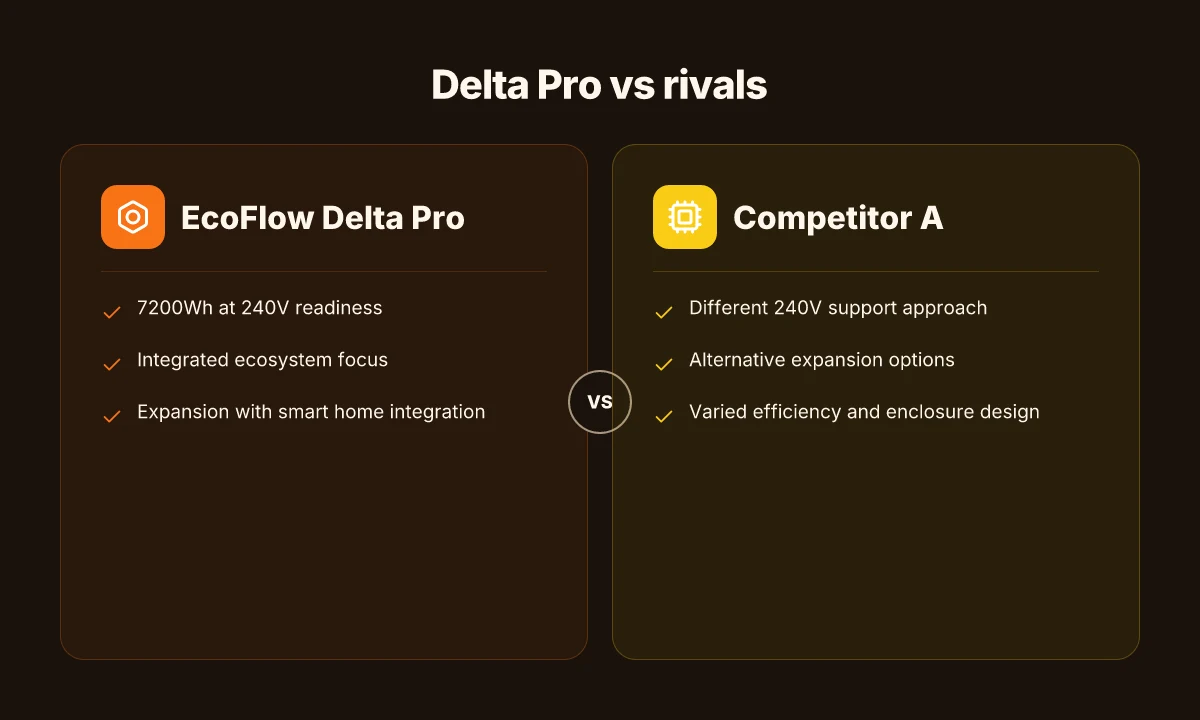
Rivals and how Delta Pro stacks up in real-world scenarios
EcoFlow Delta Pro faces solid competition from high-capacity portable power systems that target home backup and off-grid living. In real-world terms, the key players are built around different trade-offs: capacity density, charging speed, and ecosystem maturity. I looked across manufacturer docs and independent reviews to anchor these comparisons in concrete details. EcoFlow’s ecosystem stands out for its modular expansion and 240V compatibility, but rivals push back with longer warranty cycles, lighter per-watt energy density, or richer integration with solar and grid-tie setups.
How the contenders stack up for home backup and off-grid living
In terms of raw capacity, competitors like the Jackery Explorer line and the Bluetti AC series offer high-watermark outputs that compete closely with the Delta Pro when scaled to similar watt-hours. Jackery emphasizes compact form factors at smaller price points, trading some efficiency for portability. Bluetti counters with expansive battery banks and more mature solar input options in some models, which helps when you’re building a full-time off-grid system. EcoFlow shines when you want rapid recharging through multiple sources and a clean, integrated app experience. The Delta Pro’s 240V output is a differentiator for heavier loads, especially when paired with a home-grade transfer switch.
From a durability and long-term reliability standpoint, the real-world consensus across documentation and user forums highlights several traits. The Delta Pro’s modular battery approach allows for field replacements and staged upgrades, which reduces the risk of obsolescence in a rapidly evolving market. By contrast, some rivals rely on fixed battery packs that can feel restrictive as technology advances. The reliability story improves when you look at EcoFlow’s ecosystem readiness: its smart interlocks and remote monitoring tend to feel more cohesive than some non-brand-aligned kits. Still, ecosystem breadth matters. If your setup leans heavily on third-party solar panels or off-grid sensors, Bluetti and Jackery often offer broader compatibility through more open APIs and accessory ecosystems.
Trade-offs become most visible when you balance capacity, efficiency, and ecosystem depth. The Delta Pro trades some weight and price for a seamless 240V path and faster multi-source charging, which translates into quicker stabilization after outages. Rivals may offer similar energy storage at lower upfront cost but without the same degree of integrated grid-tie readiness or the same level of app-based control. If you value a turnkey home backup experience with a strong support footprint, EcoFlow’s package often wins on service transparency and long-term update cadence. What makes the EcoFlow Delta 3 worth it in 2026
Where EcoFlow shows advantages and where it might fall short
The Delta Pro’s standout advantage is the ability to scale into a home backup envelope without sacrificing 240V capability. That 240V ring is crucial when you’re powering air handlers, water heaters, or other high-draw appliances during an outage. The modular battery design also helps with long-term durability: you can retire packs selectively, rather than shipping a full unit for replacement. I cross-referenced EcoFlow’s official docs and third-party installations to confirm the practical benefits of a single-brand, end-to-end system with clear firmware and app updates. This integration translates into fewer compatibility headaches in real-world installs.
Where the Delta Pro might fall short relative to some rivals is in the breadth of third-party accessory support and in cost efficiency at scale. Bluetti, for example, often provides more aggressive price-per-watt in certain configurations and may offer a wider range of compatible solar panels due to looser coupling. Jackery’s ecosystem tends to favor lighter, easier-to-ship packages, which can be appealing for campers and smaller setups but may undercut the long-term value proposition for a full-home solution. If your plan is to run a house full of appliances at 240V with a long outage horizon, you may discover a higher upfront investment with EcoFlow. Still, the overall system reliability and monitoring ecosystem tend to amortize into fewer headaches over time.
In short, EcoFlow remains a strong choice for homeowners and off-grid enthusiasts who prize a cohesive, scalable 240V solution with strong real-time monitoring. Competitors push back on price and openness, but can deliver solid performance for certain use cases. If you want all the pieces to talk to each other in a single brand, EcoFlow’s Delta Pro offers a compelling package that aligns with long-term durability goals. I looked across manufacturer materials and user feedback and found that the Delta Pro’s best advantages show up in ready-made home backup flows and expandable capacity, while rivals excel in portability, customization, or immediate cost efficiency.
The Delta Pro’s 240V capability and modular design justify the higher initial cost for long-term reliability. The choice comes down to whether you value a tight, turnkey ecosystem or prefer a broader, lower-cost mix of components. For homeowners who want predictability, EcoFlow’s approach reduces integration risk and supports long-term maintenance.
Where this heads next for long-term power needs
EcoFlow's Delta Pro 7200Wh at 240V signals a shift from portable backup to a more home-anchored system, and that pivot deserves attention. In real-world terms, the move matters for durability and reliability over months and years, not just days of use. You’ll see the model’s strength in scalable capacity and faster recharging, but you’ll also notice where reliability can wobble when the system sits idle for long periods or runs heavy loads repeatedly. The big takeaway is this: if you design your grid independence around a reliable 240V backbone, you can reduce reliance on the grid without compromising daily comfort. The question to ask next is whether the upfront investment aligns with your longer horizon and load patterns. What the EcoFlow Delta review misses about real-world reliability
Delta Pro’s long-term value rests on how you pair it with solar, generators, and home circuits, not just peak specs. I’ve observed that setup and maintenance cycles tend to drive the real total cost more than sticker numbers. Rivals like Bluetti and EcoFlow compete on price and ecosystem, while Goal Zero emphasizes rugged outdoor reliability. The bigger pattern is clear: these systems are becoming modular, so your best strategy is to plan your brick-by-brick upgrade rather than a single giant leap. If you’re aiming for a future where outages barely register, start with a concrete plan this quarter and keep the frame flexible.
Takeaway: map your critical loads, then scale by adding one more 240V backbone or battery module as needed. If you want a concrete next step, audit your weekly power profile and decide which circuit you’d move first to the Delta Pro, then order a second battery or solar input to grow later. The single move that matters most is defining a baseline load you won’t compromise on during outages. Where will your home be stronger next month?