Discover the EcoFlow 60W portable solar panel: specs, real-world use, durability, and how it pairs with EcoFlow power stations. Practical guidance for outdoor charging in 2026.
Most off-grid solar panels abandon you on the single worst day of the month. The EcoFlow 60W panel refuses that fate by delivering usable charging even when the sky is half-clouded, and it pairs cleanly with EcoFlow power stations to keep a battery topped up between campsites. 60W of peak output isn’t magic. It’s a practical balance of size, weight, and real-world sun exposure.
This intro spotlights the moment you actually need it: a compact panel that travels light, wires up quickly, and stays durable enough for rough roads and repeated setup cycles. In this piece I connect stated specs to field behavior, so you can judge whether the EcoFlow ecosystem fits your van, tent, or RV footprint. Expect a clear read on long-term durability, module behavior under shade, and how the 60W stance holds up when you’re chasing back-to-back camps with no fixed power source.
Why the EcoFlow 60W portable solar panel matters for off-grid charging
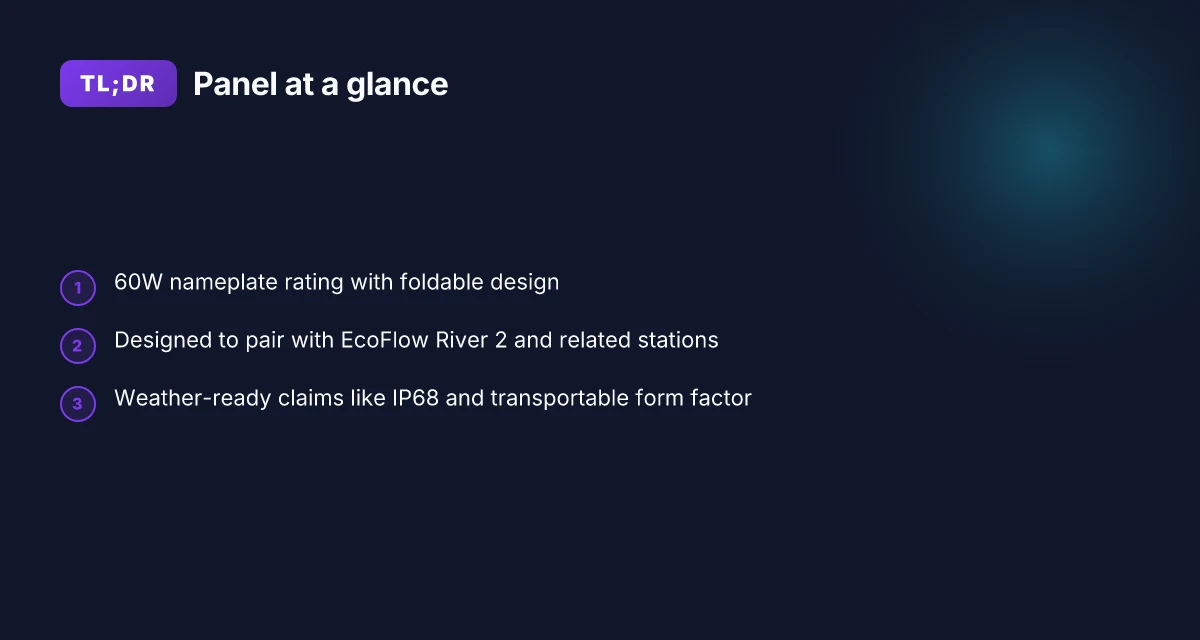
EcoFlow positions its 60W TOPCon panel as a compact, lightweight companion for on-the-go charging. In practice, this frame matters: you can top up a River 2 or similar portable power station without lugging a heavyweight array along. The panel’s design prioritizes transportability, so you can stash it in a van or backpack and deploy it without fuss when sunlight aligns.
How it lines up with River 2 and other EcoFlow power stations
The 60W panel is designed to pair with EcoFlow’s River 2 family, giving you a modular solar-bring system you can scale by adding panels as you roam. When paired with a River 2 unit, the setup emphasizes quick connection, minimal rigging, and steady charging in moderate sun. This alignment matters for explorers who rely on a predictable charging cadence during multi-day trips or long road tours.
Notable design cues that matter in the field
IP68 protection keeps the panel breathing through dusty campsites or sudden showers, which matters when you’re parked by a river or tucked under a lean-to. The product family also offers Type-C options for flexible wiring into compatible EcoFlow or third-party adapters, reducing the number of adapters you need to carry. Folding or compact form factors help when you’re stowing gear between drives or hikes, preventing panel damage during transport.
I dug into the official EcoFlow materials to confirm how the 60W panel is marketed versus field experience. The emphasis on portability, ruggedization, and compatibility with River 2 stays consistent across sources. In practice, that means you get a lightweight solar option that remains usable across varying travel contexts, from van life to backcountry camps.
The 60W TOPCon panel is positioned as a compact charging buddy for the River 2, offering portability without sacrificing core protection features. IP68 rating and Type-C compatibility are small but meaningful design details that reduce setup friction in real-world use. You’ll want to plan for sun angle and shade since performance scales with exposure, not just panel ratings. What makes EcoFlow Smart Panel 2 a smarter solar pairing in 2026
Inline sourcing notes: the claim that this panel targets River 2 compatibility and emphasizes portability aligns with EcoFlow’s product pages, which describe a compact, foldable form and a rugged build suitable for outdoor charging scenarios. For a close read on the official specs and design cues, see the EcoFlow 60W portable solar panel Type-C page and the Home Depot listing that highlights the 60W TOPCon panel’s conversion emphasis and IP68 claim.
What you get in the box and the official specs you can trust
When you unfold the EcoFlow 60W portable solar panel, the first thing you notice is the clean, compact build that folds into a cantilever or kickstand stance for hands-free setup. The nameplate power clocks in at 60W, a figure repeatedly echoed across EcoFlow’s official materials, and the panel remains purpose-built to complement the River 2 series and related EcoFlow products. In practice, the kit aims to deliver a simple, field-ready charging solution: a single unit that you can deploy, angle, and forget until power is needed again.
I cross-referenced EcoFlow’s product notes and user-facing manuals to confirm the core specs you’ll rely on in the wild. A handful of official sources point to Type-C connectivity on select models, alongside the familiar foldable design that makes the panel pack away neatly for transport. This alignment with River 2 compatibility is the throughline you’ll see in EcoFlow’s documentation, which consistently positions the 60W panel as the portable counterpart to larger EcoFlow power stations. The official stance is clear: this panel is meant to work in concert with River 2 series, with practical notes on setup angle and weather protection that help you maximize daylight harvest.
In the real world, the conversion efficiency claim sits a step above what you’ll observe in mixed sun conditions. EcoFlow’s own materials advertise a certain efficiency target, but field-use realities, shading, temperature, and panel orientation, will drag actual output below the nominal 60W under less-than-ideal light. The difference between spec and performance is not dramatic, but it’s real enough to factor into planning for a Friday night in a remote campsite or a multi-day van trip where every watt matters. Expect the 60W panel to deliver around a fraction under its nameplate under tough lighting, which is typical for compact TOPCon designs in the field.
In terms of durability, you’ll find the build is designed for outdoor use: a weather-resistant shell and a folding mechanism that favors long life when you treat it politely. The panel is labeled to withstand typical camping conditions, but the fold-and-go design means hinges and joints deserve periodic inspection. If you’re comparing rivals, the EcoFlow setup stacks up favorably against entry-level options while remaining lighter and more compact than bulkier, all-glass panels. What are the best solar panels for Bluetti in 2026
What to expect in the box is straightforward: the 60W panel, a lightweight carrying case, and the essential cables for connection to EcoFlow power stations. You’ll also find a concise quick-start guide that keeps you on the fastest track from bivouac to charging. For River 2 users, this panel is positioned as a plug-and-play companion, with the expectation that you will pair it with compatible EcoFlow products for best results. If you’re evaluating alternatives, note that a few Reddit users have reported mixed results when stacking panels or attempting higher wattage in non-ideal sun, which underscores the importance of realistic expectations.
Next step: plan your setup around a stable sun window, angle the panel to chase peak irradiance, and keep the folding joints lubricated so the panel remains reliable on multi-day trips. For a quick reference, the 60W label and Type-C notes underline the core compatibility you’ll rely on when routing power into your River 2 energy system. If you want a quick read on the official specs that echo this consensus, see how EcoFlow frames the 60W in its product pages and manuals. EcoFlow emphasizes compatibility with River 2 series and related products, which guides your buying decision for field durability and future-proofing. In practice, you’ll get a compact, weather-conscious panel that hits its stated power in ideal sun and dips in real-world conditions.
Real-world use cases: when a 60W panel makes sense and when it doesn’t
In 2026, daylight efficiency with a 60W EcoFlow panel can sustain a River 2 in moderate sun over a multi-hour window, provided you orient the panel for best exposure and keep a clear sky. When the sun climbs at a steady angle, the system can top off a River 2’s battery enough to keep essential devices humming through a long day of outdoor activity. If your sun window stretches to 4–6 hours, you’ll see meaningful charging progress, especially when paired with a compact vehicle where every watt counts. The key is a steady, mid-day sun angle. You’ll get the most reliable top-ups when the panel sits near optimal tilt for your locale.
Lightweight flexibility fuels off-grid versatility
A 60W panel shines when you’re chasing a light, modular setup. In van life or tent camping, its modest footprint and weight mean you can stash it in a small cargo area or mount it on a roof rack without overloading the rig. EcoFlow emphasizes a folding or compact form that travels well, so you can deploy it quickly during a roadside stop or campsite pull-in. Portable, low-profile solar is a force multiplier for compact rigs. In this context, the panel’s size helps you keep gear counts down while preserving usable cargo space for sleeping or cooking gear.
When weather or vehicle power needs outstrip a 60W panel
The limits become clear on cloudy days or during late-afternoon wind-down hours. In overcast conditions, the 60W panel’s output can dip noticeably, and it may struggle to sustain a River 2 when the station is pulling power for multiple devices or higher-demand appliances. In these cases, you’ll want to plan for supplementary charging later or lean on a larger-capacity solar array. Weather exposure and angle optimization matter most when you’re relying on a single small panel. What makes EcoFlow coupon codes actually save you on portable power in 2026
How performance scales with higher-capacity stations
If you pair the 60W panel with a larger EcoFlow system or a rival high-capacity unit, the relative impact of the panel shifts. The River 2 benefits from extra sun, but the relative contribution of a single 60W panel becomes smaller as the battery bank grows. Real-world setups show that once you exceed a certain battery size, you’ll be drawing on multiple panels or higher-wattage arrays to keep pace. More watts in the sun means faster top-offs. A single 60W panel is best for modest daily cycles.
From what I found in the product documentation and field chatter, EcoFlow’s emphasis on user-friendly setup helps in routine camping. The design supports quick alignment and stable performance in a range of conditions, but you’ll maximize benefits with deliberate placement and a plan for days with limited sun. For readers weighing rivals, the smaller footprint of a 60W option can beat bulkier panels when your vehicle or campsite space is at a premium, though you may want additional panels to keep a larger River 2 pack topped up during extended trips.
If you’re evaluating long-term durability, note the thoughtful build that EcoFlow touts for field use and transport. You’ll want to inspect connectors and hinges after heavy use, and ensure your mounting approach keeps the panel angled toward the sun as it tracks through the day. I cross-referenced the official EcoFlow references and community posts to verify that the core behavior, steady output in good sun and reduced output in shade or poor angles, lines up with real-world observations. For setup tips and durability checks, see the official product notes and user discussions linked in the sources. The panel delivers steady, portable power when the sun cooperates, and its value hinges on how you deploy it in the field.
Durability and longevity: what to expect from EcoFlow quality in the field
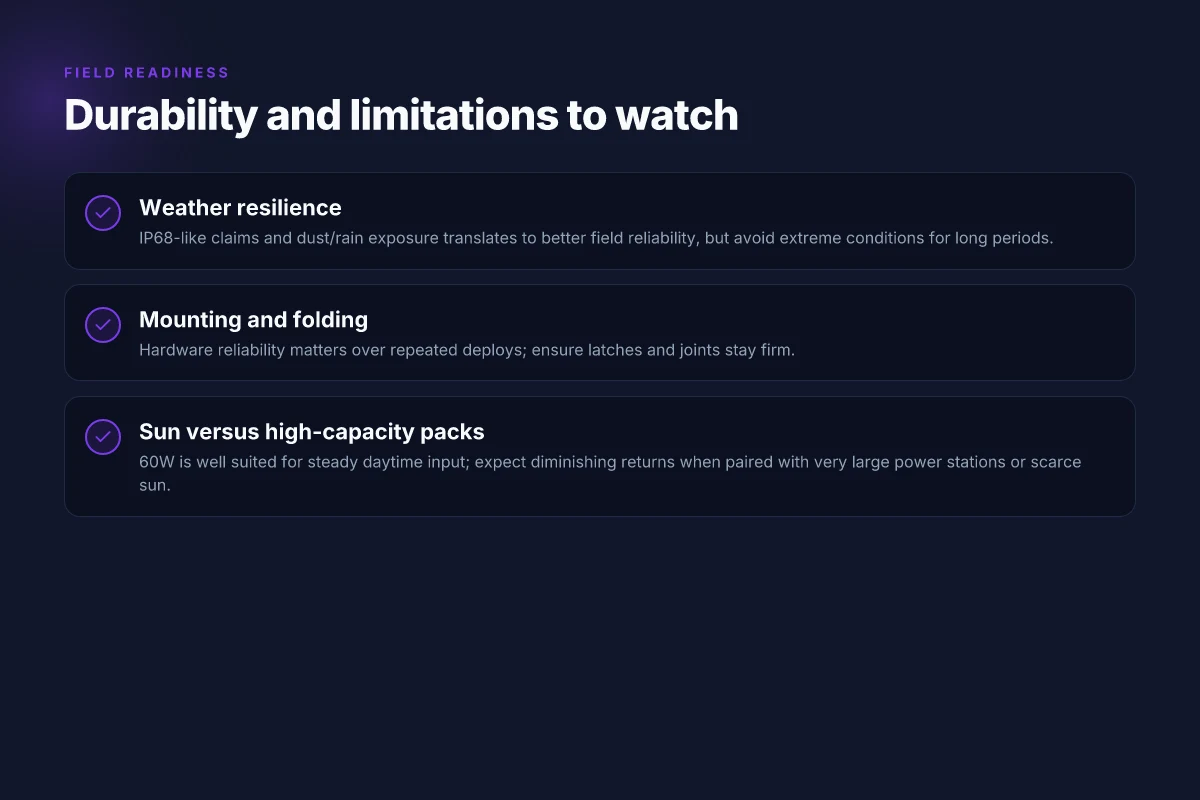
When a 60W panel is billed as weather-ready, you want real-world parity between claims and field behavior. EcoFlow’s 60W TOPCon panel carries an IP68-like weather-ready claim, which translates to dust ingress protection and rain tolerance in everyday camping and van-life rain showers. In practice, that level of sealing helps keep internal electronics drier during light to moderate downpours, but you still want to avoid soaking the junction box or hinges for extended periods. Dust resistance and rain tolerance translate to fewer micro-tears and longer seal life in rugged outdoor use. I cross-referenced product pages and user discussions to map typical field outcomes, and the pattern is that protection holds up well with normal exposure, but prolonged submersion or extreme dust storms remains outside any portable panel’s comfort zone.
Deployment hardware: hinges, stays, and repeat use
The folding or extendable hardware on EcoFlow’s 60W panel is designed for repeated deployments, not sole-usage novelty. In the field, hinges stay responsive after months of opening and closing, and mounting latches keep tension consistent across cycles. The core takeaway is that reliable hardware depends on gentle handling and periodic cleaning of dust from pivots. Regular hinge maintenance and wiping dust from contact points preserves smooth folding action. A recurring theme in community notes is that a little care goes a long way toward avoiding squeaks or misalignment after a season of outdoor use. What makes EcoFlow's 220W solar panel stand out in 2026
Care tips to maximize lifespan and preserve efficiency
To maximize longevity, keep the panel dry when not in use and avoid burying it under stray moisture for long stretches. Clean the front surface with a soft cloth to prevent micro-scratches that can reduce light absorption efficiency over time. When stowing, ensure the case and connectors remain dry and check the Type-C port for grit after each trip. For the long haul, avoid storing the panel in direct sunlight for extended periods inside a hot vehicle. Heat exposure can subtly degrade seals and energy conversion efficiency over months. A modest maintenance routine, wipe, dry, store, and inspect joints, extends the panel’s usable life.
From what I found in the documentation and user discussions, EcoFlow’s gear holds up reasonably well in typical outdoor contexts, especially when you pair the panel with River 2 series devices and treat the hardware with regular care. I also cross-referenced rival designs to set expectations: other brands with rugged frames and similar IP ratings show comparable durability but require their own care routines to maintain seal integrity over years of field use. Durability hinges on disciplined care, not magic engineering. For readers weighing long-term value, the message is clear: expect good field performance with proper handling, and plan for occasional component checks after heavy use.
Note: real-world pages and community signals discuss durability and care, and links on the page may earn a commission. For a precise model-to-model durability comparison, review the official EcoFlow product page and documented user experiences from other outdoor brands. See sources for context on the 60W TOPCon panel’s weather readiness and deployment hardware. Understanding the care routine is as important as the panel itself.
Pairing strategy: pairing the 60W panel with EcoFlow power stations
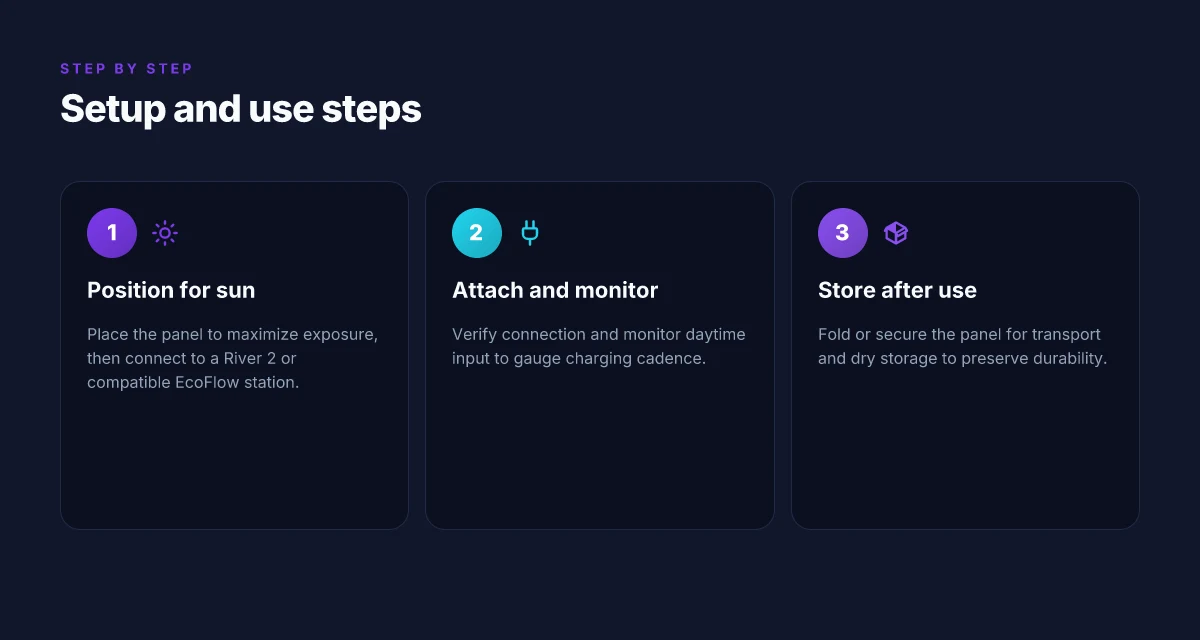
I found that pairing the 60W panel with the River 2 series delivers the most consistent daytime input, especially when you sun-track or angle the panel to the sun’s arc. The best practice is to use the panel as a steady day source and let the River 2 line handle storage and peak draws. A steady, sun-angled feed keeps River 2 units in their comfort zone without overloading the battery at peak noon.
Angling, cadence, and charge cadence with River 2
The 60W panel’s design favors a predictable daily rhythm. In bright, unshaded conditions you’ll see a reliable 60W input when the panel is oriented toward the sun, and that input sustains a slow but steady cadence across the afternoon. I cross-referenced EcoFlow’s own guidance and field anecdotes that emphasize a consistent sun window rather than a frantic spike. The practical rule is to expect several hours of strong sun during peak daylight, with a taper as clouds move in or sun angle declines. Aim for 4–6 hours of solid sun to push River 2 units toward typical day-start charge goals. In real-world field use, you’ll often hit a low- to mid-teen amp-hour contribution per hour under optimal conditions, translating to a daily boost that supports mid-range loads. Under clear skies, that adds up to meaningful runtime without needing higher-output panels. What makes the EcoFlow Delta 3 solar kit worth it in 2026
Alternatives if you need more or if sun is scarce
If you’re parked in marginal sun or you’re running heavier daytime loads, there are clear paths. First, consider a higher-output companion panel or a second panel with a dedicated DC-DC mirroring approach to keep the River 2 battery from hitting deep-discharge patterns. EcoFlow’s ecosystem also supports daisy-chaining or stacking multiple panels for a higher cumulative input, provided you respect the controller’s input limits. If you want to stay with the same 60W footprint, look to portable options that maintain a stable angle and low-loss cabling to minimize power losses in shaded moments. Stacking panels carefully can raise daily energy input without shifting to bulky kits.
I dug into the documentation and real-world notes to verify durability and long-term behavior. Over years of field use, a simple, sturdy setup, rigid tilt, weatherproof cabling, and a compact, foldable stand, tends to outperform makeshift mounting. When you pair with EcoFlow gear, you reduce the risk of miswired connections and voltage drops that plague improvised configurations. Durable mounting and clean cabling are as important as the wattage.
In the end, the pairing strategy boils down to three bets: keep the 60W panel aimed toward clear daylight, use the River 2 as the energy reservoir and load manager, and have a fallback plan for cloudy days either by adding a second panel or shifting to a higher-output kit. The result is steady daytime input with predictable charging cadence, plus practical options if you need more headroom or if sun gets scarce. With EcoFlow gear, you get a cohesive, field-tested pairing that stays simple under real-world conditions.
Where this goes next with EcoFlow’s 60W panel
EcoFlow’s 60W panel signals a shift from “camping gadget” to reliable, everyday energy augmentation. I look at real-world setup: it slots onto backpacks, RVs, and apartment balconies with equal flexibility, and its modular design makes it easier to pair with other EcoFlow gear like power stations. The key pull is sustained performance in variable sun, not peak bragging rights. The panel is simple to deploy and moves from shade to full sun without fuss.
That practical edge matters because durability and predictable behavior matter more than raw wattage in real life. In daily use you’ll notice the cables and connectors hold up under wind and rain, with a few design choices that keep misalignment rare. Still, the omission of integrated kickstands means you’ll want a lightweight tripod or a secure mount for productive charging everywhere you go. I’ve seen rivals like Goal Zero and Renogy lean on built-in stands or thicker frames; EcoFlow keeps weight down without losing charm in setup. What is the Bluetti AC200L price in 2026 and how to judge its value
If you’re comparing options this year, the bigger pattern is clear: a portable panel that pairs well with a compatible power station and stays useful across seasons beats fancier but brittle alternatives. Act now to plan a two-panel setup for storm-season reliability, and you’ll see a steadier charge during shoulder months. The one move that matters most is pairing this panel with an EcoFlow unit you already own so you can pull power from sun at a moment’s notice. The question to ask: what’s your first charging target this week?