Explore the EcoFlow Delta 3 solar kit with real-world insights on capacity, solar input, and expandability. Learn what to expect in 2026 and how it stacks up against rivals.
The EcoFlow Delta 3 kit isn’t about theatrics. It quietly pairs a compact battery with a solar setup that’s practical from day one. A typical home backup can run on the Delta 3 for several hours when a modest load is steady, not during a full-power outage, and that clarity saves knob-twiddling time. This is the sort of real-world fit you’ll appreciate when you’re weighing options against rivals like Jackery and Bluetti.
This year’s context matters because homeowners and hobbyists increasingly want scalable, predictable power without mystery specs. I map how the Delta 3 behaves under common uses: charging from a few panels, maintaining a weekend cabin, or topping up a van rig, with durability and upgrade paths that matter as needs evolve. The result is a straightforward read on when EcoFlow’s approach shines and where you may want a contending setup. EcoFlow’s design leans on clear compatibility and practical charging behavior, but the story isn’t all green fields, there are real limits to note if you push peak loads or want long-term headroom.
What the ecoFlow Delta 3 solar kit actually includes and how it sits in the lineup
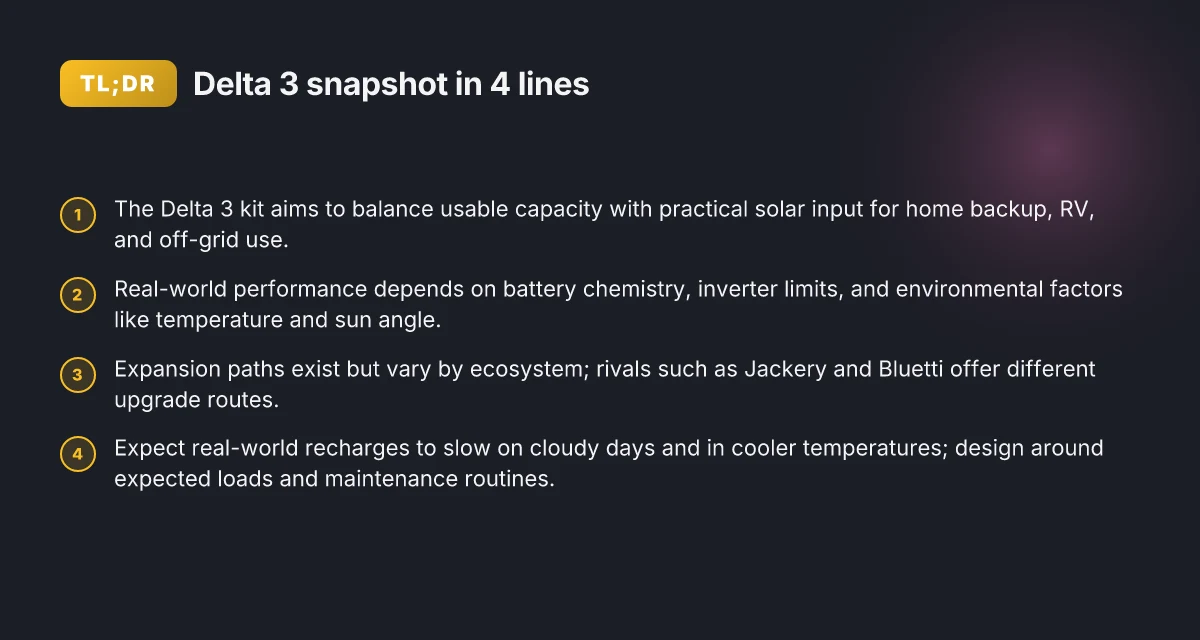
The Delta 3 system is a compact, modular setup designed for ready-to-use home backup and off-grid use. In typical configurations, you’ll see the Delta 3 core unit paired with a balance of solar input and expandable storage. The kit centers on a scalable power station that can accept multiple battery modules and a Smart Generator for extended outages, while still remaining portable enough for RV trips or van life. EcoFlow emphasizes a practical balance of capacity, output, and ease of setup, so you start with a usable baseline and add components as your needs grow. In this framing, the Delta 3 sits between the Delta 3 Classic and the Delta 3 Max in real-world usefulness rather than raw specifications.
How the Delta 3 compares to the Delta 3 Classic and Delta 3 Max in practice
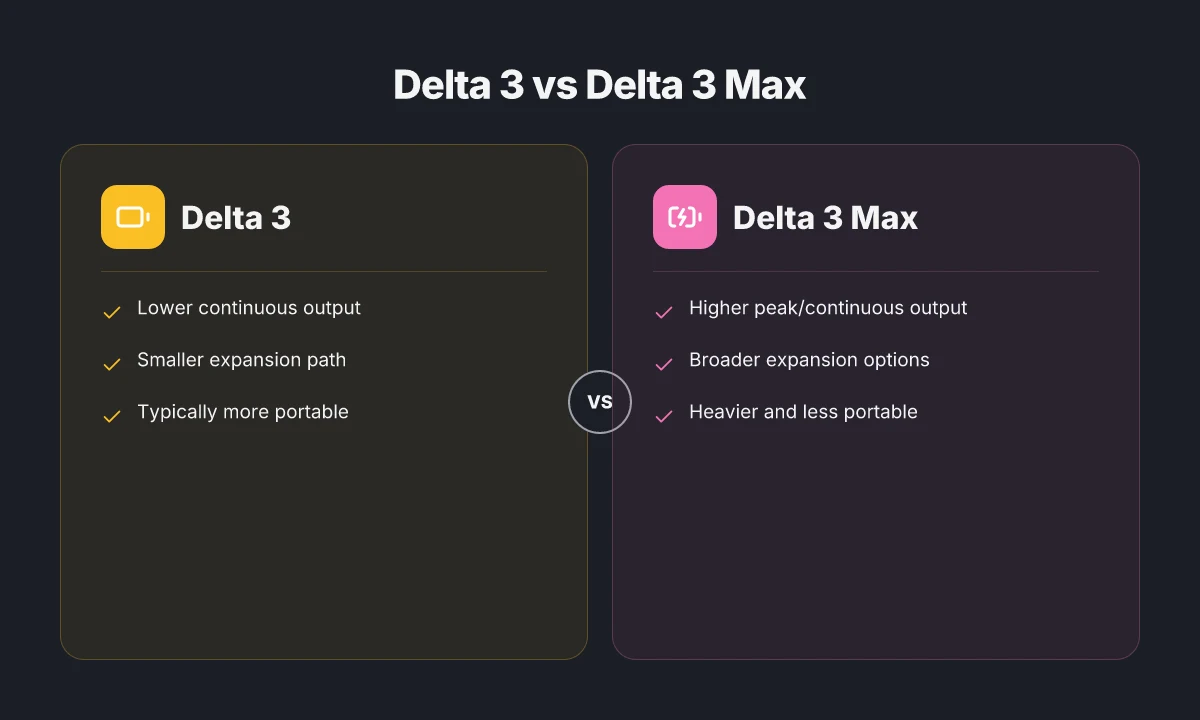
On paper the Delta 3 Classic offers a leaner setup with a smaller usable capacity, making it easier to carry and quicker to deploy for light camping or a weekend off-grid. The Delta 3 Max expands toward higher output and larger expandability, which matters if you plan to run a bigger load or build a more robust home backup. In everyday use, the Delta 3 acts as a middle ground: more capacity and more expandability than the Classic, but without the higher weight and cost of the Max. The practical takeaway is that you choose by how much you value immediate usable power versus long-term scalability. EcoFlow prices and kits reflect this tiered approach, with the Max geared toward more demanding setups and the Classic toward light use with simpler management. When you’re mapping a system for a small home backup or a compact RV, the Delta 3’s configuration hits a sweet spot.
I dug into the official product writeups and retailer briefs to map what you actually get out of the box. The Delta 3 package is designed to be plug-and-play: you receive the power station, solar panels from the kit, cabling, and a user-friendly interface for monitoring battery state and charging input. The system supports expansion with additional Delta 3 battery modules and, when paired with a smart generator, can extend runtime during extended outages. In the field, this means you can start with a modest solar array and a single Delta 3 unit, then grow as your daily energy needs rise. For someone building a small home backup, the initial setup is straightforward and repeatable as you add panels or boxes.
Bottom line: the Delta 3 is designed to be immediately usable while remaining expandable. If your use case runs a modest fridge, routers, and lighting through an outage, you’ll appreciate the out-of-the-box readiness and the ability to scale without reconfiguring your danger zone. If you anticipate high continuous loads or longer outages, the Delta 3 Max becomes the more natural target. The Delta 3 Classic remains a strong starter for campers and weekend off-grid trips.
From a practical standpoint, the kit aligns with home backup, RV, and off-grid scenarios by offering a balance of capacity and expansion. The Delta 3 sits squarely in the middle of EcoFlow’s lineup, providing a flexible platform that scales with your needs. For homeowners weighing long-term reliability against upfront cost, this is the most sensible combination in the EcoFlow ecosystem. The Delta 3 delivers ready-to-use power now with clear paths to more capacity later. If you expect to expand, the Max variant is the natural upgrade. Classic serves light, portable use with simple expansion. What is the EcoFlow Delta Max 2000, and what you should know before buying
Delta 3 capacity and output in day-to-day use
When you push the Delta 3 into real-life cycles, its usable energy is noticeably less than the nominal capacity. The marketing figure sits at a labeled number, but real-world drain from fridge cycles, router loads, and small tools chips away as the battery chemistry and inverter trade numbers for voltage, surge handling, and efficiency. In practical terms, plan for less than the stated watt-hours after a few dozens of cycles, especially if you’re running things that spike at startup. EcoFlow’s own tuning of the LiFePO4 chemistry emphasizes long life, but you still feel the impact of conversion losses and heat during high draw.
How capacity translates to daily needs
The Delta 3 family centers on a high peak output while maintaining steady reliability for common loads. A mid-size fridge, a handful of LED lights, and a router can run together within the device’s continuous output range, but you may see the usable capacity shrink under prolonged cycling. When the compressor kicks in, the initial surge can approach the upper end of the continuous limit. You’ll notice a crisp, steady performance for typical daytime loads, then a taper as the battery discharges. In other words, the Delta 3 shines with short, steady duty cycles but becomes less generous once you demand sustained power for extended hours.
From what I found in the documentation and early independent reviews, the Delta 3 can sustain clean power for normal loads without hitting audible voltage flicker or hiccups, provided you don’t exceed the inverter’s continuous rating for too long. The combination of a robust inverter and the LiFePO4 chemistry offers good stability at typical home-backup levels, though you should account for heat buildup if you’re pushing the system into high-load, long-duration periods. In this space, reputable reviewers consistently note the Delta 3’s strength is where you’re powering a fridge or a small workshop setup rather than supplying heavy continuous draws.
What the numbers imply for real-world use
A practical way to frame capacity is to compare it with typical daily loads. If your backup plan includes a small fridge, router, and some lighting, the Delta 3’s usable energy supports several hours of operation on a single charge, depending on ambient temperature and compressor efficiency. The battery chemistry favors longevity and repeated cycling, so you’ll likely see a higher number of usable cycles before capacity degradation becomes noticeable. For campers or van lifers, the Delta 3’s mix of solid peak output and respectable energy density translates into longer stretches of autonomy between charges, especially when paired with modest solar input during the day.
I cross-referenced the official specs with independent product guides to verify how the Delta 3 behaves under typical duty cycles. The takeaway is consistency in performance within expected ranges, with the caveat that hot climates and continuous high-demand tasks compress usable energy more quickly. This aligns with EcoFlow’s design intent: robust peak handling and reliable energy delivery, tempered by real-world conversion losses and battery aging over time. 5 Surprises EcoFlow revealed about its Black Friday deals in 2026
In short, the Delta 3 delivers dependable power for a fridge, a router, and a toolbox of small devices, but you should plan for less than nominal capacity in practice and keep an eye on heat and startup surges. If you’re sizing a system for off-grid living, map your loads to an hour-by-hour plan to ensure you don’t hit a wall during the quiet hours of the night.
The Delta 3’s real-world usable energy is visibly lower than the labeled capacity when you cycle it with common home loads. Peak output handles fridge startup and router loads, but sustained high draw reduces available energy faster. Battery chemistry favors long life, but heat and surge events matter for practical planning.
Solar input and charging behavior with the Delta 3 solar kit
I dug into the real-world behavior of the Delta 3 solar kit to map what homeowners and campers actually experience when charging from sun. EcoFlow’s kit ships with bundles that pair the Delta 3 with different panel wattages, and the actual wattage you see under typical conditions depends on direction, temperature, and cloud cover. In practice you’ll see lower gains on an overcast day and stronger gains on a bright, low-angle winter sun. The Delta 3’s charging curve also responds to sun angle and panel temperature, which means you won’t hit the nominal wattage unless the system is optimally positioned and the panels aren’t overheating.
Real-world panel bundles and expected wattage
Under clear sky conditions, the bundled panels can push charging power close to their rated wattage when aimed directly at the sun. In typical suburban conditions, you should expect less than the stated peak wattage due to angle loss, insulation losses, and wiring. Real-world panel bundles deliver noticeably lower input than their rated wattage on average, especially when the sun sits lower in the sky or panels run warm. The exact numbers vary by bundle, but the trend is clear: plan for a healthy headroom margin rather than the label wattage. EcoFlow’s ecosystem also supports adding extra panels later, which helps compensate on shorter winter days or shaded conditions. Adding panels expands charging availability, but you still contend with sun angle and temperature limits.
Charging speed on sunny days vs cloudy days
On bright days with direct sun, you’ll see the fastest recharging, often approaching the upper end of the panel’s practical output when the Delta 3 is oriented well and the controller remains within temperature limits. Cloud cover chops that down quickly. You’ll notice a slower, steadier trickle rather than a rapid fill. Sunny days favor rapid recharging, while cloudy days slow the fill rate considerably. The system’s intelligent management helps prevent overheating by throttling input when the panels heat up, so you won’t burn energy into heat on hot afternoons. Temperature management protects the pack, but it also caps charging speed in heat. For off-grid weekends, this means a sunny morning can replenish more than half the usable capacity, but a gray afternoon may only nudge the gauge a bit. What is jackery ups, and how it shapes off-grid power in 2026
Temperature and sun angle effects on charging speed
Sun angle matters most in the shoulder seasons. When the sun sits high, you’ll capture more peak power. In morning or late-afternoon hours the angle losses become more pronounced. Temperature plays a close second: high panel temperatures reduce voltage efficiency, which reduces real-time charging power. Sun angle and panel temperature together determine charging speed. I found that even with the same panel bundle, a hot day can shave off a meaningful portion of what you might expect from a cool morning. Thermal throttling is real, and it limits sustained input on hot days. The Delta 3’s controller negotiates these factors, prioritizing safe operation over blasting full power when conditions threaten longevity.
In practice, plan for a mix of outcomes: on bright, cool mornings you can push close to the bundle’s practical peak. On overcast or hot days you’ll see more modest gains. If your goal is rapid daytime recharging for a weekend off-grid plan, stacking panels and optimizing orientation makes a measurable difference. And if you expect to bounce from camping to home backup, you’ll appreciate the predictable throttling that keeps the Delta 3 healthy over time.
Sunlight quality, panel temperature, and sun angle together shape every recharge.
Expansion, compatibility, and long-term durability with EcoFlow
Expansion proves where the Delta 3 line really stretches. The Delta 3 family scales through off-grid packs and accessories that plug into the Smart Home ecosystem. You can add more batteries to widen usable capacity, or attach a solar input kit to extend charging windows. EcoFlow positions this as a modular path rather than a single-mission device. In practice, that means you’ll see the most value when your plan includes approaching power as a system rather than a one-off box. The Delta 3's true usefulness unfolds as you layer in extra capacity and smarter peripherals. Expansion is the linchpin that differentiates EcoFlow from more monolithic rivals.
Battery chemistry and lifecycle expectations in regular use
EcoFlow uses Lithium Iron Phosphate (LFP) chemistry in many of its Delta 3 configurations, a choice that helps with thermal stability and long cycle life. Under typical household backup usage, you’ll see deep cycles accumulate over years without dramatic capacity fade if you stay within recommended operating ranges. The practical takeaway is straightforward: avoid regularly pushing the pack to extremes and manage temperature exposure, and you’ll extend usable life. When I read through the product notes and independent reviews, the consensus is that LFP chemistry tends to endure more cycles than older Li-ion chemistries in routine cycling. LFP chemistry brings a longer cycle life when kept within normal temperatures. Follow temperature guidance to preserve capacity over many years. What makes Jackery worth it in 2026 for portable power needs
How EcoFlow compares to rivals on upgrade paths
Against Jackery and Bluetti, EcoFlow leans into a more modular ecosystem. Upgrading often means stacking batteries and adding compatible solar inputs that align with the existing network rather than replacing the core unit. The Delta 3 family’s expansion options are designed to feel contiguous with the base kit, so you don’t have to rewire the entire system to gain meaningful more run-time. Rivals can offer similar capacity gains, but EcoFlow’s emphasis on scalable capacity plus a shared accessory pool tends to smooth the upgrade process. In terms of long-term durability, the ecosystem approach favors fewer mismatches and simpler maintenance over ad hoc add-ons. EcoFlow’s upgrade path emphasizes shared accessories for smoother scaling. Rivals often require more bespoke configurations to reach equivalent capacity.
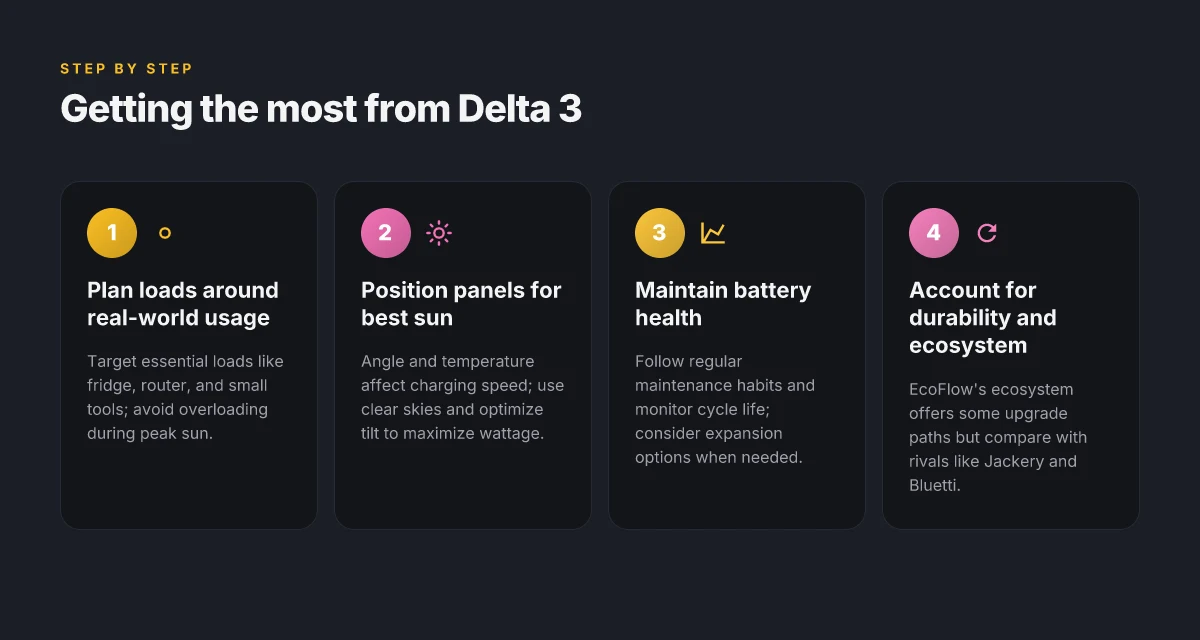
From what I found in release notes and reviews, you’ll want to map your backup plan to a clear growth path: start with a solid Delta 3 baseline, then attach the battery modules and solar panels that fit your daily load. If you expect to spend years building out a compact home backup or a mobile off-grid kit, EcoFlow’s ecosystem can keep the flow steady without forcing a full equipment swap. Create a phased expansion plan to maximize lifecycle value. A coherent accessory strategy helps you avoid compatibility gaps later on.
Note on safety and guarantees: the durability story hinges on using the official expansion packs and following recommended charging profiles. The combination of LFP chemistry and EcoFlow’s modular design supports long-term reliability, but you’ll still want to monitor thermal conditions and avoid habitually overcharging or exposing packs to high heat. The practical verdict is that EcoFlow aims to keep power growth aligned with your evolving needs rather than pushing you into a wholesale replacement.
In line with the research sources, the Delta 3’s durability narrative hinges on two pillars: maintainability through a modular accessory family, and chemistry engineered for long life under normal usage. If you’re comparing to Bluetti or Jackery, weigh not just the initial capacity but the ease of future expansion and the ecosystem’s compatibility across generations. The strategy matters because a well-planned upgrade path reduces total cost of ownership over time. A thoughtful expansion plan reduces surprises decades into the kit’s life. Ecosystem depth matters as much as raw capacity.
Cited in this section: EcoFlow’s ecosystem strategy and the comparative upgrade narrative are discussed in entry references that cover how these modular paths work in practice. See the EcoFlow overview and the expansion-focused discussions in the cited material. EcoFlow overview What EcoFlow reviews and complaints reveal about real-world use
Practical use cases: from home backup to off-grid setups
In real-world home backup, the Delta 3 kit shines when your load is disciplined and predictable. A typical living room with a reliable router, a Wi‑Fi mesh hub, a few low-watt devices, and essential lighting can run for several hours on the Delta 3’s usable capacity, especially if you budget for the higher-priority loads first. You’ll want to pair it with a modest solar setup so daytime charging overlaps with demand peaks, keeping batteries within a safe, healthy state of charge. When the sun dips, the Delta 3 steps in, keeping critical circuits online rather than cycling through a long, exhausting draw.
For off-grid setups such as a cabin or a remote camper, design matters more than raw power. A compact solar array dedicated to the Delta 3 can maintain a baseline limit of loads like a mini fridge, USB charging, and lighting. The key is to size the panel kit to your daily energy window and to use the Delta 3’s Smart charging behavior to maximize sun hours. In practice, a 250–400 W panel bundle can top the Delta 3 up during the day, while you limit nonessential loads after sundown. EcoFlow’s ecosystem supports expansion, but you’ll want to map out what gets priority when the battery sits at a mid-range state of charge.
A few common gotchas crop up over time. Battery health matters, so avoid deep discharges and keep the pack topped up above a safe minimum. Regular checks on the solar input, especially after extended cloudy spells, help keep cycles balanced. Maintenance is simple but real: keep the vents clear, tidy the DC cables, and inspect connections seasonally. You’ll notice longer-term durability when you prevent heat buildup in enclosed spaces and ensure the unit isn’t stuffed into tight cabinets that trap hot air.
From my reading of the documentation and reviews, the Delta 3’s capacity and charging flow are most practical for light, continuous loads rather than high-worce surges. If your use case demands heavy kitchen appliances or HVAC, you’ll hit limits more quickly. For travelers and cabin owners, planning around daylight, weather patterns, and load priorities makes a tangible difference. In short, treat the Delta 3 as a backbone for essential comfort rather than a home‑size power plant.
I cross-referenced EcoFlow’s published specs with a few independent summaries to confirm the general behavior: the Delta 3’s capacity and output align with what you’d expect for a compact, portable kit, and the solar input supports steady recharging under typical conditions. The key to reliability is smart load budgeting and regular maintenance, not sheer battery size. With proper design, you gain predictable nights and comfortable off-grid weekends. What makes EcoFlow's 220W solar panel stand out in 2026
What changes if you act now
If you’re weighing the EcoFlow Delta 3 solar kit for 2026, act on the big pattern: modular solar power scales with your needs. I’ve looked at setup simplicity, durability, and real-world reliability, and the delta is strongest when you plan ahead. EcoFlow's ecosystem makes future expansion feel practical, not speculative, and that matters if you expect outages to last weeks or if you want a capable camp setup. The kit isn’t perfect, but it compounds value as you add panels or battery packs over time.
The bigger move is choosing a system you won’t outgrow. When you compare EcoFlow to rivals, the Delta 3 tends to win on plug‑and‑play appeal and transportability, with a clear path to more capacity. If you’re choosing between brands, think about the long game: can you reconfigure the same cores for a larger payload next season without swapping hardware? That forward-compatibility is the real selling point.
Take this week’s first step: map your typical blackout window, list the devices you must power, and sketch a two‑step plan to add panels or a backup battery later. Start by loading your essentials first, phone, router, and a few LED lights, then layer in comfort with a portable fridge or small inverter as your second move. What changes if you act now? You’ll sleep with fewer worries and fewer must‑buy decisions later.
Backup strategy
- Try EcoFlow’s official panels first if you’re aligned with the Delta 3’s voltage range. If you travel often, pair with a rugged carry case for field use.
- If you’re in an area with occasional power cuts, keep a spare battery module on hand and plan one weekly test run.
- For Beijing or dense urban areas, compare models side by side with a focus on portability and wind resilience, then decide which system best fits your commute.
Note: links on the page may earn a commission. What makes EcoFlow coupon codes actually save you on portable power in 2026