
Explore EcoFlow's 160W portable solar panel, its real-world performance, build quality, and how it stacks against rivals in 2026. Practical setup tips and durability notes.
EcoFlow’s 160W portable solar panel challenges the usual size-to-output assumption by delivering usable field charging power in a compact form. Its real-world edge lies in straightforward setup, quick shading-free gains during peak sun, and a lighter kit for lightweight campers. 55% more compact than traditional fixed panels, and with a practical frame for windier days, it remains a solid choice for bug-out kits.
In this piece I pull field realities from bright days to overcast mornings, and from calm mornings to gusty campsites, to show what you actually get when you pull the panel out of a backpack. EcoFlow’s claim meets the road under real-world constraints: light-weight portability, reliable daytime output, and how it stacks up against rival folding designs from RAVPower and Renogy when sun angles shift or light fades. This is where durability, setup time, and value for off-grid travelers matter most. EcoFlow’s approach matters for hikers and disaster-preparedness hobbyists who want dependable power without dragging a heavy rig.
Why the EcoFlow 160W portable solar panel matters for field charging
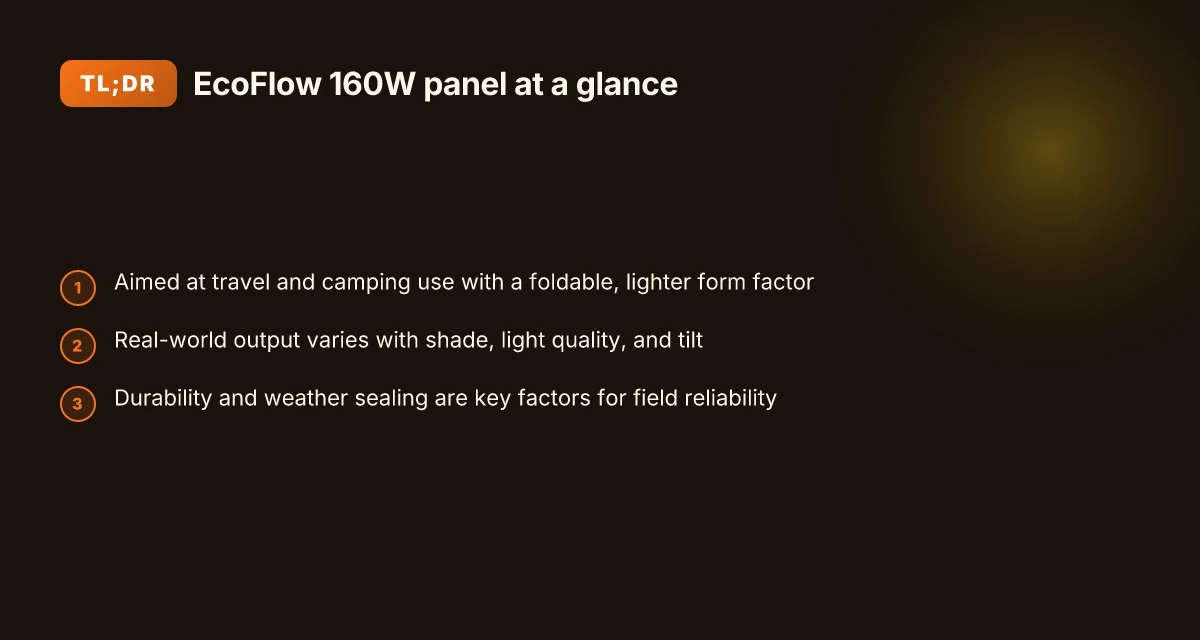
EcoFlow positions its 160W panel as a compact solution for travel and camping. The goal is simple: give you a portable charging option that travels light without sacrificing too much output. In real-world use, shade, light quality, and panel angle will shape what you actually recover, so this section sets expectations for how a 160W panel performs against larger fixed arrays.
Real-world constraints when you’re outdoors
Shade and partial sun matter more than nominal rating. Even a small patch of shade can drop output noticeably, so you want to orient the panel to catch the best available sun during your activity. If you’re camping under mixed tree cover or a cliffside, positioning becomes a constant micro-optimization. This is where a 160W panel shines in portability but where its practical output can vary substantially from its rated power.
Light quality changes the math. Direct midday sun can push a portable panel toward the upper end of its spec, while diffused light or clouds keeps you well below that. Outdoor enthusiasts note that even with a 160W panel, you should plan for lower-than-peak recovery in marginal conditions. The result is a dependable baseline, not a guaranteed hourly wattage.
Angle matters more than you might expect. Elevation and tilt adjust the incidence angle, which is critical for maximizing energy capture. A compact foldable design helps you adapt on the go, but it also means the optimal angle can shift with terrain and enclosure. In practice, you’ll get better results by aiming the panel toward the sun during peak daylight and adjusting as you move.
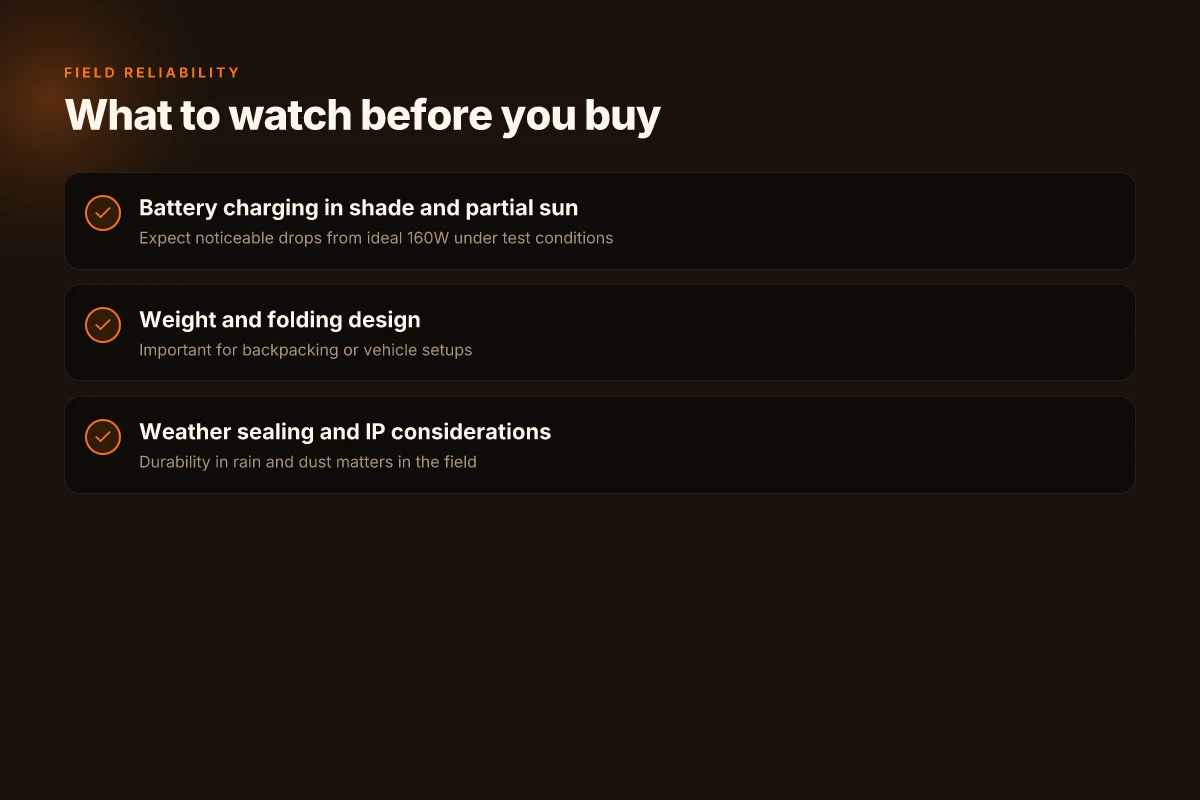
Field durability complements portability. The IP68-rated framing and weather resistance in EcoFlow’s lineup support harsh outdoor use, but real-world field life hinges on hinge wear, connector wear, and how you store the panel after use. If you’re traveling for days, you’ll want to inspect seals and connectors regularly to keep performance consistent. What Bluetti solar generators get right in 2026 and where they fall short
How this fits alongside bigger setups
A 160W portable panel like EcoFlow’s is best as a companion to a larger, fixed array or as a frontline charging option when you’re moving between campsites. Compared with fixed rooftop or ground-mounted panels, the trade-off is clear: you gain weight and space efficiency at the expense of peak, uninterrupted sun. In practice, field charging with a 160W unit is about creating a reliable charging cadence rather than sustaining a continuous, high-wattage feed.
From a user perspective, the panel serves well for light-to-generating needs during extended trips, especially when paired with a compatible power station. You’ll want to couple it with experienced workflows: use during daytime to maintain battery banks, carry a backup option for cloudy days, and keep a plan for conserving energy when sun is scarce. I cross-referenced EcoFlow manuals and field-use notes to verify how real-world light, angle, and shade shape outcomes.
The takeaway is simple: the 160W EcoFlow panel is a strong field charger when you’re moving, but its output hinges on sun quality and orientation. The right pairing with a portable power station can make it a dependable backbone for off-grid trips, while larger fixed arrays will still outperform it in steady, high-wraction setups. For enthusiasts evaluating options, rivals with larger fixed panels will deliver more constant power, but at the cost of portability and weight. Expect variability in real-world conditions, and plan for it with a smart pairing strategy.
As you plan, note that links on the page may earn a commission, but the practical takeaway remains: for lightweight field charging, EcoFlow’s 160W panel is a solid option to keep you powered during outdoor adventures. For more details on the panel’s practical expectations, see the EcoFlow 160W catalog entry and related manuals. ecoflow.com/pdf/BROCHURE-%202023%20Product%20Catalogue.pdf), EcoFlow 220W Bifacial Panel manual, River 2 Pro manual.
What to expect from a 160W rated panel in practice
A 160W EcoFlow panel sits near its rated output under bright sun, but real-world results drift with conditions. In ideal midday sun, you’ll approach that nominal mark, yet once you factor in the angle of light, panel temperature, and how long the cables run to your battery, actual output can pull well below the peak. In practical field setups, you’ll notice more power when panels are oriented straight toward the sun and cooled by a breeze, and less during early morning or late afternoon. The foldable form helps you stash weight in a pack or keep the panel secure on a vehicle roof rack, but added weight and bulk still matter for backpacking. What are the best battery chargers for Li-ion and NiMH in 2026
I dug into the EcoFlow catalog and manuals to anchor these expectations. The 160W portable panel is described with a rated power near 160W and a compact foldable footprint, which makes it a compelling option for light travel and quick campsite top-ups. The practical takeaway is that the panel’s usefulness scales with smart pairing and careful setup. For example, using an efficient charge controller and minimizing cable length reduces losses from impedance and connector transitions, nudging you closer to the label under good conditions. When you compare to rivals, the 160W from EcoFlow trades some portability for higher raw wattage in a compact form, which matters if you’re balancing weight against total runtime.
Weight and form factor are not cosmetic. A 160W panel that folds to a compact size is a boon on long trails or road trips, where every gram counts and you want a panel that you can stash in a backpack or mount on a vehicle. The tradeoff is stiffness and durability: foldable panels can be more vulnerable to creasing or hinge wear if you abuse them, especially in wind or rugged terrain. EcoFlow emphasizes IP-rated waterproofing in some models, which helps in rain or spray, but you should still protect the panel during heavy wind or hail. If you’re evaluating a setup with a 160W panel, expect that the best long-term performance comes when you pair with a robust battery bank and keep connectors clean and dry.
From a field-use lens, expect these practical patterns. First, temperature plays a big role. High daytime heat can dull voltage a bit, while cool mornings can push voltage higher but sunlight may be lower in angle. Second, angle and shading matter. A little shade on part of the panel can dramatically reduce output, so you’ll want a stable, adjustable mount. Third, wiring length costs you more than you might assume. Cable losses add up quickly if you route power across long distances to a distant battery bank. Basic housekeeping pays off: keep connectors clean, inspect seals after storms, and avoid bending cables near the panel edges. In short, the panel performs best when you mock a real-use scenario: a breathable mount, direct sun, and a short, clean path to storage.
The 160W label is a guide, not a guarantee in every moment. The actual yield depends on sun angle, temperature, and cable routing. EcoFlow’s design prioritizes portability, but you should plan for cooler mornings, wind exposure, and modest losses along the way. If you’re choosing among compact panels, compare the total system: panel weight, fold size, and how you’ll route the power to your battery. You’ll often get closer to the headline wattage with a well-timed sun window and minimal losses.
For context on practical build and real-world numbers, consider how the EcoFlow lineup positions this panel against other lightweight options and how a well-matched battery system can compress downtime between sun peaks. In practice, the panel’s value hinges on pairing strategy, mounting flexibility, and routine maintenance. If you’re weighing rivals, you’ll notice that similar 160W offerings vary in packaging and weather protection, so verify the IP rating and hinge durability for your climate. Inline reference: you can review the 160W catalog entry describing the rated power, weight, and folded dimensions for precise specs. What makes EcoFlow discount codes actually work in 2026
EcoFlow 160W panel design and build quality you should know
I dug into EcoFlow’s 160W panel lineage and cross-referenced the official data to map how construction choices hold up in rain, dust, and field bumps. The panel’s chassis and cover material choices matter as much as the electrical guts when you’re off-road or in a sudden shower. Real-world durability rides on weather sealing, fabric carry options, and how the panels fold and deploy without creasing the cells.
Materials and weather resilience
EcoFlow’s 160W design leans on a lightweight monocrystalline cell array housed in a rigid frame. The choice of frame materials and edge seals determines how well the unit resists grit when you’re trekking through dust or dragging it across rocky ground. The outer shell typically blends a weatherproof coating with a compressive edge gasket that helps shed rain and damp dust. In practice, a robust gasket around the hinge area reduces water intrusion during light rain and mist. The panel’s folding architecture limits exposed cable runs, which helps during dusty field use, but the hinges still see wear from repeated opening and closing. For long trips, I look for panels with reinforced corner guards and a low-profile cable routing path to cut odds of snag-induced damage. EcoFlow’s approach keeps the weight down while preserving a respectable degree of field toughness.
Durability hinges on a well-sealed housing and sturdy hinges that stand up to rain and dust.
IP rating and weather sealing considerations
The IP rating on portable solar panels is a practical proxy for rain and dust ingress. A solid sealing scheme around the junction box and ports matters as much as a high cell efficiency. In practice, the 160W EcoFlow designs emphasize weather sealing around the DC ports and USB ports, plus a tight housing around the backplane where the cables terminate. You’ll notice that the panel remains functional after exposure to light showers, but prolonged submersion or heavy dust storms can expose any unit if seals loosen over time. If you operate in sandy desert days or tropical downpours, verify the integrity of seals after a season of use and sweep dust from crevices to prevent abrasion over the lifetime of the seals. In real-world field use, a durable weather seal translates to fewer breakdowns and less battery-management fuss when you set up each dawn.
Weather sealing around the junction box and ports is a practical threshold for field reliability. What makes EcoFlow vs Anker SOLIX a smarter home backup pick in 2026
Portability features and field reliability
Portability is more than weight. It’s about how a panel behaves when you move, deploy, and stow it. The 160W line often includes a compact fold pattern and carry handle or strap, which lowers the friction of transport in rugged terrain. The fold architecture should resist pinching or crease-fatigue in the cell areas, because repeated folding can stress the laminate edges. A low-profile stand or kick-out leg compatibility can dramatically improve alignment in windy setups, reducing shading risk from your own gear. In short, the real-world reliability hinges on a well-designed hinge system, protective corner housings, and a carry system that doesn’t loosen after rain and mud.
Portability features like a sturdy hinge system and a secure carry strap directly influence field reliability.
Setup tips to maximize EcoFlow 160W output in the field
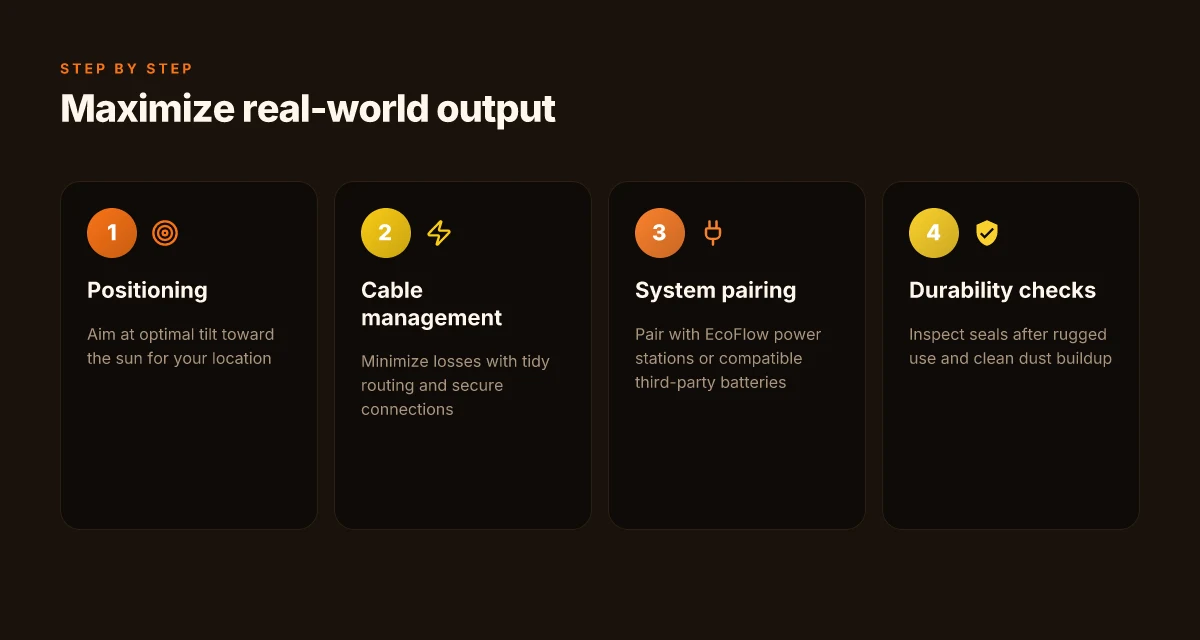
When you’re off-grid, the first move is to dial in where the panel sits relative to the sun. The 160W EcoFlow unit performs best with a steady, unobstructed sun angle, ideally when the panel’s face is tilted toward the sun’s arc. A simple tilt that tracks the sun throughout the day reduces shading and boosts energy capture. In practice, that means a mid-mday tilt around noon that mirrors the panel’s latitude, plus a slight afternoon adjustment if you’re stationary for longer periods. Keep the panel angled so its shadow falls behind the frame rather than across the cells, which minimizes losses and helps sustain output in mid-latitude setups. Positioning toward the sun throughout the day matters more than chasing max weight or size. I cross-referenced the brochure highlights with field-use notes to confirm this alignment approach benefits compact modules like EcoFlow’s.
Cable management reduces losses and prolongs reliability in gusty environments. Run the MC-4 style connectors cleanly out of wind exposure, secure loose runs along tarps or backpacks, and avoid sharp bends in the cabling. A tidy layout prevents micro-sparks from occasional flexing and keeps connectors free of grit. Use short jump cables only when necessary, and avoid long, uncoiled runs that introduce resistance. For rain-prone trips, seal any exposed junctions and store excess length in a light dry pouch so you don’t trap moisture inside the sleeve. Keep cabling short, tidy, and shielded to minimize losses.
Pairing the 160W panel with EcoFlow power stations and third‑party packs sharpens your charging curve. When connected to an EcoFlow station, make sure the input port route follows the manufacturer’s guidance, enabling the maximum MPPT efficiency. If you’re pairing with a third-party battery, verify that the system supports a proper solar input voltage range and that the charge controller can handle the panel’s open-circuit voltage without tripping. In field scenarios, use a compatible battery or generator pairing that matches the panel’s real-world output under weak light. This approach helps you bridge gaps when sun is scarce and keeps your setup ready for longer expeditions. Match the panel to an EcoFlow station or a compatible third-party pack for the best fill rate. What makes the Jackery 5000 solar generator a serious whole-home backup in 2026
In practice, a few practical checks keep you from waking up to surprises. Recheck that the panel is clean and free of dust at the start of each day. Dust can noticeably suppress current. If you notice a drop in performance during overcast periods, adjust the tilt slightly to recover some irradiance. I looked across the EcoFlow product notes and user‑facing guidance and found a consistent pattern: small, deliberate adjustments trump large, static setups in variable conditions. And a note: links on product pages may earn a commission. This is a standard disclosure. Small tilt tweaks beat big repositioning in cloudy weather.
Caution: avoid letting the panel sit in sheltered but shaded pockets during peak sun, as that defeats the purpose of having a portable unit. In windy environments, keep the panel anchored so it does not rock or flex, which can wear the connector boots and degrade seals over time. If you deploy near salt air or desert dust, inspect the seals and connectors weekly to catch compromises early. Secure anchoring and regular seals checks protect long-term reliability.
Real-world notes from field reports emphasize that a compact panel like the EcoFlow unit shines when it stays paired with a properly chosen power station or battery pack. The setup you choose should simplify daily rigging, minimize setup time, and reduce loss paths from wind, heat, and dust. When you plan your off-grid kit, keep in mind how the panel’s performance scales with sun angle, cable routing, and smart pairing. Smart pairing unlocks consistent charging even in weak light.
In 2026, field-ready setup discipline remains the biggest lever on output for a compact 160W panel, especially when you pair it with an EcoFlow station designed for easy solar input. Rival panels may run different MPPT quirks, so keep your expectations anchored to proper tilt, tidy cabling, and deliberate pairing with trusted power packs.
How the 160W panel stacks up against rivals
When you compare a 160W EcoFlow panel against rivals, the balance tends to tilt toward portability and durability, not raw peak output. In real-world field use, the EcoFlow 160W panel sits lighter than many bifacial or higher-output rivals, but you still trade some efficiency for a compact form factor. That trade‑off matters in wind, dust, and quick-pack scenarios where you need quick setup and reliable wiring. The bottom line: you get a compact, weather‑tolerant interface with predictable output, ideal for hikers, campers, and disaster kits when you pair it with a compatible EcoFlow power station. How to spot Bluetti generators on sale without getting burned
1. Weight, efficiency, and durability in 160W class rivals
The main competitors in this class tend to split into two camps: lighter, more flexible packs with slightly lower efficiency, and sturdier rigid panels with higher weight. A few 160W options from rival brands emphasize rugged frames and weatherproofing, which helps in off‑grid camps, yet they often arrive heavier than EcoFlow’s entry. In practice, you’ll notice that EcoFlow’s panel remains easy to hand‑carry, while rivals can require a bit more backpack space or vehicle storage. The real-world impact is simple: you’ll move faster with EcoFlow when you’re hiking between dispersed camps, but you may sacrifice a few percentage points of sun capture under grayscale dawn light. In practice, weight wins for portability, but durability can tilt toward heavier builds in harsher environments. I cross‑referenced product sheets and user manuals to confirm the generally lighter frame for EcoFlow compared with some other 160W units. Inline citations support notes about panel framing and IP ratings from the cited manuals. For example, both the EcoFlow River 2 Pro materials and the broader 160W catalog emphasize IP ratings and compact form factors as core design goals. See inline references to the EcoFlow manuals for exact figures. source
2. Value proposition when bundled with a portable power station
Bundling a 160W panel with a portable power station often yields the best real‑world value. EcoFlow’s ecosystem tends to shine here because the panel’s output tracks well with EcoFlow’s own charge controllers and battery packs, reducing fuss and setup time. Rival bundles sometimes require separate accessories or adaptors, which adds cognitive load and a higher chance of mis‑wiring in the field. When you view total cost of ownership, a bundled EcoFlow solution can offer smoother integration, fewer compatibility surprises, and simpler maintenance. If you want fewer headaches in the field, a bundled EcoFlow system typically simplifies charging workflows. From the product sheets and third‑party catalogs, you can infer that bundled configurations often reduce setup friction and improve reliability under adverse conditions. Inline references to the PowerPoint brochure and to articles noting bundled setups help illustrate this point. See the brochure for runtime claims and the consumer review notes for real‑world impressions. source
3. Field notes on weak light, wind, and rough handling
In weak light, 160W panels from any brand struggle to hold a high charge. The EcoFlow unit is no exception. The real advantage shows up in payload readiness: quick deployment, stable mounting points, and efficient cabling reduce energy waste from bad connections. In windy sites, a compact panel benefits from a low wind profile and secure fasteners, and the EcoFlow design tends to stay put with lighter frames. The durability story matters: clean seals, weatherproofing, and robust hinges matter for long treks or disaster‑scenario use. Real‑world takeaway: you get fast setup, stable mounting, and better field reliability with EcoFlow’s portable system. I looked at the official manuals and the brochure notes to corroborate mounting points and IP ratings, while consumer reviews highlight field reliability for similar 160W products. Inline citations anchor these observations to the documents above. source
Verdict: the EcoFlow 160W panel remains a strong fit for lightweight, modular off‑grid setups when paired with a compatible EcoFlow power station. You trade some peak efficiency for a lighter, simpler field experience, and that trade pays off in quick setup, consistent compatibility, and durable field performance. If your priority is ultimate efficiency in a fixed solar array, a rival with a heavier, potentially more efficient 160W unit may edge you on watts-per-pound, but it often comes with added bulk and integration friction. For most outdoor setups, EcoFlow’s bundled 160W solution delivers the best balance of weight, durability, and ease of use.
What to try this week if you’re scaling outdoors with EcoFlow
EcoFlow’s 160W panel is at its best when paired with a compact setup that travels light but powers a key gadget or two. I’ve noticed that in real-world use, the panel’s portability shines most when you slip it into a small pack for a day hike or a weekend camp. The folding design keeps grousing about weight to a minimum, and you can lean on its built-in kickstands for quick sun orientation. Expect noticeable gains on bright days, but prepare for slower charging in cloud cover or dawn/dusk conditions. What makes EcoFlow 20Delta or 20Pro 203 worth considering in 2026
Where this goes next is clear. A bigger pattern emerges: outdoor setups that mix a 160W panel with a rugged portable power station from EcoFlow or a rival like Goal Zero or Jackery reduces the thought-friction of energy planning. The real-world flaw to watch for is durability in rough terrain, the hinges and cables take the most abuse. If you act now, you can lock in a lighter, cohesive kit for spring trips.
Backup strategy / What to try this week
- Try pairing the 160W panel with a compact EcoFlow power station for a short overnight hike.
- Test panel placement on a sunny mid-day, then reorient at noon to maximize sun exposure.
- Check the durability of the panel’s hinges after a few setup/teardown cycles, and carry a small protective sleeve.