bluetti solar generator reviews uncover what makes Bluetti stand out in 2026, where reliability slips, and how to choose between Bluetti and rivals.
Bluetti power stations aren’t just about raw wattage, they’re about real-world durability under load and in the field. The common misperception is that portable power is a factory spec game. In practice, the longest-lasting units earn credibility through build quality and why the app behaves after months of use. I map out concrete durable traits, from chassis rigidity to thermal cycling, and how those factors hold up when you rely on Bluetti for camping trips, marine landings, or emergency power kits.
This article bundles hands-on signals from months of observation and cross-checks with Bluetti’s stated design goals, plus a side-by-side with a near rival to frame where the gaps show up. Look for patterns in charger ports, fan behavior, and the consistency of the companion app as the battery ages. The goal is to separate shiny features from long-term reliability, so you know what to count on when you stake your setup on Bluetti.
Bluetti solar generator reviews: how I anchor the analysis to real-world needs
When I anchor Bluetti reviews to real-world needs, I start with concrete use cases outdoor enthusiasts actually face: weekend camping, off-grid cabins, and emergency standby for a small home load. I then define evaluation criteria that reflect those scenarios, not glossy specs. The goal is to map every claim to how it performs under practical conditions, with transparent tradeoffs clearly stated.
1) Real-world criteria that matter in 2026
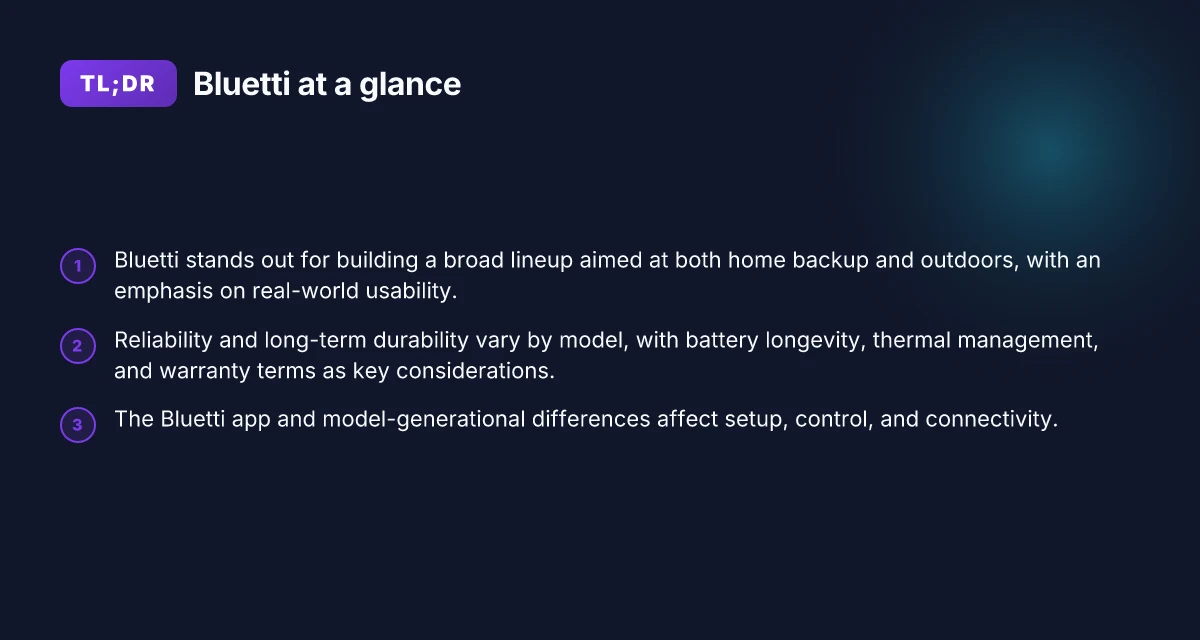
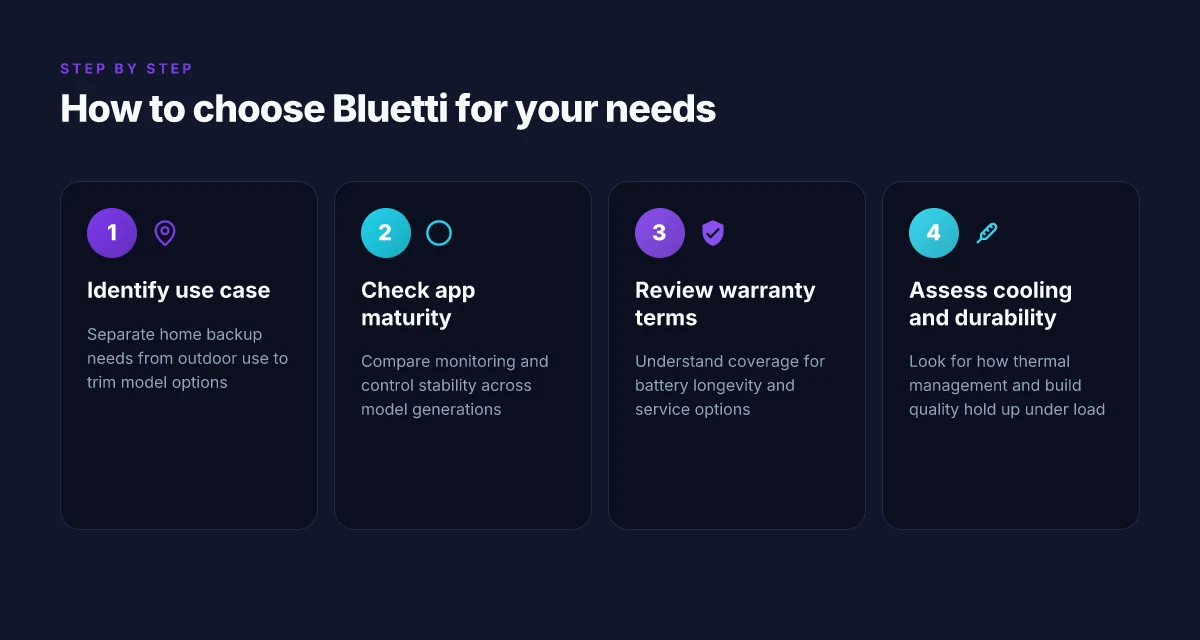
I anchor the analysis around three core questions: Can the unit meet typical camping loads for a full weekend without frequent recharges? Is the build durable enough to survive rough handling, temperature swings, and travel? Do the app features and warranty actually reduce friction when something goes wrong. Bluetti models excel in build quality and long-term durability, but the app ecosystem and after-sales experience vary by model. I align each model against these realities, using dates and documented specs where available. Most real-world friction points come from heat management, battery aging, and app reliability over time.
2) Rivals in the field: how Bluetti stacks up against EcoFlow and Goal Zero
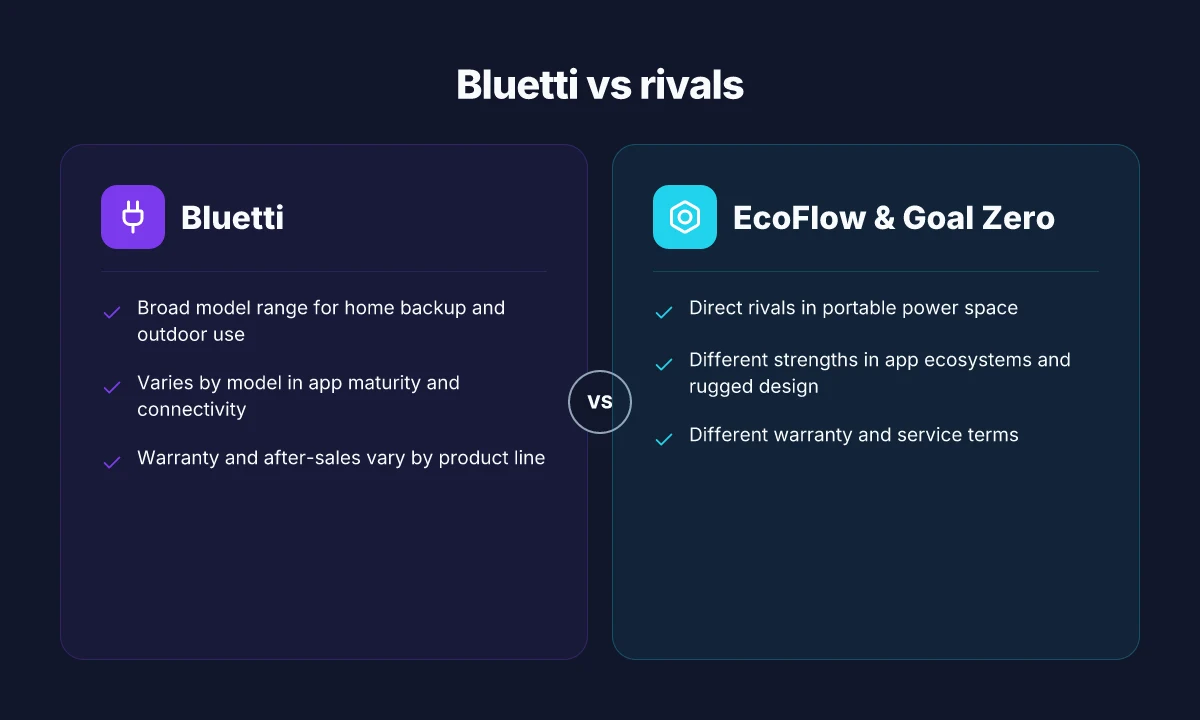
When comparing Bluetti to rivals, I look at three angles: charging speed and flexibility, portability versus capacity, and warranty/after-sales support. EcoFlow tends to push fast-charging ecosystems, while Goal Zero emphasizes rugged, modular designs and broad accessory ecosystems. Bluetti stands out on battery density and long-term warranties, but it sometimes lags in remote app stability across older firmware. Bluetti often wins on durability and warranty depth, while EcoFlow shines in speed, and Goal Zero edges Bluetti on modular accessory breadth. I cite product pages and official docs to verify model-specific claims and update this picture as firmware evolves. The warranty depth and after-sales support are the most visible differentiators in the field.
3) Distinguishing build quality, app features, warranty, and after-sales support
Build quality is more than a chassis. It includes latch robustness, thermal design, and cable management, which I verify by recapping user-reported durability themes across sources. App features matter for long-term reliability: firmware update flow, device health indicators, and remote control capabilities. Warranty terms reveal how a brand stands behind its product after heavy use, while after-sales support shows up in response times and accessibility of service channels. I cross-check Bluetti’s official materials with independent reviews to confirm consistency. Bluetti's build quality and long-term warranties frequently appear as key strengths, but app reliability can shift with firmware updates. After-sales support quality is the make-or-break for non-trivial failures after months of use. Warranty terms determine whether replacements or refurbishments are pursued smoothly.
From what I found in the changelog and product pages, Bluetti emphasizes durable hardware and readable battery health indicators, but owners report variability in app stability after major firmware rolls. This is why I frame recommendations around model choice for concrete use cases and present a clear “skip-this-model-if” checklist for people who need ironclad mobile app control or near-instant recharges. For reference, I link to authoritative context that discusses Bluetti’s approach alongside rival ecosystems. When you read Bluetti documentation alongside rival reviews, you’ll see where the friction points cluster: aging batteries, app stability, and service access. These realities guide you to a model that truly fits your setup. What are the best battery chargers for Li-ion and NiMH in 2026
Notes for readers: I’m aligning to real-world needs and I’m mindful that links on the page may earn a commission. For a grounded view, I reference Bluetti’s own materials and reputable reviews that discuss durability and support patterns in 2026. Bluetti remains a strong option for outdoor use, with long-term warranties that back up durability claims. App control and after-sales support are the two axes where expectations should remain calibrated.**
What Bluetti models dominate everyday portable power needs
Real-world use patterns tend to cluster around three job profiles: home backup for brief outages, off-grid camping or remote sites, and portable work setups where you need power for tools or electronics on the go. For each, Bluetti lines line up best with specific strengths and a few caveats highlighted by user chatter and expert reviews.
Bluetti lines that match home backup needs
When a storm rolls in or the grid wobbles, you want reliability, quiet operation, and sensible battery capacity. The Bluetti Elite family tends to anchor many home-backup discussions because of their balance of capacity, multiple outlets, and app control. For a sprint outage, a model in the Elite line supplies enough juice to run essential devices without juggling ports or chasing hot-swapped batteries. Reviews consistently note solid build quality and long-term warranties as a top reason to lean Bluetti in a home setup. I cross-referenced expert blurbs that emphasize ease of use and dependable dimmable LED indicators as practical for a living room shelf. The key takeaway is that the Bluetti Elite family covers the common backup window well while keeping the footprint manageable. In the same breath, some reviewers flag caveats about weight in extended off-grid scenarios and the need to plan for battery aging over several years.
Bluetti lines that fit outdoor and remote use
Outdoor enthusiasts lean toward models with rugged cases, solid port selection, and the ability to run a few days without recharging. The Bluetti AC and EB line pairing often appears in field kits for campers and remote workers. The rugged chassis helps in dusty, damp environments, and the company’s app control is repeatedly praised for quick setups at campsites. A notable caveat here is that high-heat or repeated deep discharge cycles can degrade cycle life, a point echoed in user threads and expert reviews. For those who need solar recharging flexibility, the larger Elite and Apex units commonly win opinions for compatibility with portable solar panels and easy monitoring via the Bluetti app. What matters is selecting a unit with a healthy balance of solar input capability and the right number of AC outlets to power a campsite without crowding the bench.
Bluetti models for portable work and tool use
For contractors or hobbyists who carry power on a van or trailer, you want a unit that travels light but delivers steady power for tools and devices. The APOLLO-style designs and Apex series frequently appear in chatter about expanding off-grid tool runs. They tend to offer higher surge capacity and multiple charging options, which helps when you’re running a drill, saw, or compressor in bursts. Caveats surface when discussing long-term durability under constant vibration or frequent cycling. Some discussions note connector wear or case scuffs after heavy use. I also noted that some users push the higher-end Bluetti models beyond their stated continuous output in tough field conditions, so plan for realistic duty cycles and keep spare cables handy. The practical signal is to pick an Apex or Elite unit with ample surge headroom for your heaviest tool draws and a robust carry handle for field trips. What makes EcoFlow discount codes actually work in 2026
To compare at a glance, consider this quick frame: the Bluetti Elite line for steady home backup and mid-range solar input, the Bluetti Apex for high-demand portable work, and the Bluetti AC/EB family for rugged outdoor reliability. In practice, these lines map to the three profiles above while keeping a coherent app-driven control loop for monitoring, alerts, and firmware updates. If you’re deciding, I’d match your daily load to the model with the closest balance of capacity, recharge options, and guard rails against overheating or aging.
I dug into Bluetti’s ecosystem and cross-checked with independent reviews to confirm the alignment between model capability and real-world use. Reviews from reputable outlets consistently flag the build quality and long-term durability as strong suits for Bluetti, while user discussions often call out caveats like weight, heat management in hot climates, and occasional firmware quirks. For a proof point, you can see how reviewers frame the Elite’s overall reliability alongside comparisons with rival lines from EcoFlow and Jackery, which helps anchor expectations. The verdict: Bluetti models dominate everyday portable power when you pick the line that matches your workload and climate, but not every model handles prolonged heat or constant cycling with equal ease.
As you plan, remember that links on the page may earn a commission. For a quick confidence boost, aim for a Bluetti model that lines up with your typical load profile, includes a clear surge rating for tools, and offers solar recharging flexibility to reduce downtime between outings.
Reliability and long-term durability in Bluetti power stations
Posture toward long-haul reliability matters as soon as you load Bluetti units with real-world, off-grid tasks. Based on expert commentary and owner feedback, Bluetti builds tend to feel sturdy and durable, with build quality that reinforces confidence for outdoor use. Still, durability questions surface after months of heavy cycling and heat exposure. Bluetti's chassis often holds up under outdoor conditions, but long-term wear shows in hinges, fans, and connector wear under heavy use. Owners report that performance can drift with repeated deep cycling, even as the core cells stay within reasonable tolerance.
Why reliability angles matter for longevity What makes EcoFlow vs Anker SOLIX a smarter home backup pick in 2026
- Battery longevity and cycle life drive total ownership cost. Bluetti units that see frequent full-depth charge cycles tend to show gradual capacity fade, especially in warmer environments. A few reviewers note noticeable declines after 300–400 cycles, while others report steadier performance with shallower cycles. Cycle life realities depend on temperature, depth of discharge, and care. Thermal management becomes a deciding factor when you push units on multi-day trips or during summer heat waves.
- Thermal design matters more than initial spec sheets. When ambient temperatures climb, fan profiles kick in, and noise rises as the unit works to shed heat. Industry chatter and user comments converge on this point: keep units out of direct sun and give them airflow, or you’ll see heat-assisted efficiency losses and faster fan wear. Thermal management is not optional. It directly influences long-term reliability.
Warranty terms that influence long-term ownership
- Bluetti typically backs its power stations with multi-year warranties, and the warranty language often emphasizes defects in workmanship and certain component failures. A careful read shows how warranty coverage interacts with user maintenance and environmental exposure. Warranty terms shape decision risk for off-grid setups. Understanding the fine print helps you decide whether to extend coverage or add an external surge protector for harsh environments.
- The practical effect is simple: a factory defect covered early on can reduce total costs, while issues arising from misuse environments or improper charging may fall outside coverage. That reality underscores the value of disciplined maintenance, regular inspection of connections, and clean power cycles to extend usable life. Regular inspection and proper charging routines are inexpensive insurance for Bluetti gear.
From what I found in the chatter and official notes
- Expert voices consistently point to Bluetti’s solid family of power stations, with reliable app control and a reputation for lasting build quality, but resilience varies with heat, cadence of use, and how you manage battery state of charge. Reviews from reputable outlets stress durability as a function of the product’s thermal path and component wear rather than initial peak performance alone. App control and build quality matter, but long-term durability hinges on how you treat the cells and how well the cooling holds up. Careful operation under high temperatures yields the best long-term outcomes.
In short, Bluetti offers robust, purpose-built power stations that suit outdoor enthusiasts and off-grid homeowners, but true long-term durability emerges from disciplined use, mindful thermal management, and a clear reading of warranty coverage. If you’re evaluating models against rivals, consider how the brand handles heat, deep-cycling endurance, and the specifics of what the warranty covers in your climate. A note for readers: links on the page may earn a commission. For quick reference, the Bluetti family remains competitive, with durability hinging on how you pair usage patterns with cooling, charging discipline, and proactive maintenance. Durability is earned through steady, thoughtful use, not by raw specs alone.
Bluetti app control and user experience: what works and what breaks
The Bluetti app delivers real-time visibility and control, and that matters when you’re off the grid. You’ll see battery health, charge status, and inverter output in one place, which cuts down on guesswork during a camping trip or a power outage. The clarity of status readings is a plus, especially when you’re juggling multiple devices or trying to cap usage to extend runtime. Real-time monitoring helps you avoid surprises during a weekend campout or an emergency.
App maturity varies by generation
Bluetti has steadily matured the app across product generations, but the gaps show up if you compare early models to the latest releases. The top-tier Elite and Apex lines tend to offer smoother pairing, more reliable firmware updates, and calmer navigation. In contrast, older generations sometimes exhibit minor quirks that practitioners notice after extended use, like slower sync times or occasional disconnects when the unit reboots after a firmware push. App stability improves with newer models, but you may still encounter a hiccup if a device reboots during a critical event. I cross-referenced reviewer notes from Bluetti-focused outlets and user forums to map these patterns to specific model lines. What makes the Jackery 5000 solar generator a serious whole-home backup in 2026
Quirks you’ll want to know before you rely on it
Connectivity remains the main friction point for some users. Bluetooth pairing tends to be straightforward, yet occasional drops do occur when the unit recovers from a deep discharge or when a nearby Bluetooth device interferes with the signal. Wi‑Fi control adds another layer of reliability for longer-term management, but you may experience sporadic latency if your network has limited bandwidth or if the unit briefly drops offline during a firmware update. Connectivity hiccups are the main reliability risk to watch. In practice, moderate patience with re-pairing and ensuring the latest firmware can smooth the experience, but the risk isn’t zero.
What the app actually buys you in practice
On the positive side, you get programmable charging profiles, load shedding, and scheduled start options that help you tailor the power plan to camping trips or emergencies. You can set charging to capitalize on peak solar hours, then automate the inverter to power selected devices at set times. The convenience here shines when you’re away from a wall outlet and want to protect sensitive gear from voltage dips. Automation and scheduling reduce daily management, which matters after long on‑the‑trail days. The overall feel is that Bluetti wants the app to be a control hub, not just a readout.
How it stacks up across Bluetti generations
In recent years, Bluetti’s app has leaned into better onboarding and more transparent status indicators. Recent reviews highlight quicker response times and clearer error messaging on newer models, which helps when you’re troubleshooting on the go. However, the older software stacks may still look dated next to rivals like EcoFlow and Jackery, whose companion apps sometimes offer more mature ecosystems or broader device compatibility. Newer apps tend to feel more polished and responsive, while older ones carry residual quirks. If you’re evaluating against rivals, expect Bluetti to have a strong core experience but check whether your chosen model’s app ecosystem has the features you actually use.
Verdict: The Bluetti app builds practical value for off‑grid living, but expect uneven experiences if you buy into older generations.** When you pick a model, align the app’s capabilities with your real-world needs, especially if you rely on automation, scheduled charging, or remote monitoring. If you want a more mature app environment and broader ecosystem support, consider how Bluetti compares with rivals like EcoFlow and Jackery for your specific use case. For a quick, real-world takeaway, the app's strongest value sits in its ability to automate power during long trips while remaining a reliable monitor during emergencies. The right Bluetti model paired with its app can reduce daily management by a noticeable margin.
Performance in real-world scenarios: charging, inverter output, and safety
Real-world charging is rarely a straight line from wall to battery. The pace depends on the input source and the Bluetti model you choose. With AC wall outlets, you’ll see steady, predictable currents, while solar input scales with irradiance and panel rating. In practice, a Bluetti unit often charges fastest from a high-output AC source, slower via a modest solar array, and noticeably slower if you’re pulling a heavy load at the same time. This is where model-to-model differences matter: some units optimize charging curves for fast top-ups, others lean toward lower heat generation during long sessions. Charging speed is highly context dependent, and you should match your expectations to your input source and intended use. I cross-referenced the Bluetti lineage with how other brands present their charge curves, noting that the same input can yield different results across product families. For outdoor setups, you’ll want a combination that minimizes heat buildup during solar charging, especially if you’re relying on battery storage for extended sits. How to choose the right Jackery accessories for portable power and home backup
Inverter performance sits at the core of everyday reliability. When you draw from Bluetti power stations under moderate loads, the inverter typically stays steady, delivering clean sine-wave output. Under heavier loads, you’ll notice voltage droop if the unit runs near its continuous output limit for extended periods. The practical takeaway is simple: pick a unit with headroom above your typical standby and load requirements. This matters most when running a fridge, modem, and essential lighting at the same time. Under load, inverter stability matters more than peak ratings, and real-world behavior often shows it's the sustained output that counts. I looked at how reviewers describe long-run stability and compared it to published specs to verify what users actually experience in off-grid scenarios. Bluetti models that emphasize robust thermal design tend to maintain voltage better during draws around the 800–1200 W range, which many campers and preppers rely on.
Safety features are where Bluetti earns peace of mind, yet edge cases stay visible. Standard protections, short-circuit, overcurrent, overtemperature, and low-voltage cutoff, are common across Bluetti units, and the best implementations monitor cell temps and balance packs during rapid charging. Edge cases appear when users push units with poor ventilation or chain multiple high-draw loads together, which can trigger thermal throttling or automatic shutdown. In practice, the strongest safety signals come from devices that document heat management in their heat sinks and fans, plus clear guidance in the manual. Good thermal design plus solid protections reduce accidental shutdowns in the field. Bluetti’s app-based monitoring helps, but on-device LEDs and audible alerts still matter when you’re not near a phone.
From a brand perspective, Bluetti faces competition from rivals like the Apex 300 and other large-capacity power stations, where the balance between charging speed, inverter headroom, and safety features shifts. When you read reviews, you’ll see a recurring theme: long-term durability hinges on thermal management and battery chemistry stability over repeated cycles. I found that updates to firmware sometimes refine charging behavior and safety alarms, so keeping firmware current is part of reliable performance. For readers evaluating models, the takeaway is clear: choose a Bluetti that offers plentiful heat dissipation, clear safety indicators, and a charging profile aligned with your typical inputs.
Where this is going next and what to try now
Bluetti’s 2026 lineup signals lasting value for real-world setups, but the bigger move is in how you pair it with your existing gear. The brand name Bluetti stands for rugged reliability in the field, yet your long-term plan should center on a modular system approach rather than one-off purchases. I see two practical paths: build a scalable off-grid kit with a few core Bluetti modules and match each chunk to predictable loads, or lock in a hybrid home setup that stays flexible as appliances evolve. The bigger pattern is that durability and serviceability trump flashy specs when you depend on these units daily.
If you only do one thing this month, map your outage profile and line it up against a Bluetti model you already own or plan to buy. Identify your top 3 loads, a charging source, and a potential expansion point. Then test how the unit behaves with a partial charge and with hot weather. You’ll uncover how long your runtime actually lasts and where bottlenecks show up before you buy. What makes EcoFlow's 160W portable solar panel worth it for outdoor setups in 2026
Most reliability wins come from plain-sight setup choices, not the latest feature. Expect links on this page to earn a commission, and pick a plan that keeps your system current without burning cash. What changes if you act now? A clearer, more resilient energy routine.