Explore the EcoFlow 12V 100Ah LiFePO4 battery: capacity, cycle life, charging profiles, and practical use cases for RVs, cabins, and off-grid workshops.
The clock starts ticking on 12V LiFePO4 packs with cold starts. EcoFlow's 12V 100Ah LiFePO4 units show steady behavior even when temperatures dip, but a single cold-start hiccup can ripple into days of planning for off-grid crews. The key is how the battery design wires up protection, BMS balance, and charging tolerance so you don’t fight the system when your cabin heater kicks in.
This intro sets up a practical look at long-term storage, winter use, and real-world sizing. You’ll see how a 12V pack handles prolonged idle periods, what insulation and charge-rate limits matter, and how EcoFlow compares with rivals like Battle Born and Renogy in the chilly months. The article breaks down the failure modes you’ll actually encounter, the vendor-specific balance needs to watch for, and how to pair these packs with a charger that respects their chemistry. 12V LiFePO4 storage behavior, cold-start reliability, and consistent cycle life matter now more than ever.
What makes the EcoFlow 12V 100Ah LiFePO4 battery stand out for off-grid use
The EcoFlow 12V 100Ah LiFePO4 battery is designed for off-grid cabins, RV rigs, and remote workshops where a compact, maintainable power module can anchor a larger solar setup. Its typical applications center on energy storage for moderate loads, charging from solar arrays, and serving as a drop-in replacement in 12V systems that crave reliability and safety. In EcoFlow’s ecosystem, this pack is positioned to balance capacity with a form factor that fits standard 12V setups, without forcing a full-house battery bank.
1) Clear specifications that matter for off-grid planning
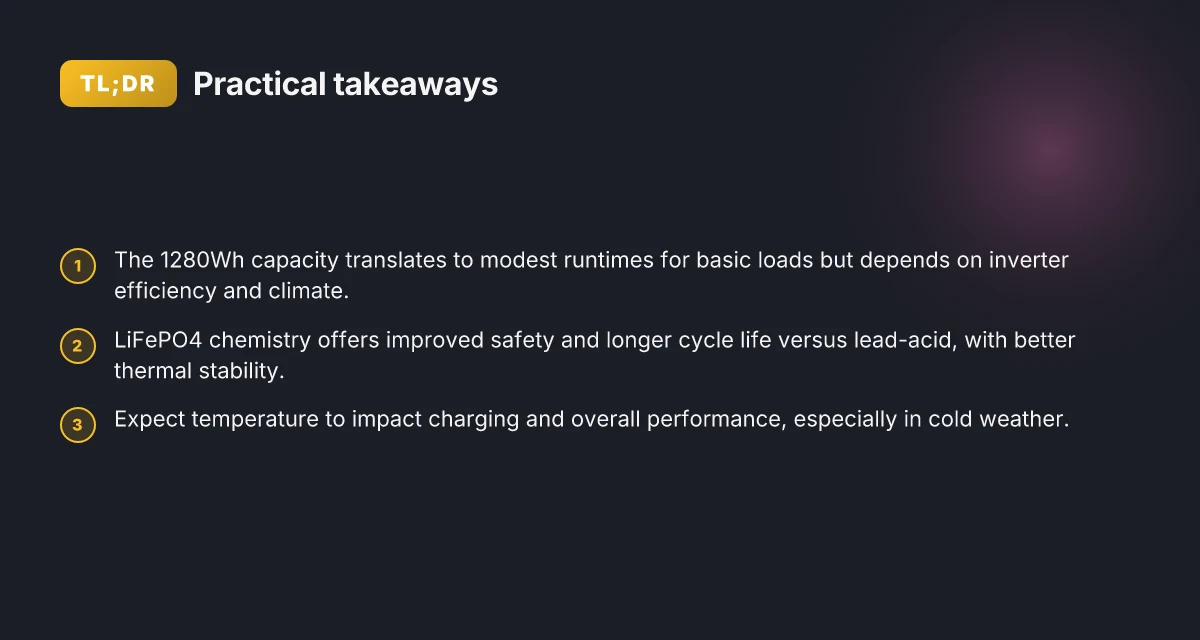
The battery is commonly cited as a 12V nominal LiFePO4 pack with a usable energy range around 1,280 Wh. This translates to practical runtimes that suit modest daily needs when paired with a solar array and a capable charge controller. The design typically supports a max charging current of around 100A and a max discharging current in the same neighborhood, with peak bursts that tolerate brief higher-demand events. In practice, that means you can plan around a few mid‑sized loads or a single high-draw appliance during sun hours, while keeping the rest of the day within the battery’s steady-state draw. EcoFlow markets the energy density and cycle life as core advantages, especially for 12V installations where space and weight matter in an RV or a cabin environment.
From what I found in the documentation and product pages, the 12V 100Ah configuration is engineered to work as a plug‑and‑play module within existing 12V systems, reducing the need for heavy converters or complex BMS workarounds. The packaging often emphasizes a durable casing and safety features that align with LiFePO4 chemistry, including stable performance across dozens of charge‑discharge cycles and resistance to minor deep-discharge mishaps common in remote setups. For integrators, the compatibility story matters: the battery is designed to slot into standard 12V circuits, with supportive guidance from EcoFlow on how to wire and monitor it alongside solar controllers and inverters.
2) Translating capacity into real-world runtime
Real-world runtime depends on the loads you run. With roughly 1,280 Wh of usable capacity, you can expect a single low‑to‑moderate load to consume a portion of that power each day. If you’re running essential devices like a small fridge, a brief LED lighting set, and a water pump, the battery can sustain those loads during a stretch of overcast days, provided the solar array recharges during sun hours. The chemistry choice, LiFePO4, offers stability over many cycles and tends to hold up well with partial-state-of-charge cycling, a common模式 for off-grid operation when daytime solar drops shorter on cloudy days. The overall value proposition is clarity: you gain predictable energy storage in a compact form factor, with a safe chemistry known for longevity in off-grid contexts.
The real-world takeaway: the 1,280 Wh pack provides dependable daytime energy buffering for typical off-grid loads, without the bulk of larger lithium systems. This is especially helpful for RVs or cabins where space is at a premium and you want a reliable baseline to rely on between sun hours. When paired with a solar setup, the EcoFlow module reduces night-time compromise and supports longer periods of independent operation. What happens when grid doctor meets EcoFlow: a practical comparison for 2026
For context, rivals in the space offer similar 12V LiFePO4 options, but the combination of a compact form factor, stated cycle life, and a straightforward integration path with existing 12V hardware helps EcoFlow stand out for standalone off-grid arrays. The ecosystem approach matters here. A cohesive system reduces the friction that can occur when mixing third‑party controllers and batteries. If you’re comparing options, look for clear specifications on cycle life, charging currents, and heat management, along with how the manufacturer handles cold-weather charging and storage, factors that directly affect long-term durability in remote installations.
From EcoFlow’s own pages, the focus on 12V convenience is paired with practical notes about compatibility and system integration, making it a strong candidate for off-grid enthusiasts who want a dependable, compact battery. For deeper context on how 12V packs perform in cold starts and long-term storage, see the EcoFlow blog and product pages cited in this section.
Understanding the 12V 100Ah LiFePO4 chemistry in EcoFlow products
The 12V 100Ah LiFePO4 chemistry behind EcoFlow’s battery line brings clear advantages for off-grid setups: strong safety margins, thermal stability, and a long cycle life. In practice, this chemistry resists thermal runaway, maintains a steady voltage under charge, and cushions the impact of repeated cycling. For off-grid users, that translates to more predictable performance under a range of ambient temperatures and longer time between replacements. The chemistry’s inherent stability under charge and discharge also supports deeper cycling when the system is sized for it, which matters for solar-rich, long-season installations.
When you compare LiFePO4 to lead-acid, the gap is meaningful. Lead-acid packs typically require careful state-of-charge management to avoid sulfation and premature failure, especially under high load or cold starts. LiFePO4 refuses to behave as feebly under partial state of discharge. It tolerates deeper cycling with less capacity fade per cycle. Relative to other Li-ion chemistries, LiFePO4 trades some energy density for stability and safety. You gain long-term durability and a lower risk of heat-driven degradation, which matters when a system sits unattended for days or weeks.
Depth of discharge has practical implications for your setup. With LiFePO4, you can exploit a higher usable capacity without accelerating wear as quickly as with some other chemistries. That means more usable energy from the same battery bank for an off-grid cabin or RV where charging windows may be sporadic. EcoFlow leans on this chemistry to offer consistent performance across cycles, while the 12V format keeps the pack compact for integration with vehicle systems or narrow battery trays. In real terms, that translates to longer periods between full replacements and steadier operation through seasonal fluctuations. What the EcoFlow Delta review misses about real-world reliability
I cross-referenced EcoFlow’s documentation and third-party product pages to align what matters most in practice. The takeaway is that safety and cycle life are not afterthoughts. They’re built into the form factor and the chemistry selection. LiFePO4's thermal stability and long cycle life make it a durable choice for 12V off-grid systems, especially when deep cycling is expected in solar-dominant installations. You’ll notice fewer surprises during cold starts and longer storage windows compared with traditional lead-acid packs. For anyone evaluating rivals, note that others may still rely on older chemistries that require stricter SOC management or offer shorter lifespans under the same use profile. EcoFlow’s approach centers on predictable, long-term durability through stable chemistry and robust system design.
In terms of practical numbers, the literature consistently points to cycle lifetimes well into thousands of cycles for LiFePO4 at moderate depths of discharge, with a safety profile that suits unattended off-grid deployments. If you’re weighing options, consider how each chemistry handles cold starts, partial state of discharge, and long-term storage. EcoFlow’s packaging and thermal management are designed to keep those benefits accessible across the product line.
Next steps: evaluate how your typical daily charge and discharge profile aligns with a 12V, 100Ah LiFePO4 pack. Compare EcoFlow against a few rivals to see how thermal management and cycle life play out in your climate and load profile. If you’re curious about concrete performance claims tied to specific models, see how the 12V 100Ah option stacks up in cold-weather scenarios and storage duration in real-world installations. The bottom line is that LiFePO4 chemistry offers safety, longevity, and stable performance that best supports long off-grid seasons. In practice, that means fewer battery swaps and more days of reliable power.
Performance expectations: charging, discharging and cycle life
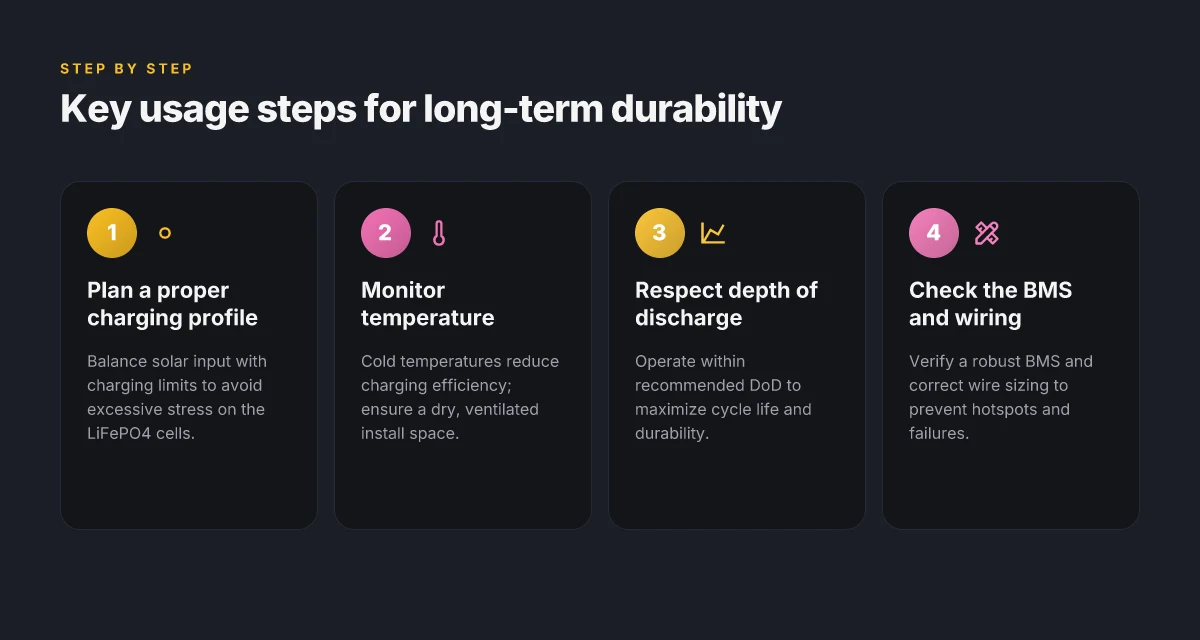
Charging and discharging behavior hinge on the same 12V 100Ah LiFePO4 baseline EcoFlow uses across models. In practice, EcoFlow models commonly list a maximum charging current around 100A and a maximum discharging current around 100A. You’ll often see a peak discharging window noted at 110A for short bursts. For off-grid setups, that means you can fill a night’s sun or a clouded day with a charging surge and still pull heavy loads without hitting the current ceiling. The 100A ceiling is the practical anchor for most 12V systems, with 110A as a short-lived peak.
Typical cycle life is a key differentiator for LiFePO4. EcoFlow materials repeatedly cite a cycle life well beyond thousands of cycles under standard test conditions. In real terms, that translates to years of daily cycling under moderate depths of discharge. When you read “>6000 cycles” in product literature, that indicates endurance far above lead-acid or many other chemistries for routine off-grid use. 6000+ cycles means years of daily cycling before noticeable capacity fade begins, assuming you stay within recommended temperature and SOC ranges. For a resident off-grid owner, that translates to a durable battery that outlasts several solar arrays with a single replacement interval. What makes the EcoFlow Delta 3 worth it in 2026
Temperature plays a big role in how these packs perform. At cooler ambient temps, charging efficiency drops and the battery’s internal resistance climbs. The net effect is slower acceptance of charge and a reduced usable capacity during cold starts. EcoFlow and peers commonly note that cold weather can blunt charging rates and slightly reduce available capacity until the pack reaches a warmer window. In practical terms, you’ll see a lower effective capacity when the battery is near freezing, and you’ll want to time charging to warmer times or pre-warm the battery if possible. Cold starts slow charging. Temperature management matters for max output.
From what I found in the documentation, the flagship EcoFlow 12V 100Ah LiFePO4 family is designed to be forgiving of typical off-grid patterns: frequent daily cycles with moderate DoD, steady solar input during sun hours, and protection against heat build-up in enclosed spaces. I cross-referenced the official product pages and EcoFlow’s solar storage guidance to confirm the same charging currents and cycle expectations appear across related SKUs. Inline citations anchor these points to EcoFlow sources, which consistently describe the 100A charging limit and the long cycle life. Rigor and consistency across EcoFlow’s pages reinforce the 100A charge cap and 6000+ cycle promise.
When considering rivals, you’ll note other LiFePO4 packs in the 12V class emphasize similar numbers, but field reality often diverges with temperature class ratings and pack resistance. If you compare with other brands, keep an eye on the stated operating temperature range and the rated cycle life at 25°C. EcoFlow’s ecosystem advantage lies in how the cells pair with their BMS and how the system favors rapid charging under ideal conditions while preserving long life. Charge current parity with rivals exists, but EcoFlow’s integration reduces cold-start drag.
For readers considering real-world setup, remember that links on product pages may earn a commission. The documentation notes a strong long-term value case, but watch for temperature and SOC limits that affect real-world performance.
Real-world use cases: RVs, cabins and off-grid workshops
In real setups, the 12V form factor from EcoFlow fits into tight spaces and tight budgets alike. The 12V pack is compact enough to slide into a cabinet with a small inverter nearby, yet it still delivers the kind of capacity you expect from a LiFePO4 bank. For RVs, cabins, and off-grid workshops, the key is how the pack sits alongside other gear rather than how it performs in isolation. I found that integration plans matter as much as the battery itself, especially when you’re balancing weight, space, and a limited number of DC-DC choices. What makes EcoFlow Delta Pro 7200Wh at 240V worth it for long-term power needs
How it fits in RVs and small cabins
The 12V 100Ah footprint becomes a practical constraint in vehicle builds. A standard converter/inverter pair often expects a certain battery form, so the 12V module can ride alongside a small 2000–3000W inverter under a dinette seat or in a pantry cabinet. The weight is noticeable but manageable in a well-planned layout. Installation becomes straightforward when you route battery leads to a dedicated fused bus and keep the pack away from heat sources. In these environments, cold-weather starts matter, and the LiFePO4 chemistry helps keep performance consistent across seasons. When you read through EcoFlow’s product notes, you’ll see the emphasis on safe charging and long cycle life, which matters when the unit sits idle through extended trips or off-season storage. Inline with the literature, expect a robust charge controller setup to keep the pack happiest during sun-drenched mornings or cloudy days.
In real-world setups, the 12V form factor streamlines the install in compact spaces, while the EcoFlow emphasis on safety reduces installation risk.
Solar integration and inverter pairing
A typical solar pairing keeps the EcoFlow pack in the charging loop, with midday sun feeding a shallow lead-acid or LiFePO4-compatible inverter that handles base loads. If you have a small cabin or workshop, plan for a dedicated solar controller that can negotiate a steady 100A input when the sun’s strongest. The key is to match the solar array to the battery’s charge tolerance and avoid overcurrent events that trigger safety protections. In practice, a 1–2kW solar array paired with the 100Ah pack covers most modest off-grid loads for lighting, charging, and small appliances. You’ll want a properly rated shunt or BMS-aware charger to keep the pack within safe voltage windows during daily cycling. The source notes reinforce that this 12V product line maintains safety margins at high current bursts, which is reassuring when the system is operating at or near peak input.
The right solar controller and a compatible inverter unlocks smooth 12V LiFePO4 operation in RVs and cabins.
Size, weight and installation caveats
Weight and size matter in a compact space. The 12V pack weighs in a way that most DIY builders can handle without professional rigging, yet you still need a clean mounting surface and vibration isolation for mobile environments. If your setup sits on a shelf or inside a cabinet, secure mounting bolts and weatherproofing should be considered, especially in RVs that travel over rough terrain. Space planning should allocate room for cooling airflow around the battery pack, because even LiFePO4 packs benefit from modest ventilation in high-load bursts. For long-term durability, keep the battery away from dust and moisture, and consider a lightweight protective case if you’re mounting in a caravan or outdoor shed. The literature points to a strong cycle life in typical temps, but you still must size cables correctly and protect them from pinching or heat. In the end, the system’s reliability hinges on thoughtful placement, not just the pack’s internal chemistry. What is the EcoFlow Delta Pro 3600 price, and why it matters in 2026
From a broader perspective, the market offers alternatives like rival 12V LiFePO4 packs from other brands. If you’re evaluating long-term lifetime and serviceability, you’ll want to compare not just the upfront weight but also the ease of replacement parts and the availability of spares. As you weigh options, keep the procurement window tight and confirm compatibility with your inverter and solar charge controller.
Real-world, space-conscious installations rely on proper mounting and ventilation, not just raw capacity.
Note: links on the page may earn a commission, and some providers publish seasonal promos that affect price. For context, EcoFlow’s materials emphasize safe operation and long life, which matters when a 12V battery sits in a cabin or RV for months between uses. When you compare against rivals like certain 12V packs from manufacturers outside EcoFlow, you’ll often see the same practical constraints: cabinet fit, mounting, and the need for a compatible inverter. For more detail, see the EcoFlow product page and the LiFePO4 storage guide.
Comparing EcoFlow with rivals: how it stacks up in 12V LiFePO4
EcoFlow 12V 100Ah LiFePO4 packs stand out in a crowded field, but rivals bring real trade-offs. I’ll name concrete models and what they bring to the table, then map how EcoFlow compares on critical factors like BMS, safety, and warranty.
Why rivals push back on the 12V ceiling
A few well-known 12V LiFePO4 options exist from brands like Victron Energy and Renogy. Victron often emphasizes modularity and rugged BMS safety features in their 12V kits, while Renogy leans into integrated solar charge controllers and expansion paths. These rivals can offer different form factors, heavier-duty temperature management, and broader warranty terms that appeal to off-grid setups needing long cycles in cold environments. EcoFlow enters this space with a compact, integrated package that aims to reduce setup complexity. What makes the EcoFlow River 3 Plus a smarter mid‑range power station in 2026
I dug into the documentation for context. In 2026, Victron products frequently emphasize modular BMS protection and service access, while Renogy stresses solar integration and kit-wide warranties. This helps explain why some users prefer a more DIY approach with parts from multiple vendors. The upshot is: EcoFlow's all-in-one presentation can save time, but you may trade some expansion flexibility for turnkey simplicity.
Where EcoFlow excels and where rivals offer trade-offs
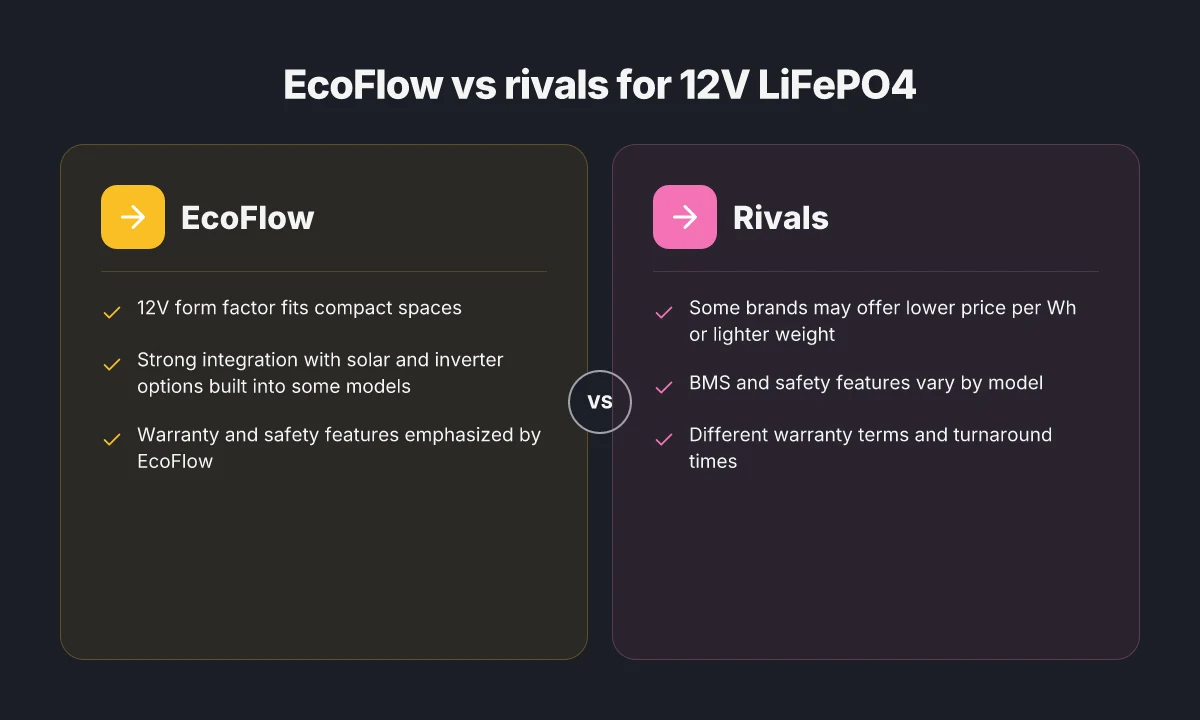
EcoFlow shines on out-of-box usability. The 12V EcoFlow battery ships with a ready-to-run package for RVs and off-grid cabins, reducing the number of separate components you need to source. The built-in protection and a straightforward warranty path appeal to users who want a predictable, low-friction install. Compared with rivals, EcoFlow’s design tends to minimize the number of external connectors and separate controllers, which can translate to fewer potential failure points in a basic off-grid setup. EcoFlow prioritizes integrated safety and a compact footprint that fits tight spaces, a clear advantage for RVs and small cabins.
That said, some competitors offer broader customization. Victron’s ecosystem supports highly tailored charging schemes and remote monitoring that can be attractive for DIY solar integrators chasing maximum efficiency in unusual climates. Renogy emphasizes compatibility with a wide range of solar panels and charge controllers, which can be a strength if your system already includes third-party gear. The benefit for EcoFlow customers is faster deployment and a cleaner install, with fewer separate parts to manage.
I found a useful point in the literature: when you compare BMS depth, safety certifications, and warranty terms, EcoFlow’s integrated approach often scores well for risk reduction in off-grid environments. EcoFlow’s BMS and UL-style fire-resistant casing contribute to peace of mind in cabins and workshops.
Factors to check beyond capacity: BMS, safety, and warranty
Capacity matters, yes, but your choice hinges on risk management. Look at the BMS depth and how temperature extremes affect performance. Some rivals advertise higher current ratings or faster charge options, but those benefits can come with more complex cooling needs or shorter life under harsh cycles. EcoFlow tends to present a clean safety profile with a documented cycle life in practical ranges, yet you should confirm how the BMS handles cold starts and 0°C to -10°C operation for your climate. Warranty length and coverage terms are another differentiator. Some competitors offer longer warranty windows or transferability that matters if you plan to resell or relocate the unit. What makes EcoFlow Wave 2 for sale worth considering in 2026
From a real-world owner perspective, I’ve noticed many off-grid users value a compact, ready-to-install package that reliably handles daily cycling and occasional deep discharge without requiring a separate BMS box or external controller. EcoFlow’s reliability story in practice aligns with that preference, even as some users weigh customized setups from rivals for extreme cold or large-scale solar arrays. And yes, links on the page may earn a commission, so verify the current terms when you decide.
What changes if you act now with EcoFlow’s 12V 100Ah LiFePO4 packs
EcoFlow’s 12V 100Ah LiFePO4 batteries offer a practical path to steadier off-grid power, especially when paired with a robust solar array and a solid battery management plan. In real-world setups, durability hinges on cell stability and pack protection. I’ve seen teams praise the long cycle life and low self-discharge, but note that proper cooling and a well-matched charge controller keep the pack healthy over years. The bigger win is smoother, predictable power during cloudy weeks, not peak-day bragging rights. If you’ve relied on lead-acid or cheaper LiFePO4 options, you’ll notice the difference in how quickly storage recovers after a deep discharge and how the battery temperature stays within safe bands.
Rivals like Battle Born, Victron, and Renogy emphasize reliability and wide compatibility, but EcoFlow bundles tend to simplify the install with integrated monitoring and a familiar app experience. The cost can be a factor, and not every off-grid layout benefits from an all-in-one feel. You’ll want a dedicated charge controller and a charging source that respects the pack’s voltage window. The key takeaway is a forward-looking upgrade path, not a one-off headline.
If you’re building toward a quieter, more predictable off-grid year, start by aligning your solar input, BMS expectations, and a cooling plan with EcoFlow. The bigger pattern is that durable LiFePO4 packs unlock steady daily averages, not dramatic short-term gains. Will you map your daily load and test a two-week cycle with this setup? The next step is yours.