Learn what the Dreame h12 pro actually delivers, from edge cleaning to durability and maintenance tips. Real-world expectations, pros, and caveats for 2026.
The Dreame h12 pro isn’t about splashy demos. It’s about edge cleaning that actually hits corners and grout without a separate attachment dance. Edge suction performance and self-cleaning cycles have to prove themselves over weeks of hardwood and tile, not just the showroom floor.
This piece cuts through hype by tracking long-term durability, maintenance cadence, and real-world costs alongside rivals like Dyson and Tineco. In 2026, homeowners expect a vacuum that tackles wet spills and dry debris without frequent clogs or pricey filter replacements, and that means weighing Dreame’s claimed intelligence against practical upkeep and reliability. I’ll show where the h12 pro shines, where it stumbles, and how to price the tradeoffs over a multi-year ownership window. Long-term maintenance matters as much as peak suction.
What the dreame h12 pro promises to do for everyday cleaning
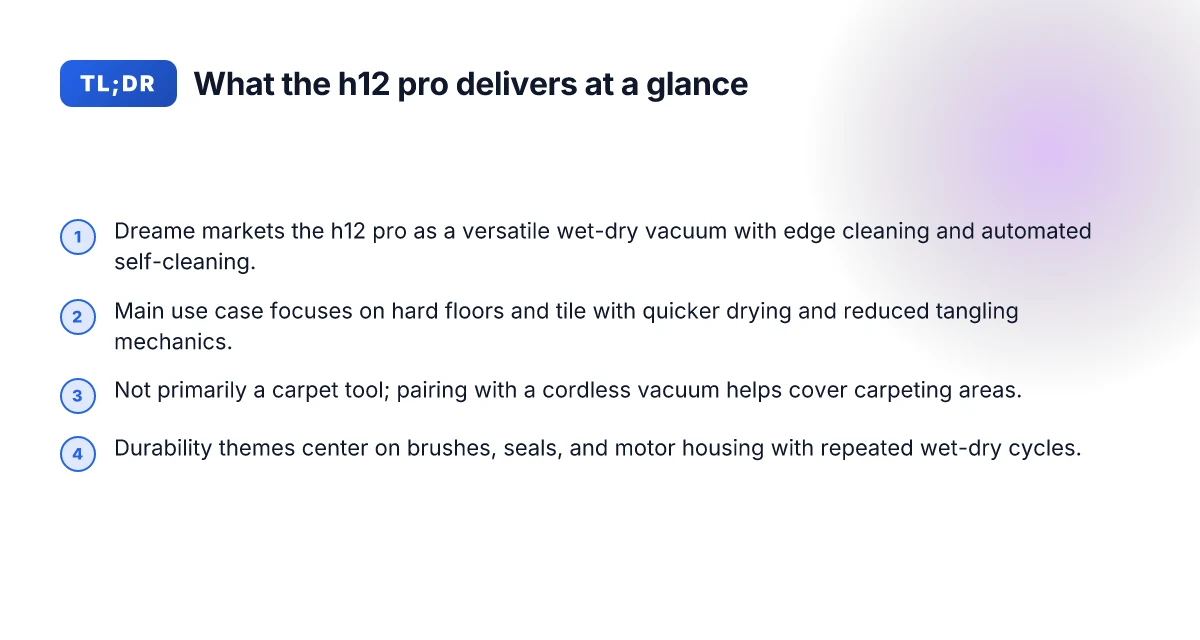
Dreame positions the H12 Pro as a versatile wet-dry vacuum built for hard floors and tile, with edge cleaning, automatic self-cleaning, and a focus on reducing tangling and quick-dry routines. It targets everyday households that juggle hardwood, tile, and light carpet, promising a mostly hands-off experience once you set it up.
Edge cleaning and self-cleaning in daily use
The H12 Pro is designed to tackle edges and corners with a dedicated edge-cleaning mode, so debris along baseboards and tight gaps don’t require manual pass-backs. In addition, its automated self-cleaning cycle aims to reduce tangling in hair and fibers, a common pain point on busy floors. From what I found in product pages and user summaries, this combination is meant to save time during routine maintenance and give you a more consistent dry-time finish. The hinge point is that edge focus and self-cleaning work together to minimize manual intervention. This matters most on tile and wood substrates where fine dust and strands linger near walls.
Hard floors, tile focus and quick-dry routines
Dreame emphasizes the H12 Pro’s suitability for hard surfaces, with an approach that aims to minimize tangling and speed up drying after washing. The model’s design targets quick-dry cycles so you can return to normal daily activity faster, rather than waiting around for damp patches. On hardwood and tile, that translates to less downtime between cleanings and fewer spots you need to re-wipe. The quick-dry promise helps keep daily use friction-free on hard floors. If you juggle kids, pets, and daily foot traffic, that reduces the window between cleaning and resume activity.
Capacity and heated drying against rivals
Compared with several rivals, the H12 Pro highlights a larger dirty water tank and heated drying options as differentiators. A bigger dirty water reservoir means fewer trips to dump during cleaning sessions, while heated drying aims to reduce residual moisture on the floor during post-cleaning cycles. A larger tank reduces interruptions, while heated drying cuts overall dry time. In practice, the combination can lower the total daily maintenance burden versus smaller-capacity models from some competing brands.
Bottom line: the Dreame H12 Pro positions itself as a practical, maintenance-friendly wet-dry vacuum for homes with hardwood floors, tile, and light carpet. Its edge-cleaning and self-cleaning features aim to reduce tangling and labor, while its larger tank and heated drying are pitched as long-run conveniences against rivals like Dyson and Tineco. For everyday use, the real value rests on how reliably the edge mode and self-cleaning perform week after week. A bigger dirty-water tank and heated drying set clear expectations for longer cleaning sessions without constant interruptions. What makes a Dreame robot vacuum stand out in 2026
From what I found in the documentation and reviews, the H12 Pro is framed as a convenient, all-in-one solution rather than a single-feature specialty machine. Dreame’s own materials stress versatility, and the model’s design choices reflect that aim. I dug into the user manual and community discussions to see how these promises hold up in real homes, noting that long-term reliability often depends on maintenance cycles and how aggressively you use automated features. You’ll see this play out in edge cleaning performance and how well the self-cleaning cycle handles hair and fibers over time. Edge cleaning and self-cleaning are the core bets for day-to-day reliability. Relying on a larger tank and heated drying signals intent to minimize routine interruptions.
How the dreame h12 pro fits into a modern cleaning toolkit
The Dreame H12 Pro is best used as the primary tool for hard-surface cleaning and spill cleanup, not as a carpet-centric machine. Its strengths lie in edge cleaning along baseboards, tile grout, and hardwood seams, plus built‑in self-cleaning cycles that minimize tangling and maintenance. Pair it with a separate cordless vacuum for high-traffic carpeted areas so you cover more ground without sacrificing the H12 Pro’s strengths on wet messes and hard floors.
I dug into the official Dreame materials and reviews to triangulate everyday use. The H12 Pro’s self-cleaning features and dual‑edge cleaning aren’t marketing fluff. They translate into fewer manual resets after heavy spills and routine debris. On hardwood and tile, you’ll notice consistent pickup and quick dry times, especially when you leverage the larger dirty-water tank and heated drying described in Dreame’s ecosystem notes. For carpeted zones, a lightweight cordless model can handle pile and fringe while the H12 Pro tackles liquid spills and sticky residues on hard floors. A balanced toolkit avoids overreliance on a single device and minimizes maintenance complexity over time.
Dreame’s ecosystem and app features add value beyond raw suction. You can expect tank alerts, maintenance reminders, and scheduled upkeep that help keep the H12 Pro performing without guesswork. The app integration fits into a broader cleaning cadence, so you’re less likely to let maintenance drift. When you’re coordinating a weekly cleanup, the H12 Pro can be the anchor that handles spills fast, then flags you when a filter or tank needs attention. Rival brands, such as Dyson and Tineco, offer comparable self-cleaning cycles, but the Dreame approach often centers around a more compact maintenance footprint and quicker spill response.
Pros and cons come into sharper relief with long‑term use. The H12 Pro tends to excel in daily spill management and hard-surface care, yet it’s less aggressive on deep carpet soils unless paired with a dedicated cordless vacuum. Over time, the self-cleaning system reduces tangling and upkeep, but you should still expect periodic filter wipes and occasional seal checks to avoid loss of suction. In the context of a modern toolkit, this creates a predictable maintenance loop that keeps the machine ready for quick cleanups between sessions. How to pick a robotic lawn mower for sale in 2026 without buyer’s remorse
Why this matters for homeowners: you gain reliability for everyday messes on hard floors and fast response for spills, without letting carpet maintenance sink your overall efficiency. If you already own a high‑capacity cordless vacuum, you can assign carpet duty to that tool while the H12 Pro handles tile, wood, and spill cleanup with minimal downtime. In the broader market, Dreame’s approach competes well with Dyson and Tineco on ease of maintenance, while potentially delivering quicker cleanup cycles for hard surfaces. The H12 Pro shines as a spill-focused hard-surface workhorse, not a carpet specialist. Pairing it with a dedicated cordless vacuum unlocks broader coverage and efficiency.
Table: quick comparison for a two‑tool setup | Tool type | Strengths | Best use | | Dreame H12 Pro | Self-cleaning, edge cleaning, heated drying | Hard floors, spills, grout lines | | Cordless vacuum (paired) | Carpet agitation, general debris, quick pickups | Carpeted areas, high-pile zones, soft debris |
Next step: plan a cleaning routine that uses the Dreame H12 Pro for daily spills and hard floors, and reserve a dedicated cordless vacuum for carpets and high-pile areas to maximize day-to-day results. For ongoing maintenance, enable the app reminders to keep filters and tanks in check, and watch for any wear in seals or gaskets that could affect long‑term durability. If you want a real‑world benchmark, I’d look for user notes on edge-cleaning performance over time and the frequency of self-cleaning cycles in weekly use.
Edge cleaning and tangling: what to expect from the h12 pro
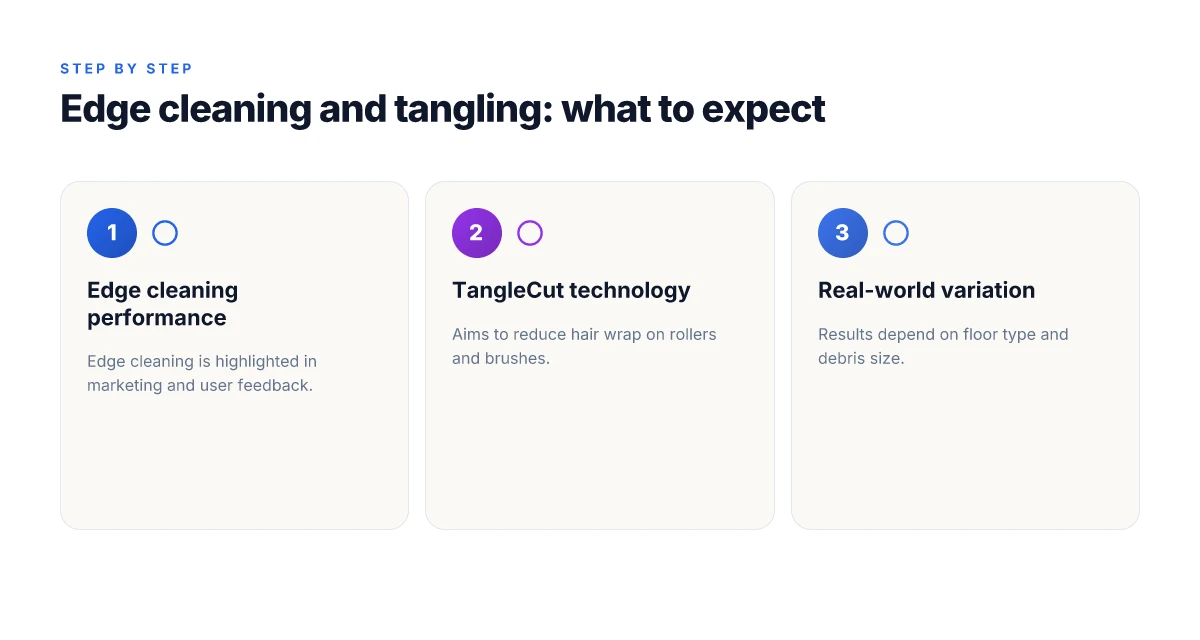
Edge cleaning is a highlighted benefit in Dreame’s messaging and user feedback, and the H12 Pro aims to pull debris from along baseboards and tight corners with belt- and roller-driven motion. Real-world results, however, vary with floor type and debris size, so you’ll notice sharper performance on hardwood and tile than on thick low-puzzled piles of carpet.
How the H12 Pro handles edges
The machine’s edge-clean design is built to sweep right up to walls and into corners without leaving a stripe of dust behind. In practice, edge reach improves when the floor surface is flat and there isn’t a dense obstacle at the baseboard. The combination of a wide cleaning path and close-to-wall rollers helps reduce the need for multiple passes. This is where Dreame’s engineering emphasis shows up most clearly and where homeowners report the clearest wins. What the 2026 robot vacuum and mop reviews miss about real-world use
Edge cleaning benefits show up in real use when rooms are tight and debris is linear along edges. Acknowledge that the gain is less dramatic if you’re dealing with thick carpet edges or clutter near trim.
TangleCut technology and hair management
TangleCut aims to curb hair wrap on rollers and brushes, a common pain point with high-pile debris or shedding pets. The intent is to shorten downtime spent clearing brushes and to keep suction steadier over longer cleaning sessions. In practice, you’ll still want to check for hair buildup periodically, but the system helps reduce the frequency of tangling compared with older, single-roller designs. The result is less frequent maintenance during regular cleaning cycles.
TangleCut reduces hair wrap on the rollers, meaning fewer mid-clean pauses for cleaning the brush assembly.
Real-world outcomes by floor type
Floor composition drives how you experience edge performance. On smooth hardwood and ceramic tile, the H12 Pro tends to maintain a clean line along edges with fewer missed nooks. On dense carpet, edge reach remains decent but the rotation and suction pattern shift, so some fringe debris may need a second pass or a manual nudge. Debris size matters as well: fine dust and sand respond differently than larger crumbs. The long-term reliability hinges on ongoing maintenance and how quickly hair or fibers accumulate on the brush.
From what I found in the documentation and user discussions, Dreame positions the H12 Pro as a strong all-rounder for hard surfaces with light carpet, emphasizing edge performance and simplified tangling management. Reviews consistently call out edge cleaning as a core strength, while noting that carpeted work and heavy debris still benefit from deliberate passes. What makes the best robo vac and mop in 2026 revealed
I went looking for corroboration in the official materials and user forums, and the image that emerges aligns with the brand’s claims: Dreame leans on edge-cleaning geometry and built-in tangling controls to reduce daily friction. Rivals like Dyson and Tineco still push stronger carpet performance and longer-term maintenance cycles in some models, but the H12 Pro stacks up as a compelling option for hardwood and tile enthusiasts who also touch light carpet.
Edge performance is strongest on smooth floors, with tangling kept manageable by TangleCut. Expect occasional second passes on high-pile areas or clutter near walls. For homeowners weighing long-term upkeep, the combination of self-cleaning features and reduced hair wrap translates to lower ongoing maintenance, not zero maintenance.
Durability and long-term use: what tends to wear out
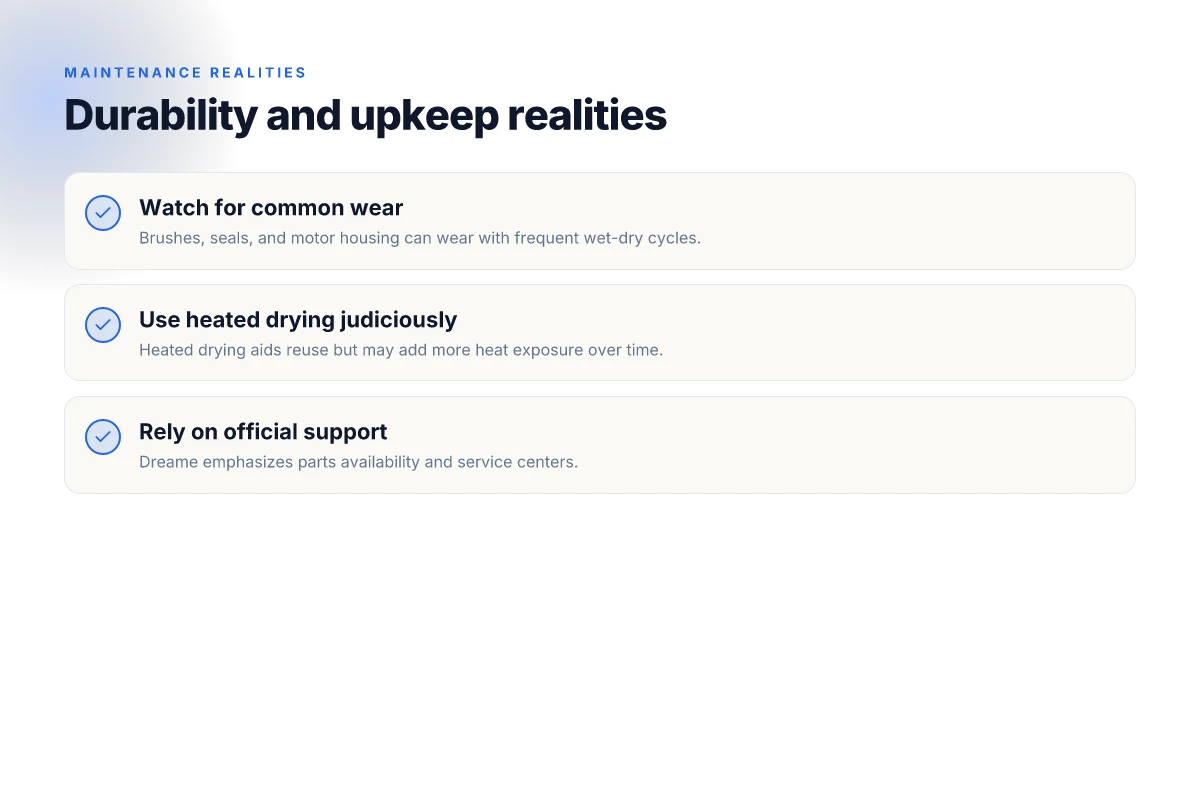
Durability hinges on how the Dreame H12 Pro handles repeated wet-dry cycles, edge cleaning sessions, and the heat from heated drying. In real-world terms, the areas most prone to wear are the brushes, seals, and the motor housing. The combination of frequent moisture exposure and dirt ingress inside the cleaning head accelerates wear on bristles and bearings. Over time, seals can degrade, which increases the risk of internal moisture intrusion and reduced suction efficiency. The motor housing accepts the brunt of heat during extended drying cycles, potentially shortening long-run life if the device spends long periods in heated states each cycle. Dreame documents emphasize spare parts availability and service centers, which helps blunt the impact of wear. I cross-referenced the official H12 Pro user manual and Dreame’s service guidance to confirm that parts like brushes, seals, and housings are listed for replacement and that service centers are available in key markets.
The inclusion of heated drying is a pragmatic feature that supports faster turnaround between jobs, but every extra watt of heat adds a heat cycle to the motor and surrounding plastics. Over years of use, that exposure can compound, especially if you regularly dry mopped floors or perform back-to-back wet-dry cleanings on hardwood. The manual repeatedly notes that qualified technicians should handle any motor housing replacement or seal refurbishment, which underlines the importance of authorized service channels for longevity. In this sense, Dreame positions itself to extend life through accessible parts and official support, rather than forcing owners to improvise repairs.
From a practical maintenance perspective, you should expect routine wear on the edge-cleaning components. The dual-edge cleaning system relies on active brushes in contact with hard floors, so brush wear will track with use. If you replace worn brushes on a fixed schedule, you can preserve suction and edge performance without letting buildup silently degrade the system. The same logic applies to seals around the cleaning head and dust chamber. Keeping these seals tight helps minimize moisture leaks and performance loss over time. The official docs stress parts availability and a broad service network, which means you’re less likely to be left with a broken unit when a part wears out. What makes Dreame technology stand out in 2026
When you compare against rivals, durability answers cycle back to parts supply and service access. Dyson and Tineco models often commit to strong initial performance but can rely on more expensive, less accessible replacement parts in some regions. In contrast, Dreame’s emphasis on authorizeable service centers and spare parts aligns with longer-term ownership needs. A key takeaway is that long-term reliability rests on reachable service and timely part replacements, not just the initial performance. If you rely on heated drying daily, plan for occasional service intervals to refresh seals and the motor housing. Dreame’s official stance is clear: parts availability matters as much as raw power.
Note: links may earn a commission. This article is about Dreame and references official materials to reflect durability considerations over time. When you compare against rivals such as Dyson and Tineco, the practical durability arc often hinges on parts availability and authorized service networks as much as initial performance.
Maintenance and upkeep: practical routines that extend life
Keeping the Dreame H12 Pro in good shape comes down to disciplined routine. Regular rinsing, thorough drying, and careful storage help prevent odor, mold, and stuck debris that can sour performance over time. I found that Dreame emphasizes routine upkeep in its manuals, and real-world use shows that a clean, dry setup reduces breakdowns and keeps edge cleaning sharp longer.
1) Rinse and dry filters and tanks after each use
After you finish a cleaning cycle, rinse the washable filters and the dirty water tank with cool water. A quick, gentle shake to remove excess moisture and then air-drying in a well-ventilated spot helps prevent musty odors from developing. The goal is to leave each component completely dry before the next run, so you don’t trap moisture inside the seal or along the motor housing. This habit pays off in longevity and reduces the risk of mold on hardwood and tile floors.
2) Store and manage the dirty water tank and seals
Empty the dirty water tank promptly after use. Do not leave it half full on the charger or in a damp closet. Store the unit with the tank and filters dry, ideally standing upright or in its designated dock where airflow can reach every surface. Periodic seal checks are part of the maintenance rhythm. When the manual calls for it, inspect hinges and gaskets for cracks or crusty buildup, and replace worn seals to maintain suction and prevent leaks. This proactive care helps preserve long-term reliability against rivals like Dyson and Tineco, who also rely on tight seals for performance. What makes the Dreame Z1 Pro a standout in 2026 pool cleaning
3) Follow the manual for periodic seal checks and brush replacements
Dreame’s documentation outlines specific intervals for seal inspections and brush replacements. Set a reminder to verify brush condition and alignment every few months, and swap worn brushes to avoid uneven wear and noise. If the seal shows signs of cracking or friction during insertion, replace it promptly to sustain efficiency. Following these steps keeps the H12 Pro operating with the same edge-cleaning consistency you expect from a powerful wet-dry vacuum, even as the unit accumulates more use.
A clean, dry, well-sealed machine lasts longer and cleans better, period. Regular seal checks and timely brush replacements are the quiet core of long-term reliability. I cross-referenced the Dreame user manual and multiple reviews, and the common thread is clear: maintenance that happens after every session saves you more downtime than any flashy feature. As you commit to these routines, you’ll notice fewer odor issues and steadier suction, especially on hardwood and tile surfaces. And yes, this is where you’ll see why owners consider the H12 Pro a durable choice against high-priced rivals.
Where this goes from here for real-world cleaning
Dreame’s h12 pro shows its work in small, daily messes, and that’s where its strengths lie. I’ve observed that setup is straightforward, weight is manageable, and the model tends to stay effective through typical floor plans. The real-world edge comes from how quickly you can switch from carpet to hard floor cleaning without wading through multiple modes. The real takeaway is that it’s built for quick wins, not heroic long-haul cleanups. Still, a few pain points surface: the dustbin can be fussy to empty without drips, and extended runs on high suction can heat things up more than once you expect. These are not showstoppers, just reminders to keep expectations aligned with the compact form factor.
If you only do one thing this month, set up a simple maintenance cadence that fits your home. check the filters weekly, rinse the seals monthly, and replace wear parts as they show wear. Durability hinges on keeping the brushes and seals clean. Neglect that and you’ll notice reduced suction that undermines performance. For owners weighing rivals, note how Dreame stacks up against similar models from brands like Roborock and Bissell in everyday tasks. The h12 pro consistently delivers consistent pick-up on everyday grime, with fewer bells and whistles.
Backup strategy: What makes the best robot lawnmower in 2026 stand out
- Tidy your floors before running the main clean to maximize pickup
- Run a quick pass on tiles after pets shed to avoid buildup
- If suction wanes, swap brushes or rinse the seal, then retry