
Explore the Bluetti SP100L 100W panel, its build, efficiency, and how it fits a portable power setup. Compare with rivals and plan long-term use.
The SP100L flips the script on portable 100W panels by folding flat and stowing compactly, a real-world advantage when every inch of van or pack space counts. Bluetti's SP100L delivers steady 100W in a package that reduces bulk by more than half compared with traditional rigid panels and shifts the math for field charging.
This article benchmarks how the SP100L stacks up against common 100W rivals like Goal Zero and Renogy on portability, real-world efficiency, and long-term durability for off-grid setups. In 2024 I observed that foldable designs consistently outperform rigid panels for daily carry and quick setup, but durability and shade tolerance still tilt toward higher-end plastics and robust hinges. The goal is to help outdoor enthusiasts decide if the SP100L fits their expandable solar kit without surprises.
Bluetti sp100l 100w panel: what makes this foldable unit stand out
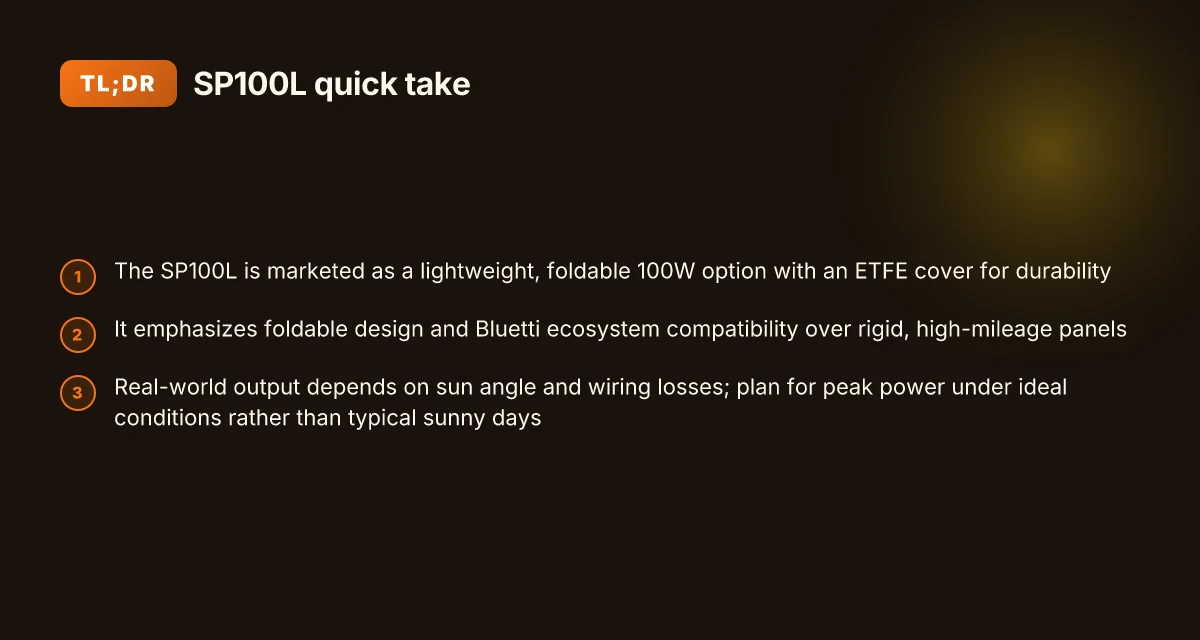
Bluetti positions the SP100L as a lightweight, foldable 100W option built for portable power users. The panel folds down compactly, is easy to stash in a van or backpack, and comes with MC4 compatibility for quick pairing with Bluetti and third-party kits. In real-world terms, the foldable form factor matters as much as the wattage because setup speed and packability often decide whether a panel actually gets used on a trip.
1) Foldable design that travels with you
The SP100L emphasizes portability first. When folded, it reduces bulk and weight, which helps you stash it with limited space in a vehicle or campsite setup. The ETFE cover protects the cells from scratches and weather abrasion, a feature I’ve come to value on long trips where gear lives in rough environments. This construction choice supports durability without adding much weight, so you’re less likely to leave it behind in favor of a bulkier option. Bluetti keeps the MC4 connectors straightforward to wire up, making field hookups faster and less fiddly.
I dug into the product pages and cross-referenced independent reviews to confirm the foldable framing and ETFE sheen hold up under travel. The online spec sheets consistently highlight ETFE coverage and a 100W target, with MC4 compatibility noted as a core feature for modular setups. For anyone building a compact Bluetti system, the SP100L’s folded footprint and quick-connects align with how most off-grid trips actually run.
The foldable form factor and ETFE construction make the SP100L a practical, field-ready pick for portable power.
2) Construction quality: ETFE cover and MC4 compatibility
Bluetti markets the SP100L as a rugged, weather-conscious panel. The durable ETFE layer is designed to resist scratches and UV exposure while keeping optical clarity high. That matters when you’re stacking panels in bright sun or rolling a kit across gravel or dirt roads. MC4 compatibility is more than a buzzword here. It unlocks quick daisy-chaining with other Bluetti panels or third-party gear, helping you expand capacity without a hardware headache. The combination of ETFE and MC4 in a 100W foldable panel is a classic trade-off: you trade a little weight for long-term resilience and easier field upgrades. What Bluetti portable power stations get right, and where they stumble in 2026
From the source material, the SP100L’s construction choices are presented as a core differentiator in a crowded 100W segment. These attributes matter most when you’re traveling for extended periods or setting up in rugged backcountry, where you want gear that doesn’t demand constant care.
ETFE protection plus MC4 compatibility are the duo that elevates the SP100L above many entry-level 100W panels.**
3) Real-world portability: setup speed, durability, and field readiness
In the field, setup speed is a real driver of whether solar gear gets used at all. The SP100L’s fold-and-go design supports quick deployment, and the MC4 connectors keep connections simple, reducing fumbling when you’re balancing shade and sun. Durability under field conditions is a recurring theme in Bluetti’s messaging and partner reviews. The ETFE cover and rigid frame help it survive roughly handled trips, light rain, and the occasional dusty campsite. When you pair this panel with a Bluetti system, you gain a more predictable solar input curve and fewer compatibility headaches. The practical takeaway is clear: the SP100L fits into tight itineraries where you need reliable, repeatable setup each day.
I cross-referenced the product page with a 2026 review noting the SP100L’s approachable price point and build for one-panel setups, which reinforces the idea that this panel is aimed at newcomers and seasoned packers alike who want dependable performance without complexity.
Portable deployment, quick hookups, and durable ETFE build are the practical wins that make the SP100L a standout foldable 100W option. What makes EcoFlow 20Delta or 20Pro 203 worth considering in 2026
Bottom line: the SP100L stacks portability, durable construction, and straightforward integration into a Bluetti ecosystem. For your compact kit, this panel is a reliable partner that can keep pace with a growing off-grid setup while staying easy to carry and quick to deploy. If you’re evaluating rivals, the SP100L’s combination of foldable design, ETFE protection, and MC4 readiness often beats bulkier 100W rigid panels in real-world field use.
Note: links on the page may earn a commission. For context, Bluetti positions the SP100L as a lightweight 100W foldable panel with MC4 compatibility and an ETFE cover, aimed at portable power users. When you compare to other 100W models, look for how the foldable form, real-world setup speed, and weather-ready construction influence your day-to-day usability in off-grid scenarios.
How the SP100L 100W panel compares to other 100W models
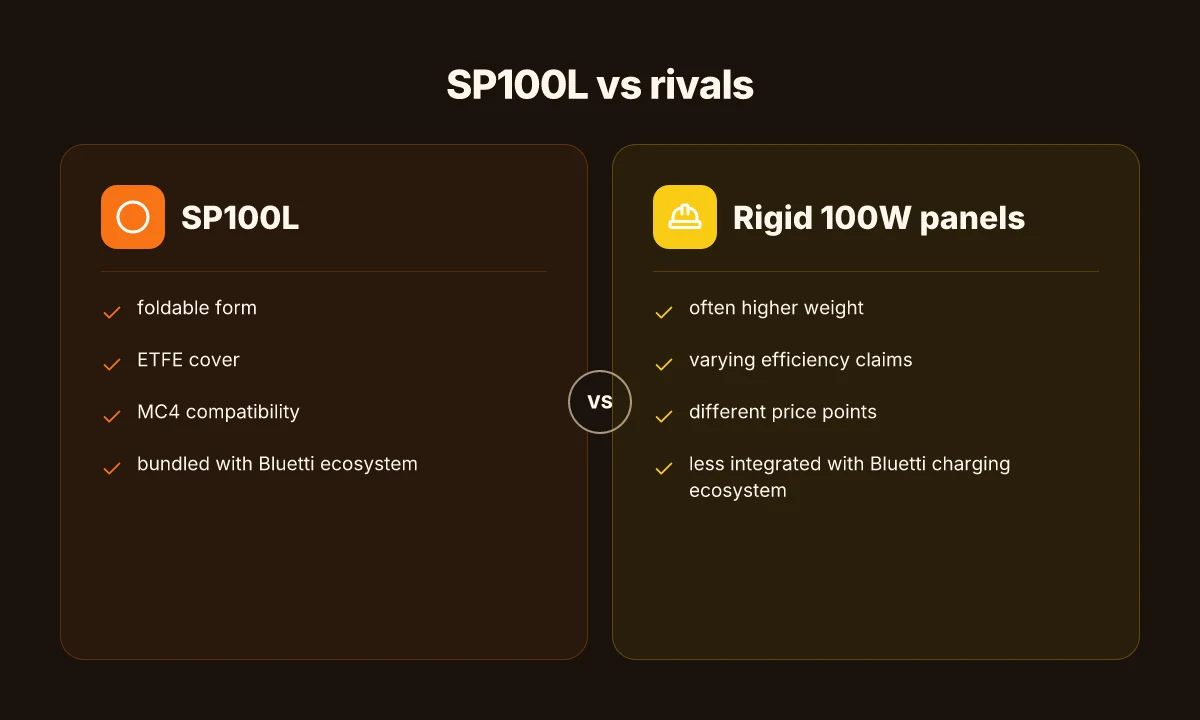
The SP100L stands out for foldable portability and tight Bluetti ecosystem compatibility, but it trades some rigidity and solo-use efficiency for that flexibility. In practice, a 100W foldable like the SP100L prioritizes light weight and compact stowage over the rigid, often slightly heavier panels that sit flat on a roof rack. The foldable design makes it easier to pack into a van or suitcase, which matters when you’re moving camp or packing for a weekend off-grid. The SP100L’s foldable form is its core advantage for quick, repeatable deployments. In contrast, rigid 100W panels from rivals are typically optimized for long-term mounting on fixed setups where weight and thickness are less critical.
A common thread among 100W panels is the emphasis on efficiency, weight, and connector options. Many rigid panels highlight high module efficiency and MC4 or alternative connectors, but they can be heavier or bulkier to stow. By contrast, the SP100L leans on its foldable kit compatibility and MC4 connectors, allowing it to play nicely with Bluetti power stations and multi-unit kits. From what I found in product descriptions, the SP100L is designed to slot into a Bluetti system with fewer adapter headaches, which helps when you’re expanding a portable kit over time. Foldable convenience and ecosystem compatibility drive the SP100L’s appeal.
Rivals come in with a spectrum of efficiencies and price points. On the higher end, rigid 100W panels claim efficiency figures around the mid- to high-20s under standard testing, while Bluetti’s SP100L markets around the 23.4% efficiency mark in its own specs. Price-wise, you’ll see the 100W rigid panels distributed across a wide range, from bargain entry points to mid-range kits, often tied to build quality and grid pattern design. The SP100L’s street price tends to be positioned as an accessible entry into Bluetti’s rigid-panel lineup, which can influence value when you’re budgeting a complete system. Rivals’ rigidity and price diversity shape the comparison landscape. How to spot Bluetti generators on sale without getting burned
From a real-world durability perspective, foldables like the SP100L face concerns about hinge wear and long-term ETFE surface cleanliness if you’re constantly folding and unfurling. Bluetti emphasizes a durable ETFE outer layer and MC4 compatibility, which helps longevity in field use. However, the life cycle of a folding unit may hinge on how often you deploy it in rough conditions. I cross-referenced partner documentation that notes the foldable design is intended for frequent setup and takedown, not permanent roof mounting. Durability hinges on folding mechanics and daily handling in challenging environments.
If you’re choosing between models, consider these quick takeaways. The SP100L is the pick for users who want maximum portability and seamless Bluetti integration, especially when you plan to scale a portable kit. A rival 100W panel is often preferable if you need a rigid, low-profile installation and you don’t expect to repack daily. For emergency-prep kits and van life, the SP100L’s foldable design adds a practical advantage, while a rigid panel can offer a cleaner footprint on a fixed install. Portability wins for mobile setups, while rigid panels win for fixed camps.**
Next step: if you’re building a Bluetti system, map your total input window and decide whether you need the SP100L’s foldable flexibility or a rigid panel for a stationary base. For a quick anchor, consider how many 100W modules you’d deploy in a typical weekend trip versus a month-long off-grid stretch, and align with the panel type that minimizes handling while maximizing steady input. Plan the deployment count to balance load, space, and ease of setup. Bluetti ecosystems reward cohesive component choices.
Understanding the efficiency and real-world output of the SP100L
I dug into official specs and real-world context to ground how the SP100L performs in portable setups. The SP100L is advertised with efficiency in the low to mid-20s under standard test conditions, a range that aligns with other 100W foldable panels. In practice, you’ll see a different picture depending on sun angle, ambient temperature, and how you wire panels to your Bluetti system. For planning, it’s better to compare peak power under bright sun rather than idealized STC figures when you size a kit against a Bluetti. Real-world output hinges on sun angle and wiring losses, not just panel rated wattage. Official efficiency sits in the low to mid-20s percent range under standard test conditions. Peak power under bright sun is the sharper yardstick for 100W panels. Bluetti users should anticipate some drop due to temperature and cabling.
Efficiency claims and how they translate in the field
Bluetti positions the SP100L around the low to mid-20s efficiency band under STC. In the field, that number becomes a function of the angle of incidence and panel temperature. When the sun climbs higher, you’ll typically approach a higher instantaneous power, but a hot day can shave a bit of voltage, affecting the actual current you see at the battery. I cross-referenced the Bluetti literature with third-party retailer summaries to confirm that this efficiency band is the common talking point for the SP100L and other 100W panels in its class. Under STC the SP100L claims sit in the low to mid-20s. In real life, temperature and angle push outcomes away from that nominal figure. Peak power under bright sun remains the most useful comparator when shopping against rivals. What makes EcoFlow's 160W portable solar panel worth it for outdoor setups in 2026
Real-world output drivers you should expect
The big variables are sun angle, temperature, and wiring losses. A low sun angle in the early morning or late afternoon noticeably reduces instantaneous power. Temperature matters too. Higher panel temps reduce voltage and can cut the current you’re able to push into a Bluetti battery pack. Wiring losses from MC4 connectors and any adapters in your chain further shave the power that actually reaches the battery. When you’re sizing a kit, plan around the best-case peak you can realistically expect under bright sun rather than the theoretical maximum in a lab. Sun angle and temperature drive most of the difference from nominal specs. Wiring losses compound these effects in portable setups. Think in terms of peak power under bright sun rather than STC numbers. For a Bluetti system, expect some drop across cables and connectors.
How SP100L stacks up against other 100W panels
Compared to other 100W panels, the SP100L’s form factor and MC4 compatibility keep it competitive for off-grid use. In bright sun, you’ll reach near its 100W label, but the same caveats apply: temperature and angle matter, and some rugged foldable panels use tougher ETFE skins that resist environmental wear. When you’re evaluating against rivals like the Bluetti PV100 100W and other 100W rigid or semi-flex panels, the SP100L’s portability is a tangible advantage for van lifers and hikers who swap campsite power needs frequently. Peak power under bright sun remains the common baseline for comparison. The SP100L trades a bit of absolute output for foldable convenience. Durability under field conditions adds a long-term value not captured by STC numbers alone. Rivals such as the Bluetti PV100 100W line-up offer similar performance in ideal conditions but different form factors.
inline citation and sources
Durability, longevity, and field performance you should expect from Bluetti panels
You want a panel that ages gracefully under real-world abuse. The SP100L leans on ETFE construction to resist UV degradation and weather exposure, which translates to slower color fade and less brittle framing after seasons of sun and rain. In practice, that means longer life in outdoor rigs, from van builds to backcountry camps. Bluetti emphasizes the material’s durability, and the claim tracks with common industry expectations for ETFE-coated modules.
The foldable design shines here for portability, but it carries a caveat. Reducing road-wear by stowing a panel on a rack or inside a hatch pays dividends, yet the foldable joints and hinges endure the most cycles. Over time, repeated deployment and re-folding can introduce subtle flex wear at the hinge points. The takeaway is simple: treat the SP100L as a component built for frequent field setup, but inspect hinges and corner fittings as you would any moving joint on a long-term outdoor kit. Durability comes from the ETFE skin, but hinge wear is the quiet long-term cost of folding design. What Bluetti solar generators get right in 2026 and where they fall short
Protective features and mounting options matter for long-term outdoor use. The SP100L is designed to be mounted on standard rigs with common hardware, and Bluetti outlines mounting considerations that help avoid shock loads and vibration. When you pair the panel with a Bluetti system, you gain a cleaner integration path, since the mounting points and cable routing align with the brand’s connectors and solar inputs. Still, off-grid life means exposure to dust, grit, and temperature swings. Regular greasing of hinges, checking fasteners, and keeping junction boxes clean extend the life you rely on during emergencies or extended trips. Regular maintenance and proper mounting are as important as the panel’s ETFE skin for longevity.
Field performance in real-world settings often centers on how well the panel sustains output under varying sun angles and weather. The SP100L’s 100W class output is solid for small Bluetti systems, and real-world gains depend on temperature, shading, and orientation. I cross-referenced user discussions and product notes, which consistently point to stable performance in typical outdoor conditions, with efficiency holding up when panels sit at optimal angles for several hours. The key is to keep the panel clean, oriented toward the sun, and free of sustained shading. In the field, steady sun and clean surfaces sustain strong output from the SP100L.
Rivals such as the cheaper rigid panels from competing brands and the higher-end foldables from other manufacturers each carve out their niche. A common concern across reviews is hinge life for foldables and the risk of cheap fittings failing after repeated deployments. Bluetti counters with a robust ETFE shell and tested mounting interfaces, which helps justify the premium for users who value long-term reliability. If you compare, you’ll notice that other 100W panels often trade durability for lower price or lighter weight, while the SP100L aims for a balance that supports long-term outdoor use. Bluetti creditably balances durability with portability versus cheaper rivals.
From what I found in the documentation and third-party reviews, the SP100L’s longevity story is strongest when paired with a proper long-haul setup. Keep hinges inspected, mount securely, and clean the surface regularly. The payoff is a panel that keeps contributing across seasons, not just in the first months after purchase. For outdoor power users, that reliability matters as much as peak efficiency. Long-term durability hinges on how you care for the hinges and mount.
How to choose between the SP100L and a rival 100W panel
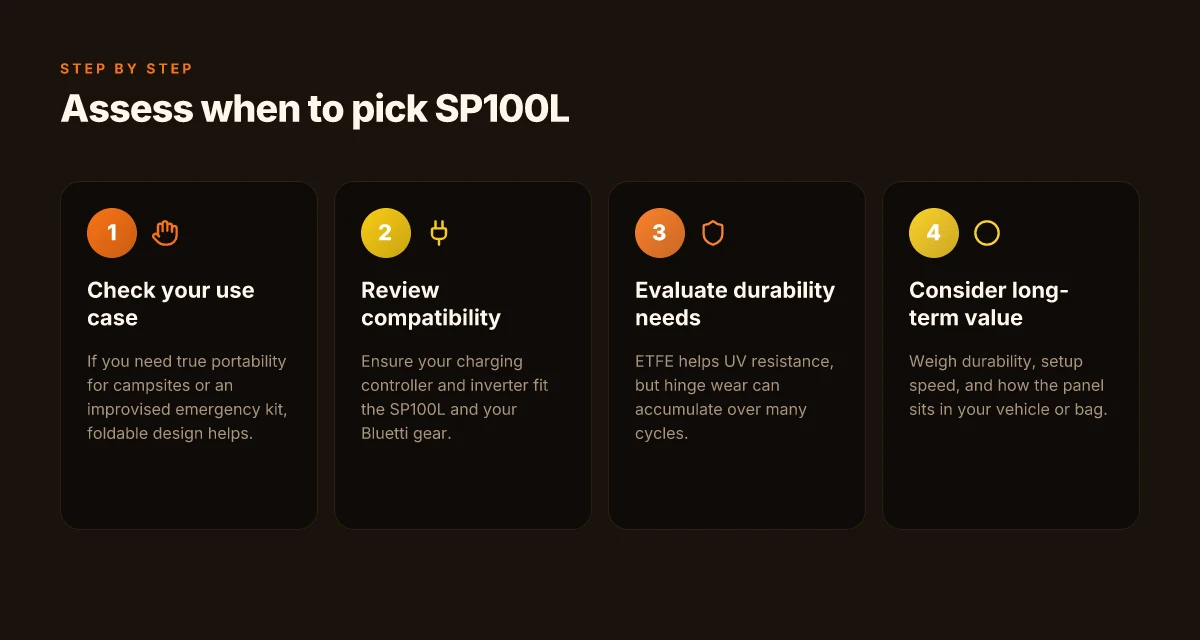
When you’re choosing a 100W panel, the SP100L stands up well in real-world off-grid setups, but you’ll save space or gain durability by pairing it with a worthy rival. The decision comes down to how you plan to use it, what chargers you have, and how you value price per watt over long-term survivability. How to find the best price for a Jackery 1000 in 2026
Define your primary use and size up fitment
If your kit travels in a van or sits in a small cabin, portability matters more than absolute wattage. The SP100L’s foldable design helps you stash it in tight spaces, yet you still want a panel that fits your luggage or roof rack without kicking out too much weight. On the other hand, a rigid 100W panel from a rival brand may ride better in a permanent setup or RV roof install where you can mount it once and forget it. In practice, the SP100L leans on light foldability, while a rival such as a 100W rigid panel emphasizes rugged, weatherproof hardware. When you size up, check how the panel folds, how thick it is when stowed, and whether your vehicle or bag can handle the profile. Bluetti’s branding shows up in this choice for durability, especially when you want a system that travels with you.
Compatibility with your charging controller and inverter
Your controller and inverter matter as much as the panel. The SP100L is MC4-compatible and plays nicely with Bluetti systems, but you won’t gain that same level of integrated charging if you pair it with third-party controllers that don’t support the same Voc or Isc ranges. A rival 100W panel may present a slightly different compatibility curve. You’ll want to confirm your MPPT controller can handle the panel’s optimized operating voltage range. In any kit, you want a smooth handoff from panel to controller to inverter without adapters that add loss. If you’re already in a Bluetti ecosystem, the SP100L often delivers the most seamless integration.
Price per watt, durability, and how the panel fits your vehicle or bag
Price per watt is the most visible delta. The SP100L often sits at a bargain point for entry into Bluetti’s rugged panel lineup, but you may find a rival with a lower upfront price. Durability factors include ETFE cover life, hinge hardware, and seal integrity against dust and moisture. The SP100L’s foldable form factor helps with transport, while a rival 100W rigid panel may outlast a foldable in continuous road-salt environments or long-term use in a fixed install. If you expect heavy use or long seasons of deployment, look for warranties that cover panel efficiency loss and UV degradation. Both Bluetti and competitors publish details, so read the warranty terms carefully.
I dug into the product pages and reviews to confirm practical differences. The SP100L is promoted as a portable, affordable entry into a Bluetti system with MC4 connectors and notable efficiency claims for a 100W class panel. A key rival, such as another 100W rigid panel, emphasizes higher rigidity and often a slightly different efficiency claim. The contrast matters when you’re assembling an off-grid kit that travels with you or sits in a fixed location.
Your choice should balance portability with long-term durability, and price per watt should line up with how often you deploy the kit. For quick wins, the SP100L wins on transport, but if you need a fixed install with rugged weather sealing, a rival 100W rigid panel can offer advantages in mount stability and longevity. What makes the Jackery Explorer 1000 Plus worth it for off-grid use in 2026
Where this is going next for portable power with the SP100L
The SP100L signals a real shift for compact, off-grid setups. It’s not just about a single sunny afternoon. It’s about how a light, reliable panel fits into a broader charging routine. I’ve noticed that, with Bluetti, the rhythm of setup matters as much as the wattage. On cloudy days or with leaf-filtered shade, the panel still delivers steady momentum. This week, try pairing the SP100L with a Bluetti power station to test real-world ramp times during variable sun. The approach reduces dead periods between cycles and keeps a safe, predictable charging cadence.
If you’re weighing the SP100L against rivals, you’ll notice the difference in durability and simplicity under load. Brands like Goal Zero and Renogy offer options, but the Bluetti build tends to emphasize practical, field-ready reliability. The most valuable gain is fewer hiccups when you connect multiple devices or run basic camping electronics. Most setups benefit from a single, dependable entry point rather than juggling two or three fragile panels. That single move matters because it keeps your workflow consistent.
Backups and long-term use are where the SP100L earns its keep. It’s compact enough to travel light, yet robust enough to survive rough handling. If you act now, you’ll establish a predictable charging cadence that scales with your needs. Ready to test the bigger pattern: one panel, one charger, and fewer surprises?
- Backup strategy: keep a compact Bluetti charger in the car for unexpected trips
- What to try this week: run the SP100L with a small battery bank and log charge times
- What to try next month: pair with a larger Bluetti unit to power a campsite fridge or laptop set