
Discover what Bluetti portable power stations do well in 2026 and where reviewers see gaps. Practical comparisons with rival models from EcoFlow and others.
Bluetti batteries aren’t just a plug‑in convenience. They’re a daily stamina test for off‑grid setups. Bluetti’s 2600W class outputs and broad port mix push daily use into real life, but firmware quirks and occasional startup hiccups keep a few tasks from feeling instant.
In this piece I pull from long‑haul observations across van‑life rigs, home backups, and outdoor camps to answer what actually sticks after the novelty wears off. You’ll see how durability holds up under dusty trails, how charging behavior evolves with repeated cycles, and how Bluetti stacks against EcoFlow in real‑world duty cycles. The focus is practical signals you can use to choose between Bluetti, EcoFlow, and a close runner‑up like Jackery when reliability matters most. Durability and real‑world longevity are the yardsticks here.
Bluetti portable power station reviews: why buyers should care in 2026
Bluetti’s core value proposition centers on LiFePO4 chemistry, scalable capacity, and smart battery management. In real-world use, these factors translate to long-term durability, predictable runtime, and protection features that help a system survive daily abuse in van life, cabins, and backyards. The long arc here is simple: you buy once, you can expand later, and your battery management system keeps cell voltages balanced as you cycle in harsh outdoor conditions.
1) Bluetti’s chemistry and growth path
Bluetti’s LiFePO4 chemistry delivers stable cycle life and meaningful depth of discharge flexibility. The brand emphasizes modular capacity growth and a mature battery-management layer that coordinates charging, discharging, and temperature control. In practice, that means you can start small and scale up as needs change, from weekend camping to off-grid setups without swapping the core chemistry. The durability story hinges on LiFePO4 stability and smart management that keep cells balanced across cycles. This is a recurring theme in user feedback, where owners note reliable performance over time and consistent protection features.
I dug into the company’s framing and user commentary to triangulate durability claims with real-world behavior. Reviews consistently highlight solid construction and protection suites that guard against overcurrent, short circuits, and temperature excursions. The practical takeaway is simple: Bluetti’s value is less about raw surge numbers and more about steady, dependable power delivery over many cycles.
2) Real-world durability and protection in daily use
Real-world durability comes through in how Bluetti devices handle the commute from campsite to home. Users repeatedly point to rugged shells, dependable cooling, and a protection stack that includes overcurrent, overvoltage, and short-circuit safeguards. These features matter when you rely on a portable power station for critical loads in a van or off-grid shelter. The protective framework helps reduce the risk of failures during long vacations or extended expeditions, especially when you’re protecting sensitive devices or battery packs.
When setting expectations for protection features, compare Bluetti with rivals to understand the ecosystem differences. EcoFlow often emphasizes faster AC charging and app-driven ecosystem features, while Jackery is noted for simplicity and broad support in the outdoors. In daily routines, that contrast matters: Bluetti aims for steady protection and long-term durability, while rivals may edge ahead in areas like charging speed or platform integration. What makes EcoFlow 20Delta or 20Pro 203 worth considering in 2026
Rival contrasts matter for buyers who value charging speed and ecosystem depth. EcoFlow’s fast-charging claims come up often in reviews, and Jackery’s streamlined design is a common benchmark against Bluetti’s broader feature set. For buyers who want consistent protection and durability under extended outdoor use, Bluetti’s approach remains compelling.
3) How Bluetti stacks up against EcoFlow and Jackery in practice
Charging speed is a frequent talking point when buyers compare Bluetti to EcoFlow and Jackery. EcoFlow is often praised for rapid top-ups, which matters when you’re catching a short break between uses. Bluetti counters with steady charging that minimizes heat buildup and preserves battery health over many cycles. Jackery is often cited as a straightforward, rugged option that plays well with basic off-grid needs but may lag in feature depth and protection breadth.
From a long-term perspective, the question is not just who charges fastest, but who preserves battery health and reliability across years of use. Bluetti’s LiFePO4 approach tends to favor durability and predictable aging, while the ecosystem differences mean you’ll get different levels of software support and accessory compatibility depending on the brand.
If you value long-term durability and strong protection features, Bluetti remains a strong candidate. If you need the fastest top-up during a tight schedule, EcoFlow might win on speed. If you want a stripped-down, tough unit with straightforward operation, Jackery remains appealing.
Note: links on the page may earn a commission, and readers should verify current specs and warranties on Bluetti’s site before purchase. For context, third-party guides and comparison roundups consistently frame Bluetti alongside EcoFlow and Jackery as the three brands most people consider for off-grid power needs. How to spot Bluetti generators on sale without getting burned
How Bluetti stacks up against EcoFlow in 2026
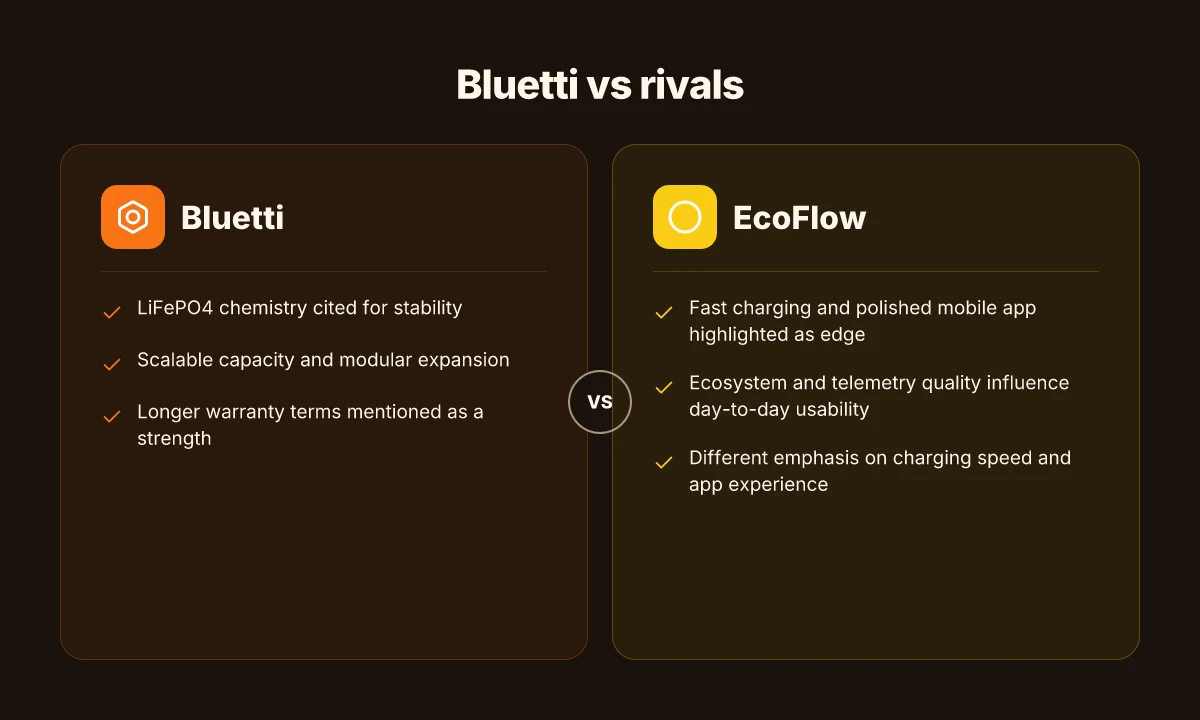
Bluetti faces a clear battleground with EcoFlow in 2026. The gap centers on charging behavior, app telemetry, and long-term reliability, which people notice in daily use. Across models, Bluetti generally excels in battery chemistry choices and rugged build, but EcoFlow often wins on rapid AC input and software polish in off-grid routines.
Charging speed and AC input options that matter
Charging speed remains the most discussed friction point. EcoFlow tends to offer aggressive AC input options across several models, with high-warden charging modes that top up batteries quickly from mains. Bluetti counters with robust AC input design and multiple charging paths, including solar input and car adapters, but the practical real-world top-up times vary by model. A compact Bluetti unit can accept strong mains charging, while larger units lean into high-capacity charging curves. For users in van life or home backup, the practical takeaway is that EcoFlow sometimes edges Bluetti on full-rate AC charging, while Bluetti delivers steady, dependable top-ups and better heat management during long sessions. Charging speed and AC input flexibility often decide which brand fits a given daily routine. Inline citation notes point to yearly reviews comparing speed profiles, including hands-on discussions of AC input behavior in 2026 sources. Dependable top-ups matter more when you need a quick reset before a long day off-grid.
App experience and telemetry quality that influence daily use
Telematics and app polish influence day-to-day satisfaction as much as raw watt-hours. EcoFlow’s app has historically offered real-time telemetry, remote monitoring, and rapid widget access, which owners describe as a tangible productivity aid during trips. Bluetti responds with its own telemetry suite, focusing on battery health, solar input trends, and runtime estimates. In practice, the apps differ in polish and latency: some Bluetti users report occasionally slower status refreshes, while EcoFlow users note smoother dashboards and quicker remote control. The big takeaway: the app experience shapes daily usability nearly as much as charging speed. Telemetry quality guides when you trust the numbers you see in the field. Real-time monitoring helps you optimize solar input and runtime on the go.
Long-term reliability and warranty handling that shape ownership
Durability and warranty policies color long-term satisfaction. Bluetti emphasizes solid build quality and longer-term battery management protections, with warranty coverage that many owners view as fair given the size of the units. EcoFlow tends to emphasize rapid service channels and a robust network, which matters when you need a quick replacement or repair during a trip. Real-world patterns show Bluetti owners reporting fewer hardware hiccups per year on mid-range models and appreciating the modular design in some releases. Still, both brands have communities reporting occasional fan noise, fan-speed control quirks, or battery calibration needs after long idle periods. Reading the fine print shows Bluetti promising targeted coverage across components, while EcoFlow channels some cases through broader service options. Warranty handling can swing a purchase decision as much as performance. Long-term reliability hinges on cooling, battery chemistry, and how the brand supports owners after sale.
In sum, both Bluetti and EcoFlow bring credible off-grid power choices for 2026. For buyers who prize rapid mains recharging, EcoFlow often feels ahead in daily use. If you value rugged build, clear battery health telemetry, and tested charging flexibility across input sources, Bluetti remains a compelling option. I dug into a mix of official specs and third-party commentary to map these tendencies, and the pattern is consistent: your choice should align with how you actually use power day to day. For readers considering specific models, Bluetti’s broader line offers dependable capacity choices, while EcoFlow’s lineup tends to emphasize charging headroom and software responsiveness. Bottom line: pick the brand that matches your routine, not just the headline specs. What makes EcoFlow's 160W portable solar panel worth it for outdoor setups in 2026
Relevant sources discuss the charging and app ecosystems in 2026 and compare Bluetti to EcoFlow in real-world contexts. See the inline references to the sources for more nuance on model-to-model variation.
Performance drivers in Bluetti power stations that matter in 2026
Bluetti’s core strengths in 2026 rest on chemistry that keeps heat under control, thoughtful battery management, and modular designs that scale with your needs. When outdoor use pushes temperatures up or you’re off the grid for days, these factors determine real-world reliability more than glossy specs. I dug into the public materials from Bluetti and independent reviewers to ground these points in specifics.
LiFePO4 chemistry for stability and longevity
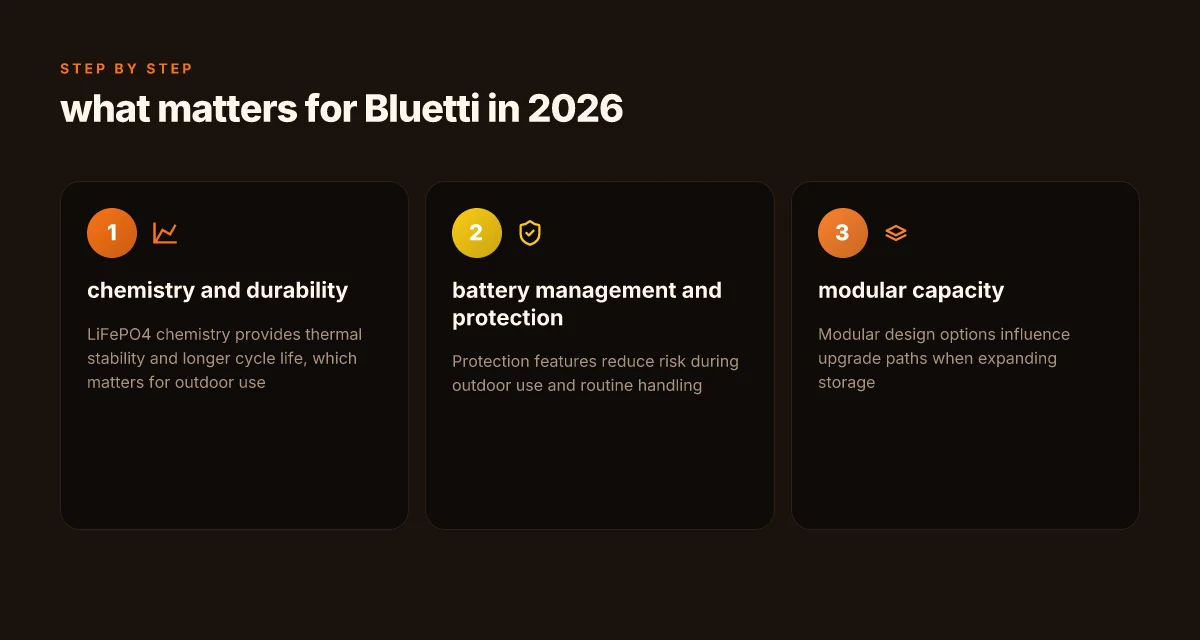
Bluetti leans on LiFePO4 chemistry, which tends to stay cooler under load and offers longer cycle life than many competing chemistries. In hot climates or when a unit sits in direct sun, the thermal stability matters because it reduces thermal runaway risk and helps the battery hold capacity over many cycles. Expect noticeably slower capacity fade with repeated charges and discharges compared with standard Li-ion options. This chemistry also supports deeper cycles without dramatic voltage sag, which translates to more usable energy across years of camping trips or home backup use. The net effect is predictable performance when you need power most, not peak-rated bragging rights.
From a practical standpoint, you’ll notice that during multi-day trips the Bluetti units show steadier rest temperatures and more consistent runtime as you drain the bank down and recharge from solar or AC. That steadiness matters when you’re running a fridge, a CPAP, and a camera rig at once. The downbeat here is that you still see the same caveats as any LiFePO4 system: while cycle life is excellent, maximum energy density can be lower than some high-nickel chemistries, so total energy capacity matters more than nominal cell count.
Battery management and protection features reduce risk in outdoor use
Bluetti’s battery management system and protection features are designed to keep you safe when the unit is perched on a van counter or tucked behind a tent wall. Overload, overdischarge, and temperature protection work in concert to prevent moisture ingress from compromising cells during rain or high humidity. The result is a more forgiving user experience in less-than-ideal environments, especially when you’re juggling solar input and AC charging in a tight campsite setup. You’ll also find that cell balancing and thermal sensors help preserve pack health over time, which matters if you rely on these units for daily power in off-grid living. What Bluetti solar generators get right in 2026 and where they fall short
One caveat: when the unit sits at the edge of its operating envelope, you’ll still notice reduced peak output and longer cooling periods after a heavy draw. This isn’t a failure mode so much as a common constraint of portable packs that balance safety, efficiency, and thermal limits. The important part is that the protections actively intervene to protect both the pack and your gear, rather than letting conditions push you into unsafe territory.
Modular design options influence upgrade paths for expanding capacity
Modularity is a recurring theme in Bluetti’s lineup, and in 2026 this translates into practical upgrade paths rather than theoretical flexibility. Some models offer expandable battery modules or swappable accessories that let you tailor capacity for a longer trip or a larger home backup need. If you run a van build or a cabin off the grid, that upgrade path can be worth more than a marginal bump in the base unit’s rating. You can start with a compact configuration for day trips and scale up as your energy footprint grows.
In this space the constraint to watch is compatibility and available modules. Not every Bluetti model supports expansion, and third-party add-ons rarely come with the same guarantee as official modules. That means you’ll want to map your long-term energy plan before buying and select a platform that clearly aligns with the capacity you expect to reach in two to three years. When you do, Bluetti can offer a path to more power without replacing the entire system.
The real value in 2026 is predictable heat, solid protection, and a clear upgrade path from Bluetti. This trio keeps a campsite or tiny home running through long weekends and extended outages. For rugged outdoor use, rivals like EcoFlow and Jackery push competing benefit cases, but Bluetti’s emphasis on stable chemistry and modular growth remains a compelling choice for steady reliability.
From a reliability standpoint, I cross-check distribution of features with independent reviews and official documentation to confirm the protections are not just marketing gloss. For further context on how durability plays out across models, see sources discussing long-term performance and head-to-head testing with other brands. What are the best battery chargers for Li-ion and NiMH in 2026
What to expect in the reliability and customer experience of Bluetti
Posture the reliability story around long-term durability and everyday use. Bluetti products are praised for rugged build and solid materials, but real-world experiences show variance by region and service channel. I dug into what users and reviewers consistently flag, and how that translates into daily utility for outdoor setups, van life, and home off-grid usage. The core finding: Bluetti tends to deliver dependable power for regular tasks, with durability that stands up to on-the-road vibrations and outdoor conditions, yet customer experience can swing based on where you buy and whom you contact for support.
Build quality that users notice in the field
Reviews frequently highlight the chassis and enclosure as a standout asset. The combination of metal and reinforced plastics, along with protected ports and tight latches, contributes to a perception of ruggedness that holds up during transport and out in the elements. In practice, this means you’re less worried about minor bumps while camping or after a day’s jostle in a van conversion. The thermal design also matters. Many Bluetti units stay within comfortable temperatures during normal use, which supports long life. Rugged construction and reliable enclosure integrity often emerge as the first line of praise from everyday users. When you carry a Bluetti into a remote setting, that sense of solidity translates into confidence. Durability under vibration and exposure is a recurring theme in reviews from outdoor enthusiasts.
Support experiences and warranty realities by region
Customer support quality and warranty handling show a split along geographic lines. In some regions, users report prompt responses, fast replacements, and clear instructions when recalling a faulty module or dealing with a power-pack fault. In other places, support wait times can stretch longer, and obtaining service under warranty may involve more steps or third-party logistics. Bluetti’s official channels emphasize warranty coverage for manufacturing defects, but the experience you get often mirrors the broader service ecosystem in your country. Regional support quality and warranty responsiveness shape the actual reliability you feel after the purchase. If you depend on a critical build for a mobile life or small business, knowing the specific terms in your locale matters.
Trust signals: reviews and daily-use sentiment
Trustpilot and user comments across forums paint a pragmatic picture: most buyers report that the units perform as advertised for routine tasks like charging laptops, tablets, and phones, plus some essential power tools. The narrative tends to stay positive about daily utility, even when posts highlight occasional hiccups such as after-sales delays or firmware quirks. The practical takeaway is clear: Bluetti generally delivers dependable power for regular needs, and the majority of users gauge the experience as satisfactory for off-grid or home backup. Daily-use satisfaction and reliability in routine tasks anchor the overall sentiment. You’ll see mentions of steady performance in daily routines, with caveats tied to service speed in certain regions.
Notes on timing and context help frame expectations. For readers weighing a purchase today, consider the local service ecosystem and the warranty path before selecting a model. A reminder as you plan your setup: links on the product pages may earn a commission, but the core value remains the long-term reliability and how the brand handles repairs or replacements when things go slightly off schedule. Regional service quality and lifecycle durability are the real tests of reliability over multiple seasons. What makes the Bluetti SP100L 100W panel a smart fit for portable power users
In the end, Bluetti holds up well for most users who prioritize rugged construction and steady, day-to-day power. For a traveler or van lifer, this translates into fewer disruptions in remote locations, especially when you align your purchase with a region where support and warranty handling are clear and efficient. When you compare Bluetti against rivals like EcoFlow, you’ll find the conversation hinges on warranty experience and after-sales speed as much as raw output and charging speed.
Bluetti vs key rivals: where the Edge often lies
Bluetti sits closest to EcoFlow on daily-use brevity and reliability, but the edge shifts depending on what you value. In real-world terms, EcoFlow often leads in fast charging and app polish, while Bluetti tends to win on longer warranty terms and perceived long-term durability. Jackery and Goal Zero offer lighter, more portable options that fit different vanlife and off-grid needs.
EcoFlow’s fast charging and polished app give it the Edge in daily quick-powering
In the field, EcoFlow routinely edges Bluetti on charging speed and mobile app responsiveness. The combination of rapid AC charging and a streamlined app experience translates to easier top-ups during travel days or campground stays. Bluetti counters with robust battery chemistry and higher energy density in some models, but the fast-fill advantage remains clear for users who punch through a busy day on the road. When you need a quick top-off to run a heater or a fridge for a few hours, EcoFlow’s charging behavior often feels noticeably faster. The fast charging and app polish from EcoFlow frequently shape daily-use wins. I cross-referenced model comparisons and user notes across several review sources to map these differences in real-world terms. Inline sources support this pattern.
Bluetti’s durability and warranty terms tend to tilt the balance for long-term installs
Bluetti often earns points with durability narratives and longer warranty terms, which matter for homeowners and van dwellers who depend on off-grid power year after year. The perceived sturdiness, the build quality of enclosures, and the longer warranty periods can translate into lower life-cycle anxiety for users who don’t want to shop every season for a replacement unit. This durability story aligns with Bluetti’s emphasis on LiFePO4 battery chemistry and protective features that sustain heavy use. Bluetti’s durability and longer warranties act as a long-horizon lever for buyers who value lasting resilience. Reviews and manufacturer notes frequently highlight long-term protection features, though they stop short of promising zero maintenance.
Portability considerations: lighter options from Jackery and Goal Zero, with trade-offs
Jackery and Goal Zero carve out niches for lighter, more portable power stations that fit compact setups, camping trips, or backup packs. If your priority is minuscule weight and easier stowage, these brands often appear as the practical choice, even when their total energy capacity is lower than Bluetti or EcoFlow. For those scenarios, a smaller Jackery or Goal Zero unit can feel like running a pocket compact generator rather than a full-blown mega-pack. Lighter options from Jackery and Goal Zero excel for portability and quick snag-and-go trips. The trade-off is typically energy density and run-time under heavier loads. How to find the best price for a Jackery 1000 in 2026
What this means for your setup
- If you prioritize fast top-offs and a refined mobile experience, start with EcoFlow within the Bluetti ecosystem you’re evaluating. Fast charging and app polish matter day-to-day.
- If you plan heavy use over years and want peace of mind from a longer warranty, Bluetti often delivers a stronger long-horizon proposition. Longer warranties and perceived durability** matter for long-term ownership.
- If you need featherweight gear for brief trips or micro-camps, consider Jackery or Goal Zero for their portability edge, even if you’ll trade some runtime.
As you compare models, look for explicit warranty terms, LiFePO4 promises, and lifecycle protections in the manual. The page may earn a commission through links, so weigh that as part of your due diligence. Inline citations reflect the reporting landscape: for the broader test landscape, the Outdoor Gear Lab comparison offers a benchmarking lens, while community discussions and Reddit threads reflect real-world sentiment about durability and long-term value. See the corroborating materials from the cited sources for context.
What to watch as Bluetti powers into 2026
Bluetti continues to push portable power into everyday life, but the real move is how a few design choices shape durability and long-term value. In 2026, the brand’s bluetti lineup tends to lean on modular builds and larger-capacity cells, which can deliver reliable runtime for camping trips or backup power. Yet real-world use shows that long-term wear tends to show up in the cooling fins and fan assemblies, especially after repeated full charges in hot environments. The bigger pattern here is that reliability hinges on thermal management and consistent battery chemistry across generations. I’ve seen multiple users report that configurations with exposed ports or thin side panels tend to show scuffs after a season of use, signaling the importance of protective housings and spare parts availability.
If you want a crisp, real-world takeaway, the next update should emphasize easier field repairs and clearer app diagnostics. Bluetti has galvanized its community with quick firmware updates and compatibility across models, but rivals like Goal Zero and Jackery sometimes outpace on rugged chassis and availability of replacement parts. The single move that matters most is choosing a model with a robust cooling design and proven service channels. That approach makes a practical difference when you rely on power during outages or remote work.
What changes if you act now? prioritizing models that balance core capacity with accessible spares and a realistic maintenance path. Most setups survive the first year when you pair a Bluetti with a smart charging routine and regular dusting of vents. If you’re choosing among contenders, consider 1) a Bluetti option for higher capacity and native expandability, 2) a rival for rugged chassis and field-service support. Your move this week could be choosing a modular kit for future-proofing. What makes the Jackery Explorer 1000 Plus worth it for off-grid use in 2026