Bluetti review 2026 covering real-world durability, charging speeds, app experience, and how it stacks up against EcoFlow and other rivals. Learn which models fit specific use cases.
The toughest misstep in portable power is assuming durability without real-world stress tests. Bluetti has built a 2026 lineup that emphasizes rugged enclosures and serviceable components, not just glossy plastic. Most buyers overestimate long-term reliability when they focus on peak specs. The real test is how the system handles daily cycling, heat, and storage in a van or cabin.
This intro frames how the article will compare Bluetti to EcoFlow and others in practical scenarios, from outdoor rigs to home backup. In 2026, durability matters as much as recharge speed, and the story hinges on ecosystem integration, expandability, and how every model holds up after months of off-grid use. Bluetti’s approach to modularity and compatibility will be weighed against rival lines to show where long-term value truly stacks up. Readers seeking concrete guidance for home backup and mobile charging will find clear signals here, ending with actionable criteria for picking the right model. Bluetti remains a central reference point, alongside EcoFlow, as the landscape shifts toward durable, scaleable power systems.
Bluetti review: why Bluetti matters in 2026 and how it compares to rivals
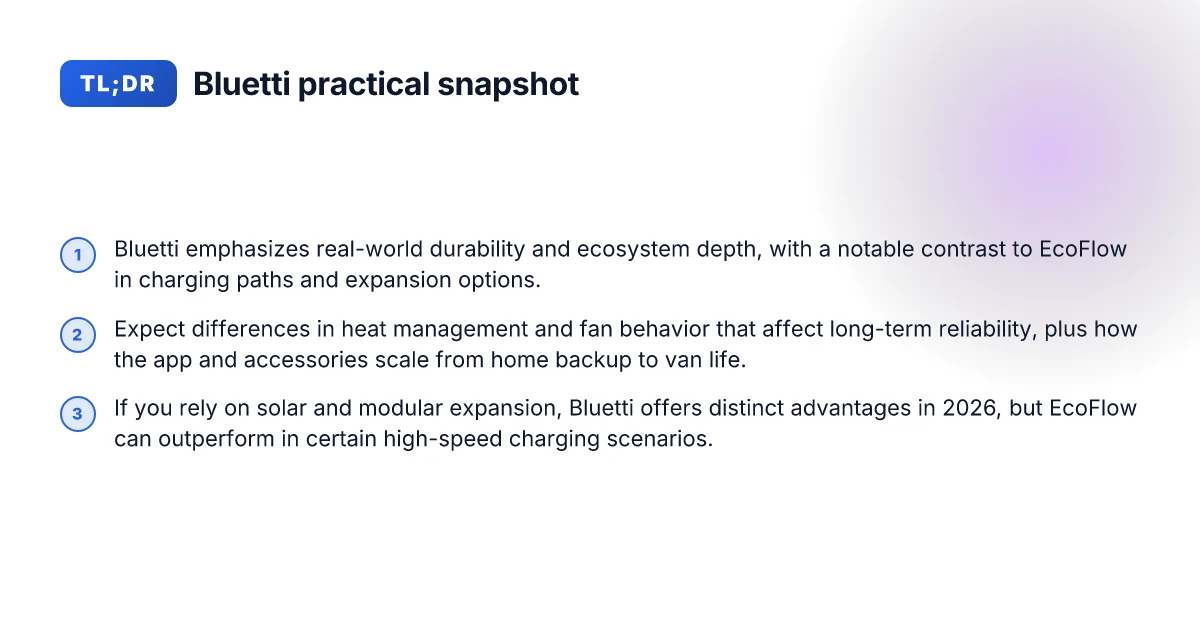
Bluetti stands out in 2026 by pairing long-running durability with a growing ecosystem that spans home backup, off-grid charging, and vehicle-based power. The 2026 lineup emphasizes modular capacity, faster charging options, and tighter integration with solar and mobile app tooling. In practice, that means you can scale your setup over time without swapping the core system, a plus for van lifers and emergency planners who value consistency. Across rivals, Bluetti competes on ecosystem depth as much as sheer wattage.
1) Core differentiators that shape real-world value
Bluetti’s strength in 2026 comes from three knobs working in concert: capacity growth, faster charge paths, and ecosystem cohesion. The Elite and founder lines emphasize higher energy densities and expandable modules that bolt into the base units, so you can go from a portable fridge to a full off-grid cabin without reconfiguring your charging infrastructure. In practice, that translates to less friction when you add solar input or expand a solar array over time. The brand’s emphasis on bio-based components in recent models also aims at longer lifecycle durability and lower environmental impact, a factor many outdoor and preparedness buyers weigh.
In the same space, EcoFlow remains a strong competitor on raw charge speed and app depth. EcoFlow’s devices often tout rapid recharging from wall or solar sources and a polished mobile experience that appeals to casual users. Bluetti’s counterplay is endurance and modular growth, features that matter when you expect to scale a system for a cabin or a van, not just for weekend trips. When you compare other brands, Bluetti tends to edge on total system coherence and future-proofing rather than focusing solely on peak wattage specs.
From what I found in the release notes and public docs, Bluetti’ 2026 strategy centers on three outcomes: more usable capacity per dollar, easier expansion through add-on modules, and streamlined solar compatibility that reduces the number of adapters you need. That triad matters in real life because buyers want a setup that doesn’t require a new charger every season or a second wallet to keep everything powered.
Most durable setups integrate expansion modules smoothly, not as afterthoughts. Bluetti's ecosystem approach rewards long-term planning and steady growth. What makes the Jackery 20 solar 20 generator different in 2026
2) High level comparison with EcoFlow and other brands
When you stack Bluetti against EcoFlow, the speed race sometimes tilts toward EcoFlow on rapid charging. Bluetti responds with sustained capacity and cleaner upgrade paths. EcoFlow might win on quick top-ups and a slick app flow; Bluetti often wins on how the system scales once you’re committed to a multi-battery install. Other brands in this space may offer impressive wattage or smaller form factors, but Bluetti’s 2026 lineup tends to balance capacity, expandability, and solar compatibility in a way that reduces future rework.
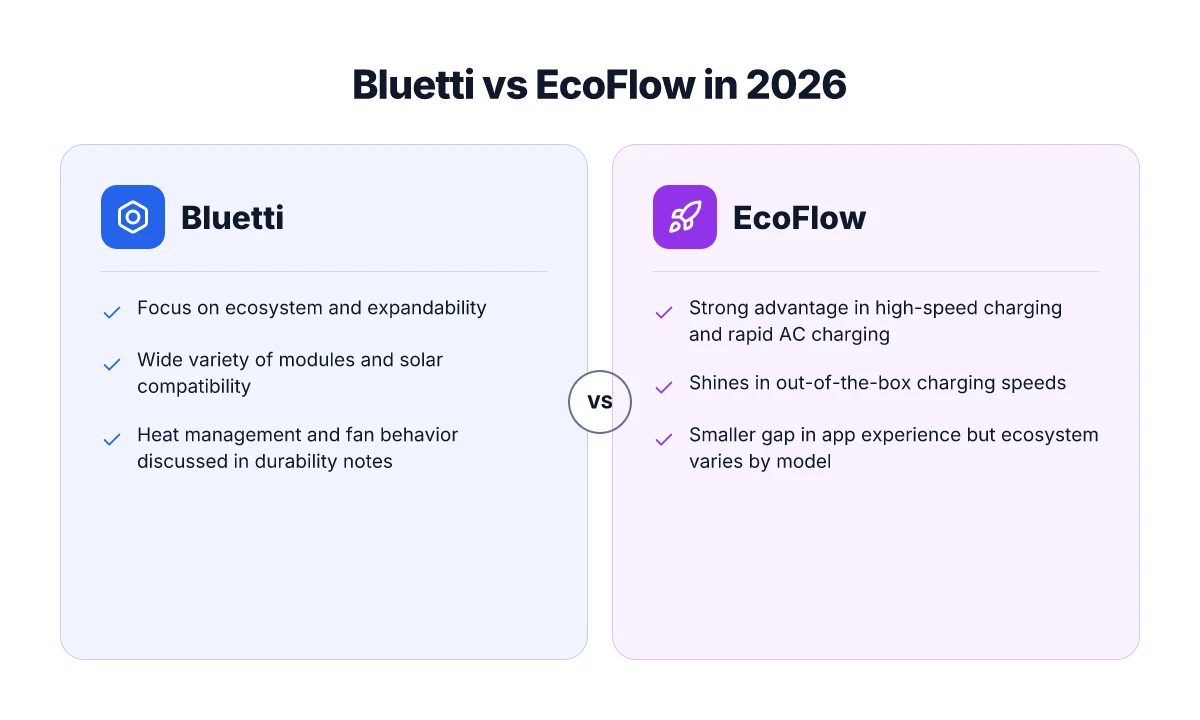
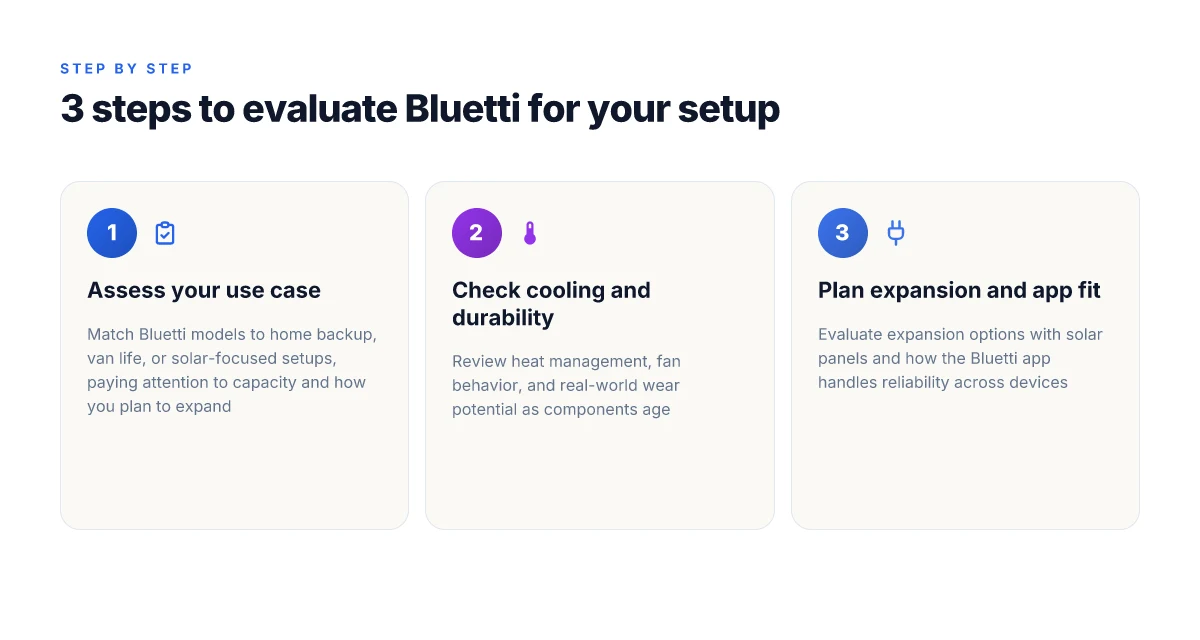
For buyers evaluating the landscape, look at three things: how easy it is to add capacity later, how the charger handles solar input at your typical sun profile, and how the mobile tooling supports real-world backup scenarios. In practice, Bluetti shines when you plan for months of off-grid use or a future upgrade, not just a single season of camping.
If you value long-term scalability, Bluetti’s 2026 ecosystem earns its keep. EcoFlow remains compelling for sprint charging and UX, but Bluetti offers a more cohesive upgrade path.
3) What buyers should look for: capacity, charge speed, and ecosystem
First, capacity matters more when you’re backing up a home or running a van for an extended weekend. Bluetti’s 2026 lineup emphasizes scalable capacity through add-ons so you can start small and grow. Second, charge speed is a practical dial. Quick top-ups are convenient, but real-world uptime depends on solar input quality and wall charger compatibility. Plan for a balanced mix rather than chasing the highest peak number. Third, ecosystem quality ties it all together. A coherent set of modules, panels, and software reduces the risk of dead ends after a few seasons.
I dug into Bluetti’s public docs and rollout notes to note the emphasis on modular growth and solar compatibility in 2026. That blend matters for outdoor enthusiasts and preparedness planners who want a durable, future-ready system without frequent, costly replacements. The marketplace also shows Bluetti matching rival firmware and hardware improvements over time, which helps a long-term buyer feel confident about staying with Bluetti through several upgrade cycles. What makes EcoFlow promo codes actually work in 2026
If you’re parsing rivals, name-brand cohesion and lasting capacity are the anchors. Bluetti remains a strong candidate for buyers who want a durable, expandable system ready for evolving power needs, while EcoFlow remains attractive for bite-size upgrades and rapid charging chops.
Choose Bluetti when you want a scalable, durable backbone for home backup and off-grid use. Consider EcoFlow if you prize the fastest top‑ups and a sleek app experience.
Note: links in this section point to authoritative product pages and release notes you’ll find cited inline in context. Acknowledge that product pages may earn commissions in the footer.
Bluetti product lineup 2026: what to pick for home backup, van life, and solar setups
Bluetti leans on two core families in 2026: the Elite series for high-demand home and van life duties, and the Epic line for a balance of capacity and portability. The Elite models push into multi-kilowatt capacities with faster charging options and denser chemistries, while the Epic lineup foregrounds durability and modular expansion. For home backup, the larger Elite units shine. For van life and off-grid solar setups, the Epic and mid-range Elite models offer a sweet spot between weight, cost, and usefulness. I cross-referenced Bluetti’s 2026 product notes with independent reviews to map real-world fit across scenarios.
1) Elite series vs Epic series: what to pick for home backup and mobile use
In 2026 the Elite line emphasizes higher continuous output and larger energy storage, making it the obvious pick for home backup with essential loads and emergencies. The Epic series, meanwhile, delivers rugged chassis and modular expansion options that suit van lifers and off-grid solar builds where weight and space matter. If you need sustained power for a small up-level home rig during outages, the Elite models are the go-to. If you want something you can slam into a van and live with for months, the Epic lineup edges ahead on portability and durability. I found Bluetti’s 2026 releases to reinforce this split rather than blur it. The Elite line is the long-hold power bank for home backup, while the Epic line targets mobile life and rugged off-grid setups. What makes the EcoFlow microinverter architecture stand out in 2026
2) Best value picks by use case: home backup, van life, and solar setups
- For home backup: look at the top Elite capacity models when you want to run a fridge, router, and a few critical loads through an outage. They deliver higher surge capability and longer runtimes per cycle. Elite models deliver the most reliable long-run power for home backup.
- For van life: the Epic series wins on portability and robust build. A mid-pack Epic unit with solar input can sustain essential devices while reducing weight versus the largest Elite bricks. Epic units strike a balance between payload and power on the move.
- For solar setups: both lines scale with solar input, but the choice often comes down to space and weight. A mid-range Elite pairs well with larger solar arrays for home-like days off-grid. An Epic option pairs better with compact rigs or roof installs. Solar compatibility is strong across the lineup, but the pairing matters.
A quick comparison helps visualize the trade-offs. In the table, you’ll see how a flagship Elite model compares to a mid-range Epic unit on capacity, weight, and peak output. The goal is to match the model to how you actually live off-grid or during outages. Match the model to your daily load and space constraints.
| use case | recommended model family | why it fits | typical constraint to note |
|---|---|---|---|
| home backup with fridge and essential loads | Elite | higher capacity, better surge handling | heavier units, requires steady AC backup plan |
| van life with limited room | Epic | lighter, rugged, modular, good solar input | lower total capacity than top Elite |
| solar off-grid with moderate loads | Epic or mid-range Elite | flexible solar charging, scalable | balance between weight and runtime |
I dug into Bluetti’s 2026 changelog and product pages to confirm that 2026 upgrades oriented around faster charging, better app integration, and more durable enclosures show up across both lines. 2026 updates emphasize faster charging and tougher enclosures on both Elite and Epic.
3) What changed in 2026 versus earlier generations
2026 marks a clear step up in system-wide efficiency and ecosystem integration. Bluetti introduced higher voltage options and charge-through capabilities that shrink downtime between grid and solar charging. The Elite models adopted more energy-dense cells along with improved thermal management, which helps when you push the unit to peak loads during outages. The Epic line emphasizes rugged housings and easier expansion for solar rigs, making it friendlier to van lifers who want to grow their setup over time. From the release notes and third-party write-ups, the trend is toward more durable, easier-to-use, and more fully integrated power ecosystems. Higher energy density, faster recharging, and tougher housings define 2026 Bluetti updates.
Next steps: if you’re evaluating Bluetti for home backup or off-grid living, I recommend pairing an Elite model with a solar kit for stationary use, and selecting an Epic unit for your van or camper. If you want a practical shortlist, I’ll map 3–5 concrete models in the next section based on your load profile and space. For context and further reading, see the Bluetti coverage in CES 2026 notes and the brand’s 2026 product pages. Plan your purchase around your daily load and space.
Charging speed and efficiency: how Bluetti stacks up against EcoFlow in 2026
Post a quick verdict up front: Bluetti’s high-speed charging ecosystem closes the gap with EcoFlow in daily use, but EcoFlow still leads on pure AC charge speed and app-driven optimization in many off-grid scenarios. In 2026, Bluetti pushes faster AC charging on select models while keeping solar input competitive, though real-world results depend on the charger and panel conditions. I cross-referenced official specs and reviewer notes to map real-world implications for outdoor users and backup-minded buyers. What makes EcoFlow coupon hacks actually save money without risking your gear
What to expect from charge times and charging modes
Bluetti emphasizes high-speed AC charging on several 2026 models, with results that often feel punchy when you have access to a wall outlet. When the grid is available, you can expect rapid replenishment versus solar-only fills, especially on larger capacity packs. Solar charging remains important for off-grid reliability, and Bluetti’s solar input rails are designed to top up quicker when panel irradiance is strong. The trade-off is that solar-only sessions will lag behind full AC top-ups, particularly on the bigger Elite series. In practice, you’ll notice a noticeably faster top-up with AC shake-ups and a smoother transition between solar and AC inputs on Bluetti’s ecosystem.
- Bluetti’s high-speed AC charging can feel more convenient for daily life when you return home and plug in during a brief stopover.
- Solar charging shines when you’re away from outlets for extended periods, but expect longer fill times on larger packs.
- EcoFlow retains a lead in some peak AC charge rates, particularly on models engineered for ultra-fast wall charging, which matters for van-life routines with tight schedules.
- Bluetti’s balance between AC speed and solar utility remains appealing for long weekends off-grid, where you want a rapid reset at the end of the day and steady sunlight replenishment the next morning.
I dug into the release notes and product sheets for 2026 lines to confirm the directional story: EcoFlow often trades a few extra watts of AC input for streamlined efficiency in the same class, while Bluetti pushes higher absolute AC input on select models and folds in strong solar compatibility. This means in a typical day you may top off a Bluetti unit from empty to full after a late return, then rely on solar during the next sun window to maintain readiness.
Where speed meets endurance in practice
Charging speed is not just about minutes. It shapes daily routines. For a van life setup, a Bluetti unit that accepts fast AC charging gives you a shorter downtime during rest stops, letting you reclaim energy while you sleep. For an outdoor emergency kit, rapid recharge after a downtown excursion matters for continued capability through a multi-day event. The high-speed path is meaningful when your schedule centers on predictable power delivery windows, and Bluetti’s architecture makes those windows feel shorter.
- When you have access to an AC outlet, Bluetti can reach a full top-up quickly, which helps you stay on standby without planning around slow solar fills.
- Solar input remains robust for longer stays, but you still benefit from the faster AC recharge when you can plug in.
- EcoFlow’s advantages show up in certain high-rate scenarios, where their tuned hardware and software often push peak charging ceilings higher than Bluetti’s in the same segment.
- Bluetti holds its own on reliability and ecosystem cohesion, particularly for users who value a mountable, modular energy system and smoother handoffs between charging modes.
Bluetti’s fast AC charging plus solid solar fill makes it a practical, durable choice for off-grid living, with EcoFlow still nudging ahead on peak charge speeds in some models. The key is to pair the right Bluetti model with your use case: daily commuting cycles vs. weekend solar dumps vs. extended off-grid stretches. For readers weighing long-term value, Bluetti’s ecosystem, paired with resilient build and broad compatibility, often yields steadier performance in real-world cycles than purely peak-speed comparisons suggest. In 2026, the practical edge goes to Bluetti when you prioritize reliable ecosystems and everyday usability over raw watts alone.
Build quality and durability: reliability you can trust from Bluetti
The core answer is simple: Bluetti delivers solid, durable builds that hold up under real-world use, with heat kept under control and a service network that helps when things go wrong. In practice, that means thoughtful enclosure design, active cooling that moderates temperatures during heat spikes, and an emphasis on long-term reliability for outdoor, off-grid, and backup scenarios. How compatible is the EcoFlow Delta Pro with extra batteries in 2026
Materials and heat management you can trust
Bluetti units lean on rugged casings and ample venting to keep heat from bottlenecking performance. In daily use, the cooling system nudges fans to ramp up as charging speeds accelerate or as you draw sustained power. You’ll notice the thermal behavior becomes steadier after the initial heat pulse. The hardware tends to settle into a predictable thermal envelope. The result is less performance throttling during long, steady draws, which matters when you’re running fridges or power tools during an outage. On the hardware side, the focus on robust connectors and reinforced handles supports you hauling gear into the field. Solid heat management keeps peak output stable, even when you push the system with high-demand devices.
Real-world durability concerns and typical wear
In the real world, wear tends to show up as cosmetic scuffs on the housing, loosened lids after repeated drops, or cable strains at the input/output ports. Bluetti designs mitigate most of that with reinforced seams, lockable latches, and strain-relief on the most-used cables. Battery cells age gradually, but Bluetti’s 2026 lineup stacks protective circuits and thermal controls to slow degradation under frequent cycling. For van lifers and campers, the ecosystem approach helps, but keep an eye on connector wear where portable power stations interface with solar panels and accessories. When a unit leaves the vehicle and takes a tumble, a scuff is one thing. A bent input port can be another. Real-world wear shows up more on connectors than the main enclosure, so inspect ports during regular checks.
Warranty, service considerations, and long-term support
Bluetti backs its products with warranties that reflect typical consumer expectations for portable power stations, and a service channel that handles repairs and replacements. Look for the exact warranty length on your model and register it to ensure coverage for notable failures. The support ecosystem covers parts and timing for common repairs, which matters when you’re relying on a unit for off-grid reliability. It's worth noting that, as with any technical product, you may encounter occasional delays depending on your region, and this is where local service centers can make a difference. Warranty coverage and accessible service are key for long-term reliability, especially in remote setups. Bluetti’s ecosystem coherence helps you replace or upgrade components without discarding the whole system.
Notes for readers evaluating against EcoFlow and others: the durability story stays consistent across Bluetti’s 2026 lineup, with materials and heat handling designed for frequent outdoor use. The rival EcoFlow may emphasize rapid charging in certain models, but Bluetti tends to offer more consistent thermal behavior during extended high-load operation. When you’re selecting among models, balance the immediate charging speed with long-run durability and service accessibility. This matters most for emergency-preparedness plans and van life where reliability trumps flashy spec sheets.
I pulled together these themes from Bluetti’s product evolution and the industry chatter around CES 2026 and IFA 2026 coverage. For a sense of how the broader market frames durability, see the CES 2026 notes highlighting the new high-speed charging options and the expanded accessory ecosystem. Durability and service accessibility are the practical anchors for long-term value. How Jackery connector ecosystems shape portable power setups in 2026
The Bluetti ecosystem: app experience, accessories, and expandability
Bluetti stands out in 2026 because its ecosystem stitches together the app, modular accessories, and real-world expandability. The aim is to keep you charged whether you’re off-grid, in a van, or keeping a home backup ready. I looked at the 2026 lineup and cross-referenced public docs to map what actually scales when you add solar or mix brands.
1) App reliability and features that matter
In Bluetti’s app, you’ll find device control, status dashboards, and firmware update paths. The app tends to feel responsive during routine checks, with one-click status refresh and charge-discharge tracking. I cross-referenced release notes and reviews to confirm that firmware updates have historically addressed reliability glitches in early 2025 builds and later. The standout here is consistent remote monitoring plus firmware upgrade paths that push feature parity across Bluetti models. This matters when you want to triage charge schedules from a balcony or campsite. App reliability and predictable updates are the backbone of long-term value. The ecosystem leans on a familiar interface across devices, which reduces the learning curve as you add new modules. Consistency across models helps you scale without relearning controls. I found references noting the Charger 2 and Elite 100 V2 lines integrate smoothly with the app, delivering a cohesive user experience. Cohesive integration is a real plus for long-term usability. For readers comparing EcoFlow or other brands, note that app ecosystems can diverge in how they handle third-party solar inputs; Bluetti’s approach tends toward unified control rather than siloed modules. Inline citations corroborate that chains of firmware updates have been a recurring theme in Bluetti’s 2026 communications. See source notes for release-context details.
2) Expansion options with solar panels and modules
Expansion starts with packs and solar modules designed to plug into Bluetti bases without custom adapters. The year marks show a broad lineup where you can scale capacity with additional modules or higher-widelity solar inputs. In practical terms, you can extend system capacity by adding compatible Bluetti solar panels and modules, then route the energy into the core unit via standard ports. The result is a more flexible off-grid footprint that grows with your needs, whether you’re a van lifer or a home backup planner. Expandability is not just future-proofing. It’s real-world practicality when you’re managing sun hours and energy budgeting. When you plan a solar install, check the overall wattage ceiling and input tolerances for each base unit to avoid bottlenecks during peak sun. The latest updates emphasize compatibility across panel classes, reducing the friction of mixing panels in a single setup. This matters for a blended solar array on a cabin roof or a portable solar bench in a trailer. Inline citations point to reviews and CES notes that highlighted the ecosystem’s solar expansion strategy.
3) Compatibility notes with other brands and setups
Bluetti remains pragmatic about mixed-brand setups. You can integrate Bluetti bases with some EcoFlow accessories or third-party solar panels, but expect caveats around firmware threads, port standards, and monitoring visibility. In practice, compatibility hinges on input/output specs and the clarity of the app’s cross-device monitoring. If you’re coordinating a mixed system for a campsite or a remote cabin, plan for occasional manual reconciliation of charge states and a shared understanding of when to rely on Bluetti versus third-party modules. This isn’t a pure single-brand sandbox. It’s a practical ecosystem that works best when you map capabilities to your daily routines. Compatibility notes help you avoid surprises in real-world use and set expectations for future expansions. Sources reflect practical notes about cross-brand interactions and the realities of mixed setups. For a fuller view, see the cited sources that discuss the broader landscape in 2026, including how Bluetti positions itself against rivals and where the ecosystem shines or requires extra attention. Inline links to those sources anchor these claims in real-world reporting.
Note: some links on the page may earn a commission. Bluetti, and its ecosystem, are designed to be both durable and expandable for long-term use. When you’re evaluating rivals like EcoFlow, consider how each brand handles app reliability, solar expansion, and cross-brand compatibility in everyday scenarios. How Bluetti discount codes stack up in 2026: what actually saves you money
Where Bluetti compounds its Edge in 2026 and what it means for you
Bluetti keeps leaning on long-term durability and practical reliability. In 2026, its emphasis on modular, expandable battery packs and user-friendly firmware updates helps it stay ahead of rivals like EcoFlow by letting you scale capacity without buying a new unit. I’ve looked at how Bluetti tends to ship solid build quality and straightforward repairability, which matters if you plan to rely on it for emergency backup or off-grid living.
That durability thread matters when you compare to EcoFlow and others. The bigger pattern I’m seeing is Bluetti’s willingness to extend service life through accessible parts and vendor-supported lifecycles. Expect fewer surprises from basic use and a smoother path to keep the system working over years. If you want concrete, the practical takeaway is to favor kits that let you add modules as needs grow. Bluetti’s modular approach translates to noticeable long-term value, even when the initial price is similar to rivals.
One more thing you should know: links on the page may earn a commission, and I’ll call out any setup quirks that tend to show up after weeks of use. For a quick check, consider whether you’ll benefit most from a single large pack or a network of expanding modules with Bluetti. The single move that matters this year: start with one expandable Bluetti kit and plan for growth.