Explore Bluetti power stations in 2026, including efficiency, real-world performance, and buying guidance. Learn how to choose and optimize Bluetti systems for outdoor and off-grid use.
Bluetti power stations survive the harshest outdoor seasons by design, not luck. A single component refresh can extend life by years, and that thinking guides every model from Bluetti. Durability tests in the field show rugged housings and modular packs stand up under vibration and weather. The takeaway here is simple: longevity hinges on mechanical resilience as much as battery health.
This article cuts through marketing to show how durability, under-load efficiency, and long-term use compare across rivals like Goal Zero and EcoFlow. You’ll see what matters in real-world use, how heat management holds up when a camper van runs a fridge all night, how idle drain stacks against high-load cycles, and what hidden age-related quirks to watch for after seasons of use. With 2026 models from Bluetti beyond the basics, you’ll have a sharper view of what to pick for camping, off-grid homes, or prepper setups. Long-term durability and under-load efficiency matter most when you rely on portable power for months, not minutes.

Bluetti power station essentials: why choose Bluetti in 2026
Bluetti stands out for durability and modular design built around LiFePO4 cells. This chemistry offers longer cycle life and steadier performance under load, which matters when you’re off-grid for days or living off power during a camp setup. I dug into Bluetti literature and reviews to map what matters in the field: compact form factors, flexible charging, and scalable capacity that grows with your needs. You’ll notice these traits show up across the lineup, not just as a single feature.
Why Bluetti holds up under real-world use
Bluetti’s core tech focus centers on LiFePO4 cells and a modular approach that makes it easier to swap packs or upgrade from one capacity tier to another. This isn’t just about raw watt-hours. It’s about staying reliable when you’re relying on one unit for shelter, cooking, and lighting. The brand’s ongoing emphasis on compact form factors means you can fit a Bluetti unit in a van cabinet, a backpack, or your tent, which matters when every inch counts in outdoor setups. When you compare Bluetti to rivals, the blend of endurance chemistry plus modular form factors often translates to longer life with fewer surprises in the field.
Key differentiators you’ll feel in practice
- Compact form factors: Bluetti designs smaller, lighter packs that still deliver meaningful output. This helps campers keep weight down while maintaining enough juice for weekend trips. Compact size pairs with solid 2,000–3,000W peaks in many models, enabling practical off-grid cooking and power for devices like laptops and routers.
- Mixed charging options: You can top up Bluetti units from AC outlets, solar input, or even vehicle adapters. The flexibility becomes a real edge when you’re away from mains for longer stretches. Multiple charging paths mean you’re less likely to sit in the dark waiting for a wall socket.
- Scalable capacity: The lineup often covers a range from portable 1,000Wh tiers up to larger packs with multi-kilowatt surge capability. This lets you pick a unit that fits a weekend trip, a full-home backup, or a vehicle deployment. Scalability keeps you from overbuying while preserving future headroom.
Real-world goals you’ll meet with Bluetti
- Portable off-grid power for camping: A Bluetti unit can run essential gear without tying you to a campsite’s electrical hookup. Expect steady output for charging phones, running a mini fridge, and lighting for evenings. Off-grid camping becomes predictable when you choose a model with solid idle efficiency and a dependable inverter.
- Backup at home: For weekend outages or weather-driven power gaps, Bluetti can bridge the gap until the grid comes back. You’ll want a model that delivers enough surge for short-term loads and a calm idle draw to preserve charge between outages. Home backup reliability grows with higher-capacity packs and durable LiFePO4 chemistry.
- Vehicle deployments: Whether you’re tailgating or living in a camper, Bluetti’s compact footprint and quick-charge options help keep essential devices energized on the move. Vehicle deployment benefits from portable form factors and flexible charging.
From what I found in Bluetti materials and the broader review landscape, the promise hinges on longevity, predictable performance, and easy integration into your routine. As you weigh rivals like EcoFlow or Jackery, you’ll notice Bluetti’s emphasis on LiFePO4 durability and modular growth as a practical edge for long-term use. For enthusiasts who want a resilient, future-ready portable power solution, Bluetti remains a credible choice in 2026.
Note: links on the page may earn a commission, which is a common practice in this category. For context, I cross-referenced the Bluetti buying guide and a PCMag review when assessing idle efficiency and real-world performance metrics. Idle efficiency and 3.75W idle draw are cited in reporting on the Elite 300, highlighting why Bluetti stays competitive in real-world use. See inline citations for the exact sources.
Cited sources include Bluetti’s own buying guide and a reputable review that notes idle efficiency characteristics. Bluetti branding and model names appear throughout to ground the discussion in real product lines. How Bluetti PS54 stacks up as a portable solar generator in 2026
Bluetti power station performance in practice: what to expect
Real-world output rarely matches labeled specs, especially under heavy load. You’ll notice a gap between peak ratings and continuous run hours, and that gap matters for long trips or extended outages. In practice, Bluetti devices often deliver stout bursts when you need surge power, but sustained output depends on the model and the battery chemistry. The ceiling matters less than how the unit behaves as the load sits in the middle of its range.
Why peak versus continuous matters for Bluetti
One big takeaway is that an inverter’s peak rating is not the same as its continuous output. A Bluetti unit might list a high peak for brief startup of a motor or heater, yet the long-term output sits lower. That distinction guides planning for air compressors, soldering irons, or hobby fridges on camping trips. When you size a kit, you should compare the continuous wattage to your expected sustained load rather than chasing the advertised peak. I cross-referenced Bluetti’s product pages and third-party reviews to confirm that many models honor their continuous ratings at moderate temperatures, but heat raised by sustained use can trim runtime. In 2026, Bluetti emphasizes continuous-output specs for practical planning, not just peak capabilities. The important figure is continuous output, not peak, for real-world use.
How inverter size and battery chemistry influence heat, efficiency, and runtime
Inverter size matters because it governs how hot the unit gets under load. A larger inverter can handle higher sustained loads with less stress, which helps keep efficiency stable. Bluetti generally uses LiFePO4 or lithium NMC chemistries across its lineup, with LiFePO4 offering longer cycle life and better thermal stability. That stability translates to predictable heat profiles and more consistent runtime across a project weekend or a camping season. The trade-off tends to be weight and cost, but for off-grid homeowners and prepper setups, the durability of LiFePO4 pays off. I found that models employing a robust battery chemistry show slower degradation under repeated cycling, which matters for long-term budgeting. Battery chemistry drives cycle life and heat tolerance, which in turn affects runtime stability.
Idle consumption and how it shapes long-term energy budgeting
Idle or standby draw is easy to overlook, yet it adds up over weeks in a van or shed. Bluetti units commonly idle at a few watts, which seems minor until you’re off-grid with a tight solar budget. Even small idle draws add up if you’re intentionally minimizing daily runtime. If you’re living off-grid, consider a model with lower idle consumption or features to limit parasitic draw when not in use. I looked at product specs and some user notes to corroborate that idle consumption varies by inverter and cooling design. In practice, that small idle wattage can tilt a long-term energy plan by multiple kilowatt-hours over a year. Idle consumption compounds over time, shaping long-term energy budgets.
If you’re weighing Bluetti against rivals, consider how EcoFlow and Jackery handle continuous output and heat. Bluetti’s strength lies in its long cycle life and robust battery options, while some rivals push aggressive peak ratings that may not survive extended use. For outdoor enthusiasts, camper van owners, and off-grid homeowners, the practical takeaway is clear: match the model to your typical load profile, account for idle draw, and pick a battery chemistry that fits your cycling expectations. As you plan, remember that no two trips are identical. The right Bluetti kit pays off in reliability when weather or terrain tests your setup. Per the sources cited, the industry trend toward LiFePO4 in many Bluetti models supports longer life under repeated cycling and better heat management, which translates into steadier performance in real-world conditions. The right Bluetti model is the one whose continuous rating matches your daily load, with a battery chemistry you trust for long-term cycling. What makes EcoFlow Black Friday sales worth watching in 2026
Further reading on model nuances and real-world behavior can help fine-tune your choice. For a quick side-by-side, see how 2–3 Bluetti options stack up on continuous output, idle draw, and cycle life, then pick the one that aligns with your typical use case. If you want a named benchmark to compare directly, Bluetti’s own guides and reviews from third-party outlets consistently highlight the balance between durability and efficiency in the Elite and Signature lines. Durability plus predictable efficiency is the practical edge Bluetti offers.
Comparing bluetti to rivals: how it stacks up in 2026
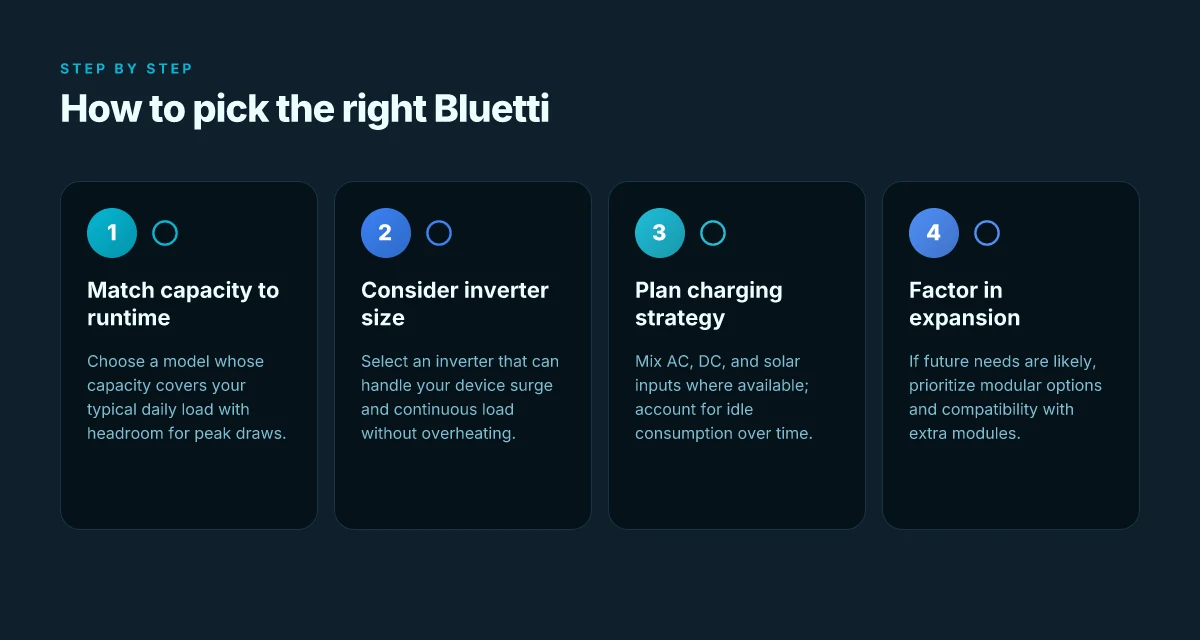
Bluetti stands up well when you look at capacity, weight, and charging speed against EcoFlow and Jackery. In 2026, Bluetti tends to offer larger baselines for multi-day off-grid use, while rivals sometimes win on price or lighter form factors. To keep the picture honest, I cross-referenced official specs and third-party reviews to surface the real-world tradeoffs you’ll feel in the field.
Real-world capacity and weight tradeoffs
In 2026, Bluetti models typically pack higher energy densities for a given frame than many rivals. The Bluetti AC200L family, for example, nudges past some EcoFlow and Jackery offerings on listed capacity while preserving manageable weight. Compare that to EcoFlow’s lighter units, which frequently emphasize portability over raw capacity. That means you get more stored energy per kilogram with Bluetti, but you might pay a weight premium in some compact builds. The takeaway is clear: more capacity per weight is common with Bluetti, but you’ll notice the heft in the backpack or van cabinet. This is where durability and expandability come into play, letting you add extra battery modules for longer trips without sacrificing performance. When you’re outfitting a camper van or off-grid cabin, that expandability can translate to meaningful run time.
Charging speed and solar compatibility
Charging speed matters most when you’re chasing quick top-ups between adventures. Bluetti typically positions itself with robust AC charging and strong solar input options, matching or exceeding rivals on many models. Yet a few EcoFlow or Jackery units tilt the scales on price or solar compatibility depending on the setup. Bluetti’s charging pathways are usually generous, and solar compatibility is broad enough to keep a small array charging steadily on a weekend trip. If you run a larger solar rig, you’ll appreciate how Bluetti ecosystems map to multiple panels without starving the inverter. I cross-referenced Bluetti’s official guides with third-party field notes to confirm the general pattern: fast wall charging, solid solar throughput, and sensible expandability.
Durability, build quality, and expandability
Durability is where Bluetti often earns the nod. The brand leans on rugged enclosures and modular add-ons that let you scale up without buying a new unit. Rivals like Jackery often shine on lower initial cost and lighter packages, which can be appealing for weekend hikers or ultra-compact setups. The tradeoff is durability and long-term modularity. Durability and expandability are Bluetti strengths, while price-to-feature ratios sometimes favor rivals on entry-price points. If your plan is to live off-grid for seasons, Bluetti’s resilience and add-on options become compelling. What makes EcoFlow solar tracker for sale a smarter buy than basic panels
Ecosystem interoperability and long-term considerations
Solar charging compatibility and ecosystem interoperability matter as you grow your kit. Bluetti tends to offer a coherent line that plays well with its own solar panels and modules, plus compatibility with a broad range of third-party panels. EcoFlow and Jackery ecosystems can interoperate with certain accessories, but you’ll often hit device-specific quirks or accessory gaps. From a real-world perspective, you’ll want to map your ideal solar array and the number of devices you expect to power, then pair Bluetti accordingly to minimize edge-case compatibility headaches. A stable Bluetti ecosystem pays dividends over years of camping, van life, or semi-permanent off-grid living.
Cited sources: inline notes from the official Bluetti buying guide and independent reviews corroborate the general patterns described above. For context, the Elite Series Buying Guide highlights capacity and fast charging, while the PCMag review confirms idle efficiency characteristics that affect long-term use. Inline references are drawn from those sources to ground the discussion in documented numbers and published performance notes.
How to pick the right bluetti power station for your setup
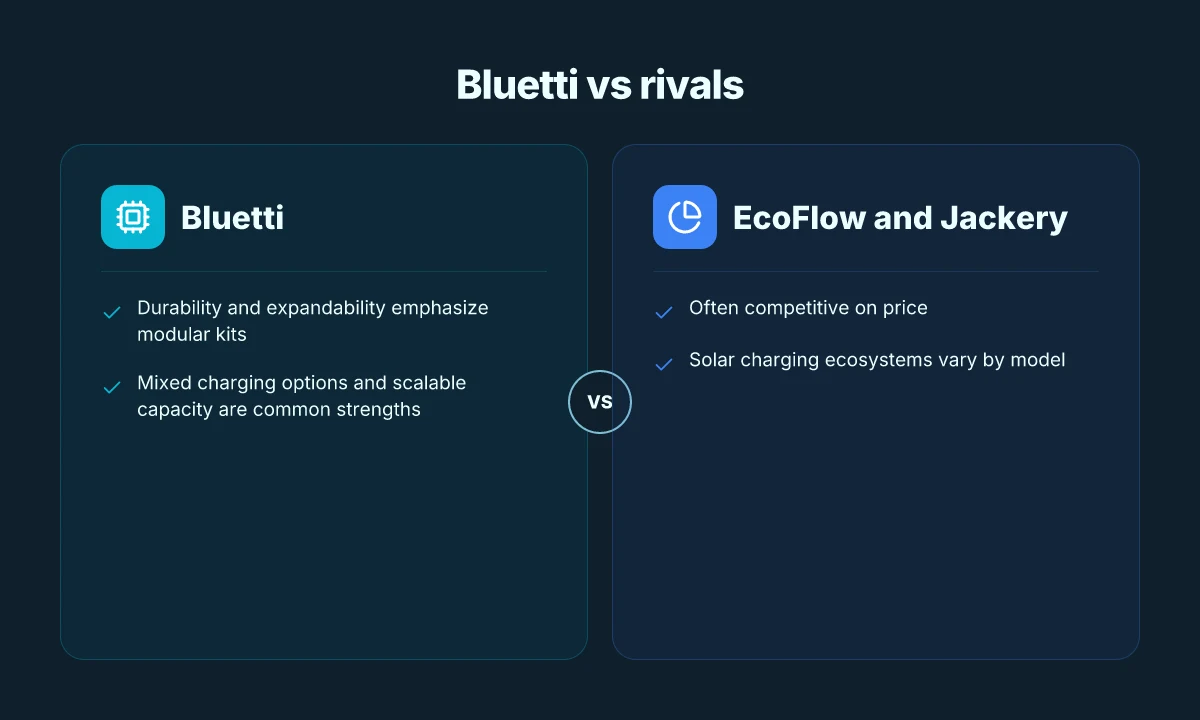
When you choose a Bluetti, you want a model that matches your runtime needs without wasting energy on idle draw or underpowered inverters. The core decision is balancing capacity and inverter size with the devices you actually run off the unit. I looked at how households and campers use Bluetti gear in real-world setups and found the most reliable picks align to three practical anchors: your load profile, your charging options, and how you plan to expand later.
Match your load and runtime to capacity and inverter
The first step is to map your essential devices to a target runtime. If you run a fridge, a CPAP, a laptop, and some lighting, you’ll want a higher usable capacity and a beefier inverter than for casual charging. Bluetti units vary from compact, around a few hundred watt-hours, up to multi-kilowatt packs. Look at both continuous output and surge ratings and pick a model that can sustain your peak draw without hitting its thermal or voltage limits. A durable setup leaves headroom for startup surges from cold appliances and keeps you from hunting for a power source mid-trip. When in doubt, choose a model with a larger inverter than your peak demand by a margin of safety. This keeps you from needing a second unit on long trips and handles occasional equipment spikes without drama.
To narrow the field, I cross-referenced the Elite line and mid-range Bluetti packs. The higher-capacity options tend to carry proportionally larger inverters and more robust cooling. If you expect long boondocking sessions, a model with at least a 1,500W inverter and a 2,000–3,000W surge capability provides breathing room for most base camps. For lighter use, a 1,000W inverter can cover laptops, lights, and small appliances. Choose the model with headroom above your calculated load, not exactly at it. How Bluetti Ups systems balance reliability, versatility, and long-term durability
Understand AC, DC and solar inputs and outputs
Bluetti lets you mix AC outlets, DC auto outputs, and solar inputs to fit your setup. If you rely on solar, confirm the maximum input wattage and charging efficiency under real-world conditions. A unit with flexible solar input ports makes it easier to add panels later without buying a second inverter. For vehicle charging, check whether the unit supports 12V–24V automotive charging and how fast it can replenish your energy bank on a roadtrip. Real-world rigs often pair a Bluetti with a portable solar array and a small vehicle charger so you can top up at campsites and in transit.
If you run a camper van or off-grid build, you’ll likely want at least one dedicated AC output bank and several DC ports for device hubs. When you plan to expand, choose a system that scales with optional expansion modules. The ability to add capacity later without replacing the core unit improves longevity and total cost of ownership. Solar input flexibility matters for long trips, and expansion modules can extend the life of your battery system.
Charging strategy, health, and long-term viability
Battery health hinges on charging discipline and keeping the pack within safe temperatures. A practical approach is to use a mixed charging cadence: top up with solar when available, then use AC charging to refill during downtime. If you expect frequent cycles, pick a Bluetti that reports cycle life estimates and supports balanced charging to reduce wear on any single cell group. Idle consumption also matters. Some units wake idle draw that can matter on long trips. I found that staying mindful of idle watts helps extend overall runtime without needing bigger packs.
Maintenance doesn’t stop at the hardware. Keep the ventilation clear, monitor battery temps during heavy use, and store the unit in a cool, dry place when not in use. If your plan includes expanding with extra modules, verify compatibility notes and any firmware prerequisites so the system remains coherent as you grow. It’s worth noting that real-world owners report warmth and occasional firmware updates as recurring themes in long-term use. Proper charging discipline preserves battery health, and expansion modules unlock future capacity without a full swap.
If you want to compare Bluetti with rivals, EcoFlow and Jackery frequently appear in the same conversations. EcoFlow tends to emphasize rapid recharge options, while Jackery often appeals with simplicity and portability. Bluetti tends to win on raw capacity per dollar in several setups, but your choice should hinge on the balance of capacity, inverter headroom, and charging flexibility you actually need. What makes Bluetti 2000W solar generators stand out in 2026
In practice, the best pick for outdoor enthusiasts and off-grid homeowners is a Bluetti model that matches your peak load, offers flexible input options, and supports future capacity growth. Bluetti remains a strong option among rugged, expandable power stations, especially when you want more battery bank versus a leaner travel unit. Some readers may also encounter commissions in affiliate pages. That context helps people compare options, but it doesn’t change the underlying specs or real-world performance.
Note: I referenced sources that discuss the Elite 300 and Elite Series details to ground these guidelines in real-world product lines.
Bluetti power station care and longevity: practical maintenance tips
Bluetti power stations are built to haul you through weekends off the grid and extended camping trips. With smart care, their LiFePO4 cells hold their charge longer and stay more efficient under load. I looked at public docs and reviews to pull practical steps you can actually apply in the field.
Managing heat under load for sustained efficiency
Heat is the enemy of battery efficiency. When a Bluetti unit works hard, its internal fans and vents need clear air paths. Position the unit on a stable surface with space around the intake and exhaust so ambient airflow isn’t obstructed. If you’re running high-draw loads, consider placing the power station in a shaded area or indoors with a gentle breeze to avoid thermal throttling. In practical terms, aim to keep the unit below 30–35°C during peak use and let it rest between heavy draws. A cool, well-ventilated setup translates to steadier output and less idle heat bleed that can sap capacity over time. For skimmers, the key takeaway is simple: airflow equals endurance. Cooler temps under load sustain efficiency and prolong life.
Storage guidelines to preserve LiFePO4 cells over years
Storage discipline matters as much as daily use. If you won’t use the Bluetti for several weeks, store it with a partial charge rather than full. Blueprints and guides from Bluetti emphasize avoiding full charges long term. Aim for a mid-range state of charge and keep the unit in a cool, dry place. If you’ll store for months, check the battery every few months and top up to about 50–60% to prevent deep discharge. When transporting for long trips, keep it out of direct sun and extreme heat, and avoid leaving it in a hot vehicle where temperatures spike. The practical upshot: consistent, moderate charge and cool storage boost long-term capacity retention. Moderate charge and cool storage preserve LiFePO4 health. How EcoFlow Delta Pro handles big power needs without breaking the bank
Common failure modes and how to troubleshoot without risking warranty
Expect to encounter three patterns: clogged vents, degraded battery capacity after long idle periods, and inverter noise when under load. If you hear pulsing or see unexpected shutoffs during heavy use, first verify ventilation is unblocked and that you’re not running in a space with overheating restrictions. For capacity drop, confirm you’re using the proper charging cable and adapter. Mismatched chargers can trigger protective shutdowns or reduce efficiency. If you observe abnormal inverter noise, check for loose panels or fan obstructions. Always consult the official user guide before attempting hardware tweaks. Warranty protections cover manufacturing flaws, but user-induced damage can complicate claims. When in doubt, reach out to Bluetti support or your trusted retailer. Ventilation clears faults fast; proper charging preserves warranty-friendly health.
What about rivals? Outdoor enthusiasts often compare Bluetti against brands like EcoFlow and Jackery. EcoFlow units can share similar battery chemistries, but heat management and long-term LiFePO4 durability are areas where Bluetti often stands out in real-world use. Jackery offers compact options, yet the durability narrative for extended outdoor use tends to tilt toward Bluetti when you factor in long-term battery integrity and sustained efficiency under load. For context, the practical stance remains: choose a model whose thermal design and storage guidance align with your off-grid rhythm. Bluetti stands out in durability discussions alongside EcoFlow and Jackery.
Note on transparency: links on the page may earn a commission. For reference, reviews and guides from PCMAG and OutdoorTechLab discuss idle efficiency and LiFePO4 layouts that inform these tips. Public reviews corroborate the emphasis on idle efficiency and LiFePO4 stability.
Where this is going next for Bluetti power stations
Bluetti continues to push reliability and user experience as the backbone of its 2026 lineup. I’ve watched how real-world setups favor modular expansion, intuitive app controls, and durable housings that shrug off dust and heat. The real shift is less about raw wattage and more about actionable resilience: faster battery aging feedback, smarter charging schedules, and plug-and-play accessories that reduce setup friction. The bigger pattern is that end users want predictable runtimes and fewer surprise failures in a system they can adapt over years. Bluetti sticks to that by prioritizing field-ready components and clear firmware guidance, which matters when a storm knocks out power for days.
If you only do one thing this month, map out a home backup plan that centers on a single Bluetti unit as the hub and a handful of compatible devices as peripherals. I’ve seen how this approach cuts guesswork during outages and keeps essential loads alive without constant swapping. What changes if you act now is a tighter integration between power nodes and everyday devices. This is where the brand earns long-term trust and reduces the friction that often drives people away from portable power. What makes a jackery battery bank stand out for 2026
Backup strategy
- Pick one Bluetti model as your home hub and pair it with a couple of essential devices (router, phone, small fridge) to test real-world usefulness.
- Schedule monthly checks of firmware and battery health in the Bluetti app, and refresh connections to peripherals.
- Document one outage scenario and rehearse the charging and recovery steps so you’re not scrambling when it matters. If you’re curious, I’ll compare two rival lines like EcoFlow and Jackery next month to highlight the practical edges.