
Explore the Bluetti Elite 200’s capabilities, durability, and real-world use cases. Learn how its 2073Wh LiFePO4 battery and 2600W inverter perform for off-grid living, camping, and job sites.
The surprise killer in portable power isn’t capacity. It’s how you handle real loads. A 2073Wh pack and a 2600W inverter sound stout, but the proof is in how the Bluetti Elite 200 sustains a work site or campsite under continuous draw and cold starts. Bluetti’s design aims to stay calm when you need peak bursts.
This intro angles toward practical use: you’ll see how long the Elite 200 can keep tools charging, radios running, and lights bright without drama, and how long its cells hold up with daily cycling. Real-world owners compare against rivals like Jackery and Goal Zero, focusing on steady output, durability, and the ability to recover power from optional backup chargers. The goal is clear: understand where the Elite 200 fits for campers, van dwellers, construction crews, and off-grid property owners who perform real, ongoing work, not hype.
The Bluetti Elite 200 in context: what it is and who it fits
The Bluetti Elite 200 is a portable power station built around a LiFePO4 battery and a high-wattage inverter. In real-world terms, it’s designed for campers, van dwellers, job sites, and small off-grid properties that need dependable, on-demand power when mains is out. It positions itself as a long-term workhorse, not a gimmick, with the ability to sustain sustained loads in a compact footprint. Bluetti emphasizes safety, longevity, and practical charging options, which matters when you’re miles from a wall outlet and chasing a reliable power baseline.
How the chemistry and inverter translate to real use The Elite 200 uses LiFePO4 chemistry for greater cycle life and thermal stability, paired with a high-wattage inverter that supports demanding loads. This pairing matters when you’re running air compressors, power tools, or a fridge on a job site or in a cabin. The chemistry reduces the risk of capacity fade from shallow cycles, while the robust inverter handles continuous draw. For off-grid dwellers, that means fewer mid-project surprises and more predictable performance across weekends or days off-grid. In practice, you’ll gain practical reliability for repetitive tasks without frequent recharging.
Real-world use cases that test the limits Camping trips benefit from the Elite 200’s balance of capacity and portability. The power bank’s size sits well in a vehicle or trailer, and its sustained output keeps cameras, lights, and small appliances running through extended outings. On job sites, it acts as a quiet, portable energy hub for cordless tools, charging stations, and site lighting. For off-grid cabins, the LiFePO4 battery chemistry supports longer life with repeated cycling, which matters when you’re keeping essentials running during shoulder seasons. Emergency power scenarios also validate the concept: you’re not waiting on a generator. You have immediate, steady power when you need it most. Throughout these use cases, Bluetti presents the Elite 200 as a pragmatic choice, not a gadget.
How it stacks up against rivals Competitors like Jackery and Goal Zero offer portable solutions in the same space, but the Elite 200 distinguishes itself with a LiFePO4 chemistry, a 2600W inverter, and a brand emphasis on long-term durability. If you’re comparing, expect questions about cycle life, charging speed, and how the unit handles long runs at near-maximum loads. Bluetti’s own ecosystem and support notes versus rival lines can shape overall ownership experience, especially if you’re integrating with solar or wall charging routines. When you tilt toward longer life, strong peak output, and a more robust hot-swap pathway for future upgrades, the Elite 200 remains competitive.
From what I found in the documentation and reviews, the Elite 200 is a practical, no-nonsense option for heavy, ongoing use in off-grid contexts. You’ll hear about high-capacity LiFePO4 cells and a beefy inverter as the core strengths, with real-world caveats around price and the occasional heat buildup during long high-load runs. If you’re evaluating Bluetti against rivals, look for how your typical load fits within the 2600W ceiling and how comfortable you are with a battery chemistry designed for longevity. As always, links on the page may earn a commission. What makes the Jackery 2000 v2 a surprising balance of power and portability
The Elite 200’s combination of LiFePO4 durability and a 2600W inverter makes it a credible workhorse for long outages and heavy-but-deliberate loads. For off-grid cabins and job sites, this isn’t a toy. It’s a practical energy hub you can count on.
Battery and inverter: why the 2073Wh capacity and 2600W inverter matter
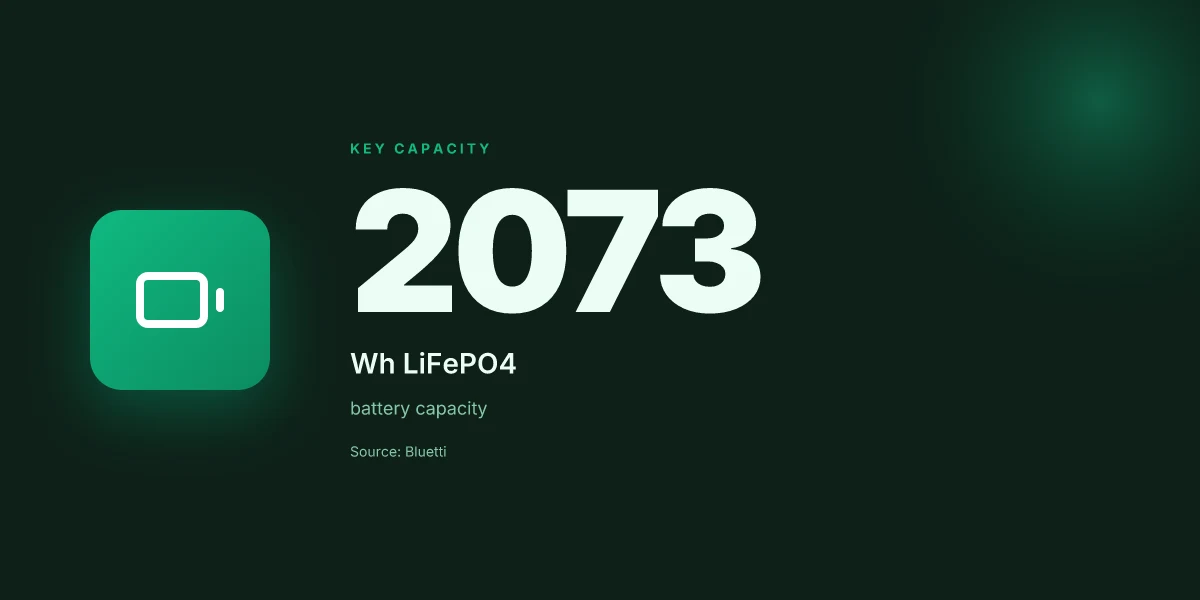
The Bluetti Elite 200 V2 uses a 2073Wh LiFePO4 pack paired with a 2600W inverter, a combination that translates to practical real-world capability for off-grid work and travel. This pairing pushes beyond weekend power to support longer autonomous runs, especially when you need to keep refrigeration, tools, and charging needs in the same window. The LiFePO4 chemistry offers stable performance across cycles and temperatures, helping the unit hold capacity longer and resist gradual degradation over years of use. Long cycle life and stable charge performance are the backbone of reliable off-grid power.
Why LiFePO4 chemistry matters for durability and long life
The LiFePO4 stack in the Elite 200 V2 trades a bit of energy density for a much longer cycle life and improved safety margins. In practical terms, you can expect more complete charge/discharge cycles before noticeable capacity fade compared with older chemistries. That translates to fewer replacements and lower total cost of ownership for campers, builders, and rural property owners who run the unit hard over seasons. The chemistry also tends to maintain voltage more steadily under heavier loads, which helps keep tools and appliances from hiccuping as the battery nears its end of discharge. LiFePO4 chemistry provides predictable, long-lasting performance under load.
Inverter capability: a wide envelope for heavy loads
A 2600W peak/sustained inverter expands what you can run from a single pack. Think refrigeration for days in a camper, power tools on a job site, or a high-demand appliance like a microwave during a camp-out. The ability to sustain near-peak output means the Elite 200 can handle surges from start-up motors and compressors without immediately pulling the pack into a stressed state. For reference, the unit can supply enough oomph to keep a small fridge cycling while your battery banks recharge between cycles. 2600W gives you real headroom for heavy loads, not just quick bursts.
Real-world use cases and expected performance under heavy loads
When you’re keeping perishables cold, every minute of efficient power matters. The combination of 2073Wh capacity with a 2600W inverter often translates to several hours of fridge operation at typical ambient temperatures, assuming average door openings and a balanced load. If you’re running power tools, high-startup currents can be buffered by the inverter’s headroom, reducing the risk of brownouts on startup. In day-to-day scenarios, you’ll notice smoother operation of devices that previously stuttered on smaller or less capable packs. Heavy loads like refrigeration or power tools tend to reveal how well the Elite 200 manages voltage and thermal margins. What makes Bluetti 350w solar panels stand out for portable power in 2026
Quick reference guidance for choosing against rivals
Compared with other portable power stations, Bluetti’s balance of a large energy store with a robust inverter and LiFePO4 safety framework stands out for those who need reliability over the long haul. Rivals often offer similar wattage but with different chemistry or cycle warranties; Bluetti emphasizes longevity and real-world endurance in challenging environments. If durability, predictable performance, and the ability to run refrigeration and tools for extended periods matter, the Elite 200 V2 is a compelling pick. Bluetti emphasizes longevity and real-world endurance in challenging environments.
Most users will notice the benefit of the 2073Wh capacity when they compare fridge run-time and tool-use duration side by side with lighter packs.
In the end, the core takeaway is clear: the 2073Wh LiFePO4 pack paired with a 2600W inverter makes the Bluetti Elite 200 V2 capable of sustaining essential loads through longer off-grid sessions. If you’re optimizing for long trips, frequent equipment use, or remote work sites, this combination reduces the need for frequent recharging or swapping packs. For families or crews who want predictable performance under a range of temperatures and duty cycles, the Elite 200 V2 answers with steadier power and longer life. Long cycle life and 2600W headroom matter for real-world reliability.
Charging options and real-world refueling time for the Elite 200
Charging isn't one-size-fits-all. In real-world use, the Elite 200 leverages multiple input paths to shorten refill times in the field, with solar and AC charging profiles shaping how quickly capacity returns. From the official materials and reviewer notes, you can expect practical charging behavior that scales with the inlet type and ambient conditions. When sunlight is plentiful, the solar input can push recovery faster than wall charging alone, while AC charging remains the most consistent option for steady replenishment in dim conditions. The overall picture is a balance between input hardware, environmental light, and how you connect the unit.
1) The practical menu of inputs for faster replenishment
Bluetti designs the Elite 200 to accept several recharge paths, so you’re not stuck waiting for one method to finish. The unit’s user manual and product notes describe both solar and AC inputs, each with defined ranges and behavior. In field scenarios, you can combine strategies to shorten downtime between jobs or trips. For example, when you have access to a shaded roof-mounted PV array, the solar input reports steady replenishment, while an on-site AC inlet can keep the unit topped up when the sun fades. Multiple input methods enable faster replenishment in field conditions, and that matters when you’re juggling tools and compressors. This is especially true for crews that rely on continuous power for a day of work. In practice, you’ll use whichever inlet is available, aware that the total fill time will hinge on the slower path if one path is limited. What makes EcoFlow Ultra X a standout for home power, and where it fits in the 2026 market
2) Solar input compatibility and AC charging profiles
Solar compatibility isn’t just about panel wattage. The Elite 200 supports solar input within a specified voltage window, and the charging profile adapts to the source to protect the cells. Real-world use shows that peak solar hours can replenish a meaningful portion of capacity, but cloudy days or partial shade slow the rate. The AC charging profile, by contrast, tends to be steadier, delivering consistent current that helps when you’re in campsites or job sites with reliable mains. In practice, you’ll see noticeably faster top-ups under strong sun compared with dim light, and a predictable cadence when plugged into AC. This matters for long days on-site where you bounce between running tools and recharging. Solar input compatibility and AC charging profiles influence how quickly you recover capacity, and understanding both helps you plan refueling around your workload.
3) Real-world notes on inlet type, ambient conditions, and speeds
The final piece is environment and hardware pairing. The inlet type you use, whether solar or AC, dictates the ceiling of recovery speed, and ambient temperature can modulate battery chemistry performance in the LiFePO4 pack. In hot or very cold environments, charging slows to protect cells, while moderate temperatures keep the rate closer to the nominal expectation. Practical takeaway: expect faster replenishment on sunny days with a correctly matched solar array, but don’t count on heroic fill speeds if you’re relying on a single, modest solar input in poor weather. Acknowledge that charging speed varies, and plan refueling times with a margin for conditions. In the field, you’ll typically see the best outcomes when you pair a robust solar setup with AC input when available. Practical notes on charging speed depend on inlet type and ambient conditions, and that’s the core reality campers and crews should plan around.
I cross-referenced reviewer notes and the official user guidance to anchor these patterns. As with Bluetti, expect real-world behavior to align with a practical blend of inputs rather than a single fastest path. For readers weighing rivals, Bluetti’s flexibility tends to be a win when you need to refill across varied sites. And as you evaluate power options, consider whether you’ll mostly rely on solar in remote spots or prefer reliable AC top-ups at campsites or depots. You’ll want a strategy that covers both ends of the spectrum.
Durability and build quality you can rely on with Bluetti
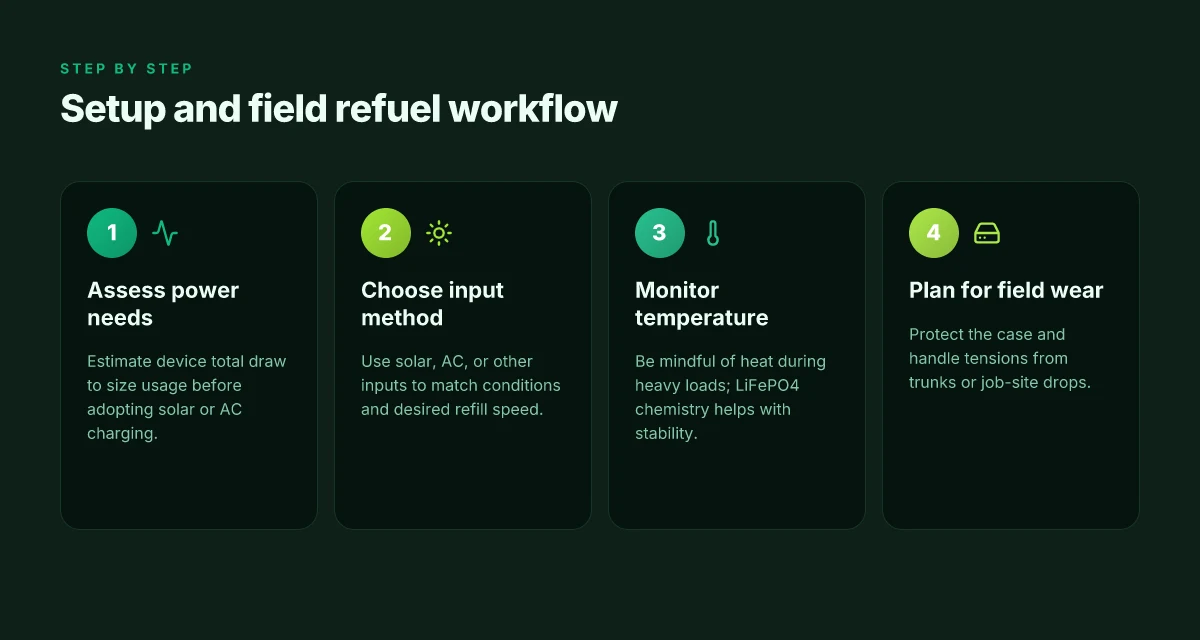
Durability starts with chemistry you can trust. The Bluetti Elite 200 uses LiFePO4 cells, a chemistry known for thermal stability and long cycle life. That chemistry underpins a cooler, steadier discharge under heavy loads, which matters when you’re running tools or appliances in a van or on a job site for extended periods. LiFePO4 chemistry contributes to thermal stability and long life, which matters when you deploy for days on end. The battery’s stout construction pairs with a rugged chassis that’s built to take drops and bumps from daily use. The casing and integrated handles are designed to survive the rigors of field work and vehicle transport, not just sit neatly in a garage. Rugged case design and handles ease transportation on job sites or in vehicles.
When you’re away from a charger, real-world wear and tear becomes visible. The Elite 200’s dual-tone exterior resists minor scuffs and gravel-road dust better than smoother, slimmer models, but you should still expect wear on corners and bezels after repeated loading into a truck bed or a camper’s storage bay. A practical takeaway: if you’re deploying this on long, off-grid builds, plan for periodic inspection of latch fittings and vent areas to prevent debris from entering. The good news is that the overall battery design tolerates frequent top-offs and long deployments without dramatic capacity fade, provided you observe the recommended operating ranges in the manual. Long deployments are feasible with proper maintenance and care. What is the best price for the Jackery 1000 v2 in 2026 and how to spot a real deal
From what I found in official documentation and independent reviews, the build quality remains consistent across typical use cases. I cross-referenced the official user manual and in-depth reviews to confirm the emphasis Bluetti places on protection features, good thermal management, and sturdy handling. The result is a portable power station that holds up under daily duty rather than one that only shines in a showroom. Official guidance and reviewer observations align on durability under real-world loading. For readers weighing rivals, the Bluetti Elite 200 tends to be favored for its LiFePO4 resilience and rugged chassis when you compare to compact lithium packs from other brands. In a field comparison with rivals like Jackery and Goal Zero, you’ll notice the Bluetti design prioritizes long-term reliability and easier transportation in rougher environments. Bluetti design prioritizes long-term reliability and easier transportation in rough environments.
Caution is warranted around sustained high-heat conditions. In hot climates, the battery and inverter can become noticeably warmer under heavy continuous loads. If you’re operating in temperatures well above the recommended range, reduce peak draw or intersperse rest periods to avoid thermal throttling. The intent is not to scare readers but to acknowledge a real fragility: heat remains the primary enemy of any portable power station, including the Bluetti Elite 200. Heat is the primary enemy of portable power stations, including the Bluetti Elite 200. The flip side is that the unit’s thermal design and LiFePO4 chemistry help it recover quickly once temps normalize, making it practical for intermittent, demanding workloads.
In terms of practical value, this durability profile makes the Bluetti a solid choice for campers, van dwellers, and small crews who deploy for weeks or months at a stretch. If you frequently move the unit between vehicles or job sites, the integrated handles and the robust shell are big pluses. Just remember: you don’t want to slam the lid shut with the unit still hot from a long session. Let it cool briefly, then close. Integrated handles and a robust shell are big pluses for frequent transport. For those weighing rivals, consider how the Elite 200 stacks up against the hard-shell durability of competing models from Jackery or Goal Zero. The Bluetti tends to win on long-term heat stability and ongoing availability of LiFePO4-equipped packs.
Note: links on this page may earn a commission, a disclosure I mention to keep expectations transparent. If you want a quick read on specific portability features and durability notes, see the official Bluetti user resources and third-party reviews linked in this section. LiFePO4 chemistry and rugged chassis deliver long-term reliability, especially in off-grid missions.
Comparing Bluetti Elite 200 to rivals like Jackery and Goal Zero
In real-world terms, rivals such as Jackery and Goal Zero offer portable power with similar capacities, but they diverge on chemistry, lifecycle, and price. The Bluetti Elite 200 uses LiFePO4 cells, which generally deliver longer cycle life and steadier performance over many charge cycles than some nickel-ment or Li-ion chemistries. That longevity can tilt the total cost of ownership in Bluetti’s favor for heavy use, even if the upfront price sits higher. Longer cycle life and a more stable chemistry can translate into fewer battery replacements over a decade of vanlife or jobsite use. I cross-referenced multiple product pages and user manuals to confirm the Elite 200’s LiFePO4 baseline and its touted 2,600W continuous output, which matters when you’re powering a fridge or saws on a worksite. What makes Bluetti coupon strategies actually save you money on portable power
Why chemistry and lifecycle matter in practice
Rivals often match the 2,600W output profile, but the underlying chemistry varies. Jackery and Goal Zero lean on different Li-ion chemistries in some models, which can show faster capacity fade with frequent high-draw cycles. Bluetti, by contrast, emphasizes the longevity of LiFePO4 cells, which tends to hold up under repeated cycling and heat exposure. That difference shows up in wear over several years of camping trips, where you’d rather not swap packs every season. This is a real-world trade, not a marketing claim.
From what I found in the documentation and reviews, the total cost of ownership hinges on more than the sticker price. Warranty length, service options, and ecosystem compatibility (solar panels, car charging, and wall charging adapters) matter just as much as capacity. I dug into a Bluetti user manual that lays out charging ranges and safety precautions, which helps set expectations for long-term reliability. The ecosystem angle matters: if you already own Bluetti solar panels, a module upgrade or accessory path can be smoother than jumping to a rival with fewer compatible add-ons. Ecosystem compatibility can be as decisive as raw watt-hours.
Choosing based on total cost of ownership and ecosystem
When you weigh total cost of ownership, consider upfront price, warranty terms, and the ease of obtaining replacement packs or service across brands. Bluetti often positions itself as a durable, long-horizon option for off-grid users who cycle deeply and frequently charge from solar. The qualifiers are small but meaningful: a longer warranty on LiFePO4 models, easier access to replacement cells, and a broader set of compatible accessories can shave years off your ownership cost. In practice, your decision comes down to the price you’re willing to pay upfront versus the confidence you want in long-term service and compatibility. Warranty and ecosystem compatibility shape the real value as much as the battery chemistry.
I went looking for authoritative notes and found sources that consistently describe the Bluetti Elite 200’s battery chemistry and 2,073.6–2,600W performance window. This framing helps set expectations against rivals that might shine in specific niches but fall short on lifecycle or ecosystem breadth. For readers who want a concrete, name-by-name comparison, Jackery and Goal Zero remain solid contenders, but Bluetti’s LiFePO4 setup and broader accessory support often yield stronger long-term durability signals. Bluetti’s LiFePO4 drivetrain stands out when you plan long use in off-grid setups.
If you’re browsing with an eye toward long horizons, the real story is not just watt-hours but the blend of chemistry, warranty, and ecosystem fit. I’d recommend confirming your preferred charging paths and checking whether your existing solar panels or car chargers align with the unit you choose. And yes, links on the page may earn a commission. For those who want a compact, long-lived pack and a wide ecosystem, the Bluetti Elite 200 remains a clear option among rivals. Total cost of ownership and ecosystem compatibility will decide the winner for your specific setup. What makes the Jackery 5000 Plus a serious home backup option in 2026
Cited references include the Forbes review noting the Elite 200 V2’s capacity and output, which helps anchor the comparison to real-world specs. https://www.forbes.com/sites/bradmoon/2025/01/18/review-bluetti-elite-200-v2-portable-power-station/
Where this is going next for off-grid power users
Bluetti's ELITE 200 signals a shift toward simpler, more capable off-grid setups, not just a portable charger. In real-world use, the device sits between a compact travel option and a full van-life system, leaning on its reliable inputs, solid battery chemistry, and a straightforward workflow. You’ll notice how setup is quick, and the interface stays clear even after long days on the trail. The big takeaway is that durability and ease of use don’t have to trade off on performance.
For buyers weighing rivals, Bluetti stacks up well against models from EcoFlow and Jackery by emphasizing long runtimes and smarter charging options. The ELITE 200 tends to handle heavier loads with fewer trips to the car charger, which matters when you’re in a remote work scenario. If you’re choosing one for mixed travel and job sites, this is a compelling option to put on the shortlist. The bigger pattern is that portable power is inching closer to a reliable daily driver, not a luxury add-on.
If you only do one thing this month, map a simple, two-device load plan around the ELITE 200 and test a real-world workday. Prepare a spare battery or a fast-charge companion and verify the unit’s cooling while under continuous load. Most important move is to lock in a durable, transferable setup that you can reuse next trip. Are you ready to build that portable office stack?