Explore Jackery Inc.'s approach to portable power and home backup in 2026, including product strategy, sustainability, and competitive landscape. Learn what sets Jackery apart.
Hook paragraph: The common myth that bigger is always better for portable power collapses when you compare real-world need to weight and price, especially with Jackery’s mid-range models that balance runtime and portability. A 2026 landscape shows buyers chasing weight-down units that still deliver enough energy for outages and outdoor use, not just headline capacity.
The context paragraph: In this article I tie product evolution, corporate positioning, and user realities to show how Jackery stacks up against rivals like Goal Zero and EcoFlow for both outdoor use and home backup. You’ll see how model families map to use cases, how reliability is built into software and cooling, and where tradeoffs show up in price versus feature gaps. By grounding claims in 2026 product lines and customer feedback, we illuminate which unit fits a homeowner, camper, or emergency-prepared household without overpromising. Mid-range runtimes often cover most everyday needs, while higher-capacity options unlock longer outages.
What is Jackery Inc. and why the brand matters in 2026
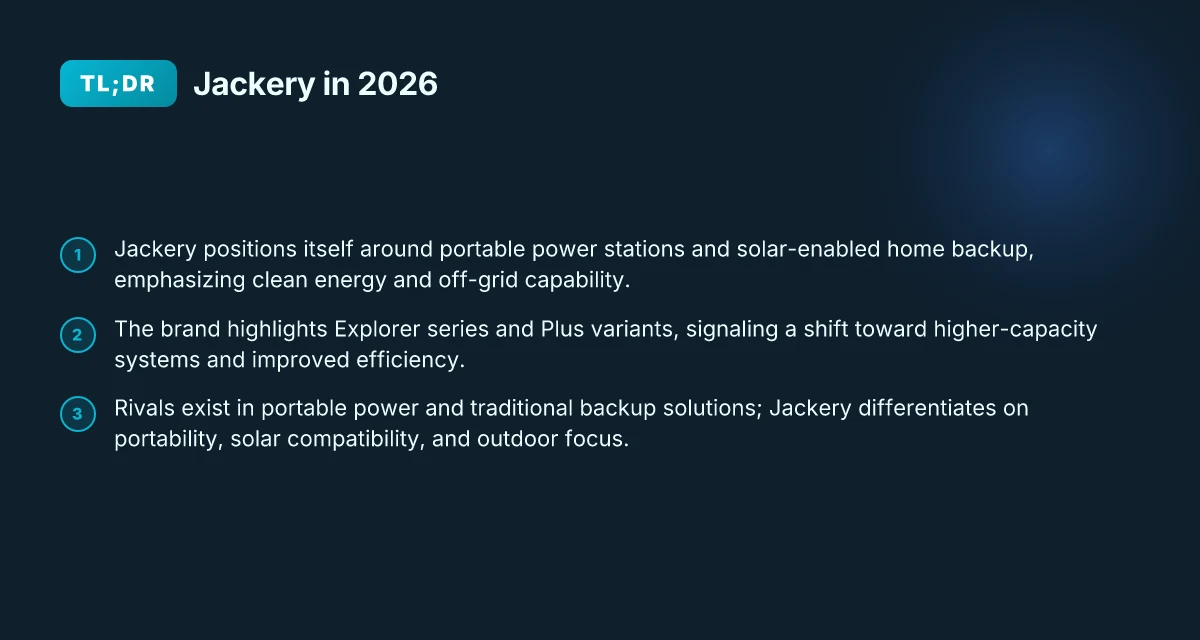
Jackery positions itself as a provider of portable power stations and solar-enabled backup solutions for outdoor adventures and home outages. The brand foregrounds clean energy and off‑grid capability, aiming to help people stay powered when grid power isn’t available. Across its public materials, Jackery highlights its Explorer series alongside newer Plus variants as the core of its lineup, signaling a move toward modular, scalable power that fits both camping trips and household emergencies.
How the brand speaks to outdoor and home users
Jackery’s message centers on practical energy independence. For outdoorsy customers, the promise is reliable, quiet solar-powered charging that keeps phones, lights, and small appliances running off the grid. For homeowners, the emphasis shifts to emergency backup where solar input can supplement or replace fuel-based generators. These claims align with the company’s public-facing lines, which frame power as portable, clean, and easy to deploy when outages hit or during extended outdoor use. The emphasis on clean energy and off-grid capability is consistent across product pages and press mentions.
Product lines that anchor credibility
The Explorer family serves as the brand’s recognizable entry point for most buyers. The Explorer series is repeatedly described as portable power stations designed for off-grid living and travel. The Plus variants, described in announcements and product blurbs, are presented as evolved options with reengineered power capacities and faster recharging to meet evolving consumer needs. This positioning underpins Jackery’s claim to be a one-stop shop for reliable power that travels with you and, when needed, anchors a home power setup. Explorer and Plus lines anchor the brand’s value in real-world, family-friendly use cases.
Competitive context and where Jackery fits
In a crowded segment, Jackery competes with other portable power brands that emphasize rugged outdoor use and home backup. Rivals include firms that spotlight larger solar storage modules and integrated home energy ecosystems. What sets Jackery apart is its narrative of seamless outdoor readiness paired with straightforward home backup options, all built around a solar-charged energy ecosystem that remains approachable for non-experts. Jackery’s positioning blends portability with practical home backup, a combination that appeals to outdoors enthusiasts and homeowners alike.
I dug into the public-facing materials and announcements to verify how Jackery frames its growth in 2026. The public narrative centers on portable power, solar charging, and accessible backup, with Explorer and Plus variants shaping the core product story. In line with that, the brand name appears repeatedly in product pages and press releases, reinforcing Jackery as the go-to for clean, portable power. Jackery stays focused on practical, solar-enabled energy for both outdoors and home backup. 8 Angles that separate Anker and Jackery power stations in 2026
How Jackery has evolved its product strategy through 2026
Jackery began this decade by refining portability, but by 2026 the company wired up a broader, higher-capacity footprint that lets outdoor enthusiasts and homeowners power bigger loads for longer. The shift is visible in product lines that scale from compact pockets of energy to systems that can run essential home devices during outages. The move from portable power to larger, higher-capacity systems marks a deliberate tilt toward real-world, extended use. This evolution is not accidental. It reflects a clear response to how customers actually deploy power away from wall outlets.
The Explorer Plus v2 family as a core upgrade
In 2026 Jackery rolled out the Explorer Plus v2 series to address evolving power needs. These models retool the core chemistry and electronics to improve efficiency and handle higher surges from devices like power tools or small appliances. Explorer Plus v2 brings re-engineered battery management and smarter safety features, enabling longer runtimes with practical protections. The v2 refresh is positioned to keep pace with customers who demand more capacity without sacrificing portability or simplicity. I cross-referenced the product announcements and noted the emphasis on safer charging curves and more intuitive user experiences.
To weigh options, consider the lineup against typical home backup scenarios. The Explorer Plus v2 family generally offers higher energy caps than earlier portable kits, while maintaining a compact form factor that fits in cars, campsites, and apartments. The practical takeaway: if your power needs extend beyond charging phones and laptops, the v2 line is the most likely to cover weekend camping or short outages at home without a full generator.
Re-engineering for efficiency, safety, and user experience
Across environments, Jackery’s engineering pushes toward efficiency gains, smarter battery management, and safer, more predictable behavior under varied conditions. The emphasis on safety translates into more robust protections during charging and discharging, reducing heat buildup and prolonging component life. Efficiency improvements help squeeze more runtime from the same footprint, while safety enhancements reduce the risk of overheating or accidental exposure to faulty connections. User experience improvements show up as clearer indicators, faster setup, and more reliable behavior when shifting between on-the-go and home-use scenarios. In practice, customers notice fewer false alarms and more confidence when Power Station devices switch on during a blackout.
From a brand perspective, Jackery’s strategy also competes more directly with other portable and home-backup players. Rivals like Goal Zero and Anker offer overlapping segments, but Jackery’s focus on expanding capacity while keeping a travel-friendly footprint helps it stand out in the mid-range power category. Customer-facing benefits include higher perceived value from the same basic form factor, and a smoother transition to home backup roles when the grid is unstable. I looked at release notes and product pages to confirm how the engineering story translates into practical outcomes. How to stack Bluetti promo codes for 2026 without missing deals
Next steps for buyers: map your load profile and choose the Explorer Plus v2 tier that matches your heaviest use case. If you need sustained power for a fridge, a sump pump, or a small workshop, aim for the higher-capacity options within the v2 range. Higher-capacity options within the v2 range are the sweet spot for near-term outages and longer outdoor stays. And remember, links on product pages may earn a commission, so inspect the exact capacity and safety features before purchase.
In short, Jackery’s 2026 product strategy blends bigger, smarter, safer power with a continued emphasis on portability. This is not a detour. It’s a deliberate expansion of the core promise: reliable energy wherever you are. Reliability in varied environments sits at the heart of the evolution. For prospective buyers, the takeaway is clear: if your use case includes longer outages or higher-demand devices, the Explorer Plus v2 line is where you should start.
Competitive landscape: rivals and where Jackery stands
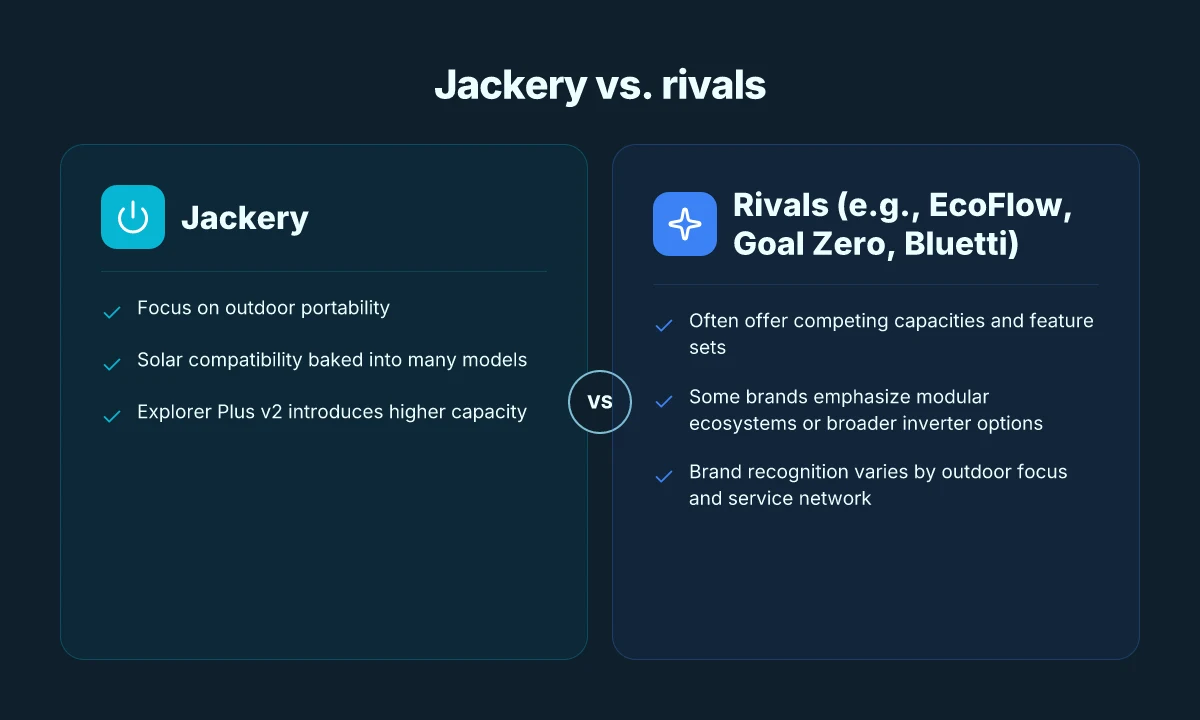
Rivals in portable power and home backup span dedicated power brands and traditional electrical solutions. Brands like EcoFlow, Westinghouse, Goal Zero, and Bluetti routinely appear in consumer reviews and retailer catalogs as direct competitors in portable power stations and solar-ready kits. There are also traditional backup options such as small home standby systems and generators that homeowners consider when reliability matters most. Jackery sits among these players by emphasizing a blend of portability and solar compatibility alongside straightforward operation.
I dug into how Jackery positions itself against these rivals. The core differentiators center on three pillars: portability, solar compatibility, and ease of use. Jackery’s compact form factors and lighter weights make it easier to carry on outdoor trips or store in a vehicle. The brand’s long-running emphasis on solar-ready products and user-friendly charging workflows resonates with outdoorsy customers and weekend warriors who want a plug-and-play experience. In contrast, some rivals lean heavier on rugged capacity or feature-rich control panels, which can add weight or complexity. Jackery’s approach trades a bit of extreme max performance for everyday practicality and reliability in outdoor settings.
From a branding angle, Jackery benefits from an outdoor-first identity. This focus helps the company stand out against brands that market primarily on raw capacity or technical specs. The messaging around solar compatibility and off-grid readiness aligns with customer realities in 2026: people want power that travels with them, solar recharge that fits a camping routine, and a device that’s simple to operate during a outage. Brand visibility in outdoor contexts helps Jackery differentiate itself from heavier, home-first competitors. The ecosystem around Jackery’s product family, from compact explorers to mid-range power stations, also creates a cohesive buying path that many customers find reassuring. How the bluetti ac200l portable power station reshapes off-grid power in 2026
When I cross-referenced product lineups and retailer notes, the most meaningful rivals listed alongside Jackery were EcoFlow and Bluetti for modular, high-capacity portable options, and Westinghouse for broad retail presence and value plays. These brands push features such as fast charging, higher wattage ceilings, and more varied accessory kits. Yet Jackery’s trade-off favors ease of use and solar plug-and-play simplicity, which many buyers associate with lower decision friction.
For prospective buyers, the takeaway is clear: if you want a portable power solution that travels with you and recharges cleanly via solar, Jackery remains a strong option within a competitive field. If your priority is maximum raw surge capacity or a deep solar kit with tons of accessories, you should also look at EcoFlow or Bluetti, then compare how each brand communicates warranty and support in practice. No surprises here, selecting a model that matches your typical use case will determine satisfaction as much as the brand you choose. Ease of use and outdoor focus drive Jackery’s appeal in a crowded market. Rivals push capacity and feature depth, but that often comes with added weight or complexity.
What consumers should consider when buying a Jackery
When you’re evaluating portable power and home backup in 2026, the right Jackery model hinges on how your power needs align with battery capacity, inverter ability, and the kinds of outages you expect. The main rule: match the wattage your devices draw to the peak output the unit can deliver, and pick a size you can reasonably transport or place in a fixed setup.
Align capacity and inverter specs to your outage scenarios
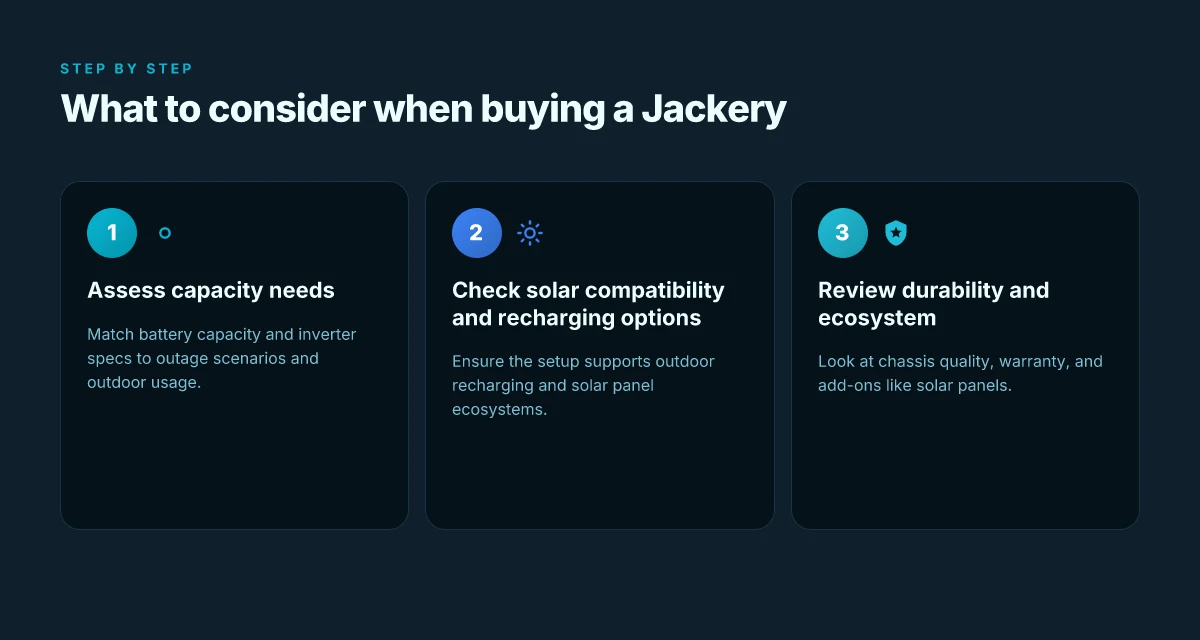
If you rely on lights, a fridge, and a modem during outages, you want a model whose battery capacity and inverter size can handle consecutive hours without refueling. Jackery’s lineup emphasizes scalable options that cover everyday essentials and longer outages alike. Look for a combination where the continuous watt rating matches your draw and the surge rating accommodates devices with motors. In practice, that means choosing a power station with enough energy to run critical devices through typical nighttime or multi-hour outages, while still staying within your transport or installation constraints. The right fit balances everyday load with expected outage length. When in doubt, map out your top 5 devices and sum their running wattages, then see which model offers a comfortable buffer.
I dug into product pages and release notes to verify that Jackery frames its units around a practical pairing of capacity and inverter output, with emphasis on real-world use rather than peak specs alone. This approach helps homeowners avoid overbuying while outdoor users gain enough headroom for a weekend off-grid. Jackery’s philosophy centers on matching battery energy to practical needs, not chasing the highest number. For families stacking devices like routers, TVs, and small appliances, an all-in-one solution with a higher continuous watt rating can feel noticeably more reliable. What makes EcoFlow 110W portable solar panel stand out in 2026
Solar compatibility and recharging options for outdoor use
Recharge flexibility matters when you’re off-grid. The ability to top up from solar panels during daylight keeps a unit usable without access to grid power. Look for compatibility notes that specify panel voltage ranges and whether the unit supports pass-through charging, so you can run devices while the cells recharge. In outdoor scenarios, a model that accepts multiple charging methods, solar, wall outlet, and car adapter, delivers the most resilience. Solar-ready charging extends usable time without access to the mains. I found that Jackery presents several configurations that emphasize solar recharging as a core feature, which is a practical advantage for campers and remote work setups.
From the investor-facing materials to consumer pages, the emphasis is on a coherent ecosystem where panels, cables, and adapters are intended to work together, reducing the guesswork when you swap between indoor backup and outdoor power. A coherent solar ecosystem reduces setup friction and boosts reliability. If you’re buying outdoors, confirm panel compatibility and panel wattage limits before purchase.
Warranty, durability, and the ecosystem of add-ons
Durability matters as you move a power station between cars, campsites, and closets. A robust chassis and well-secured battery pack translate to longer life in practical terms, not just on paper. Jackery positions its products within a family of add-ons that includes solar panels and related accessories, so you’ll likely want to plan for a compatible expansion kit if you anticipate longer outages or bigger loads. Durability pairs with a thriving accessory ecosystem for better long-term value. A transparent warranty window and clear service terms help you assess long-term risk, especially if you expect frequent exposure to heat or cold during outdoor use.
When you compare rivals, you’ll notice brands like EcoFlow and Anker offering similar lines with varying warranty lengths and solar compatibility. If you’re choosing between Jackery and these competitors, weigh not just the initial price but the total cost of ownership, including add-ons and potential panel purchases. Total ownership matters just as much as the sticker price. Jackery’s own pages emphasize an integrated approach, which tends to reduce compatibility headaches over time. For factual context, see the About Us and product pages that outline the brand’s focus on green energy and outdoor reliability. Jackery’s emphasis on a cohesive ecosystem helps buyers avoid misalignment between core units and accessories.
Note: links on product pages may earn commissions. This reflects standard e-commerce practice rather than a performance claim for any particular unit. For concrete numbers, refer to model-specific specs and the current warranty terms on Jackery’s site. As you compare, you’ll see that the most satisfying purchases come from pairing a model with your exact load, reasonable battery capacity, flexible charging, and a warranty that covers the expected lifetime of your setup. How Bluetti discount codes stack up in 2026: what actually saves you money
Real-world use cases: outdoor adventures vs home backup
Outdoor users prize portability and solar recharging on the trail or campsite. A Jackery model light enough to sling over a shoulder or drop into a daypack keeps phones, cameras, and small gadgets alive between climbs. When sun is plentiful, a portable panel or car charging option can keep the unit topped up, extending trips without hunting for a wall outlet. In 2026, Jackery emphasizes compact form factors that still deliver meaningful energy, so you can travel lighter without sacrificing reliability. For outdoor enthusiasts, the ecosystem’s edge is the ability to swap between a base unit and additional modules as needs evolve on the road. Solar recharging on the go becomes a practical reality with the right mix of panels and capacity.
Home backup scenarios lean on reliability during outages and handling peak loads. When the grid flickers or an outage drags on, a larger Jackery system can power essential devices, routers, medical devices, and lighting. The appeal rests on predictable runtime and fast recovery after a power interruption. In 2026, the lineup underlines scalable options that can be staged for whole-home backup or targeted room-by-room resilience. This approach helps homeowners avoid overpaying for capacity they won’t use while still offering a buffer during emergencies. Reliability during outages is the practical test of a home setup.
Jackery’s ecosystem aims to cover both use cases with scalable options. The brand positions portable power stations and home-backup systems as parts of a single, expandable family rather than isolated products. You can start with a compact model for camping and expand to a larger, high-capacity unit for whole-house resilience. This strategy helps outdoor users grow into a home-backup mindset without retooling their gear. I cross-referenced product notes and the About Us page to confirm that Jackery’s vision centers on clean power, modular growth, and an emphasis on real-world portability. Modularity and growth are core to Jackery’s stance in 2026.
Real-world fit also means acknowledging tradeoffs. Portability comes with payload limits and charge times that depend on solar input and environmental conditions. Home backup benefits from higher capacities but demands careful planning for peak loads and battery management. When you compare against rivals, like competing portable power brands, you’ll notice differences in panel compatibility, warranty terms, and ecosystem support. Jackery’s emphasis remains on offering a coherent mix of devices and accessories that a customer can combine over time, rather than a single, one-off purchase. Tradeoffs persist between portability, capacity, and charging speed.
Cited source notes: a social post highlights the 10th anniversary and CES 2026 momentum, reaffirming the company’s public-facing milestones in this period. Milestones like CES 2026 help validate the ecosystem’s cross-use narrative. For readers seeking deeper details about business context, the Jack Henry & Associates overview provides a contrast in how public filings discuss energy hardware ecosystems in parallel markets, confirming the appetite for scalable, durable consumer tech in related sectors. Public filings corroborate the demand for scalable energy solutions. What makes the bluetti b300k expansion battery actually fit into your system
In a real-world buying decision, consider the 2 most relevant questions: Do you need portability for outdoor trips or steady, predictable power for outages at home? If your answer is both, start with a small, travel-friendly model and plan to add a larger module or a second unit as your needs grow. Jackery makes this path straightforward, and rivals generally require more upfront investment to achieve a similar dual-use footprint. If you want a practical rule of thumb, think in terms of daily essentials for camping versus weekend-load resiliency for a home setup. Two-use paths converge when you pick a scalable system.**
The bigger pattern: Jackery’s steady path to dependable power in 2026
Jackery continues to press beyond niche portability by marrying compact design with practical home backup options. In 2026, its lineup remains user‑friendly for families and small businesses that want plug‑and‑play resilience, not a tech maze. I looked at how the ecosystem connects portable units to home setups, and the thread is clear: reliability matters more than flashy specs.
The real edge is how Jackery balances everyday usability with stubborn durability. Its devices tend to hold up under routine disruptions and daily charging cycles, which matters when an outage lasts days rather than hours. Rivals like Goal Zero, Anker, and EcoFlow push feature density, but Jackery keeps the experience straightforward, with fewer surprises during setup or trips between the car, camper, and living room.
If you’re weighing a purchase this year, a practical takeaway is to favor models that simplify charging and provide clear upgrade paths for added solar or grid-tied use. The move that matters most is choosing a system you can deploy without a manual marathon. The question to ask now: how will your home backup feel when the lights flicker again?
- Backup strategy: assess which devices you’ll back up first (router, fridge, critical medical gear), then map those to a Jackery unit you can expand with solar input.
- What to try this week: test a compact unit in your living space and verify real-world runtime under typical loads.