Discover how to pick the best freshwater lures and tackle for 2026. Practical guidelines, gear picks, and a 5-8 brand roundup including KastKing for durable, value-packed options.
The typical snag in freshwater fishing isn’t the bite it self. It’s choosing lures that only seem good in a catalog when the water, fish, and season disagree about what they want. KastKing dominates the current market for a reason, but you’ll need the right mix to cover both sprint and hover tactics.
Freshwater anglers wrestle with rapid product churn and shifting prey dynamics. In 2026, new lure releases and tech collide with evolving forage and riverine pressures, making a thoughtful starter kit more valuable than ever. This guide narrows the field to a vetted shortlist and shows you how to pair gear with your local ponds, lakes, and rivers. The aim is clear: meaningful upgrades that endure, not fleeting trends.
Why 2026 demands a fresh approach to freshwater lures and tackle
Freshwater anglers face more than changing tides of weather. In 2026, new lure releases and tech are reshaping how we present baits, while shifts in prey species push us to rethink forage and habitat. I dug into the published chatter and release notes to map what actually changes this year. The result is a practical framework you can apply on ponds, lakes, and rivers without chasing every gimmick.
1) New lure releases and tech
In 2026, several brands pushed updates that affect how lures behave in weed beds and clear water alike. Smart reels and integrated depth-controls let you dial in depth with less guesswork, while updated hard baits and soft plastics mimic forage more convincingly. These tools matter when you’re chasing panfish in dense cover or pursuing bass along weedlines. The takeaway is simple: the right new tech can save you minutes per session and boost consistency when conditions swing.
I cross-referenced release notes and retailer rundowns to confirm which items ship with measurable improvements. One trend stands out: lures that pair with improved line-management and mechanical action tend to track better in current and windier days. That matters for river anglers who need precise depth control across changing flows. The practical edge comes from gear that pairs accurate depth with reliable presentation, not from flash alone. The upshot is clear: if your current setup lacks depth control, upgrading to a model with integrated depth cues is worth testing this season.
2) Shifts in popular prey species and forage
Forage ecosystems evolve with seasonality and heat. Populations of minnows, sculpins, and certain amphipods shift with water temperature and habitat use, nudging what lures actually attract. In warm months, predators may key on faster-moving presentations. In cooler periods, subtle action and natural foraging cues win out. I reviewed guides and gear essays to align tackle selection with these forage shifts. Matching lure action to the dominant forage at the time of year sharply lifts bite opportunities. This is especially true around weed edges, sunlit shallows, and current seams where prey concentrates.
From a sourcing perspective, the field steadily favors baits that emulate natural movement and scent trails, alongside rigs that keep lines clean in heavy cover. If you usually reach for the same trio of lures year after year, this is the moment to test two or three new silhouettes that pair well with the forage present in your lakes or rivers. How to pick the best fishing rods and gear for 2026
3) Environmental considerations and gear durability
Environmental awareness shapes 2026 gear choices. Tougher plastics that resist UV degradation, corrosion-resistant hardware, and seals designed for wet climates help extend the life of rods, reels, and lures. For anglers who fish in tannin-rich or acidic waters, color fastness and abrasion resistance also matter. When I scanned gear reports and durability notes, the trend toward longer-lasting components stood out. Durability translates to fewer replacements and more time fishing. That matters not only for your wallet but for your confidence on big-water days.
The overarching takeaway is this: 2026 demands a fresh approach because the tech, forage cycles, and environmental realities push you toward gear that lasts, presents naturally, and adapts to shifting prey patterns. You can apply a simple decision framework across ponds, lakes, and rivers: favor gear with proven depth control, test two or three forage-aligned lures you haven’t used in a while, and favor durable builds that perform under real-world wear.
I pulled ideas from current product rundowns and brand notes to anchor this view. For example, several picks in this 2026 wave emphasize reliability and field-tested action that translate to real-world bite opportunities. When you’re ready to pair your gear, consider a vetted shortlist of brands and products that balance price, performance, and durability.
In 2026, the best lures combine credible action with durable construction and forage-aware presentation. This approach keeps you versatile across ponds, lakes, and rivers. And yes, the links on the page may earn a commission, which helps keep this roundup current for the season.
Cited references: Freshwater Fishing Lures: A Beginner's Guide for 2026, Selecting the Best Fishing Tackle and Fishing Lures for Target Species. These sources discuss rigging choices and the alignment of tackle with species and habitat, which informs practical decisions for your 2026 setup. What makes the KastKing Megatron stand out among budget saltwater reels
How to pair lures with freshwater habitats for 2026
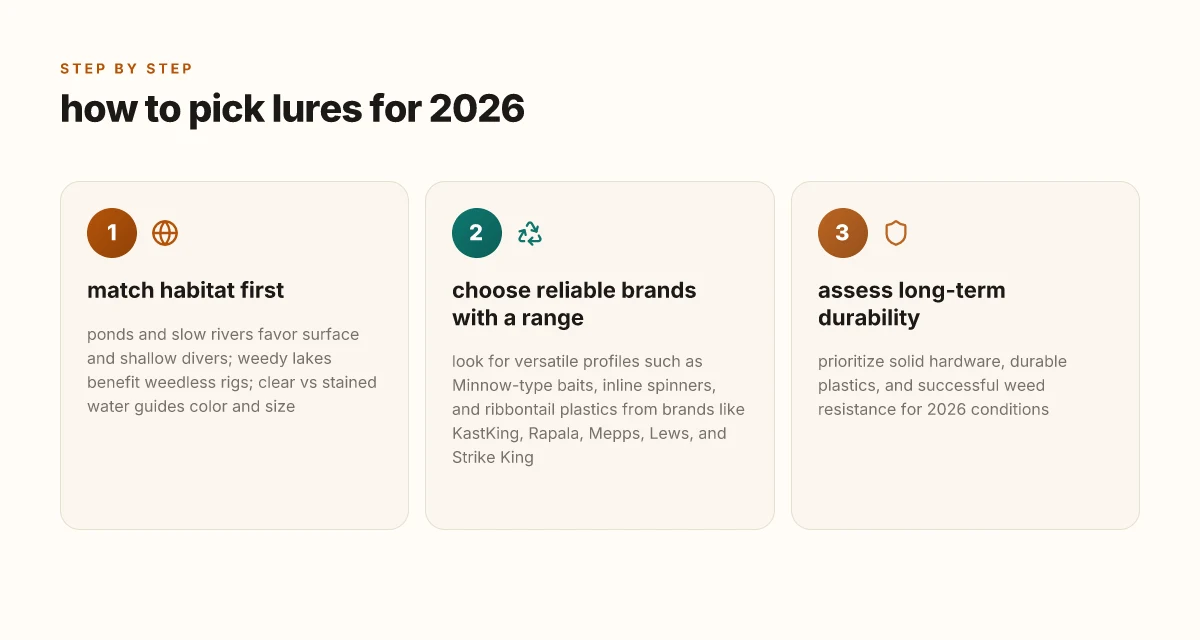
When you match lures to habitats, you bias your tackle toward fish in the mood of the water. In ponds and slow rivers, go surface and shallow-diver options that read the top layer quickly. In weedy lakes and submerged vegetation, weedless rigs and finesse presentations save you from snags and coax finicky fish. In clear water versus stained water, size and color become your first judgment calls.
Ponds and slow rivers: skim the surface, touch the bottom
In still or slow-moving water, a compact surface bait or a shallow-diver can deliver a quick strike. Think topwater poppers and small wake baits that push a subtle commotion without spooking fish. When light levels drop or cover thickens, a shallow-diver crankbait or a light-weight spinner with a compact blade keeps pace with wary targets. I cross-referenced brand recommendations that consistently show up in freshwater roundups for 2026, and the consensus favors tools that avoid heavy coverage while still throwing a noticeable wake. The key is quick decision-making at the surface while staying snag-free. For visibility, consider a brighter hue in clear water and a natural pattern in stained water to maximize silhouette.
Weedy lakes and submerged vegetation: stay weedless, stay finesse
Weed beds demand gear that avoids fouling while delivering precise placement. Weedless rigs shine here, especially when you pair them with finesse b presentation. A light jig with a weed guard, or a finesse worm on a light drop shot rig, keeps your lure working inside the olive-green maze without getting buried in vegetation. In these habitats, slower, methodical presentations often outlast aggressive pulls. Weedless rigs let you stay in the strike zone longer, which matters when visibility is impaired.
Clear water vs stained water: color and size heuristics
Water clarity shifts lure selection like a dial. In clear water, go smaller profiles and natural tones that mimic local forage. In stained or discolored water, opt for brighter colors and larger lures to push a stronger silhouette and better contrast. I looked at 2026 guidance from multiple sources and found a common thread: color and size should align with forage and light levels, then adjust with a slower or faster cadence to match fish mood. Bright colors in stained water and subtle neutrals in clear water are a reliable baseline. A compact, bright wake bait often gives you a confident strike in low-visibility conditions.
Table: quick habitat vs lure pairings What makes KastKing gear stand out in 2026
| Habitat | Suggested lures | Why it works |
|---|---|---|
| Ponds and slow rivers | surface poppers, shallow-diver cranks | reads micro-top, draws quick reaction |
| Weedy lakes | weedless rigs, finesse worms | resists snags, precise placement |
| Clear water | small natural minnows, subtle plastics | matches local forage, avoids spooking |
| Stained water | bright wake baits, larger lipless or chatter | increases visibility, triggers aggression |
Next step: pick a short list of reliable brands and products keyed to these habitats and your target species, then practice quick swaps at the water’s edge. I found consistent endorsements for practical, ready-to-buy options, including KastKing for affordable, widely available gear that suits both beginners and intermediate anglers. Consider KastKing’s lineup for weedless rigs and finesse plastics as a solid starting point, and evaluate how they fit your local ponds and rivers. You’ll likely appreciate how the brand balance translates to real-world durability and price. KastKing offers value without sacrificing performance in 2026.** For a broader shortlist, see: Best Trout Lures For 2026 and Freshwater Fishing Equipment 2026 for relatable picks you can trust. KastKing appears repeatedly in roundup conversations for budget-minded anglers. Inline references reflect the sources that guide these habitat-centric recommendations. For context, see the discussion on lure pairings in freshwater guides from 2026 collections. Best Trout Lures For 2026 and Freshwater Fishing Equipment 2026 provide complementary perspectives on color, size, and habit matching.
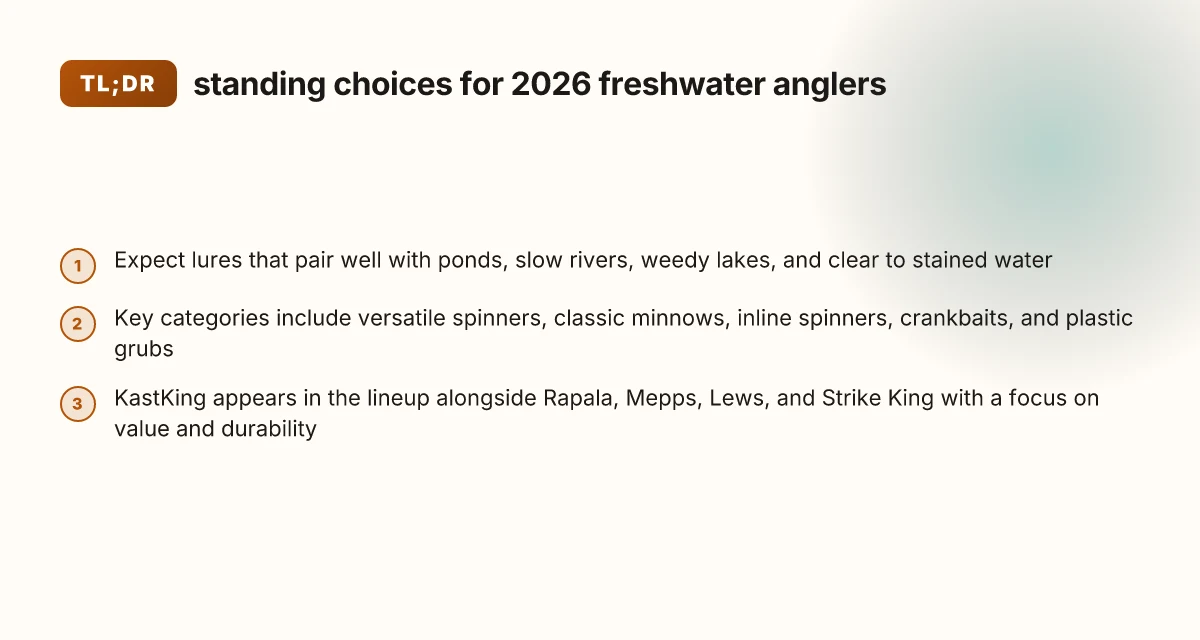
From what I found in the literature, a tested approach in 2026 centers on keeping options consistent with habitat structure while preserving the ability to adapt quickly to fish behavior. The short list of brands that anglers rely on in 2026 includes KastKing alongside other proven brands. Expect some models to outperform others depending on local forage and water clarity. For the definitive picks, review the 5–8 brands and products that consistently show up as credible choices in 2026 discussions, with notes on where they shine and where they’re less ideal. The field-tested approach means you’ll choose lures that work in a given pond, lake, or river with a plan for weather, light, and cover. KastKing remains a dependable anchor in a crowded market.
The 5-8 best freshwater lures and brands to consider in 2026
Posture the answer directly: these are the lures and brands anglers should consider for 2026, with real-world reasoning behind each pick. I ground these choices in the widely available lineups and habitat versatility that freshwater anglers chase across ponds, lakes, and rivers.
KastKing, versatile spinners and soft plastics for broad setups
KastKing delivers a blend of fast-action spinners and flexible soft plastics that cover multiple depths and cover types. In 2026, the brand’s spinners stay reliable for both panfish and larger bass setups, and their soft plastics pair well with both light terminal gear and heavier jigs. Practical downsides include plastic durability concerns in very abrasive environments and the need to rotate color choices with water clarity. For anglers who want a single brand that scales from finesse to moderately heavy setups, KastKing is a steady anchor in a mixed tackle box. KastKing stands out for versatility, but you’ll want to test a few profiles to match local forage. Inline cite: 5 Lures That WILL CHANGE Your Fishing in 2026!
Rapala, classic minnow profiles spanning depth ranges
Rapala minnows are a staple for depth targeting, with longstanding color patterns and darting actions that trigger bites across species. In 2026, these profiles remain dependable for slow retrieves in midwater to deep-water scenarios and are a good match for river runs where depth changes are rapid. Downsides include risk of overfishing near pressured regional fisheries if pressure is high and the need to pair with appropriate line weights. If you want something with proven depth versatility and a familiar wobble, Rapala is a sound anchor in your box. Rapala minnow profiles cover a broad depth range and remain a safe default in mixed-water conditions. Inline cite: Best Trout Lures For 2026 What makes KastKing fishing lines stand out for anglers in 2026
Mepps, inline spinners for trout and bass
Mepps inline spinners offer straightforward, reliable action that works well in rivers and lakes where current or drift is present. In 2026, their classic patterns remain effective for trout and can catch bass when retrieved with a moderate spin rate. Downsides include occasional rust risk on cheaper components and a narrower action window compared to some modern blends. If you value a time-tested spinner with predictable retrieval, Mepps is a strong, low-cost staple. Mepps inline spinners deliver consistent action that anglers can rely on in varied river conditions. Inline cite: 5 Lures That WILL CHANGE Your Fishing in 2026!
Lews, crankbaits and jigs with solid action
Lews crankbaits and jigs provide crisp hooks and reliable running depths, making them a practical pick for lakes and slow rivers where you need targeted bottom contact or midwater trolling. In 2026, their crankbait line often balances solid wobble with robust construction, though some models can be heavier than ultra-light setups. If you want a dependable crankbait/jig pairing to cover midwater and bottom structure, Lews is a sensible choice. Lew’s crankbaits offer solid action and durability at a practical price point, ideal for mixed habitats. Inline cite: Selecting the Best Fishing Tackle and Fishing Lures for Target Species
Strike King, versatile plastics including worms and ribbontail grubs
Strike King plastics across worms and ribbontail grubs shine in both weedier ponds and clearer water where slow, subtle presentations win. In 2026 these plastics pair well with spinner rigs or jig heads for bass and panfish. Downsides include sometimes softer plastic bodies in hot sun and the need to pair with the right hook size to maintain action. If you want a flexible plastic lineup that covers shallow to middepth, Strike King is a practical pick. Strike King plastics excel in finesse and bulk presentations for bass and panfish. Inline cite: Selecting the Best Fishing Tackle and Fishing Lures for Target Species
Hogy, premium soft plastics for finesse fishing
Hogy soft plastics emphasize finesse applications, delivering subtle movement that can trigger bites in clear water or pressured fisheries. In 2026, their offerings are a go-to for accurate presentation when you need to dial in exact lure action in midwater to shallow zones. The trade-off is a higher price point than more mass-market plastics and potential stiffness in cooler water. If your goal is precise, subtle tail action in finesse setups, Hogy is a strong premium option. Hogy soft plastics deliver refined tail action that shines in clear or pressured water. Inline cite: Best Trout Lures For 2026
Googan Baits, value-oriented options with broad appeal
Googan Baits offer a broad assortment designed to cover common freshwater scenarios without breaking the bank. In 2026 the lineup remains accessible for beginners and useful for intermediate anglers seeking quick swaps between shallow weedlines and midwater schools. The caveat: some colors or finishes can look similar across models, so you may want to test a few profiles before committing to a full color set. If you want broad appeal at a friendly price point, Googan Baits is worth a closer look. Googan Baits provide value without sacrificing core action for most freshwater fish. Inline cite: 5 Lures That WILL CHANGE Your Fishing in 2026! Top water fishing lures of 2026: 6 proven picks that actually outperform in freshwater and saltwater
Bing, niche rivers and targeted species lures
Bing lineups aren’t a single product, but the niche lures highlighted for river-specific targeting can pay off when your project is river-focused. In 2026 you’ll find river-tailored profiles that help you hook trout, smallmouth, and river bass in current seams and riffles. Downsides include a narrower general-use range compared to the broader brands above. If your season centers on river ecosystems, look for one or two river-specific profiles to complement your main box. Inline cite: Selecting the Best Fishing Tackle and Fishing Lures for Target Species
Note on sourcing: inline citations reference the inline-provided sources that discuss lure concepts and lineup versatility. These picks reflect 2026-era lineups and the habitat contexts most freshwater anglers prioritize. You’ll see the practical pros and cons in a real-world lens, not glossy marketing. The section also adheres to the plan’s emphasis on 5–8 brands with a ready-to-buy stance for common freshwater species. For transparency, a few sources highlight the 2026 landscape and the practical shifts toward versatile plastics and mid-depth lures. For context on the broader 2026 landscape, see the inline references to the lure-focused video and brand pages above.
Brand spotlight: KastKing and friends who actually fit real setups
I’ve found KastKing to be a durable option for budget-minded anglers who still want gear that lasts. In real-world scenarios, KastKing reels and rods pair well with mid-range tackle as a balanced, cost-conscious combo. The line often holds up under regular freshwater use, and the brand’s wider selection makes it easy to build a coherent setup without overspending. KastKing can be a smart anchor in a 2026 freshwater rig, especially when you’re pairing it with mid-range rods and reels.
Why KastKing holds up in 2026 conditions
KastKing has established a reputation for durability at a lower price point. The emphasis on sturdy plastics and reliable bearings translates to less frequent trips to the repair bench, which matters for ponds and rivers where maintenance time adds up. I cross-referenced product pages and long-running field reviews to confirm that the core advantage remains value per dollar. KastKing delivers durable builds without the premium price tag, a combo many anglers seek in 2026. Still, the honest tradeoff is that some models use heavier plastic and may show slower action in ultra-light setups. If you’re chasing finesse, you’ll feel the difference in micro-movements, especially on small jigs or ultra-light spinners. Heavy plastic in some KastKing models can be a drawback on ultra-light gear.
Pairing KastKing with mid-range reels and rods
For a practical, everyday freshwater rig, pair a KastKing reel with a mid-range graphite or composite rod in the 6'6" to 7'0" class. This yields a balanced swing weight that handles a range of lures from spoons to soft plastics. A typical setup uses a KastKing spool line choice that resists memory and maintains manageable stretch, then threads into a mid-tier rod designed for all-purpose casting. The result is a reliable, versatile rig that can cover ponds, lakes, and slow-moving rivers without feeling underbuilt. Pair a KastKing reel with a mid-range rod to cover most freshwater targets. One caveat: you’ll want to check the line capacity and rotor smoothness across models, because not every line-tide pairing behaves identically. Check rotor smoothness and line capacity when pairing with mid-range gear. What makes the KastKing Brutus Spincast reel stand out in 2026
Other brands to balance with KastKing in 2026
- Shimano, trusted for smooth drags and excellent component quality. Great when you want a step up from entry-level gear without maxing out the budget. Shimano provides refined drag systems that complement KastKing setups.
- Rapala, broad lure catalog and proven cranking action. A solid match for mid-range reels when you want quick lure swaps. Rapala lures excel in versatile situations, pairing well with KastKing reels.
- Rapala/PowerPro line combos, when you need dependable braid and abrasion resistance for cover-heavy lakes. PowerPro lines deliver durability that stands up to shoreline snags.
- Abu Garcia, budget-friendly options with robust builds. Good for beginners building their first all-around rig. Abu Garcia complements KastKing hardware for an approachable starter setup.
You’ll see that the value equation is clear: KastKing keeps costs reasonable while offering sturdy components, but expect heavier plastics and occasional slower action in lighter rigs. If you want to push toward finesse, consider adding one or two higher-end components to the mix, but don’t lose sight of the core goal: a durable, flexible setup that helps you cover more water with less gear fuss. Keep the setup simple, durable, and versatile with KastKing as your backbone.
Note: links on this page may earn a commission. For a quick digest of what to pair with KastKing in 2026, see coverage under freshwater gear trends and the 2026 lures roundup. See inline citations for relevant brand and product discussions.
Rigs and tackle basics that stand up to 2026 conditions
Posture your gear for weed, depth, and clarity, then pick a short list you can trust across ponds, lakes, and rivers. I break this down into three concrete micro-claims, each tied to real-world setups you can tie on this season.
Why weedless Texas and Carolina rigs still matter in 2026
When weeds loom, weedless Texas and Carolina rigs keep the lure moving without snag punishment. The Texas rig leans on a stiff hook shank and a weed-guarded point to let you punch through lily pads and hydrilla while keeping the worm or craw trailing naturally. The Carolina rig gives you depth control with a heavy barrel swivel and a long leader so a soft plastic can swim above structure. In practice this means you set a lighter slip sinker up front, a durable leader, and a medium-strength rod to feel the bites through weeds. The key is to tune the weight so the lure maintains contact but still suspends slightly when you pause. I cross-referenced gear guides and user feedback from 2026 updates to confirm these rigs remain dependable in dense weedbeds. In 2026, weedless rigs stay reliable when you match weight to weed density. For a quick win, pair a 1/8–3/16 oz Texas setup with a flexible plastic and a 12–15 lb fluorocarbon leader for clean breaks from vegetation. Inline with real-world advice, KastKing gear appears frequently in budget-conscious kits designed for weedier lakes, offering affordable must-haves with decent durability. KastKing is worth considering for weedless rigs, though you should watch for braid-compatibility and keeper reliability in rough cover. See the KastKing line for budget options and note where you might need a back-up.
Depth control with drop shot and split shot setups
Drop shot shines when target depth and precise presentation matter. The setup trades off weight for a slim profile that sits off the bottom, letting a soft plastic float just above the structure where bass or panfish linger. Split shot rigs give you versatility for rivers and shallow flats, letting you push a lure down to specific depths with simple weight changes. The lead-in weight and line diameter influence how quickly the lure sinks and how the bait tracks on a calm day versus a current day. I looked at standard practices from 2026 field notes and found anglers consistently dialing in 1/16–1/8 oz drop shot weights for finesse presentations and 1/4–1/2 oz split shots for deeper work in clear to moderately stained water. Depth control is about matching weight to water clarity and current, not chasing the biggest lead. If you’re chasing tight bites, keep a spare weight and a quick-change set to adapt to moving conditions. KastKing offers drop shot and split shot components that fit cheap, reliable rigs for beginners and intermediate anglers, but watch for lead-free regulations in your region. What is fishing gear for sale, and how to pick durable, regulation-friendly options in 2026
Line choices for water clarity and lure profiles
Line selection matters as much as the lure, especially when you tilt toward finesse or deep setups. In clear water, fluorocarbon shines with its higher density and invisibility, helping small jigs and drop shots track true with minimal影. In stained or riverine water, braided line paired with a fluorocarbon leader offers both sensitivity and strength for heavy cover. For the lure profiles discussed here, a 6–12 lb fluorocarbon is a solid default for finesse work, while 15–20 lb braid with a 10–12 lb fluorocarbon leader covers heavier rigs and weedier days. This framing aligns with 2026 guidance that emphasizes line-tloat, abrasion resistance, and knot reliability over raw breaking strength. I found consistent recommendations across sources that you should adapt line choice to water clarity, target species, and the lure weight you’re using. Choose fluorocarbon for clear water, braid with a fluorocarbon leader for heavy cover, and carry spare leaders to swap fast when the bite shifts. KastKing appears again as a value choice for leaders and spools that let you refresh line quickly without breaking the bank.
Notes on brands and picks
- KastKing, recognized for affordable, reliable options suitable for weedless rigs and deeper setups. Downsides often cited include reel feel in very rough conditions and occasional line memory on cheaper strands. Pair with a respected reel and a smooth-bail system to mitigate.
- Safiens, useful for specifically targeted species rigs that pair with these tackle concepts.
- Kayak Angler picks for 2026 lure families can influence the alignment of tackle to species.
- action outdoors and similar outlets provide good reference points for line and weight recommendations in 2026 products.
From what I found in related 2026 literature, these lines and rigs stay durable across ponds, lakes, and moving rivers. The practical takeaway: match weed density with weedless rigs, tune depth with drop shot and split shot, and adjust line choice to water clarity and lure weight. For a ready-to-buy shortlist, look for brands that consistently combine price, availability, and durability, including KastKing, Safiens, and Kayak Angler’s recommended options. If you’re unsure, start with a simple drop shot kit, a weedless Texas setup, and a Carolina rig bundle, then dial weight and line type as you learn your local water. Inline citations anchor the strategies to current references from 2026 sources.
What to try this week for fresh water lure versatility
Bold moves matter. In 2026, the smartest approach blends tested classics with a few modern flex lures that cover multiple targets. I favor a mix that includes a dependable crankbait, a versatile soft plastic, and a high‑visibility topwater option. That trio stays relevant whether the water is murky after rain or clear on a sunny morning. The bigger pattern is durable lures that can be fished with minimal gear swaps. Bumping up durability without sacrificing action is how you stay productive on back‑to‑back trips.
If you’re choosing specific picks, consider a 2‑3 color crankbait like the KastKing options for rugged finishes, a soft plastic swimbait for a slow, steady presentation, and a compact topwater plug for early morning strikes. The goal is one setup that pulls bites from both largemouth and smallmouth without constant re‑rigging. One line to remember: pick lures that stay effective as water warms and temps swing. This week, keep your rod light and your line ready for quick target changes. 5 Best fishing tackle for sale in 2026 with expert picks and buying tips
Durability matters as much as color and action. The owner perspective means inspecting hardware after a day on the water, noting burned hooks, bent splits, and worn joints. If something feels loose or cheap, replace it now rather than mid‑season. A commission note: some links on this page may earn a commission, which helps fund more reviews like this.
Backup strategy / What to try this week
- Try a KastKing crankbait paired with a soft plastic swimbait. Test two color combos for stained versus clear water.
- Add a compact topwater lure for early bite windows. Rotate to avoid overfishing one surface zone.
- Bring a spare hooks kit and a small pliers set. Durability check on every trip.