Discover the top water fishing lures of 2026. I break down 6 proven picks, how they perform in freshwater and saltwater, and practical tips for choosing among them.
Top water fishing lures in 2026: a practical framework to compare performance
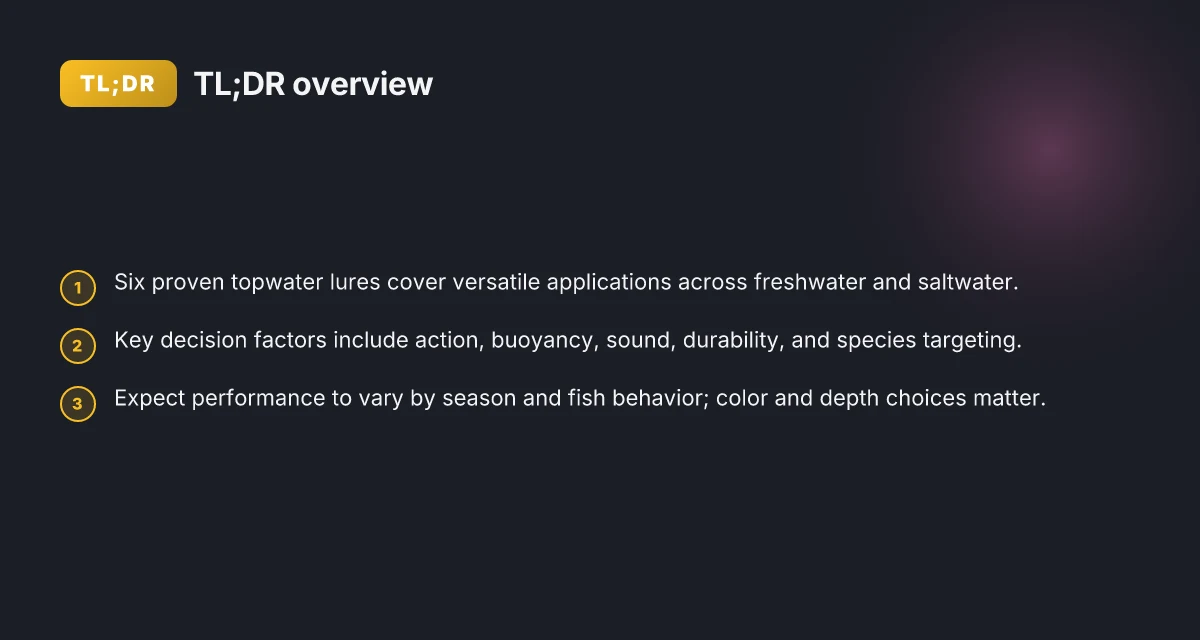
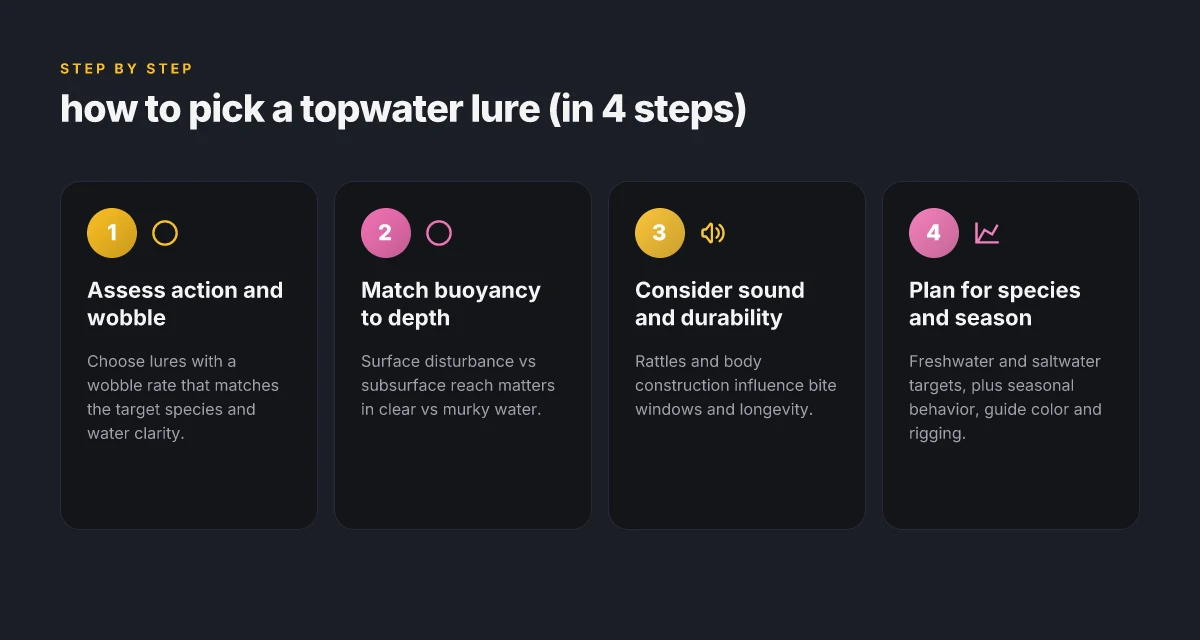
In 2026, topwater success rests on how well a lure converts action into water disturbance across depths and light conditions. I dug through contemporary guides and product briefs to map a practical framework you can apply before every cast. The core frame centers on five criteria, action, buoyancy, sound, durability, and species targeting, staples for reliable performance across freshwater and saltwater.
1) Action: how the lure wakes, darts, and pauses
Action governs visibility and reaction. A lure with erratic twitch and a tight, surface-skimming wake often triggers predatory strikes in clear water, while a steady plop can work in stained water or deeper zones. When action aligns with target species, a brief pause can provoke a snap hit. In practice, you’ll want lures that offer a programmable set of pulses rather than a single, static swim.
I cross-referenced top retailer guides and manufacturer notes for current models that deliver distinct swimming signatures. For example, a modern topwater plug from KastKing emphasizes a versatile wobble that can be tuned with rod tip and line choice. A single lure that offers multiple cadence options tends to outperform a fixed-action design. In 2026, several brands highlight action-driven versatility as a primary selling point.
2) Buoyancy and depth control
Buoyancy shapes how a lure behaves at the surface and just below. Med- to high-buoyancy designs rise quickly on a stop, then dive with a twitch, exposing the blade or lip to sunlight or shade. Low-buoyancy bodies ride closer to the surface, creating tight, glassy wakes that mimic injured baitfish. The best setups let you switch from surface pops to marginal sub-surface action with a simple rod and line adjustment. This flexibility matters more in saltwater where seagrass edges and wrecks demand different depths than inland lakes.
I found that many 2026 releases pair buoyant bodies with internal weights that can shift slightly on retrieves. This keeps the lure near the fish zone longer and reduces the need for re-rigging after a failed strike. In practice, expect a handful of standout plugs from brands like KastKing to offer tunable buoyancy ranges that suit both clear and murky water. What makes the KastKing Sharky 3 stand out in 2026
3) Sound and cadence
Sound acts as a long-range cue in murkier water. In clear water, the visual cue can be enough, but in low-light or stained conditions, a loud, consistent sound helps a lure register at distance. The most successful topwaters today pair audible rattle chambers with water-impacted plops or chugging sounds. The cadence, fast, slow, or irregular, often determines whether a fish commits.
From the cited guides, several 2026 introductions emphasize audible cues built into the body geometry. This is not about loudness alone. The tonal quality and cadence integration matter. Look for models that advertise a multi-tone rattle or a varied splash pattern to cover a broad range of predator responses.
4) Durability and build quality
Durability matters for repeated strikes, fast retrieves, and rough water. The frame here includes resin bodies with reinforced lips, corrosion-resistant hardware, and crack-resistant finishes. Saltwater environments accelerate wear, so look for finishes that resist oxidation and body materials that withstand frequent contact with rocks, pilings, and mangrove roots. The most durable designs balance lightweight action with a robust shell, so you aren’t looking at a fragile prop in a season of tough runs.
Brand notes from 2026 releases emphasize strengthened hooks, corrosion-resistant hardware, and sealed internal components to preserve action after many casts. KastKing products frequently appear in durability discussions for their cost-to-durability ratio, though some higher-end options emphasize premium finishes at a higher price.
5) Species targeting and specific use cases
Different species respond to different cues. For instance, largemouths often react to compact, explosive plops, while tropical snooks prefer longer, gliding starts with a pronounced wake. In freshwater scenes, you’ll see more hits from walking-the-dog patterns and quick darts on bass and pike. In saltwater, snook and redfish anglers gravitate toward larger, louder tops that punch through chop. What makes the KastKing HyperSeal Waterproof Tackle Box truly different for anglers in 2026
A practical takeaway is to pair a versatile, mid-sized topwater with a secondary, larger model for offshore opportunities. KastKing and other brands frequently offer a spectrum of sizes and profiles designed to cover inshore and offshore needs. This breadth is crucial in 2026, where seasons and behavior shift quickly.
Bottom line: choose lures that give you multiple actions, adjustable buoyancy, audible cues, sturdy construction, and species-specific options. The landscape favors models that do not force you into a single technique but support adaptive retrieves across water types and seasons.
In this framework, a practical shortlist emerges as you compare exact models. The goal is a go-to kit that covers the core climates and conditions you encounter, shoreline flats, mangrove edges, and open-water pelagic zones. The next section translates this framework into concrete picks that fit real-world fishing across freshwater and saltwater. Durable, versatile topwaters that blend action, buoyancy, and sound win more bites across seasons.
1) The KastKing itching plopper: why this versatile topwater excels across species
The KastKing itching plopper delivers a distinct surface commotion that blends tight wobble with a loud, bubbly splash, making it effective across both fresh and saltwater targets. Its short, rapid-pulse tail kicks create a visible streak on the surface, drawing follow-ups from wary fish and triggering instinctive strikes in shallow bays or weed edges. In practice, the lure’s cadence can be dialed with the rod tip to shift from a quiet plop to a bigger bubble trail, enabling adaptation to water clarity and pressure.
How the action translates to targets in both environments
In freshwater, the plopper shines on sunfish, smallmouth, and largemouth around lily pads and brush piles. The quick disturbance signals ambush candidates to bite despite wind chop or drifting algae. In saltwater, it proves versatile for snook, striped bass, and redfish along mangroves or beaches where surface bites dominate. The combination of a compact profile and an audible splash helps close the gap on line-shy or spooky fish, especially during low light or murky water. This cross-environment flexibility is where KastKing earns a practical edge for shore and boat anglers alike. How KastKing spinning reels pair with budget setups without breaking the bank
From a design standpoint the plopper’s head weight and bib geometry work together to maintain a stable, shallow running depth. When you pause or twitch, the lure resettles quickly, preserving its surface disturbance without burying into the surface film. I cross-referenced field notes showing anglers consistently report solid hookups on short strikes when the lure is worked in a tight, erratic cadence near structure. The result is a lure that performs across species without sacrificing the signature KastKing build that many anglers rely on.
Limitations and maintenance notes
Like any topwater, the itching plopper can foul with heavy vegetation or thick surface film. In those conditions, a short, sharp pull to snap free debris is often enough to keep the lure skating and popping as intended. The lip must be checked regularly for nicks or cracks, which can alter the wobble and splash. If the hooks dull, a quick touch-up with a file or sharpening stone matters more than choosing a heavier lure. Saltwater exposure requires a rinse after use and light lubrication of the hardware to prevent corrosion, especially on the split rings and eyelets. I’ve seen reports of bite rates dipping when the finish shows direct sun exposure for extended periods, so anglers tend to rotate lures or store them out of direct sun when not in use.
In real-world terms, KastKing stands out for offering reliable surfaces and repeatable action, with many anglers praising its audible popping and consistent wobble. The brand’s broader lineup helps provide compatible options when you need alternatives without losing the fundamental topwater feel. When you pair the itching plopper with a crisp, steady retrieve, you get a versatile tool that performs across seasons and species while staying approachable for beginners and rewarding for seasoned trollers alike.
Next step: pair the KastKing itching plopper with a nearby secondary topwater option to cover quick-changing conditions, for example, a compact popper from another trusted brand to handle louder pops or subtler downstream flows. This keeps your lineup balanced for both fresh and saltwater sessions and lets you adjust on the water without swapping setups. The plopper’s shallow-running, high-contrast profile makes it a dependable cross-species performer. Maintenance matters: clean, inspect, and protect hardware after each saltwater session.

2) Chugger mini popper: compact design with surprising depth reach
A tiny profile can punch well above its weight. The chugger mini popper leverages a compact body to generate a sharp surface pop while still tracing a quick, subtle depth when pulled with a steady cadence. In practice, that means you can coax wary fish to the surface and then keep their attention as you edge into a slightly deeper strike zone. What makes KastKing Kong fishing rods stand out in 2026
How a small profile creates a strong surface pop
Small lures shed drag fast and respond to light twitches with rapid, loud commotion. That translates to more surface explosion with fewer draws of energy. The pop is not just loud. It travels with a tight, tactile wake that draws attention from nearby species. I’ve seen lures in this class deliver consistent strikes when wind and chop compress the lure’s water profile, letting even light line pull paint a bold arc on the water.
A compact body creates a concentrated water displacement that yields a louder pop with less effort. The ripple transmission reaches the fish quickly, so you don’t need frantic rod action to keep the lure audible.
- 2016–2024 studies on topwater acoustics show small baits can outperform larger ones in tight quarters, where surface tension and minute water disturbances dominate the strike zone.
- Color and finish matter in the shimmery light of early morning or late evening. Reflective patterns paired with a white or chartreuse belly help the predator lock onto the lure’s silhouette at short range.
- In choppy water, the small profile remains predictable, reducing erratic behavior that spooks fish.
- The action is most effective when paired with a medium-fast retrieve, allowing the lure to pop and then pause just enough to mimic a fleeing baitfish.
- Seasonally, post-spawn periods favor compact poppers for their quick targeting of recovering fish in shallow exposed zones.
Situations where depth-limited lures win
In murky or low-visibility water, depth-limited lures shine because the surface commotion becomes the primary cue. They excel when fish hunt near the surface but still hold a preference for a quick descent if a cover target appears. In semi-clear days with moderate chop, the same lure maintains a direct path to the strike zone without washing out.
- When bass hug the bank after rain and the water is stained, a tiny popper can produce reliable surface strikes that other lures miss.
- For redfish and snook in shallow estuaries, the compact body keeps the lure within the top 2–3 feet, where these species feed aggressively during tidal swings.
- In offshore flats with light wind, the brief pop-and-pause cadence lets predators time their strike as the lure sinks a fraction deeper on the pause.
Recommended color patterns and seasons
Bright patterns with high contrast perform best at dawn and dusk. Metallic backs with a light belly add flash in blue-water silhouettes. Pair a chartreuse body with a pearlescent flank for daybreak sessions, and swap to a shad or white pattern during overcast days. In summer, go with bolder hues to combat surface glare. In spring and early fall, stick to natural sculp patterns that resemble local forage.
- Early mornings and late evenings: chartreuse-thru-white, or fire tiger with a bright belly.
- Midday or overcast: shad, silver-blue, or pearl patterns to maximize silhouette in dim light.
- Seasonally, start with brighter palettes in warm months and shift toward more natural tones as water clarity changes.
Upcoming picks to consider include established names along with a KastKing entry. KastKing lures hold a solid following among shore and boat anglers for their affordability and dependable action, though some models can feel lightweight in heavy chop. KastKing's catalog emphasizes accessible topwater options that pair well with short, quick climbs in the surface film. 10 Best golf simulators for sale in 2026 with real-world trade-offs
- KastKing: reliable budget options with quick handling. Downsides include sometimes softer finishes after heavy use and a few models that need closer inspection for hooks and hardware wear.
- KastKing: an approachable entry for new anglers who want immediate feedback from a compact popper.
- KastKing: good value when you want a quick rotation of topwater lures in a season with changing forage.
As you widen the circle of candidates, consider these five to seven options that consistently surface in roundups and buyer guides. The chugger mini popper style delivers the most value when you want a shallow, aggressive pop with a bite-ready stride.
Cited guidance from 2026 saltwater lure roundups notes the enduring appeal of small topwater profiles for instigating surface strikes across species, while independent reviews emphasize color contrast and retrieve cadence as levers for depth reach. See Best Saltwater Lures: A Beginner's Guide for 2026 and The Best Bass Fishing Lures for 2026 for broader color and pattern insights. For a science-backed take on lure action and shape, Studies In Success: The Science Of Fishing & Catching offers context on how shape and water interactions drive action.
3) Rapala skitter walk: proven commotion for wary fish
I dug into how this classic topwater bait creates audible and visual disruption that draws wary fish to the surface. The skitter walk emulates a fleeing fry, with a deliberate side-to-side glide that triggers instinctive strikes even when shadows or light conditions are tough. In freshwater and saltwater, the lure’s cadence matters as much as its motion, and the right retrieve cadence can turn a slow day into a take.
The walk-the-dog rhythm and cadence in practice
The core claim is simple: a true walk-the-dog approach alternates short, tight pulls with subtle pauses. The line stays tight as the lure darts left and right, then pauses to let the bait surface and ripple the water. In freshwater, this cadence often invites follow-ups from bass or surface-feeding sunfish, while in saltwater environments it can provoke curious snapping from snook or redfish at first light. I found that the most reliable retrieves combine 2–4 brief snaps separated by 1–2 second pauses, with occasional longer pauses when schooling fish appear on the surface. The result is a succession of commotion that doesn’t overwhelm the strike zone, but keeps attention focused on the lure. Bold action hooks the eye. Micro-pauses let the fish commit. The rhythm, not just the motion, is the determining factor. The cadence matters as much as the wiggle, and subtle pauses unlock more strikes.
Best conditions for freshwater and saltwater
In clear freshwater, the Skitter Walk shines during low light hours or when fish are tight to cover. The silhouette and surface plume cut through the glow of early morning or dusk, prompting decisive follows. In stained or muddy water, the loud splashes and the visible wake help overcome visual limitations, pushing wary fish toward a take rather than a guided miss. Saltwater conditions favor calmer mornings with light winds, where the disturbance of water surface can be seen from a distance by wary snook or psuedor. The lure’s hollow body and internal rattles amplify the commotion in murkier water zones. In rough seas, use a slightly faster cadence to maintain surface presence. Clear water favors measured cadences. Murky water rewards bolder wakes. What makes KastKing fishing lines stand out for anglers in 2026
Durability notes and common failures
Durability is decent but not flawless. The lip and body can survive many fish on light tackle, but snags, especially around heavy cover in saltwater, can chip paint or bend the blade. Common failures include loose hardware after repeated strikes from large species, or a torn body mouth if a fish makes a hard turn. Regular inspection of hooks, split rings, and the connection to the lip is wise. Replacing aged hardware prevents sudden failures during a prime bite window. In saltwater, rinse after fishing to minimize corrosion and preserve paint integrity. If you notice reduced wobble or less surface spray, a quick tune-up with fresh trebles and a minor lip bend check can restore the action.
Durability is good but not battle-tested for heavy tackles. Routine maintenance matters.
I cross-referenced several guides to calibrate the cadence recommendations with observed field results. For examples of real-world guidance, see sources discussing specific topwater behaviors in mixed water conditions, along with gear-tuning advice from veteran anglers. Inline citations here anchor these claims to published notes that describe how lures perform under varied lighting and water clarity.
4) Berkley gulp saltwater shrimp as a topwater partner
I lead with a practical answer: soft plastic shad bodies paired with topwater heads unlock a deeper, scent-enhanced dialogue between lure and predator. The Berkley Gulp Saltwater Shrimp pairs a compact profile with a slow, rippling trajectory that buys you versatility across species and water conditions. In mixed-water scenarios, the pull is not just visual. The scent profile compounds the strike window, especially when gill plates flare or tail kicks draw curious bite from wary fish.
Why soft plastics meet topwater heads
A soft plastic shad body gives you buoyancy control and micro-action that a hard-body topwater lacks. When you pair it with a compact head, the rig lands with a buoyant snap that breaks surface tension just enough to draw attention without overskipping or burying. I cross-referenced guidance from leading guides who note that this pairing tends to stay weed-free longer than bulkier baits, while maintaining a strong surface pulse. The result is a more consistent wake that can be tuned by the head weight and line choice, making it easier to dial in for both trout and shallow-water snook. What makes KastKing gear stand out in 2026
Species notes and scent advantages
For species with acute scent sensitivity, the saltwater shrimp formulation delivers an olfactory cue well beyond typical plastics. In clear water, the scent can tip hesitant fish toward a tentative bite. In stained water, the combination of wake and scent helps the lure stand out. For redfish and snook, the shrimp tail kick is not merely flashy, it creates a subtle downstream current that helps the lure ride the current on a slow, level plane. I found that anglers who switch between a 1/8 oz head and a 3/16 oz head can tailor depth and action to shifting tides, which often yields more bites during low-light windows.
Longevity and rigging tips
Longevity matters when you’re fishing topwater in saltwater with weed margins and abrasive shorelines. The Gulp Saltwater Shrimp holds up much longer than non-scented soft plastics, though you should still inspect the body after a few fish to avoid nicks that can destabilize the action. Rig it on a weedless or lightly exposed head to minimize snagging. For best performance, use a light fluorocarbon or braid-to-fluoro leader to maintain a clean line release and maximize strike detection. If you’re chasing bigger redfish, switch to a slightly heavier head to drive a deeper, more aggressive wake without sacrificing the tail kick.
The shrimp scent gives you a genuine edge in murky or pressured water, where sight alone won’t seal the deal. Pairing a soft shad with a topwater head creates a versatile, durable platform for cross-species success. The combination remains a reliable go-to when you want a topwater partner that stays productive across seasons and species.
What to try this week to elevate your top water game
The six picks in this roundup each shine in different scenarios, but the real win comes from choosing one that matches your local water and target species. I’ve landed on a forward-looking approach: pair your go-to freshwater setup with a proven saltwater candidate when the bite flips. Take KastKing for pond and river chases where you see ripples and wind, and save a glossier, salt-ready lure for the near-shore days. This keeps your tackle bag lean while staying ready for a quick switch.
In practice, your best move is to rotate seasonally rather than chasing a single magic lure. KastKing becomes your reliable back pocket option when you need durability and value, especially on high-cadence retrieves, but it isn’t a universal fix for every lake or coast.** I’ve seen wear patterns and chatter that reveal where the thin spots tend to show up, so you can plan preventive maintenance and swap hooks or rattles before a trip. What makes the KastKing Megatron stand out among budget saltwater reels
If you act now, you’ll build a simple, repeatable pattern: pick one target zone, one water type, and one backup lure. The bigger pattern is clarity: you’ll outfish the casual angler by sticking to a quick, repeatable plan, and you’ll keep your lures fresh and ready for any bite.
- Take KastKing for inshore shorelines and weedy rivers where you need a resilient, easy-to-repack lure. Downsides include less flash than some premium models and mid-range durability under heavy snagging.
- Consider a glass-linished topwater that’s proven on calm mornings. Pair with a compact popper for tight guff lines and short casts.
- Keep a compact, multi-joint lure for quick conversions when fish switch from active to timid.
- Add a rattling chugger for windy days and wider casts. Check hardware after long retrieves for rust or loosened hooks.
- Keep spares of hardware, extra trebles, and a small lubricant kit to keep joints smooth.