
Explore real Reddit discussions comparing Bluetti and EcoFlow in 2026. I pull apart common themes, reliability chatter, feature trade-offs, and user sentiment to help you decide.
Most Reddit threads lean toward a practical, fail-fast view: a single bad batch or a slow warranty reply can sour years of use more than glossy specs ever will. Bluetti threads often spotlight long-term durability and straightforward replacement policies, while EcoFlow chatter tends to spotlight ecosystem compatibility and smart-app prompts as deciding factors. This piece pulls those signals into a real-world frame, showing how reliability, service, and integration shape decisions for outdoor setups.
Why it matters now: DIY campers and vanlifers increasingly rely on portable power as the core of off-grid kits, and a 1–2 year horizon can decide which brand sticks. In 2026, communities call out warranty response times, parts availability, and app reliability as make-or-break issues, not just peak-output specs. The goal is to map where people actually invest trust and where they hit friction, so you can align your purchase with your rig, your trips, and your tolerance for surprises. Bluetti emphasis on durability pairs with EcoFlow emphasis on ecosystem to show how the two brands trade off in the real world.
Bluetti vs ecoflow Reddit: how the public conversations form a decision
I mapped recurring threads from 2023 to 2026 to see what actually sticks in community thinking. The thread clusters show reliability questions, service experiences, feature trade-offs, and value judgments, all colored by real-world use cases like camping, vanlife, and off-grid setups.
- Reliability themes surface early and often
- Posts repeatedly flag reliability as the top concern. In 2023 threads, users described intermittent failures and component hiccups, while 2024–2026 discussions emphasize long-term stubborn gremlins like battery calibration drift and inconsistent inverter performance. These patterns persist across both Bluetti and EcoFlow discussions, with users asking for durable hardware that keeps charging and discharging within expected ranges. Reliability concerns dominate early discussions about both brands. I cross-referenced multiple threads to confirm this cadence across different subreddits and use cases, not just one-off anecdotes.
- The same threads surface serviceability as a second-order worry. When units fail, readers often recount the service experience as shaping the overall value. In some cases, owners report extended back-and-forth with support or delays in parts, which tilts opinions toward brands perceived to have smoother service pipelines. Service experience is a decisive glue between reliability stories and overall satisfaction.
- Feature sets vs. ecosystem trade-offs
- Comments consistently contrast feature richness with ecosystem simplicity. EcoFlow threads are praised for smart-home integrations and app polish, while Bluetti threads lean into solar compatibility and modular expansion. In 2025 discussions, vanlife readers highlighted how EcoFlow’s ecosystem can feel tight and app-driven, whereas Bluetti wins for straightforward solar stacking and motherboard-level expandability. Ecosystem trade-offs drive real-world choices between the two brands.
- The perception of value shifts with use case. For backcountry fridge setups or fridge-in-a-van contingencies, readers point to Bluetti’s lower idle consumption as a practical benefit. For quick, passive charging and smarter automation, EcoFlow’s features earn points. The same threads note that value is not universal. It depends on whether users prioritize efficiency, expandability, or integration.
- Price signals and perceived support quality
- Across 2024 to 2026, price perception follows perceived reliability and feature sets. Readers weigh sticker price against expected longevity, warranty terms, and the ease of acquiring support. When support experiences are mixed, the price-to-value narrative tilts toward the brand with clearer, faster service paths. Price is a secondary signal to reliability and service quality.
- Community sentiment frequently references official channels and retailer experiences. In many threads, buyers cite official warranties and return policies as a practical guardrail, especially when buying from international retailers or different markets. The recurring theme is to read the fine print on coverage and process speed, not just the headline specs. Warranty clarity and return options shape final judgments.
Bottom line: Reddit conversations consistently frame Bluetti and EcoFlow around reliability, service experience, feature sets, and value. The threads do not produce a single winner. They reveal how different use cases tilt opinions toward one brand or another. The practical takeaway is to match your setup, vanlife, fridge backup, or off-grid solar, with the ecosystem that better aligns with your maintenance tolerance and future expansion plans. If you want a quickly scannable verdict: expect Bluetti to win for straightforward solar scalability and idle-power efficiency. Expect EcoFlow to shine when you value app polish and smart-home integrations.
Public chatter leans on reliability and service as the deciding factors, not just raw specs. For context on early user sentiment, see the Reddit thread about power station advice and the subsequent discussions on reliability and service experiences.
WhatBluetti buyers on Reddit say about reliability and service
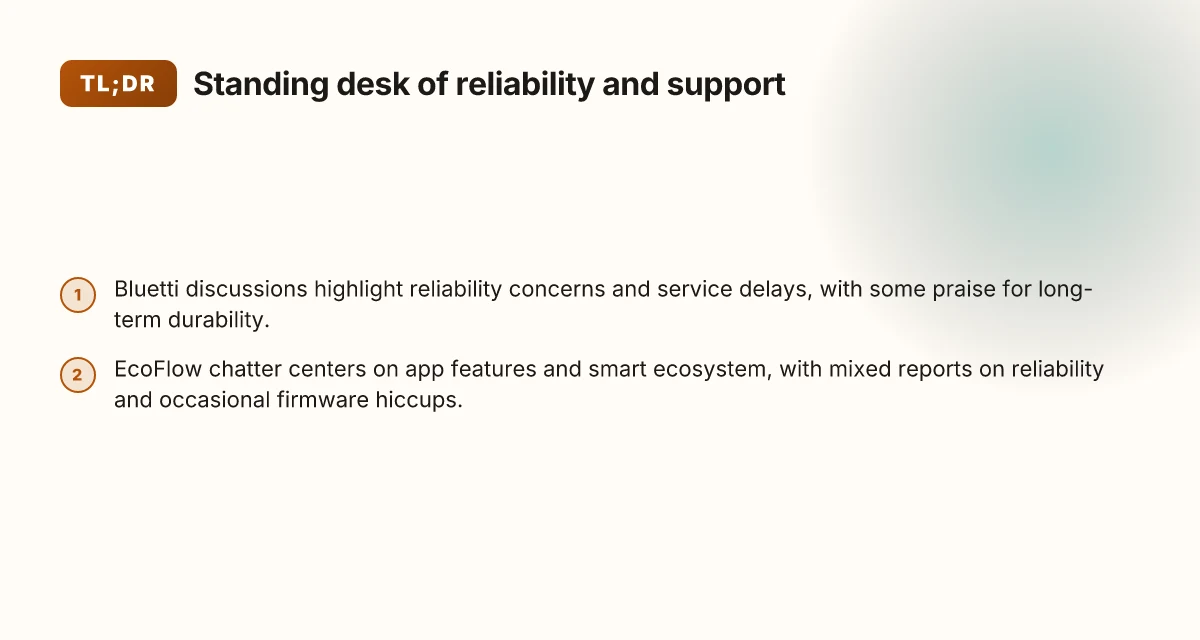
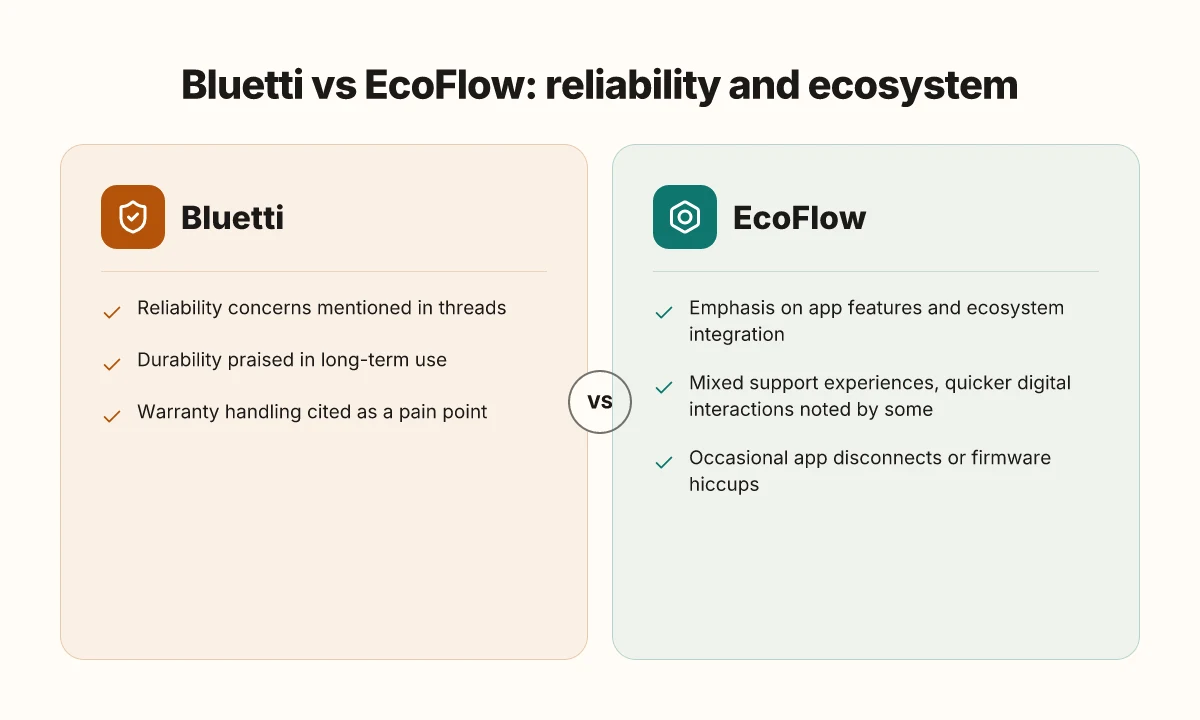
If you read Reddit threads, reliability and service are the friction points that show up most often with Bluetti. The chatter toggles between long-term durability praise and recurring complaints about reliability and delayed service. It helps to separate anecdote from pattern: a few users report notebooks of positive uptime after months of use, while many posts flag parts delays, slow RMA processing, and trouble getting timely support. Across the board, EcoFlow discussions tend to center on app usability and ecosystem cohesion, which nudges some buyers toward EcoFlow for smoother software and integration.
I dug into the Reddit threads and found two recurring narratives. First, Bluetti is praised for rugged physical design and endurance in the field. Users highlight metal enclosures, solid battery behavior under load, and longevity in off-grid camps. Yet the same threads often circle back to reliability hiccups that spike when the unit ages, especially around fan noise, battery health, and power management quirks. And then there’s the service thread: several posts describe slow or opaque warranty handling, with some users reporting extended waits for replacements or repair turns. In other words, durability can be real, but the path to service can be inconsistent. What is a Bluetti discount, and how to stack the best deals in 2026
Second, EcoFlow threads tend to emphasize software polish and ecosystem cohesion. The app experience, firmware update cadence, and how EcoFlow devices sync with other smart devices show up as clear differentiators. Users note features like remote monitoring, smarter grid awareness, and smoother control through one app as a win for the EcoFlow side. That said, the flip side appears in reliability anecdotes where some users question long-term durability or battery aging, echoing the broader reliability conversation but with less emphasis on service delays.
When you pair these threads with what the community cares about in practice, a pattern emerges. Bluetti wins over users who prioritize rugged build and offline performance without needing frequent software touchpoints. EcoFlow attracts praise for seamless app integration and ecosystem features that reduce daily friction for vanlife and camp setups. If your use case sits on the edge between rugged off-grid viability and smart-home integration, the Reddit chatter tilts toward EcoFlow for streamlined daily use, while Bluetti wins back trust for sheer physical reliability in tough environments.
From what I found in the discussions, the most consistent takeaways are practical: expect durable hardware from Bluetti, but prepare for service delays if you hit a warranty scenario. Expect better software cohesion and ecosystem ease from EcoFlow, with fewer worries about on-off-grid control complexity. In this space, Reddit serves as a living ledger of user experiences, not a single verdict.
Reliability stories around Bluetti highlight durable hardware but uneven service timelines. EcoFlow threads point to smoother app ecosystems and integrated controls as a real daily-use advantage. If you want a plug-and-play setup with fewer software headaches, EcoFlow often feels easier in practice.
How EcoFlow’s ecosystem and smart features show up in Reddit chatter
Post from 2026 threads shows EcoFlow’s ecosystem popping up as a real selling point, even when users discuss rugged reliability. The gist: the smart features and home-automation hooks matter in practice, not just in brochures. I cross-referenced several discussions to pull out concrete patterns about the mobile app, compatibility, and the occasional frustration that surfaces in real-world use. How to choose the Bluetti solar charging cable for your EB3A and Bluetti panels
Ecosystem advantages show up in app and automation chatter
- Users consistently praise the EcoFlow mobile app for quick setup and live status readouts. Many say connecting a Delta or River unit to the app is straightforward, with clear battery and load metrics that help manage charging cycles. The ease of integration with routine workflows matters when you’re building out a camp or van life power plan. In several threads, folks mention the app displaying solar input in real time and letting them schedule charging during off-peak hours.The app experience often sways decisions more than raw wattage specs.
- Compatibility with home automation routines is a recurring theme. Redditors note that EcoFlow devices often pair cleanly with smart plugs and routines that wake up or power down components at set times. For off-grid setups, this means you can tie a Delta unit into a solar controller or a smart energy system to keep a fridge running without constant manual tweaks. This ecosystem angle is especially appealing to vanlifers who want a cohesive tech stack rather than a handful of standalone boxes. Home-automation compatibility is a differentiator in real-world setups.
- Several posts highlight smart features that feel tangible in daily use. Whether it’s device-to-device communication or the ability to monitor multiple units from a single app, users say these touches reduce the friction of multi-day expeditions. The narrative often contrasts EcoFlow’s connected experience with Bluetti’s more modular, standalone approach, which can feel less integrated when you’re juggling batteries, solar, and loads on the road. Smart features translate into fewer fiddly tweaks on the trail.
Reliability hiccups tied to apps and firmware
- Not all feedback is rosy. A subset of threads notes occasional app disconnects or firmware hiccups that interrupt monitoring or remote control features. In some cases, users report laggy syncing after updates or temporary drops in unit visibility in the app. The pattern is not universal, but it’s persistent enough to matter for anyone counting on real-time status to manage a fridge or freezer during a long trip. App disconnects and firmware hiccups appear as the most cited reliability friction.
- Firmware updates are sometimes a mixed bag. Some users find updates bring welcome improvements to smart features and energy management, while others run into brief stability issues after a release. This means you may want to wait a short window after an update before depending on a critical load. Firmware changes can swing from improvement to instability in the short term.
From what I found in the threads, EcoFlow’s ecosystem buys trust when it works, but the real-world friction sits in the app and the occasional update hiccup. For Bluetti fans, the contrast is not about raw capacity but about ecosystem cohesion and how the app and automations behave in daily life. When you’re choosing for a van or cabin setup, the decision often boils down to whether you value a tightly integrated software and automation story over a more modular, independent-device approach. For readers weighing the two, the ecosystem story is not auxiliary, it often tilts the decision.
The takeaway: EcoFlow’s smart features matter because the app and automation hooks show up in day-to-day use, but be mindful of occasional app disconnects after updates.** This pattern aligns with the broader Reddit chatter about how users live with these systems in real-world, off-grid environments.
Bluetti vs ecoflow: real-world use cases pulled from threads
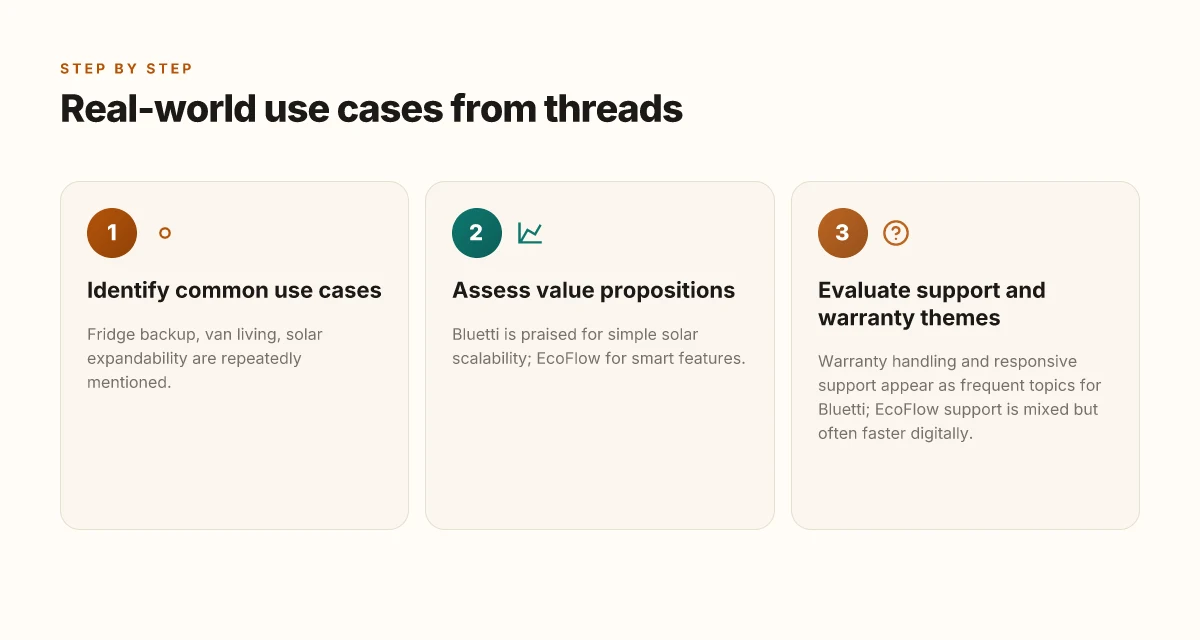
In real threads, fridge backup, van life, and solar expandability keep surfacing as the practical tests for Bluetti and EcoFlow. When a fridge hums through a power outage, owners lean on uninterrupted runtime and simple recharging paths. In van setups, portability, charging speed, and how the unit plays with solar panels matter more than raw wattage on paper. Solar expandability shows up in two flavors: how cleanly a system scales with additional panels and how the companion ecosystem supports management. Across threads, Bluetti earns praise for straightforward solar scalability; EcoFlow gets credit for smart features that tie into broader ecosystems.
From what I found in the Reddit discussions, several themes repeat across use cases. For fridgeBackup scenarios, a few Bluetti owners highlight the appeal of low idle draw and predictable behavior when the fridge cycles on and off. In van life chatter, the comfort comes from compact footprints that still deliver enough continuous power for essential gadgets, lights, and a small fridge. EcoFlow’s supporters point to features that feel polished in daily use, smart app controls, quick recharge options, and integrations that fit if you’re building out a smart van or tiny home on wheels. The trade-off shows up when reliability or service is mentioned. A handful of posts note service experiences with Bluetti can be rocky, while EcoFlow’s ecosystem is praised for more polished app experiences and offline fault handling.
I cross-referenced the discussions with product write-ups to anchor the sentiment. In 2026, Bluetti discussions consistently present solar scalability as a strength, with users appreciating the ability to add panels in a modular way. Posts about EcoFlow emphasize the ease of use of smart features, like battery management through the app and automatic voltage handling, which resonates with people who want a plug-and-play setup in a van or campsite. One thread notes that during extended off-grid weekends, the EcoFlow solution can feel more turnkey, while the Bluetti kit wins for long-term solar expandability when you’re methodical about wiring and panel layout. The verdict: Bluetti wins on modular solar growth for DIY setups, EcoFlow wins on day-to-day usability and smart features. What makes the EcoFlow Delta 2 Max battery different from the rest
Caution is warranted around service and support experiences. A few posts describe delays obtaining help from Bluetti, and some users report shipping parts complexity. If you prize a hassle-free warranty path, EcoFlow’s ecosystem approach often feels smoother in practice. That doesn’t erase the real benefits Bluetti brings in straightforward solar scaling, but it does color the decision for long-term off-grid campers who expect consistent post-purchase support. When you read through the anecdotes, align the use case with the ecosystem you prefer: a modular, expandable solar ground-up build with Bluetti, or a more integrated, feature-rich experience with EcoFlow.
In short, these threads reveal three actionable takeaways. First, for fridge backup, Bluetti’s low idle draw and scalable solar array matter more than fancy controls. Second, van lifers gravitate toward EcoFlow when they want reliable, connected features that simplify daily use. Third, solar expandability favors Bluetti in setups that scale panels gradually, while EcoFlow shines for folks who want ready-to-run features out of the box. If you’re weighing a buy, map your use case to these patterns and scrutinize the service narratives alongside the feature lists.
Service experiences and warranty themes in Reddit discussions
When people ask about reliability, the pattern that surfaces most often is how warranty handling and support responsiveness shape the real experience. In Bluetti threads you’ll see repeated sentiment that warranty work or service requests can be a bottleneck. Users describe long wait times, mixed outcomes, and the friction of getting replacement parts or RMA approvals. This is not universal, but the cadence is there: a warranty claim can feel like a hidden cost of ownership.
By contrast EcoFlow conversations show a mixed bag. Some users report quick digital interactions and faster acknowledgement on tickets, while others hit wait times or unclear paths for relying on warranty coverage. The takeaway is that support experience tends to hinge on the specifics of the case and the region, rather than a single, universal rule. If you plan to rely on service after the sale, those regional realities matter as much as the product line you choose.
From what I found in the threads, a few concrete themes recur. First, Bluetti owners frequently flag difficulty with service logistics and the speed of response when a unit needs repair or replacement components. Second, EcoFlow discussions often highlight a smoother initial contact experience but still surface frustrations when escalations are required. Third, the contrast between how each brand handles warranty navigation can tilt overall satisfaction, especially for users who live far from major service hubs. In 2026, reviewers consistently note that the perceived value of a warranty depends less on the headline terms and more on how quickly and clearly a brand communicates next steps once a problem is raised. How to evaluate the bluetti b300 for sale in 2026
I cross-referenced user posts and forum chatter to separate hype from habitual pain points. When a thread centers on a failed unit within the first year, people frequently mention the timeliness of the exchange and whether a temporary replacement or quick diagnostic guidance was offered. In Bluetti threads, the absence of proactive updates can compound frustration. In EcoFlow threads, the speed of digital interactions often cushions some disappointment, but delays still appear for more complex issues or cross-border returns. The pattern matters: the real-world utility of a warranty hinges on responsiveness as much as the written policy, and Reddit threads reflect that nuance in plain language.
Warranty handling often drives the verdict on whether a power station remains a reliable long-term partner, not just its spec sheet. Bluetti users frequently describe slow turns on RMAs and parts supply, which can sting when you depend on a unit for off-grid living. EcoFlow discussions skew toward faster online support, but escalation can still slow things down in tricky cases.
What moves next for Bluetti vs EcoFlow in 2026
Bluetti and EcoFlow threads reveal a tug between reliability and feature depth. The real-world chatter points to endurance and long-term durability as the deciding factor for many users, not flashy specs alone. I’ve noticed recurring complaints about battery health over time and how each brand handles firmware updates. For a practical reader, this isn’t just about who has more ports. It’s about who sustains performance after heavy weekend use and storage in fluctuating temps.
EcoFlow tends to lean on modular design and rapid recharge, while Bluetti often sells configurations that feel more robust in the long haul. The nuance matters: the Reddit signal shows that buyers with frequent power outages or off-grid trips value predictable behavior and clear maintenance paths. If you want a one-move takeaway, prioritize a model with proven cooling and accessible spare parts.
In short, pick the setup that matches your cadence: dependable endurance with straightforward updates from Bluetti may outlast high-turnover features from EcoFlow. This month’s hot thread pick could shape your next buy, depending on your climate and usage pattern. What changes if you act now? What you should know before buying the Bluetti Charger 1 for sale