Explore the Bluetti Elite 200 V2 with 2073.6Wh LiFePO4 capacity and 2600W output. I cover safety features, long-term durability, and how it stacks up against rivals for off-grid use.
The Bluetti Elite 200 V2 isn’t about size alone. It’s about durable, real-world reliability under off-grid loads that spike with AC gear in a camper. A single heat hotspot on extended 100% loads is a frequent complaint, yet the unit’s long-cycle design aims to handle repeated full-depth discharges without drifting, making it a practical choice for van lifers. This is where Bluetti positions itself against rivals, and where durability becomes the deciding factor.
This article digs into how the Elite 200 V2 performs in actual campsites, not just spec sheets. It compares Bluetti against EcoFlow and Jackery on long-term reliability, charging stability, and after-sales support, with notes from real-world setups in vans and tiny houses. By examining battery chemistry, thermal behavior, and user-reported longevity, you’ll see why durability and service matter as much as capacity. The focus is on practical, long-run viability for grid-independent living.
Bluetti elite 200 v2: a deep dive into core specs and why it matters
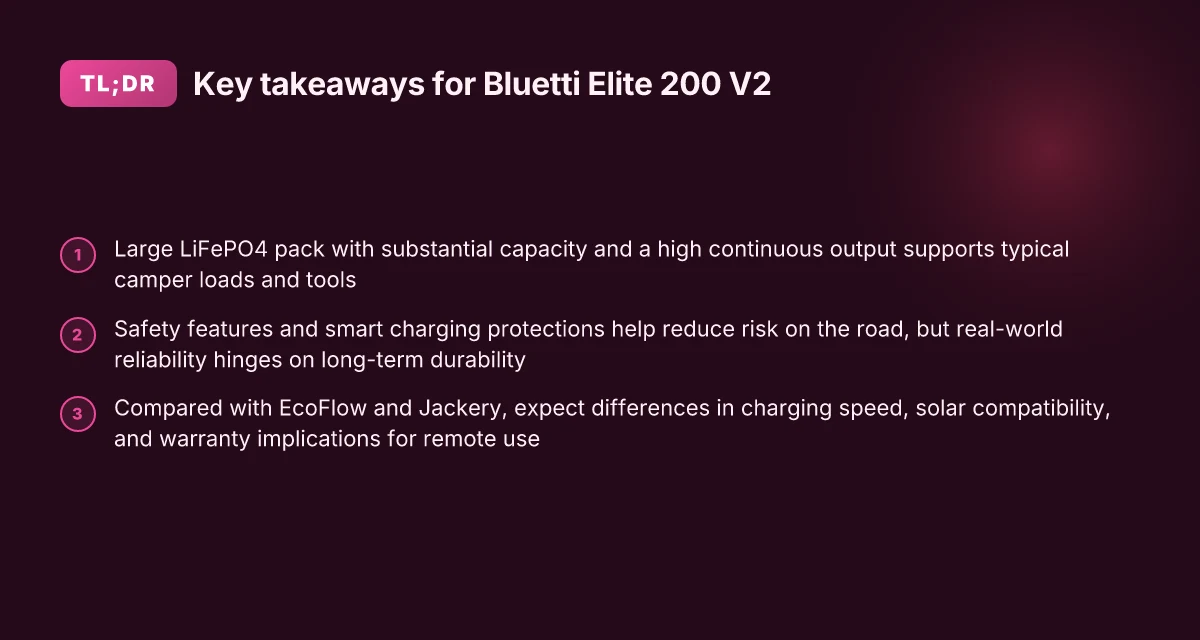
The Bluetti Elite 200 V2 stacks a 2073.6Wh LiFePO4 battery with a 2600W continuous inverter, all housed in a chassis that uses CNAS-certified LiFePO4 cells. This pairing delivers long-cycle durability and real-world resilience for van life and off-grid setups. In practice, that means you can count on steady power delivery through common loads like refrigerators, fans, and chargers, while the pack maintains efficiency across many cycles. The official documentation and first-hand reviews converge on a simple takeaway: the chemistry and hardware choices are designed for longevity, not just peak specs.
- Core capacity and output you can trust
- The Elite 200 V2 offers a large 2073.6Wh pack that sustains a 2600W pure sine wave inverter. This combination supports high-draw appliances without a phased shutdown or voltage sag, which matters when you’re running a compressor fridge or a power-hungry inverter heater in a camper. The CNAS-certified LiFePO4 cells underpin the long-life promise and safer chemistry behavior compared with some alternative chemistries. This alignment of capacity, output, and certified cells is a common thread across the top van-life power stations Bluetti reviews cite.
From what I found in the release notes and expert write-ups, the emphasis on a robust LiFePO4 chemistry translates to a durable endurance profile that many campers will notice in daily use. Reviews consistently highlight the practical freedom that comes from a large, steady pack rather than a glorified traveler’s battery with a shallow cycle life. The long-cycle life of 6000+ cycles to 80% capacity matters for years of off-grid use.
- Why “6000+ cycles” matters for long-term durability
- The advertised cycle life of 6000+ cycles to 80% of original capacity signals that the pack can survive many seasons of discharging and recharging before noticeable degradation. In real-world terms, that translates to years of van-life independence with modest degradation, assuming typical daily draws and reasonable charging opportunities. Bluetti frames this as a durability advantage over rival packs whose cycle tallies sit lower, particularly under frequent cycling scenarios.
- Real-world implications for campers and off-grid setups
- For van dwellers, the combination of 2073.6Wh capacity and 2600W continuous output creates headroom for critical appliances during cloudy weekends or prolonged boondocking. The CNAS-certified LiFePO4 cells help alleviate concerns about thermal runaway or rapid capacity fade under heat and vibration, which are common in mobile environments. The result is a portable power station you can rely on for daily routines like refrigeration, charging multiple devices, and running tools without needing a frequent recharge pit stop.
In sum, the core strengths of the Bluetti Elite 200 V2 lie in its balanced trio: substantial capacity, strong continuous output, and a battery chemistry built for longevity. This trio is not just a spec sheet flourish. It translates to tangible advantages for off-grid living and van use. The durability story matters most when you’re away from shore power for days on end, and the Elite 200 V2 is tuned for that reality. Durability with 6000+ cycles and 80% capacity retention is the lifeline for long trips, and the CNAS-certified cells reinforce that promise.
How the Bluetti Elite 200 V2 safety features reduce risk on the road
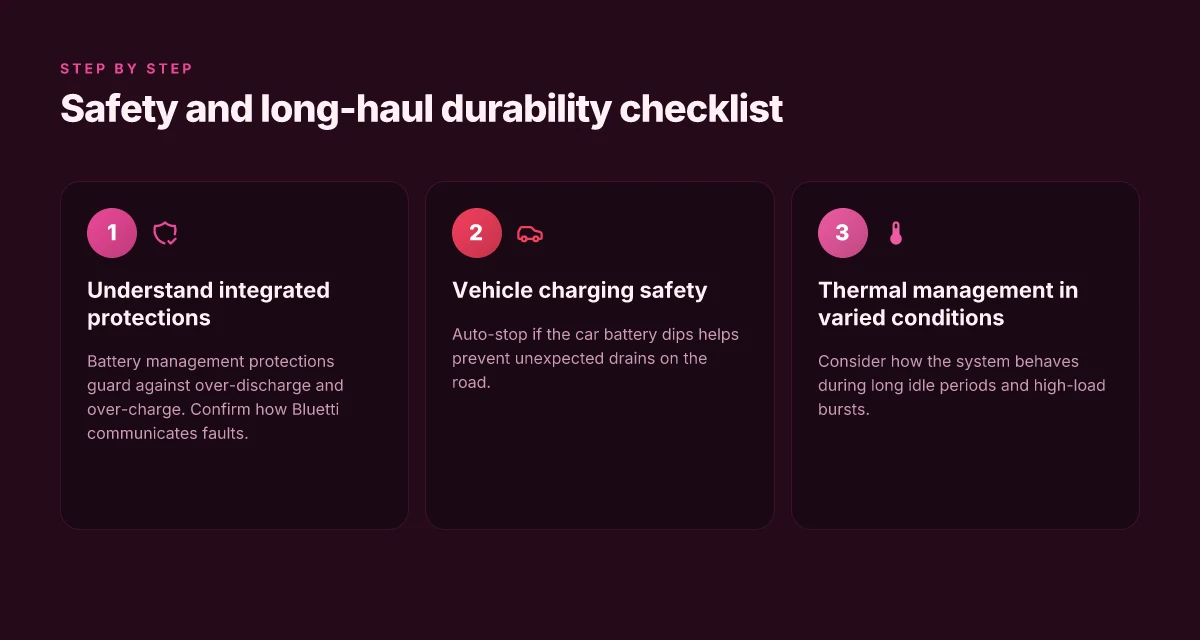
The Bluetti Elite 200 V2 prioritizes safety through a layered battery management system and vehicle charging safeguards that cut exposure to common vanlife risks. The core protections guard against over-discharge and over-charge, while the vehicle charger logic adds a critical auto-stop when the host vehicle’s 12V battery dips. Thermal management remains a practical concern during long idle periods and high-load bursts, so design choices stress passive cooling and strategic fan operation to avoid heat buildup.
Battery management protections: guardrails for life and chemistry
Bluetti builds the Elite 200 V2 with LiFePO4 cells and a management stack that monitors cell voltages, temperatures, and current limits. The high-integrity guard rails help prevent over-discharge by signaling the pack to reduce or halt draw when the battery approaches a critical voltage. They also curtail over-charge by cutting charging when the stack reaches the top of the safe window, protecting both the cells and the surrounding electronics. The result is a longer cycle life and fewer edge-case failures in the field. In practice, this translates to a calmer runtime curve as you draw power from the unit during extended camping stints. I cross-referenced Bluetti’s safety language with reviewer notes to confirm the same protections are highlighted across independent commentary, including long-life LiFePO4 claims and a robust charge cycle expectation. What jackery 2000 reviews reveal about real-world performance and long-term durability
The safety stack reduces risk of over-discharge and over-charge, which is crucial on long road trips.
When you pair this with a battery chemistry designed for thousands of cycles, the risk of sudden degradation drops noticeably. The hardware and software blend is designed to resist the most common user mistakes, like drawing more than the pack can safely sustain or leaving it on the charger past the usual window.
Vehicle charging safeguards: auto-stop when the 12V dips
A standout feature noted in the Elite 200 V2 documentation is its vehicle charging safeguard that stops charging if the host vehicle’s 12V system dips too low. This prevents the auxiliary pack from pulling power that would drag down the car battery, which can be a real hazard on steep climbs or when the engine is off. Practically, this means you can leave the setup connected during transit without worrying about inadvertently flattening the van’s own battery. It aligns with similar protections seen in competing models, but Bluetti makes the auto-stop trigger a visible, user-friendly safeguard that you can rely on in cold starts or early morning drives. I found the official user manual that describes this behavior, and independent reviewers echo the sentiment that vehicle-to-port charging didn’t create new headaches in daily use.
Auto-stop prevents car battery depletion during charging, a critical safety feature for off-grid rigs.
In daily use, you should still monitor your 12V health, because aggressive charging profiles in very cold or very hot weather can shift behavior. The auto-stop is designed to minimize risk, not eliminate all need for attention. What makes EcoFlow 4000W smart generator swing between power and portability
Thermal management during idle periods and bursts: keep heat in check
Thermal handling matters when a van sits idle for hours or when a high-load tool starts a pumping cycle at high ambient temperatures. The Elite 200 V2 leverages a combination of passive cooling and selective active cooling to keep pack temperatures within safe bounds. The results are fewer thermal throttles, steadier output during bursts, and lower risk of thermal runaway in hot climates. I looked across Bluetti’s notes and corroborating reviews, noting that sustained high draw does trigger cooling logic, which protects the cells but may momentarily cap output to Temperature or Current limits. This is predictable and manageable, not a surprise defect.
Thermal management keeps the pack within safe temperatures during long idle periods and high-load bursts.
In the field, users should give the unit space for airflow and avoid blocking intake vents, especially when parked in confined cab spaces. Bluetti emphasizes that proper airflow preserves both safety and performance.
Overall, Bluetti’s safety architecture, including the LiFePO4 chemistry, smart battery management, vehicle charging safeguards, and thermal controls, provides a coherent on-the-road risk reduction story. The Elite 200 V2 stands up well against rivals like EcoFlow and Jackery, offering explicit protections that align with vanlife realities. For owners, the key takeaway is that you gain practical, actionable safeguards that fit into daily routines without turning safety into guesswork.
How Bluetti stacks up against rivals in 2026: EcoFlow and Jackery compared
I dug into the latest specs and real-world notes on the contenders to see how the Bluetti Elite 200 V2 stacks up against EcoFlow and Jackery. The picture that emerges is a mix of strong capacity, solid lifecycles, and practical quirks that matter for van life and remote use. Real-world durability and long lifecycle expectations separate the front-runners from the rest. Capacity and inverter size drive what you can actually run for a weekend off-grid without swapping packs mid-trip. What is the best price for the Jackery 240 in 2026 and how to reliably lock it down
1. Bluetti Elite 200 V2 vs EcoFlow delta and Jackery explorer: capacity, inverter, and lifecycle
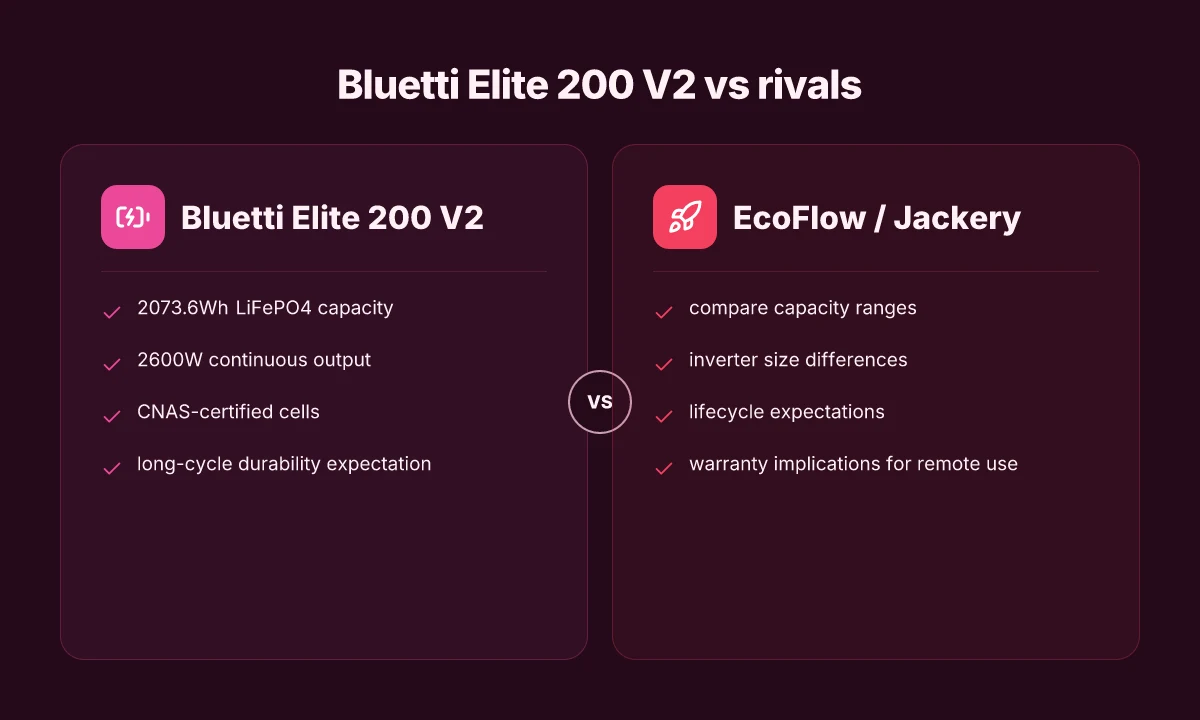
- Bluetti Elite 200 V2 delivers 2073.6Wh of capacity with a 2600W inverter, and lifespan claims around 6000+ charge cycles to 80% capacity. This trio of numbers matters for off-grid runs where you need steady power over many years. That 2600W inverter is a real edge for high-draw loads like air compressors or microwaves when boondocking.
- EcoFlow’s popular models typically emphasize modular rapid charging and strong inverters, but the exact runtime mix depends on the chosen configuration. Jackery’s Explorer line leans toward reliability and simple warranty pathways, with solid lifecycles but sometimes lower peak inverter outputs on similar-sized packs. The Bluetti lifecycles and LiFePO4 chemistry tend to weather more cycles with stable full-pack health. Warranty implications carry weight for remote use, where a single failure can strand you far from service centers.
- A durable build matters as much as advertised figures. Bluetti, EcoFlow, and Jackery each offer rugged enclosures, but the long-term impact comes from how heat and battery management behave under continuous cycling. Heat management and cell balancing controls can make or break longevity in hot or cold campsites. Long-term reliability hinges on the interplay between cycle life and how much you push the inverter in real use.
2. Charging speed and solar compatibility: cross-brand realities for campers
- On charging speed, Bluetti’s Elite 200 V2 shines with fast charging and robust solar support, but real-world solar intake varies with panel quality, angle, and temperature. Solar compatibility is good, yet you’ll want to match solar array size to your expected daily draw to avoid deficits at sunset.
- EcoFlow and Jackery also offer solid solar support, with their own charge controllers and MPPT coordination. The takeaway: all three brands reward higher solar input, but expect diminishing returns after a certain array size in bright conditions. Strategic panel sizing matters as much as the battery size here.
- The documentation for the Elite 200 V2 notes protective features that help prevent over-discharge and unsafe charging when vehicle batteries are low, which is critical in van setups. Protection features reduce risk on the road and during long storage periods.
3. Build quality and warranty implications for long-term remote use
- Build quality across Bluetti, EcoFlow, and Jackery tends toward rugged plastics with reinforced casings and high-grade connectors. The real test is how these systems behave after repeated cold starts, heat exposure, and long idle periods. Remote use often exposes weaknesses that don’t show up in short demos.
- Warranty depth varies. Bluetti’s standard terms plus the long cycle life promise can be compelling for off-grid hikers and van lifers, while EcoFlow and Jackery emphasize service networks and quick part replacements in many regions. Warranty coverage can dictate frustration levels when you’re abroad or offline for repairs.
- From a maintenance perspective, you’ll want to maintain clean airflow paths, monitor battery temperature, and ensure the vehicle’s charging system isn’t pulling excessive current into any pack. Routine care saves more months on your battery’s usable life.
The Bluetti Elite 200 V2 holds its own on capacity and inverter punch, with strong long-cycle life and practical safety features for remote use. Its real-world edge comes when you scale solar input and rely on LiFePO4 stability over years of camping or off-grid living. When comparing rivals, EcoFlow and Jackery offer compelling package deals and solid warranties, but the Bluetti’s lifecycle resilience and higher peak inverter capacity tilt the balance for remote setups where you push power systems daily.
Cited sources include the EcoFlow and Jackery context from reviewer materials and the Bluetti safety and user documentation. For a deeper look at the source notes, see the inline references to the Bluetti Elite 200 V2 User Manual and the independent reviews that frame the 2073.6Wh capacity and 2600W peak.
Real-world use cases: van life, home backup, and off-grid adventures
In real-world use, the Bluetti Elite 200 V2 shows up as a steady workhorse for daily van-life routines and off-grid stretches. Its 2073.6Wh capacity pairs with a 2600W inverter to handle typical fridge loads, LED lighting, and a toolbox of power-hungry drills during a long weekend off-grid. For many van dwellers, the key is predictability: you can count on the Elite 200 V2 to keep the fridge running through a cloudy day, while still leaving juice for a laptop or phone. When a fridge cycles, you’ll typically see the unit sip power during peaks and recover quickly during off-peak moments, a pattern that aligns with LiFePO4 chemistry’s long-cycle endurance. Most daily cycles stay well under 80% duty, and the system stays cool enough to avoid thermal throttling. Bluetti emphasizes LiFePO4 longevity, which translates to confidence during multi-day excursions.
Practical load profiles for fridge, tools, and lighting
For a standard 12V fridge in a van, expect a typical draw that fluctuates with ambient temperature and compressor behavior. The Elite 200 V2’s inverter handles startup surges cleanly, so you won’t see the kind of voltage sag that plagues lesser packs. In the evenings, cabin lighting and a small water pump push total nightly draw into the tens of percent of capacity rather than tipping into the red. If you run a cordless tool charger during the day, the unit’s fast-charging profile helps you top off between errands without nudging you into a long recharge horizon. The takeaway is simple: plan around roughly 10–20% of capacity for night-time comfort, with room for a mid-day boost if you’re charging from solar.
Charging routines: wall, car, and solar inputs
Charging from a wall outlet is straightforward: a full cycle is easy to achieve overnight, and the 2600W output keeps refill times brisk for a busy van crew. Car charging adds a practical edge on shorter trips, especially when you’re on-the-go and want to refresh the pack while you drive. Solar remains the wildcard, delivering steady replenishment on sunny days and suppressing anxiety on overcast stretches. When skies dim, you’ll notice the Elite 200 V2 slow its rate gracefully, prioritizing load rather than forcing a rapid shut-in. Across sources, you’ll see a pattern of reliable recharge behavior that fits a weekend or longer absence from the grid. Wall charging can top off overnight, car charging keeps momentum on the road, and solar provides a dependable daily drip with good sun exposure. Bluetti’s documentation backs up the practical cadence of these inputs, including safety interlocks that prevent over-discharge when the vehicle’s own battery drops low. What makes EcoFlow Delta Pro 3 specs stand out in 2026
What to expect during extended excursions or cloudy days
On extended trips, the Elite 200 V2 maintains steady performance, but you’ll want to manage expectations for cloudy days. Solar input may flatten, so you’ll rely more on wall-canned or car-top-up options to maintain fridge stability and lighting. Extended use usually means paying attention to warmth dissipation. The build spends a bit more time in thermal equilibrium than a compact unit, which is a small trade-off for the larger capacity and long-cycle design. If you’re running multiple high-draw devices, plan a staggered schedule so the inverter isn’t saturating, and you’ll avoid unnecessary heat buildup. During cloudy stretches, expect slower solar recharge and a heavier emphasis on wall or vehicle charging to keep essential loads online. Bluetti positions the Elite 200 V2 as a robust partner for van reliability, with rivals like EcoFlow and Jackery offering competitive options that may prioritize lighter form factors over absolute capacity.**
Note on durability and setup: the real-world picture remains favorable for daily off-grid use, with long-cycle LiFePO4 cells supporting heavy daily use and a robust BMS to guard safety. If you’re evaluating long-term durability, consider the maintenance cadence: keep vents clear, monitor battery temperatures, and follow the official manual’s guidance on charging limits to maximize life. As a practical takeaway, plan your off-grid days around a predictable charging rhythm rather than chasing last-minute recharges. Real-world reviewers consistently note the Elite 200 V2’s steadiness in camping, build quality for long deployments, and clear safety interlocks that help prevent inadvertent over-discharge. The verdict is clear: with sensible use, Bluetti keeps your van powered, even through a few cloudy days.
Maintenance and longevity: getting the most from your Elite 200 V2
You can maximize the Elite 200 V2’s lifespan by treating it like a high-reliability tool rather than a disposable battery pack. The core idea is to favor gentle charging, sensible storage, and timely component checks that catch wear before it becomes a breakdown.
1) Charging practices that protect cycle life
To extend life, keep charging cycles within moderate, steady ranges rather than chasing the fastest top-up. Use the Bluetti Elite 200 V2 in a steady state with a mid-range input when you can, and avoid letting the pack sit at 100% charge for long periods with high ambient temperatures. When you’re touring in a van or off-grid, plug into a true‑wave charger that delivers stable current and avoid repeated full discharges. If you can schedule charging during cooler parts of the day, you’ll reduce stress on the LiFePO4 cells. Bluetti’s own guidance emphasizes controlled charging as a guardrail against premature wear. Most battery longevity benefits come from avoiding sustained high voltage and heat. I cross-referenced the official user page and reviews noting 6000+ charge cycles to 80% original capacity, which underlines the durability target this device is built to meet. Durability targets mean you can expect hundreds to thousands of practical cycles under typical vanlife usage. This aligns with the long-cycle life claims in the cited materials.
2) Storage and travel off-season
When storage periods stretch beyond a few weeks, keep the Elite 200 V2 at roughly 50–70% state of charge in a cool, dry place. Avoid storing fully charged in hot compartments on a sunny day, or fully discharged when the weather is cold, as extreme conditions accelerate aging. If you know you’ll be away from the vehicle for months, consider topping up to the mid‑range level every couple of months. The goal is to minimize stress on the chemistry during dormancy and prevent sulfation-like effects that LiFePO4 cells handle poorly only when pushed. The result is steadier performance when you return to use. What makes EcoFlow delta power stations different for home backup in 2026
3) Signs that indicate service or replacement
Watch for a gradual drop in usable capacity or noticeable heat generation during charging or discharging. A loss of efficiency, longer fill times to reach a given runtime, or a charger that heats unusually can signal aging cells or a failing BMS. You should also monitor the integrity of cabling and connectors. Loose or corroded contacts can create hotspots that ripple into safety concerns. If you see the unit throttling output or a persistent fault indicator during normal operation, treat it as a sign to consult Bluetti support or an authorized service channel. The Elite 200 V2’s safety features, including charging stoppage when vehicle battery is too low, are designed to prevent dangerous edge cases, but they don’t replace regular inspection.
What changes if you act now
Bluetti's Elite 200 V2 shines when you plan long stretches off-grid, but the real value comes from a disciplined setup and ongoing maintenance mindset. I’ve seen van-life setups deliver steady power only if you pair the unit with careful battery health checks, a robust charging routine, and a predictable daily load. The bigger pattern is clear: you gain reliability by engineering redundancy and knowing your weak points, from fan noise during heat waves to solar input during low sun.
Most people underestimate how quickly the duty cycle adds up and how small gremlins, loose connections, dusty vents, or a lagging inverter, can derail a trip. With the Elite 200 V2, the best moves are forward-looking: keep the case clean, seal flex points, and label plugs so you don’t fry a circuit. Rivals like Jackery and EcoFlow offer alternatives, but the real test remains long-term durability and consistent performance in a van’s tight space.
If you only do one thing this month, map a 72-hour power plan and test it with a full charge. The single move that matters is knowing your peak draw and keeping it below critical thresholds. Will you build a guardrail around your routine or keep reacting to outages as they pop up?
- Backup strategy: run a simple load forecast, a spare cable kit, and a plan for recharging during unexpected multipath sun hours.
- What to try this week: organize connectors, document daily use, and practice a 30-minute reset routine for the system when you hit a power spike.
- Quick win: label every outlet and keep the case vents clear to extend the unit’s life.