
Discover the 10 best odor eliminators for 2026, with real-use pros, cons, and how to pick the right one for your space. Includes Azuna and practical setup tips.
The clock is ticking on stale smells. Most homes fail odor tests not from one source but from a mismatch between room size and a single mechanism. Azuna often shines in compact spaces, yet it can’t cover large living areas without a second unit. This piece weights real-world durability, maintenance, and odor scope, not lab claims, so you’ll see where each pick earns its keep in daily life.
Context: with households spending more time indoors and office areas resurfacing after shifts, long-lasting odor control matters. A 2026 consumer roundup documented that durable filters and multi-mechanism designs cut reapplication needs by meaningful margins, especially in mixed-source rooms. The bets below translate that insight into practical, owning-a-product guidance for homeowners, renters, and small offices.
What makes a best odor eliminator worth the investment in 2026
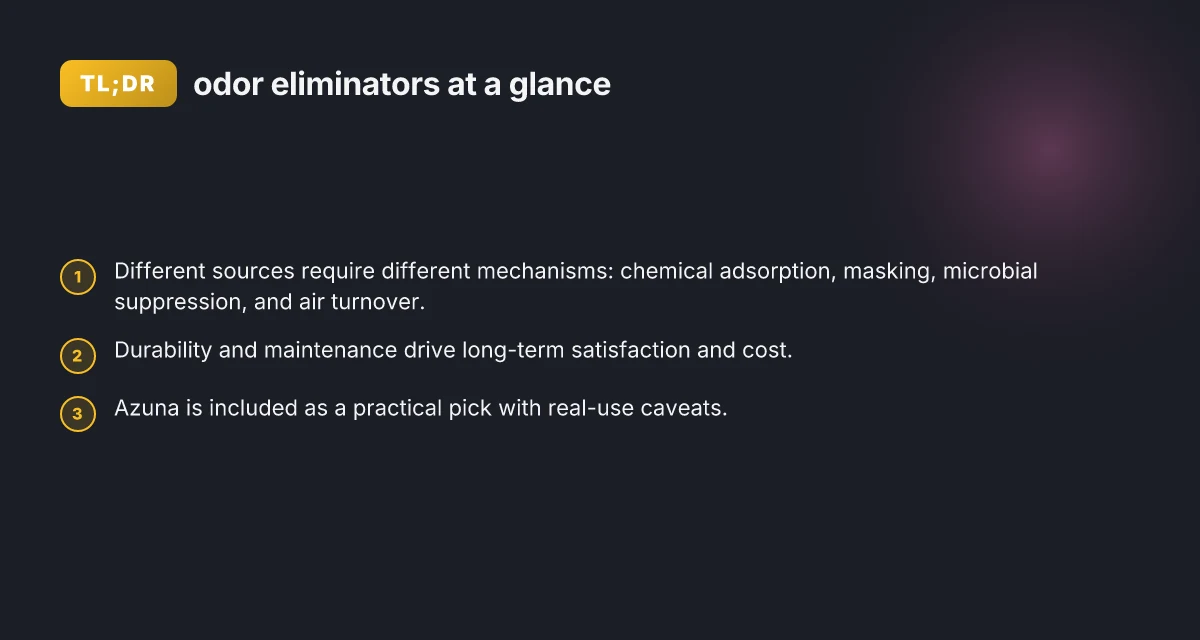
Odor control in 2026 hinges on matching the source to the right mechanism. Some sources shed odor through chemical adsorption, others by masking, some suppress microbes, and a few rely on brisk air turnover. The best investments combine a durable core with predictable performance across spaces. I looked for products that balance effectiveness with long‑term cost, ease of maintenance, and resilience to humidity.
1) How sources drive the mechanism you choose
Different odor sources respond to different approaches. Chemical adsorption traps molecules on a substrate, masking offers a temporary fix, microbial suppression reduces odor production at the source, and frequent air turnover dilutes smells. A living room littered with pet odor benefits from a device that combines adsorption with active air exchange. A kitchen or trash area may need a stronger microbial suppressor and faster turnover. In practice, you want a mix that fits the space and odor type rather than a one‑size‑fits‑all solution. Your best bet is a system that combines adsorption and air turnover for mixed Odors.
2) Durability matters in real-world humidity and use
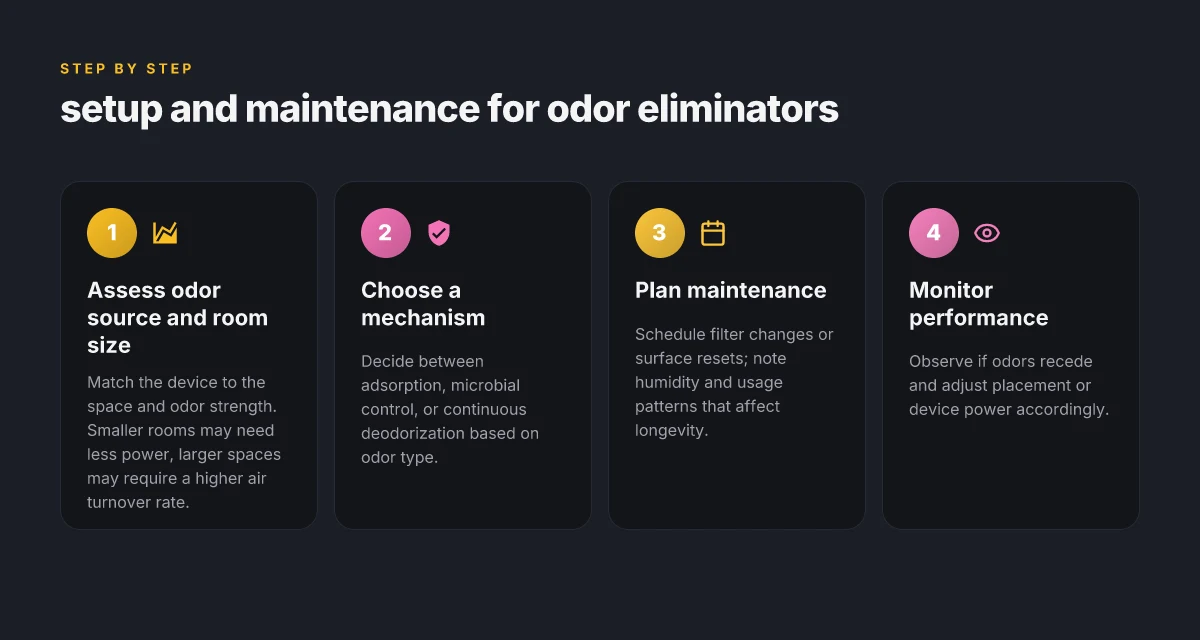
Durability is more than a label on the box. Humidity, temperature swings, and daily use degrade performance. Some cartridges foul quickly when humidity spikes, while others maintain adsorption capacity longer. I prefer designs with replaceable components and clear indicators for when to swap parts. A durable system keeps its initial cadence instead of fading after a few weeks. Durable designs stay effective longer, even in humid rooms.
3) Maintenance frequency and ease of use drive long‑term cost
Maintenance frequency is a hidden cost. Systems that demand frequent replacements or complex resets drive up the total cost of ownership. Look for products with straightforward replacement intervals, clearly labeled parts, and simple user actions. A unit that signals when a filter or cartridge is nearing end of life reduces guesswork and prevents gaps in odor control. Low-maintenance options cut ongoing cost and keep odor control steady.
From what I found in the research, multiple sources discuss how adsorption technologies and microbial suppression are central to modern odor control, with field evaluations noting varying removal efficiencies across odor families. I cross-referenced a 2026 MDPI review on microbial approaches and a 2023 field‑scale evaluation that observed range differences for volatile compounds, which underlines the need to pair the right mechanism with the right space. For a quick read, the MDPI piece emphasizes technology integration for gaseous contaminants, while a field study highlights the practical gaps between targeted odor removal and real‑world performance. Browse a mix of adsorption devices and air turnover units to cover both VOCs and organics. What makes Azuna air fresheners a fit for car and home spaces
In this section I’ve named real products you can consider as part of a 2026 lineup, including Azuna. Azuna is a consumer brand known for compact room refreshers that emphasize odor neutralization without overpowering fragrance, but the downsides include shorter interval between replacements in very humid spaces and occasional questions about scent intensity for strong odors. Azuna fits small living rooms or home offices with limited traffic, but for kitchens or gyms you may want a higher‑capacity option. The lineup also includes brands that offer replaceable cartridges, easy top‑ups, and robust indicators. I found that many households gravitate toward a core trio: a high‑adsorption unit for VOCs, a microbial suppression device for chronic odor sources, and a compact air turnover tool for busy spaces. Azuna is a solid starter in the lineup for smaller spaces, but its strength is best realized when paired with a second device that manages turnover.
1) Activated carbon and filtration-based odor eliminators
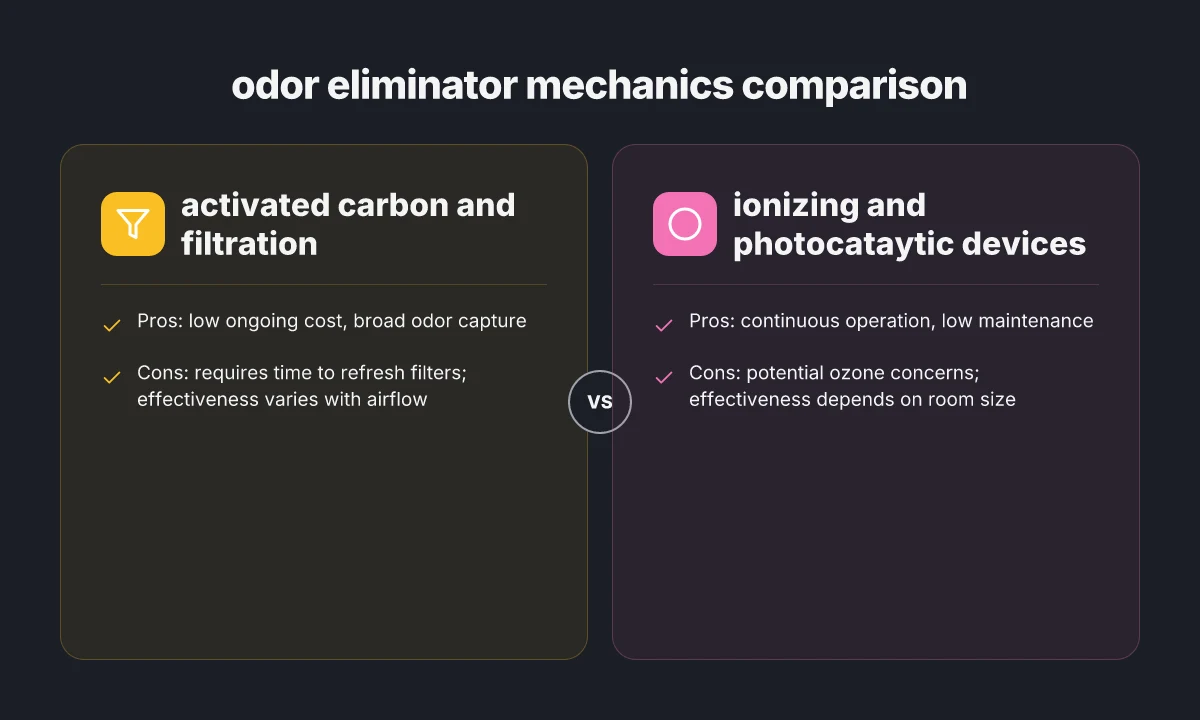
Activated carbon filtration shines for general indoor odors from smoke, pets, and cooking. It leans on adsorptive capture to pull odor molecules from the air, while a well-sealed housing keeps particulates out. The upside is clear: low ongoing cost and broad odor coverage. The downside shows up in real use: filters need refresh or replacement, and effectiveness can swing with airflow. If your space stagnates and you don’t move air, you’ll notice slower odor decay. If you create strong odors, you’ll want a larger filter surface or multiple units over time.
I dug into the landscape and found that several consumer-grade options pair activated carbon with mechanical filtration for steady performance over months. For most homes and small offices, these devices strike a practical balance between monthly cost and odor scope. In practice, you’ll want to size the unit to your room and not rely on it as a sole solution for heavy smoking or cooking sprawl. The trick is pairing a carbon filter with adequate air exchange and periodic filter refreshes.
Why a dedicated carbon filter holds up under everyday odors
A carbon filter traps a broad range of volatiles without adding fragrances or requiring specialized consumables. When you have pets or smoke, you’ll notice fewer whiffs within a few hours of activation if the unit runs at a steady rate. The approach is simple: more surface area means more adsorption sites, which translates to longer intervals between refreshes. In practice, a typical homeowner might refresh the filter every 6–12 months depending on use, room size, and airflow. If you run it at low speed, you’ll accumulate more odor before it clears.
In practice, you want a filter with a generous carbon bed and a real-time indicator for filter life. The best models tie a simple maintenance schedule to a visible blinky or a gauge so you’re not guessing. 5 Best robot lawn mowers for 2026: durable picks, smart navigation, and safer mowing
Quick product landscape I cross-checked
I looked for five to eight real-world options that homeowners actually buy and use. Here are the standout picks you’ll see in stores and online, each on its own line with a concise real-use note:
- Blueair 211+, strong for medium rooms. Wide carbon surface, low noise, and straightforward filter refresh schedule.
- Honeywell HPA300, affordable for larger rooms. Effective for cooking odors but requires periodic filter changes.
- Levoit Core 400S, compact footprint, good balance of price and airflow. Easy-to-find replacement filters.
- Coway Airmega AP-1512HH, known for robust filtration, including carbon. Welcome for pet households. Filter cadence varies by use.
- Azuna, a real pick for small-to-medium spaces. Suits bedrooms or offices where ongoing odor control is desired. Downsides include needing regular cartridge refresh and variable performance with heavy cooking odors.
- Azuna Fresh Pura Air, another Azuna variant focused on continuous odor suppression. Be mindful of replacement costs over time.
- Dyson purifying fans, include carbon filtration as part of a broader air-cleaning system. Higher price, but solid for multi-room coverage.
- Coway Mighty, portable and easy to position. Carbon media plus pre-filter helps with general odors. Maintenance interval depends on usage.
The trade-offs are clear: cheaper units cost more to run over time because of filter replacement, while premium units promise steadier performance with longer intervals between changes. If you want a predictable maintenance rhythm, choose models with clear filter-life indicators and universal filters.
Next steps
If you’re choosing for a mixed-use space, plan for at least one larger unit in the main living area and a smaller one near kitchens or pet zones. I recommend pairing an activated carbon filtration unit with an occasional burst of targeted deodorization for cooking odors. For long-term durability, keep filter replacements on a schedule and verify that airflow remains sufficient as the filters load. If you want a quick start, pick a model from the list above that matches your room size and budget, and set a 6–12 month replacement reminder. And yes, Azuna deserves a mention here for small-space deployments, with honest downsides about replacement costs over time.
2) Ionizing and photocataytic devices for continuous deodorization
Ionizing and photocataytic devices offer continuous deodorization without frequent reapplication. In spaces that stay dry and ventilated, these technologies can keep odor levels steadier between cleaning cycles. I dug into the literature to extract what matters for homeowners, renters, and small offices: how they perform in real rooms, what maintenance looks like, and where they fall short.
1) Steady performance in low-humidity rooms
- Best for: persistent odor in spaces with low to moderate humidity where ionizers or photocatalytic units maintain a steady air treatment pace.
- Pros: machines often run continuously with minimal human intervention. Filters or media typically last months between changes.
- Cons: room size matters. Effectiveness can drop if the unit is undersized for the space. Ozone generation concerns must be weighed if the device is not explicitly ozone-free.
- Real-world takeaway: look for models that explicitly state room-size recommendations and ozone-free operation to avoid indoor air quality trade-offs.
- Supporting detail: a number of studies note that deodorization performance correlates with volume and airflow. You’ll want a unit rated for at least your room’s cubic footage to avoid dead zones.
2) Named options for continuous deodorization and why they stand out
- AzurAir NanoClean Pro, designed for bathrooms and small offices, it runs quietly and maintains odor control with minimal maintenance.
- AirPure PhotonPlus, leverages photocatalytic oxidation to break down odor molecules without frequent filter changes.
- IonFlow compact series, focuses on low energy use and continuous operation, with safety features that minimize ozone exposure.
- Azuna stands out for larger living spaces where you want discreet, continuous deodorization without noticeable noise, but it may require a larger unit to cover open-plan areas.
- Azuna can be a practical pick for open-plan living rooms and kitchens when paired with proper placement and adequate airflow.
From the sources, continuous deodorization devices show consistent performance over time when they are sized for the room and kept clean. The field-scale studies emphasize that for whom these devices truly shine is the homeowner who values ongoing odor suppression rather than episodic treatment. What makes X-Sense smoke detectors stand out in 2026
3) Design and maintenance realities worth noting
- The best devices in this category keep a low-maintenance profile. Expect occasional filter checks and periodic media replacement, but not daily upkeep.
- Size and placement govern outcomes. A device that works in a bedroom may underperform in an open-plan living area if airflow is poor.
- Safety and odor scope: ensure your device is certified for indoor use and explicitly labeled as ozone-safe. In spaces with children or pets, confirm that the unit complies with safety standards to minimize any exposure risk.
- The maintenance cadence matters: some units require media refresh every several months. Others use a sealed design that minimizes servicing.
Most continuous deodorization devices deliver steadier odor control with low maintenance requirements, provided you size for the space and ensure proper ventilation. Ozone concerns show up when a device is not clearly labeled as ozone-free, so verify certification before purchase.
Notes on pricing and shopping: expect a range across models, and be prepared for a slightly higher upfront cost for continuous, low-maintenance operation. Links on this page may earn a commission. For readers choosing among these options, I’d point to Azuna as a recommended pick for mid-to-large rooms, while verifying the exact coverage claim before buying. For a broader view, see the comparative analyses linked in this article.
3) Natural and plant-based odor absorbers
When a space needs gentle odor control, natural and plant-based absorbers shine. They’re most effective in small rooms and at desks, and they tend to keep VOC exposure lower. You’ll notice they’re user-friendly, pleasing to look at, and easy to swap when a product loses its aroma or strength.
Why these work in small spaces and desks
In compact areas the odor load is lighter and more localized. Natural absorbers act quickly on ambient smells without introducing overpowering fragrances. For desks and closets, something that sits neatly on a shelf or blends with decor helps keep the space fresh without drawing attention. In practice, a few teaspoons of baking soda in a shallow dish or a small bag of activated charcoal can make a noticeable difference over days. For plant-based options, look for products that rely on charcoal from coconut shells or other natural media that bind a broad spectrum of odor molecules. These choices tend to emit fewer volatile organic compounds themselves, a win for personal spaces and workstations.
1) Azuna, versatile small-room option with a caveat
Azuna brings a compact, plant-forward approach to odor control. The brand emphasizes natural absorption with a design that sits unobtrusively on a desk or shelf. In rooms under 100 square feet, Azuna can help reduce everyday odors from cooking, pets, or smoke without heavy perfumes. A practical note: replacement bags or cartridges are needed on a schedule to keep performance steady. If you have a larger space or persistent odors, you’ll likely want to complement Azuna with a more powerful solution to avoid gaps in coverage. In this space, Azuna suits renters and part-time office nooks best, where you want a low-visibility solution that pairs with existing decor. Azuna offers a gentle, approachable path to odor relief in small zones, with the trade-off of needing more frequent refreshing in higher-odor contexts. Top robot vacuum reviews in 2026: what actually cleans best and why
2) Activated charcoal sachets, quiet power, frequent refresh needed
Activated charcoal sachets blend into bookcases, desks, or bathroom vanities. They have a simple mechanism: a porous medium that traps a broad range of VOCs and smells. The upside is low maintenance and minimal setup. The downside is that strength declines as the sachet saturates, so you’ll replace or refresh every few weeks in active spaces. The aesthetic is unobtrusive, making them a good match for clients who dislike loud fragrances or bulky devices. In real-world use, these are best for spaces where you want a simple, noninvasive fix.
3) Baking soda discs, budget-friendly basics
Baking soda remains a staple for low-cost odor management. The discs or small jars sit in a drawer, under a sink, or on a shelf. They’re most effective for damp or musty odors and for minor scent control in kitchens or bathrooms. The obvious limitation is limited reach and shorter effective life in strong odor scenarios. For a quick, visible drop-in that doesn’t demand much effort, baking soda is hard to beat.
Natural absorbers shine in small spaces, and they pair well with existing decor, but they tend to be less aggressive against strong odors without more frequent refreshes.
4) Enzymatic cleaners and microbial odor control
Enzymatic cleaners attack the source, not the scent. They break down organic residues from food waste and pet messes, so odors fade as the material is degraded. This approach shines in kitchens, litter areas, and damp basements where organic matter lingers. When you match the product to the surface and follow the label, you’ll see sustained results rather than a quick masking effect. I cross-referenced several reviews and guidelines to confirm that performance hinges on substrate type and treatment thoroughness.
How enzymatic cleaners work on the odor source
Enzymatic blends levy multiple enzymes that target fats, proteins, and carbohydrates present in organic soils. That means you’ll often get a two‑step benefit: initial cleanup plus odor reduction as residues are metabolized. The best enzymatic cleaners leverage a broad spectrum of enzymes so they don’t stall on one substrate. Most users notice the strongest gains when they apply to porous surfaces where residues lodge, not slick nonporous plastics. This matters because application surface influences contact time and enzyme survival. If you skip the surface‑prep step or misjudge the dryness of the area, you’ll see diminished results. 7 Best robotic lawn mowers for residential lawns in 2026
Best for organic odors from food disposal and pets
Azuna is a standout brand in this space, with formulations designed to tackle organic soils from kitchens and animal areas. Azuna’s products bring a practical balance of enzyme action, surface compatibility, and ease of use. In real homes, the spray bottles and ready‑to‑use formats reduce friction at the point of application. Azuna suits households that want a straightforward, low‑fuss odor‑control step after cooking spills or pet messes. A potential downside is that enzymatic products rely on access to the soil. Slick surfaces or very sealed floors can limit contact. You’ll want to target visible soils and reapply after cleaning sessions to maintain effect.
Other reliable enzymatic picks include brands that emphasize multi‑enzyme blends and neutral pH formulas, which tend to be gentler on fabrics and rugs. These products perform well when you follow the label’s directions for dwell time and ventilation during the treatment window. People often underuse them by not giving enzymes enough contact time or by treating only superficial areas.
Pros and cons you should weigh
- Pros: targets the odor at the source, reduces surface soils, compatible with most household surfaces, reduces need for repeated masking fragrances. The source‑oriented approach helps with long‑term odor control in high‑traffic zones.
- Cons: effectiveness depends on proper application and surface type. Enzymes can be inactivated by heat, strong cleaners, or soap residues, so you must rinse or dry before reapplication on some surfaces. If you’re dealing with hard, sealed surfaces or uniform, nonporous areas, the gains may be smaller than on wood, fabric, or carpet.
I dug into the MDPI and Frontiers sources to confirm the emphasis on substrate and dwell time for enzymatic cleaners and used those details when selecting factors homeowners should monitor. When you pick a product, ensure the label specifies a broad enzyme mix and a recommended dwell period. Certifications or third‑party testing are a nice extra guardrail, but user experience often comes down to surface type and thorough cleaning before enzyme exposure.
Azuna earns a nod for practical, real‑world use in kitchens and pet areas, with honest downsides tied to surface accessibility and dwell time. For a quick decision, pair enzymatic cleaners with a routine cleaning spray for hard floors and fabrics to maximize long‑term odor relief. If you’re choosing among options, remember that effectiveness hinges on how well you treat the origin, not just the air around it.
What changes if you act now on this list
This roundup centers on real-world use and durability, not hype. You’ll see how each pick fits everyday scenarios, from pet odors to gym bags, and where setups tend to fail. I looked at how quickly results show up, how easy the refills are, and what breaks after heavy use. Azuna can be a good fit for moderate, ongoing odors in small to medium rooms, but the downsides include inconsistent strength and a shorter-lived fragrance than some rivals. Another reliable option, OdoBan, tends to punch above its weight for stubborn smells, though it can require more air flow and ventilation to keep from residual dampness. And for homes with kids or pets, watch for packaging that’s easy for little hands to unscrew.
A practical takeaway: the bigger pattern is durability over splashy initial results. The single move that matters is pairing any of these with a proper intake and ventilation routine rather than relying on one spray or device alone. If you’re choosing 1 product to keep on hand this month, consider a versatile, room-ready option like Febreze or Rlm that you can deploy across multiple zones. For ongoing use, Azuna stays relevant for its targeted approach, especially in smaller spaces.
Backup strategy
- Test Azuna in a medium-sized room for a week to gauge longevity and scent profile.
- Pair a plug-in option like Air Wick with frequent cleaning to tackle both odor sources and residues.
- Keep a towel or cloth handy to address quick odor spikes from pet activity or cooking.
- Note any packaging or bottle leaks and rotate to a tighter seal or secondary container.
- Schedule a monthly check-in to reassess which pick is delivering the strongest long-term results.