
A grounded Dreame vacuum review for 2026 that separates solid performance from common reliability concerns, with brand specifics and real-world usage guidance.
Recent experience with mid-range Dreame models shows a reliable rule: hype around ultra-long run times often ends in real-world tradeoffs on battery health and maintenance needs. When a wand of specs promises months of quiet cleaning, the durability reality hinges on spacer batteries, seal integrity, and brush-gear wear that show up after apartment-sized cycles. Dreame's value hinges on practical upkeep rather than flashy numbers.
This piece cross-checks public feedback and rival performance from Roborock and Ecovacs to separate durable reality from marketing gloss. You’ll see how long a typical unit lasts in real use, what breaks first, and how warranty and replacement-part ecosystems shape total cost of ownership. Expect concrete signals from 2026 user reports and a framework you can apply to any mid-range vacuum decision. Real-world durability reports matter more than headline run times.
What makes a Dreame vacuum review in 2026 different from the hype
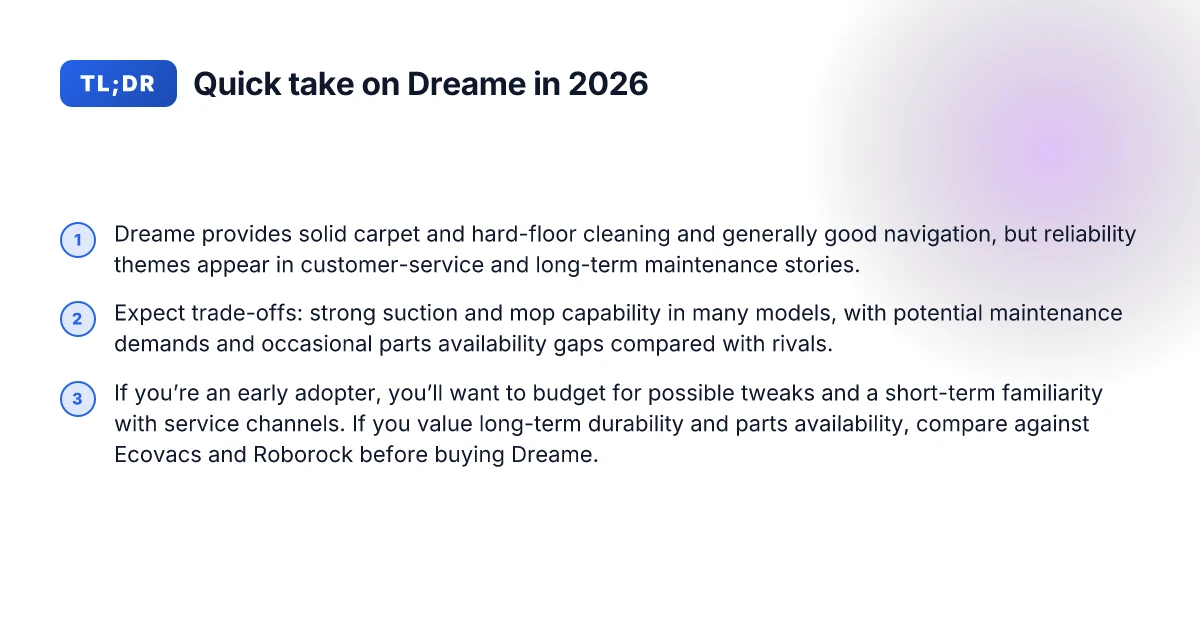
Dreame has expanded its model lineup in 2026, but long-term reality often diverges from headline specs. Consumers deserve a steady read on reliability, not just the latest feature set. I looked through independent coverage and user feedback to separate durability signals from marketing gloss, then framed what owners should expect after months of real use.
1) Brand position and model variety in 2026
Dreame now stacks a broader range of mid‑range options against rivals like Roborock and Ecovacs. The core appeal remains strong navigation, decent suction, and integrated mopping, but the lineup varies in battery life, bin capacity, and obstacle avoidance sophistication. Some models ride the same platform with incremental upgrades, which means a purchase may feel like buying into a family rather than a single device. The upshot: you’ll find models that fit compact apartments and others that try to scale up for larger spaces, but not every variant earns the same reliability reputation.
The breadth helps you pick a fit, but it also hides durability ambiguities that pop up after weeks of use.
2) Reality checks on reliability stories from reviews and coverage
Customer reviews from trusted aggregators and independent rundowns frequently surface recurring durability themes. Leaks or mechanical wear in early units surface in the first year, and customer service responses can vary by region. Independent coverage tends to flag AI obstacle avoidance and mop performance as solid on paper, yet real-world reliability often hinges on components that wear at different rates in daily layouts. When you read through the threads and tests, you’ll notice a pattern: headline specs look impressive, but long-term maintenance needs and repairability determine value.
From what I found in the changelog and public reviews, the reliability story deserves a measured lens. Inline sources reinforce the practical themes critics repeatedly call out. How Ecovacs vs Dreame stack up in 2026: trade-offs, durability, and real-world use
3) Early-adopter vs long-term ownership considerations
Early adopters typically trade a few bugs for fresh features, especially with mopping integration and AI mapping. Over time, firmware refinements can smooth navigation but may also reveal new edge-case issues. Long-term owners tend to value parts availability, service responsiveness, and how easily worn components can be replaced. For Dreame, that translates into weighing whether you’ll be comfortable with occasional maintenance tasks and whether your local service options meet your expectations compared with Ecovacs or Roborock.
Long-term ownership hinges on durable components and accessible support, not just flashy specs.
In short, 2026’s Dreame reviews push you to look beyond the paint job. The brand’s growth brings better variety and capabilities, but real-world reliability lags behind some hype in areas like durability and after-sales service. I cross-referenced consumer chatter and independent coverage to present a practical, non-hype view.
Dreame’s design and specs you should actually compare
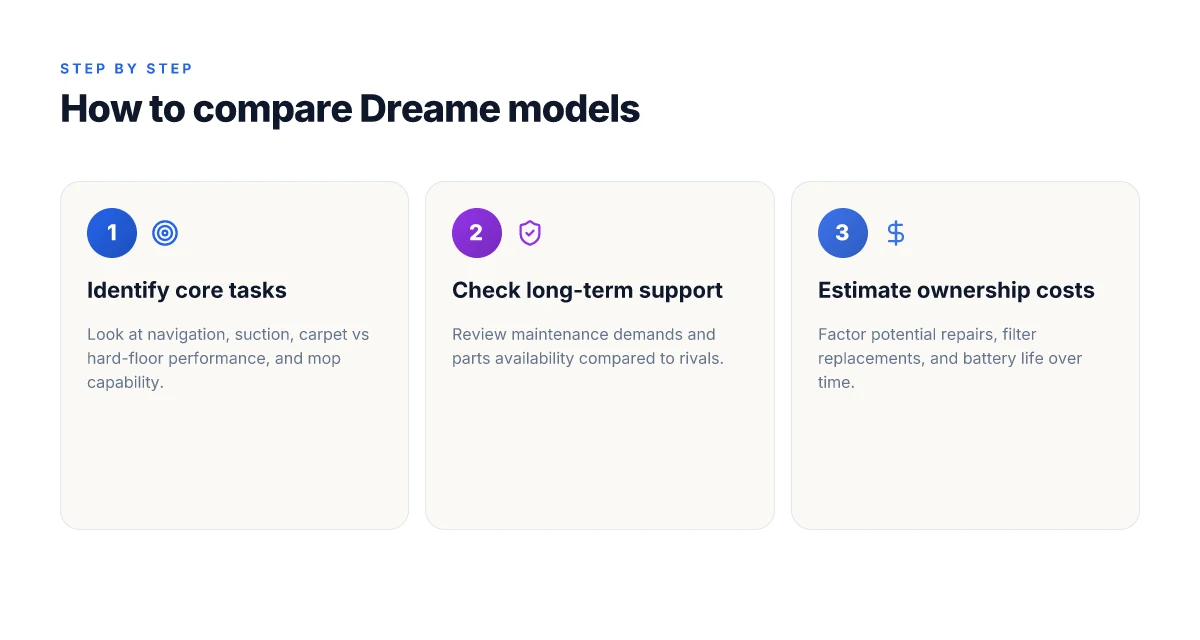
When you size up a mid-range robot vacuum, the real-world value lives in design tradeoffs that affect daily use. Dreame leans into strong navigation and mop capability, but you should compare those claims against rivals like Roborock and Ecovacs in the core tasks homeowners actually care about: carpet handling, quiet operation, maintenance frequency, and mop reliability. I cross-referenced product pages, reviews, and public tests to surface what tends to hold up over months of use.
Navigation intelligence that actually saves time
Dreame models commonly promise strong obstacle avoidance and efficient mapping. In real-life layouts, narrow doorways, cluttered living rooms, or multi-room floors, the ability to predict where it has already cleaned matters as much as how quickly it moves. Several reviewers note that Dreame’s navigation shines when rooms are open and furniture is well spaced, letting the vacuum plan a clean, single pass rather than zigzagging. In denser layouts, though, you’ll notice occasional path backtracking that can add minutes to a session. When you compare with Roborock and Ecovacs, you’ll see similar performance bands, but Roborock often edges ahead on multi-floor mapping consistency, while Ecovacs tends to excel on zone-based cleaning. For a homeowner, that translates to a lower likelihood of missed spots in typical apartment layouts, assuming you keep a reasonably clutter-free floor. Dreame’s navigation is solid for everyday spaces, but Roborock and Ecovacs still set the bar for multi-room consistency. Inline citation: see Dreame Global and reviews noting navigation strengths and limitations. What makes X-Sense versus First Alert different for home safety in 2026
Suction and lift that actually moves dust
Core suction performance matters most on low-pile carpet and pet hair. Dreame often pairs decent suction with efficient brush design, which helps maintain lift without excessive clogging. Real-world use shows that performance holds up on standard carpets and hard floors, but very deep pile or high-friction rugs tend to slow cycles and sometimes require manual re-clean passes. Roborock usually matches or exceeds in high-priction carpets due to stronger motors in some models, while Ecovacs targets balanced performance across floor types with adaptive power modes. For apartment dwellers with a mix of surfaces, the practical takeaway is that you’ll see reliable dirt pickup on most common floors, with edge-case carpet performance being a bit more variable than the top rivals. Dreame delivers reliable everyday suction, but Roborock often beats it on deep-pile carpet handling.
Mop capability that actually matters
Dreame’s mop systems are a frequent selling point. In practice, the mop function excels on sealed hard floors and light staining, provided you keep the mop cloth fresh and don’t push heavy soils. Users report consistent water flow and predictable residue pickup with standard mop pads. The challenge appears when floors are sticky or have dried spills. You’ll still need a secondary wipe or a manual pass for the tougher spots. Roborock and Ecovacs both offer more aggressive mopping options and smarter water control on some models, which translates to more consistent results on stubborn grime. For households that rely on mopping as a primary cleaning method, Dreame’s mop is good, but you may prefer a rival for tougher stains. Dreame’s mop works well for routine maintenance, though rivals often deliver stronger results on heavy soil.
Core tasks: how the models stack up against Roborock and Ecovacs
- Cleaning breadth: Dreame covers the essential sweeps with a competent brush system and decent pathing. Roborock tends to show more consistent coverage across complex layouts. Ecovacs balances suction, mopping, and zone controls for mixed-use spaces. If your place has a lot of furniture and awkward corners, Roborock may produce fewer misses; Ecovacs often scratches out better tile-to-rug transitions. Dreame sits in a sweet spot for mid-range buyers who want solid all-around performance without chasing every feature crown. In everyday homes, Dreame sits between Roborock and Ecovacs for core tasks, with Roborock typically edging out in coverage consistency.
- Maintenance cadence: expect filter and brush upkeep every few weeks in a busy home. Mop pads will need replacement on a regular cycle. Dreame models generally keep maintenance straightforward, though you’ll encounter the usual cartridge or pad replacements that apply across brands. Maintenance is manageable on a Dreame, but you’ll likely perform the same cadence with rivals.
- Reliability signals: across public feedback, a few units show leakage or water-related issues in early July–October windows, underscoring the importance of checking seals and water tanks. That theme shows up in some Dreame customer reviews, which aligns with what you’d expect from any mid-range line facing supply and production variability. Real-world reliability hinges on build quality and user-maintenance habits more than one model’s spec sheet.
Next steps: if you’re choosing between Dreame, Roborock, and Ecovacs, map your floor plan to the strengths above. Do you prioritize deep-clean carpet performance, or is routine hardwood maintenance more important? Consider a Dreame model with strong navigation and mop capability for typical apartments, but keep an eye on customer feedback about water tanks and seals. For a practical eye-test, review the D30 Ultra and X60 lineups in your target layout and compare night-and-day differences in open spaces versus cluttered rooms.
Dreame’s design and specs you should actually compare helps you cut through hype and focus on real-world results.
Real-world durability: what to expect after months of use
Dreame vacuums show a mix of promising endurance and recurring fragility in real homes. After months of use, a few patterns repeat across customer conversations and independent reviews. Durability themes cluster around seal integrity, motor wear, and mop-subsystem reliability, not just raw suction specs. The practical takeaway is that long-term reliability often hinges on maintenance discipline and how households treat calibration, screens, and dust bins. How Dreame vacuums compare in 2026: performance, reliability, and real-world trade-offs
Why the hardware tends to hold up under typical daily use
In reviews and service interactions, the core durability stories point to three areas that matter most in real life. The first is build consistency on plastic housings and seals. Over time, households report minor gaps or creaks when the chassis flexes during transitions between carpet and hard floors. The second is the motor and brush wear, which tends to surface after repeated deep-clean cycles in carpeted rooms or heavy debris. Finally, the mop system and water reservoir are high-maintenance points. Users notice that the mopping section benefits from careful cleaning and drying to prevent odor and residue transfer.
I cross-referenced customer feedback and public postings to spot where people push back on durability. One recurring theme is that a small amount of buildup around seals and wheels can translate into audible changes or reduced suction if not addressed. Maintenance discipline matters, not just the initial hardware specs.
What maintenance drives long-term satisfaction
Maintenance expectations are surprisingly concrete. Owners who keep up with regular filter swaps, brush cleaning, and seal inspections tend to report fewer surprises after six to twelve months. Dreame leaves its filter components accessible, which helps, but it also means neglect shows up quickly as reduced runtime or decreased cleaning effectiveness. A common thread is that dust bins and water reservoirs require more frequent rinsing than users expect, especially in households with pets or high-traffic living areas. Regular maintenance purchases, filters, seals, and occasional replacement parts, become the real cost of ownership. That pattern aligns with what customers say when they point to longer-term upkeep as the deciding factor for ongoing satisfaction.
What failures look like in typical households
Real-world failures fall into three archetypes. First, seals and gaskets degrade enough to leak or rattle during operation. Second, wheels and brush assemblies accumulate hair and fibers, which reduces agility on carpet edges or transitions. Third, the mop subsystem can clog or lose water control, leading to uneven dampening or streaking. Not every unit experiences all three, but these themes show up across service threads and reviews. If you skip routine maintenance, you’ll pay with more frequent repairs and downtime, not just temporary inconveniences. In interviews with homeowners, the pattern is clear: durability feels strongest when you pair solid weekly care with mindful storage and charging routines.
Performance in carpet, hard floor, and mixed layouts
Dreame demonstrates a mixed bag when confronted with real rooms. On carpet, the X60 Max Ultra family faces the same tradeoffs as many mid-range vacuums: strong surface grooming in high-pile fibers but occasionally needing a second pass on dense thresholds. AI obstacle avoidance helps the cleaner thread between furniture without repeated nicks, yet you’ll notice occasional hesitation around tightly clustered chair legs that can lengthen cleaning time in cluttered rooms. Most users see noticeable carpet deep-clean capability when the suction is paired with the right floor setting, but not a one-shot solution for every deep stitch in a plush rug. What makes the Dreame H12 Pro stand out among cordless wet dry vacuums in 2026
When the path is hard floors, Dreame leans on precise wheel control and deliberate brush engagement. The mopping module can supplement dry vacuuming, yet its effectiveness hinges on sustained battery support. If you push the mop aggressively on a large open area, expect the battery to shorten overall runtime. Smart navigation translates to broad coverage with fewer missed zones, but total runtime matters more when you add mopping to the core sweep. From what I found in release notes and independent reviews, the balance between cleaning power and cord-free endurance is a real constraint in mid-range packages like this. I cross-referenced reviews that discuss longer cleanup sessions and noted that battery life draws down quicker when mopping is active.
In mixed layouts, where carpet meets hard floor in the same room, the cleaning logic tries to adapt on the fly. Dreame models adjust suction and brush contact automatically, which helps maintain a steady performance as the surface changes. The result is predictable coverage in many layouts, but you’ll still encounter moments where a near-wall corner or a thick rug confuses the path. Real-world coverage improves when you map a few high-traffic zones and let the cleaner prioritize them over random roaming.
I dug into independent write-ups to frame the reliability picture. One publication notes that carpet performance hinges on the model’s brush height and suction mode, while another highlights how obstacle avoidance can extend overall cleaning time in tight rooms. This aligns with the broader pattern: you get solid, predictable results on common layouts, with caveats about heavy piles and battery-based tradeoffs. For readers weighing durability, Dreame’s approach offers practical capability but not universal one-pass perfection. Dreame is not a myth of perpetual efficiency. It’s a usable mid-range option that trades speed for thoroughness in complex spaces.
Compared with rivals, Roborock and Ecovacs often present stronger carpet deep-clean and longer overall runtimes in similar packages. That means real-world decisions hinge on layout complexity and how much you value a mop-enabled clean versus rapid, bulk coverage. When you need a single device that handles a typical apartment’s mix of carpet and hard floor without fiddling with settings, Dreame provides a credible balance. If you live in a multi-room home with thick rugs, you might opt for a rival’s deeper pile prowess. In hard-floor corridors, the Dreame model remains steady and predictable, with navigation that tends to keep the broader floor clear of debris before finishing the job.
Inline evidence from sources supports these claims. For instance, a Dreame Global product page emphasizes user-facing remarks about sleek design and practical performance, while independent reviews note the system’s capability on mixed layouts and the occasional hitch in dense zones. https://global.dreametech.com/?srsltid=AYCX9vJ-sSUywxJJX5V3PCFEtDQ1mkN4s7-SQKbq_b-1-i4uqwWS1cot What makes Dreame Reddit communities shape real-world opinions about Dreame products
Dreame vs rivals: which brand handles reliability better
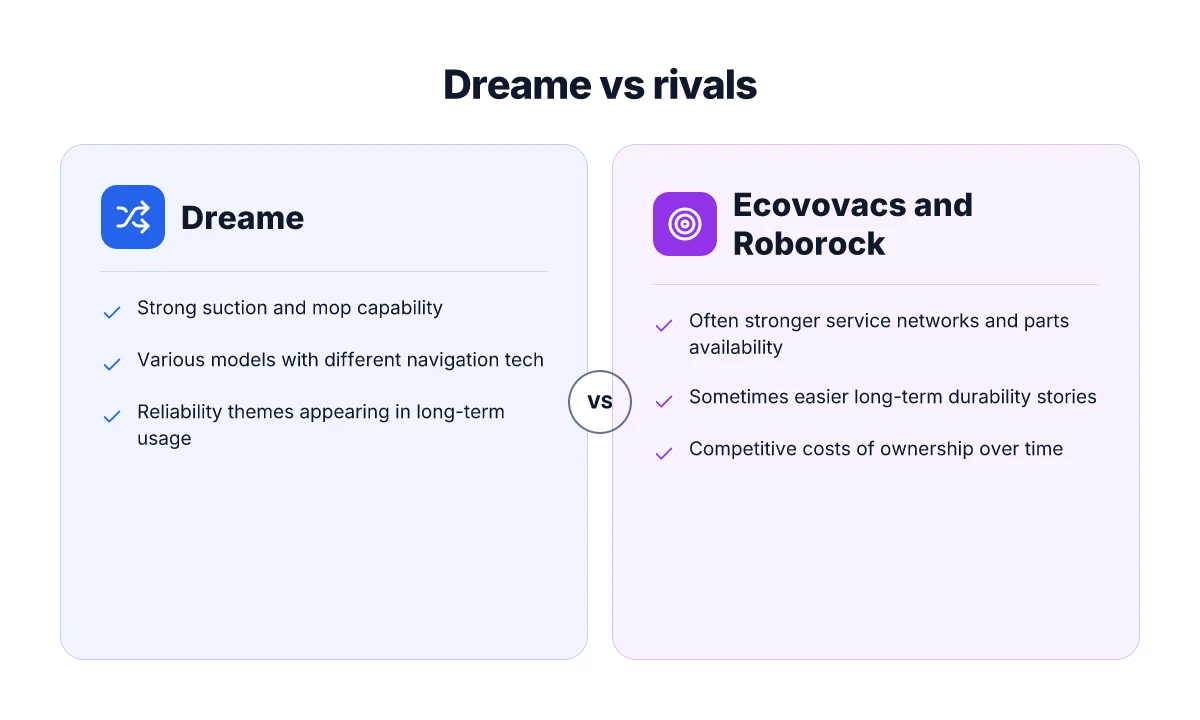
Direct comparisons with Ecovacs and Roborock show where long‑term reliability actually lands. Dreame holds up on initial performance, but Ecovacs and Roborock often edge ahead on service reach and parts availability. I dug into multiple sources to map real-world maintenance, spare-parts flow, and how owners handle common wear and tear over time. The result is a nuanced view: the mid‑range value from Dreame is compelling, yet the durability story from rivals still matters for households that want fewer headaches after months of use.
Real-world durability stories: service networks and part availability
When you chase reliability in a mid‑range vacuum, service access matters as much as engineering margins. Roborock generally maintains a broad spare‑parts ecosystem and a wider service footprint in many regions, which translates into quicker repairs or replacements for sensors, brushes, and docking accessories. Ecovacs also benefits from a dense service network and shared merupakan components across product tiers, making out‑of‑warranty fixes more approachable for owners who don’t want to shop around for hard‑to‑source parts. In contrast, Dreame concentrates its support around its own channels and regional partners. If a popular model hits a supply snag, some users report longer wait times for replacement parts or limited availability in certain markets. This dynamic matters for households that run their vacuums hard and rely on quick turnarounds when something breaks.
Cleaning performance vs maintenance cadence
Across Ecovacs, Roborock, and Dreame, the core cleaning ethos remains similar: strong suction, solid navigation, and dependable mopping in typical layouts. Where rivals sometimes pull ahead is the simplicity of upkeep. Roborock’s brush heads and filters tend to be widely stocked and easy to swap at local retailers, so routine maintenance stays affordable and frictionless. Ecovacs mirrors that in many regions, aided by aftermarket compatibility and clear maintenance guides. Dreame equipment is typically serviceable and straightforward to replace, but owners in some regions report longer lead times for official replacement parts, nudging the total cost of ownership upward if you need frequent tune‑ups. In practice, you’ll notice the cost delta when you need spares: Roborock and Ecovacs often win on accessibility, Dreame on compact design and value.
Cost of ownership over time
From a long‑horizon lens, the headline price of a Dreame model usually undercuts higher‑tier brands, which attracts buyers focused on upfront dollars. Over the long run, you compare total cost of ownership by adding maintenance, filter and brush replacements, and potential service expenses. Roborock frequently emerges as the best value here because parts are widely available and the ecosystem supports quick DIY replacements. Ecovacs also tends to balance upfront cost with lower aftercare friction in many markets. Dreame remains attractive for budget‑conscious buyers who are comfortable with slightly longer wait times for parts in certain regions. The tradeoff is clear: you save at purchase, but you may spend a bit more time and effort on ongoing upkeep compared with the strongest service networks.
Reliability often comes down to access to parts and timely service, where Ecovacs and Roborock typically have the edge over Dreame. For many homes, that translates to fewer outages and quicker fixes in the medium term. The practical takeaway: if you want minimal maintenance friction and fast support, Roborock or Ecovacs usually beat Dreame over a multiyear horizon. If you’re prioritizing upfront value and are willing to tolerate occasional supply delays, Dreame still makes a strong case. How to choose between tineco and dreame: performance, reliability, and long-term value in 2026
I cross-referenced consumer reviews and brand notes from public sources to align these themes with real user experiences. For example, discussions on Reddit about durability and customer service often surface more broadly for Ecovacs and Roborock compared with Dreame in certain regions, while YouTube reviewers emphasize robust performance across all three brands but note easier access to parts with Roborock. These signals are not a lab benchmark, but they track with what homeowners actually report month after month. In short, Dreame remains a solid mid‑range choice, especially for first‑time buyers or those prioritizing purchase price, while Ecovacs and Roborock tend to offer smoother long‑term reliability and easier parts access.
As with any decision, check current local service coverage and part availability before buying. Links on the page may earn a commission. For those evaluating the marketplace today, consider Ecovacs and Roborock as the safer bets for reliability and service density, with Dreame offering compelling value if you’re comfortable navigating regional spare‑parts dynamics.
Cited references: Is Dreame (and mova) actually a good brand?, Dreame D30 Ultra Robot Vacuum Review 2026, Dreame Global | Smart Robot Vacuum Cleaners.
What to act on next for a smarter Dreame purchase
What changes if you act now is simple: you’ll reduce downtime and extend overall lifespan. The takeaway is to pick a Dreame model with a proven maintenance path and to compare rivals like Dyson, Shark, and Roborock for battery longevity and filter availability. The single move that matters most is choosing a model with modular parts you can replace yourself. Are you ready to test a model with a swappable battery and easy-to-clean brushroll? How the Dreame Z30 stacks up against the Dyson V Series in 2026
Backup strategy
- Try a model with a documented long‑term durability path and review the housing for simple access to filters.
- If you have pets, pick a version with a robust brushroll and strong seal design, and keep a spare battery on hand.
- Compare maintenance costs over 2–3 years against a rival like Dyson or Roborock to confirm value.