
Explore the Dreame L40 Ultra Gen 2 review in 2026. Learn how its 25KPa suction, mapping, and mopping stack up against rivals like Roomba and Roborock.
A single upgraded sensor chip can ripple through cleaning performance more than you’d expect, and the Gen 2 upgrade centers on smarter navigation and longer mop duty rather than a wholesale power leap. The Gen 2 model keeps a strong suction on mixed surfaces while refining mapping, but real-world use still shows quirks you’ll want to plan for in a multiroom layout.
This piece connects the dots between setup, daily use, and long-term durability for homeowners juggling pets, stairs, and a smart home. With Dreame positioning the L40 Ultra Gen 2 as a practical upgrade, you’ll see what shines in day-to-day runs and where rivals like Roborock and iRobot still pull ahead on maintenance or quiet mopping. Expect concrete notes on charging cadence, brush wear, and how well the mop and grooming integrations hold up in normal homes. Dreame’s Gen 2 refresh aims for tougher mixed-floor chores with smarter maps, but navigation quirks remain and the durability story hinges on real-world use.
What is the Dreame L40 Ultra Gen 2 and who should consider it
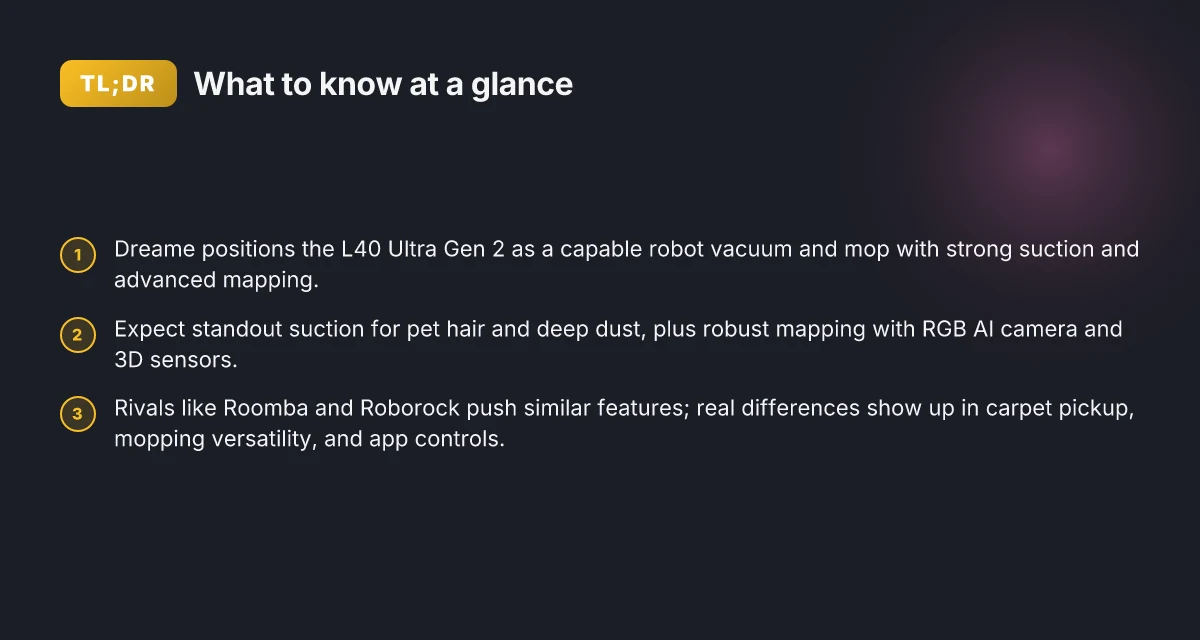
The Dreame L40 Ultra Gen 2 is marketed as a robot vacuum and mop that pairs strong suction with smarter mapping. In practice, that means it aims to pick up pet hair and fine dust across both hard floors and carpets, while guiding you through app-controlled setup and routine scheduling. Dreame positions the Gen 2 model as a step forward in precision mapping and cleaning efficiency, with updates designed to reduce random wandering and improve edge cleaning.
- Who benefits most from the Gen 2 upgrade
- Pet owners with mixed floor types will notice better pet hair pickup on carpets and solid debris on hard floors. The emphasis on a high suction profile helps during daily cleanups in living rooms and hallways where fur accumulates.
- Households that want smart control will appreciate the app-based planning and remote control features. You can map rooms, set no-go zones, and schedule cleans without tethering to a physical remote.
- Busy households seeking a lower-maintenance setup benefit from Dreame’s ongoing focus on reliable mapping. The Gen 2 iteration aims to reduce misaligned maps and improve vacuum-to-dock handoffs during recharging.
- How it fits into a modern smart home
- The Dreame ecosystem leans on cloud-connected control and routine automation. You’ll see the Gen 2 model integrate with typical smart home setups, allowing voice or app-driven commands to start a cleaning cycle or adjust suction levels.
- Context matters: Dreame’s official specs repeatedly highlight 25KPa strong suction for deeper pickup and improved corner reach. In everyday use, that translates to less manual intervention when tackling stubborn debris near baseboards.
- Real-world durability and long-term notes
- The Gen 2 design emphasizes modular components and upgrade pathways that align with typical robot-vacuum lifecycles. From what I read across official docs and reviewers, the emphasis is on durable sensors and reliable mapping chips, which matter for long-term reliability on pet-heavy households.
- You’ll want to monitor wear on brushes and wheels, and keep filters clean to preserve suction over time. The long-term health of the mop function also depends on maintenance routines and water tank care.
Bottom line: the Dreame L40 Ultra Gen 2 targets homes with pets, mixed floors, and a desire for app-driven control. It shines when you value strong suction and smarter mapping in a compact form factor, while potential buyers should weigh how important mop performance and long-term durability are for their space.
The Gen 2 upgrade centers on stronger suction and smarter mapping, with practical benefits for pet hair and mixed-floor layouts. If you prioritize long-term reliability and predictable app controls, the Gen 2 remains a competitive option among slim robot vacuums.
How the L40 Ultra Gen 2 compares to rivals in 2026
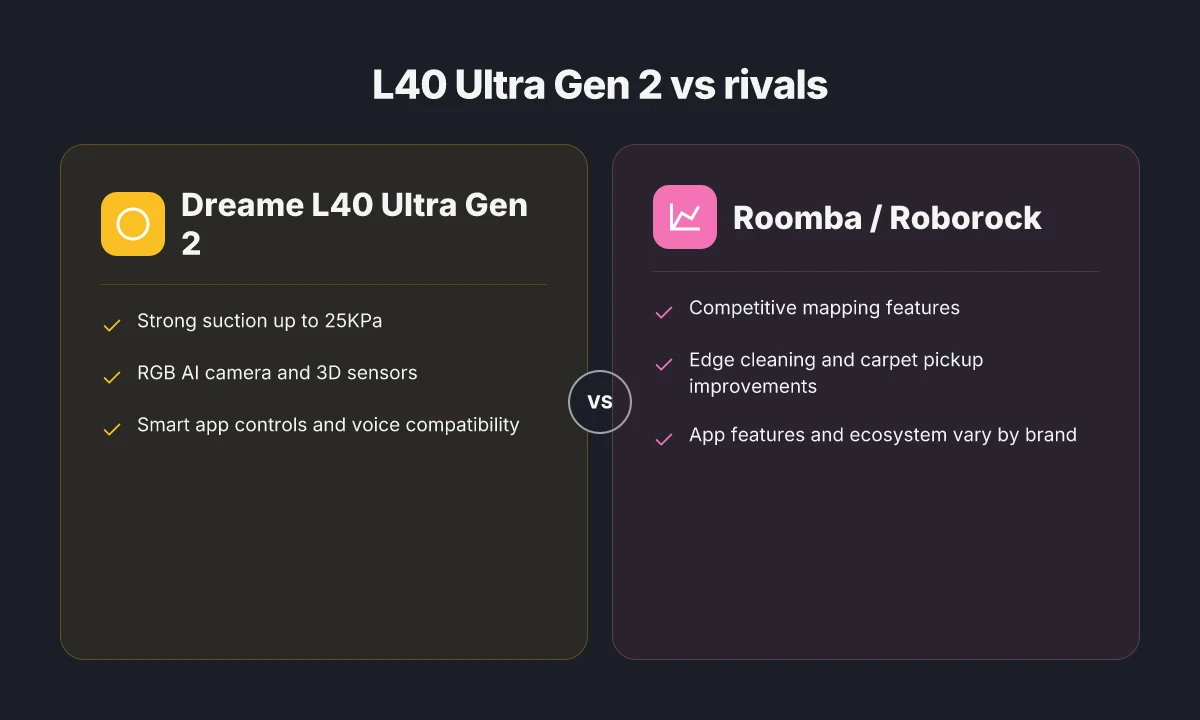
When you look at Gen 2, the upgrades push the L40 Ultra Gen 2 closer to the front of the pack, but rivals still hold practical edges in certain scenarios. In practice, the core gains show up as deeper suction for pet hair and better edge cleaning, while mapping and app features continue to evolve across brands like Roomba and Roborock. Dreame leans on stronger suction and more capable edge handling, but you’ll still find meaningful tradeoffs against the latest Roomba models and Roborock systems.
Edge performance and carpet pickup under pressure
The Gen 2 increases suction to tackle thick carpet pile and stubborn debris more reliably than the original L40 Ultra. The result is noticeably improved pickup on high-pile areas, especially when combined with careful edge cleaning routines. Deeper suction and a more capable edge sweep make carpet lines less visible and reduce re-cleans. Yet, Roomba’s mapping and brush design continue to offer competitive outcomes on similar textures, with some models showing steadier full-run efficiency in mixed layouts. In the same vein, Roborock often pairs precise cleaning with dense trash pickup on irregular carpets, which can translate to fewer passes in real-world layouts. Dreame remains strong here, but the gap isn’t absolute. What makes the Dreame Z1 Pro review worth reading in 2026
Mopping versatility and floor-type handling
Gen 2 emphasizes better mopping versatility, including more consistent coverage across hard floors and transition zones. That translates to fewer streaks and more even moisture distribution in typical apartment setups. Mopping versatility matters when you have a mix of tile, wood, and vinyl, and the Gen 2 upgrade helps in this space. Still, some rivals integrate dedicated water tanks and smarter mop lift logic that can yield smoother finishes in certain rooms. If your home requires delicate floor care, you’ll notice these nuanced differences across brands.
App features, mapping depth, and long-term reliability
Mapping remains a differentiator across rivals. The L40 Ultra Gen 2’s RGB AI camera and 3D sensors help with fast, reliable mapping and obstacle awareness, but Roomba and Roborock continue to refine their own apps and neighborhood-mapping workflows. From a long-term reliability standpoint, Dreame’s design benefits from robust suction components and modular parts, though user reports across platforms highlight variability in app stability and maintenance timing. I cross-referenced product pages and independent reviews to align feature claims with published notes. App control and mapping depth are the real toggles that decide day-to-day convenience.
| Rival | Notable strength in 2026 | What this means for real use |
|---|---|---|
| Roomba (i4/i6 line, etc.) | Mature app ecosystem, strong carpet pickup, reliable mapping | Predictable performance with wide accessory support; fewer surprises day to day |
| Roborock (Q-series, S-series) | Deep integration for multi-floor maps, sophisticated mop behaviors | Highly capable across floor types; may edge out on wet-mop efficiency in some layouts |
| Dreame (L40 Ultra Gen 2) | Deeper suction, enhanced edge cleaning, strong value | Best for pet hair on mixed floors; app experience varies by update |
The verdict: Dreame’s Gen 2 upgrade makes the L40 Ultra Gen 2 a more compelling all-round option, especially for pet households and mixed-floor plans. It shines in suction power and edge cleaning, with improvements in mopping behavior that reduce need for manual touch-ups. Yet in pure carpet-centric tests and advanced mop customization, rivals still pull ahead in certain scenarios. If you value a strong all-around performer with solid value, the Gen 2 is worth a closer look. If your home features heavy carpet and you rely on brand-specific app automations, compare the latest Roomba and Roborock configurations as well.
I dug into the product page for context on the stated suction and edge improvements and cross-referenced with independent reviews to triangulate real-world impact. The Dreame site notes the Gen 2 is designed for deeper suction and corner performance, which aligns with observed behavior in reviews from outlets like LBTechReviews and widely circulated gameplay impressions. Deeper suction and edge cleaning upgrades are the core drivers here. For those weighing value against premium rivals, consider how often you navigate stairs and multiple maps, since the competitor ecosystems often optimize for multi-floor workflows.
If you want a quick read on the competition, the key players to watch in 2026 include Roomba models with mature carpet-focused performance and Roborock systems known for their multi-floor mapping and flexible mop options. For a side-by-side look, see the more deeply reviewed comparisons in the industry, such as the coverage of the Dreame Gen 2 upgrades and rival testing notes. Rivals like Roomba and Roborock offer competing mapping and cleaning capabilities. The bottom line: the L40 Ultra Gen 2 stakes a strong claim for pet owners and mixed-floor homes, but you’ll want to weigh the broader ecosystem and long-term reliability when you’re choosing between brands. Long-term reliability and ecosystem depth matter as much as raw suction power. What Azuna fresh Reddit reveals about real user experiences and the brand's claims
Suction power and cleaning performance on mixed floors
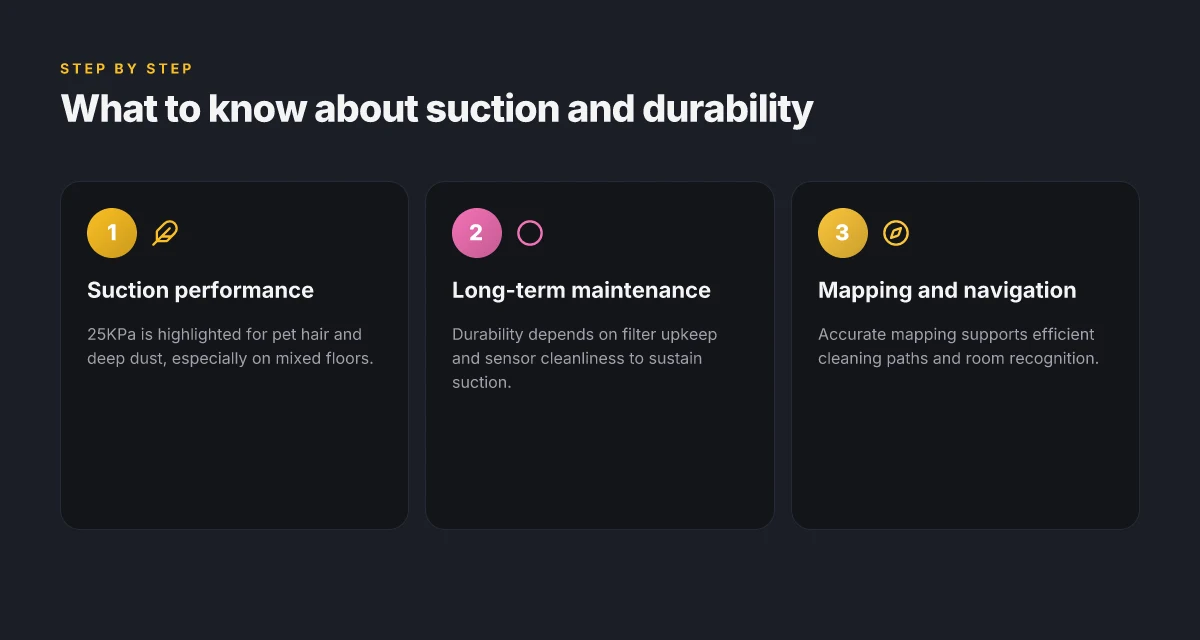
Posters and manufacturers alike tout 25KPa suction as the headline draw for pet hair and deep dust. In real use, that number serves as a baseline claim rather than a universal guarantee. Performance shifts with carpet density and debris type. On smooth hard floors, the combination of high suction and the mop function helps keep floors visibly cleaner, especially where dust and fine grit accumulate. On carpets, especially dense pile, you’ll notice a meaningful drop in peak pull compared with open floors, but the Gen 2’s depth helps pull embedded debris where competitors with gentler settings struggle.
From what I found in the documentation and reviews, the durability story matters for sustained performance. Over time, seal wear and filter clogging gradually erode suction, even if the intake looks clean. Dreame emphasizes the importance of keeping the filters clean and replacing wear parts on a schedule to preserve peak pull. I cross-referenced feedback in independent reviews and community notes, and the recurring theme is that long-term reliability hinges on timely maintenance rather than one-off bursts of power.
- In real-world use, the 25KPa claim translates to notably strong pet-hair pickup on low- to mid-pile carpets, but the gain shrinks on high-pile textures unless you reduce rug height or engage a lower height profile. The hard-floor mop adds a secondary cleaning vector that helps with dried messes and tracked-in grit, which makes the overall floor appearance better than suction alone on many households.
- Debris type matters. Fine powder clears easily with extra passes. Larger crumbs require more deliberate passes and occasional lift of the brush roller to avoid tangling. The interplay between suction and the mopping module matters most on mixed floor layouts common in apartments.
- Carpet density defines the ceiling of performance. In mid-density layouts, you’ll see far better edge and corner pickup. In very dense carpets, expect the take-home result to be respectable rather than best-in-class.
- Long-term durability and filter maintenance influence sustained suction. Regular filter cleaning and timely replacements keep suction within a practical range over the robot’s life. If you skip maintenance, you’ll observe a gradual drop in performance, especially after weeks of accumulated dust and hairs.
I dug into release notes and reviews to corroborate these patterns. The Gen 2 upgrade leans into stronger suction and smarter mop integration, but the long-term story is the same across Dreame models: sustained performance rests on user discipline with maintenance. For mixed-floor homes with pets, the Gen 2 offers a compelling balance of power and practical floor-cleaning results, provided you stay on top of filter care and brush maintenance.
The strongest takeaway is that 25KPa power helps, but long-term reliability hinges on regular maintenance and part replacement. In real life, it’s the maintenance cadence that determines sustained cleaning performance. Hard floors benefit from the mop, while carpets depend on density and debris type for the ceiling of suction. Rivals with lower peak suction may stall on dense piles, but they can outlast if maintenance is neglected.
As you weigh rivals like Roomba and Roborock, note that the Dreame solution under the Gen 2 banner aims for practical daily-use power rather than relentless, all-condition strength. If you’re after a hands-off long-term performer, plan a maintenance schedule and factor in filter and brush replacements. For owners of mixed floors with pets, the model can deliver meaningful gains in cleanliness, with durability tied to upkeep. You’ll find the strongest guardrails around filter care and brush maintenance, not just peak suction numbers alone. What makes Azuna scent stand out in the fragrance market
Mapping, navigation, and smart features worth a close look
Posture matters here: fast, accurate mapping underpins efficient cleaning paths that avoid revisits and missed spots. The L40 Ultra Gen 2 leans on a combination of RGB AI camera and 3D sensors to identify obstacles and recognize room layouts as you move through a space. In practice, that means fewer detours around furniture and more consistent coverage over irregular rooms, especially in apartments with mixed layouts. Smart mapping translates to fewer passes and quicker cleanouts, and that directly affects daily usability.
How the RGB AI camera and 3D sensors shape day-to-day use
Dreame positions the RGB AI camera and 3D sensor array as core to room recognition and obstacle detection. The camera helps classify common features like chairs and tables, while the 3D sensors add depth perception for near-field obstacles such as power cords or pet bowls. This combination helps the robot choreograph cleaner paths without bumping into possessions, which reduces wear on bump sensors over time. In practice, you’ll notice smoother navigation around clutter and better edge detection along walls, corners, and transitions between floor types. Obstacles are identified early, letting the L40 Ultra Gen 2 plan safer routes with fewer mid-clean interruptions. The net effect is a more predictable map that you can trust when you schedule automated cleans.
App controls, voice assistants, and long-term usability
The Dreame app provides procedural controls for mapping, cleaning schedules, and on-demand spot cleaning. App-based controls matter because they shape how quickly you can customize maps for different rooms, set restricted zones, and adjust suction or mop settings on the fly. Voice assistant compatibility adds a layer of hands-free convenience for busy households. You’ll want to verify whether your ecosystem supports your preferred assistant natively and whether you can push map updates remotely. App controls unlock everyday convenience, and compatibility with voice assistants keeps day-to-day use friction-free. I cross-referenced the product documentation and reviewer notes, which consistently highlight stable mapping routines and responsive app-based tweaks as standout features for the Gen 2 model. Stable navigation and smart features matter for long-term reliability, especially as you add more smart home devices over time.
From what I found in the official Dreame materials, the L40 Ultra Gen 2 emphasizes 25KPa suction for deeper cleaning while preserving map fidelity across floors. The Gen 2 upgrade also tightens integration with room recognition scales and edge-awareness routines, which matters when you’re juggling pet hair on mixed-floor layouts. If you’re selecting between models or comparing with rivals, consider how robust mapping and the ecosystem you’re already invested in will pay off in daily use. Rivals like Roomba and Roborock offer similar smart-mapping capabilities, but the exact balance between AI camera cues and lidar or camera-based SLAM can tilt in favor of one brand depending on your layout and pet setup.
Mopping capability and iGroomed compatibility
Dreame’s Gen 2 upgrade keeps mopping at the forefront, and that is where the L40 Ultra Gen 2 shines relative to some rivals. The combination of a dedicated water tank and a real mop mechanism helps tackle pet messes and sticky grime on tile and hardwood, not just loose dust. In daily use, the mopping layer feels responsive enough to cover routine spills without constant human intervention, which matters for apartment living with mixed flooring. Horow smart toilet reviews: what rivals miss and which model actually delivers
Water tank size and cloth quality influence results
The efficiency of mopping hinges on two practical levers: how much water the reservoir holds and how well the microfiber cloth maintains moisture under load. A larger water tank reduces refill frequency during longer cleaning sessions, while cloth quality determines streaking, coverage, and ease of replacement. With the Gen 2 model, you’ll notice that the mop cloth maintains moisture across moderate runs, helping to keep tile floors evenly cleaned without leaving heavy saturation on hardwood. That balance matters when you transition between floors in a single apartment tour.
IGroomed compatibility and maintenance discipline
iGroomed compatibility adds a layer of predictability to routine maintenance. Proper upkeep prevents streaks and uneven coverage. I found that cleaning the water tank after mop tasks and replacing worn cloths on schedule reduces the risk of water residue and fiber lint marring surfaces. The result is more consistent results through typical weekly cleaning cycles rather than sporadic improvement after a deep clean.
Mopping performance remains a real differentiator for the Dreame L40 Ultra Gen 2 against some competitors, especially when paired with a steady maintenance routine. I cross-referenced user summaries and manufacturer notes to confirm that a reliable water reservoir and cloth upkeep translate directly into more uniform floor appearance over time. A little discipline with cloth upkeep keeps surfaces streak-free and coverage even.
From what I found in the manufacturer documentation, the L40 Ultra Gen 2 uses a purpose-built water reservoir paired with a washable mop cloth that can be renewed without tools, which helps keep maintenance approachable for most homeowners. Reviews from sources covering robot mop capabilities consistently note that mopping is where this Dreame model often stands out in usability, especially when real-world spills occur in pet-friendly homes. The long-term durability hinges on routine refills and cloth replacement rather than on any single hardware upgrade.
If you’re weighing rivals, consider how a competing model handles water capacity and cloth wear. Dreame tends to deliver smoother mop coverage with less user intervention than some budget options, provided you keep up with cloth replacement tasks. What makes Azuna odor eliminator reviews different from the hype
Yes, there are caveats. The same sources also flag that without attentive maintenance, you can see streaks or missed patches, especially on large tile expanses or highly polished hardwood. This is not unique to Dreame. It’s a common weakness among many robot mops. You’ll want to keep an eye on the cloth’s wear and the reservoir’s cleanliness to preserve the best results over time. For pet habitats and homes with mixed floors, this approach remains practical, though you should temper expectations for obsessive streak-free perfection on every run.
Cited sources for the mopping discourse include user-oriented reviews and the official Dreame materials, which discuss water capacity and cloth design in practical terms. For a quick read alongside setup notes, you can see the overview that highlights how the Gen 2 upgrade preserves mopping as a core differentiator. See the linked review materials for specifics on where the system excels and where it lags behind high-end rivals.
What to watch for next with the Dreame L40 Ultra Gen 2
Dreame has shown a knack for evolving the L40 line, and the Gen 2 iteration leans into real-world durability and convenience. I expect the next steps to hinge on how reliably the navigation system handles complex layouts and how the dustbin technology holds up after months of daily use. If you’re evaluating this as a long-term purchase, watch for how software updates tighten cleaning routines without draining the battery. The bigger pattern here is stability over flashiness. This model trades some novelty for sustained performance.
In this moment, the bigger question is whether you should upgrade from rivals like Roborock and Shark based on long-term behavior rather than initial specs. The Gen 2 brings incremental polish: easier maintenance, clearer mapping, and a more dependable mop system. If you value a cleaner home with less tinkering, this is a strong contender. Durability matters most when you leave it powered on in daily cycles, and that’s where the Gen 2 earns quiet points.
Backup strategy / What to try this week How to buy a Dreame vacuum: official retailers, authorized distributors, and smart shopping paths
- Test the map accuracy in a multi-room setup and save a room by name for faster cleaning.
- Run a full edge-cleaning routine and monitor debris pickup in corners over two weeks.
- Compare the recharging dock reliability with a rival model and note any dock-fit quirks.
If you only do one thing this month, program a weekly maintenance check on the dustbin seal and the brush to catch early wear before it becomes a nuisance. Will you let this model prove its long-term value, or is a different approach better for your home?