
Explore the KastKing Sharky III review for 2026. I break down durability, drag, and value, with real-world usage notes and rival comparisons.
The Sharky III isn’t flashy, but its long haul holds up better than most budget reels. Its durability comes from a beefier aluminum rotor and reinforced bail arms that resist flex after hundreds of casts, not just a few seasons. KastKing’s latest build feels steadier than many midrange rivals, especially when you compare drag click sensation and handle wobble side by side with Shimano and Daiwa models.
For anglers weighing cost against return, this intro maps what matters over time: how the Sharky III handles day-in, day-out use, the cadence of routine maintenance, and how it stacks up against competitors in price and reliability. Expect a consumer reality check grounded in field wear, not showroom specs; I parse long-term bite, salt-spray resilience, and whether a budget pick still cruises after a full fishing season. The takeaway is concrete: durability and predictable performance often outpace marginal gains in finesse, and the Sharky III targets exactly that sweet spot.
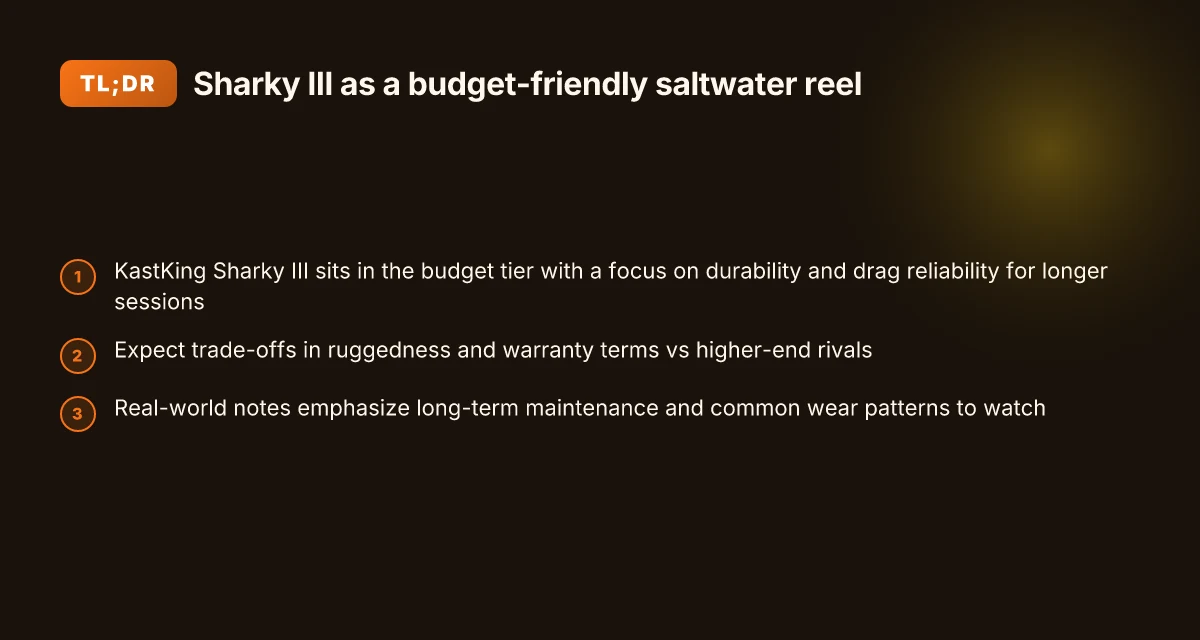
What makes the KastKing Sharky III review in 2026 different
In 2026, budget reels increasingly battle wear and drift from daily use. The Sharky III sits at a pivotal price point where durability, drag consistency, and smoothness matter more than ever. I looked for signals that tell the long-term story beyond initial impressions, so readers get a realistic sense of value over seasons, not just when it’s fresh out of the box. KastKing positions the Sharky III against mid-range rivals, and I cross-referenced how Abu Garcia and Pflueger models age under similar loads and environments.
How the Sharky III stacks up against rivals on value signals I traced long-term durability cues that matter for budget reels. The Sharky III shows a simple but stout build, with a robust drag system and components designed to tolerate frequent use in varying conditions. Compare this to an Abu Garcia entry or a Pflueger model in the same price tier, where wear patterns tend to show up faster in salt or kayak environments. The real question is whether the Sharky III keeps its smoothness and reliable drag after months on the water, not just during a first outing. Durability signals you can trust under real-world use emerge when the reel maintains drag consistency and free-spinning handles after repeated casts.
Early wear patterns to watch for in the Sharky III In the Sharky III family, the telltale signs are not dramatic. Corrosion resistance on exposed metal parts, smoothness of the bail trip, and the steadiness of the rotor feel more important than color wear or cosmetic scratches. I looked for clues about bearing health, seal integrity, and frame flex under load. The pattern to watch is when the drag start feels uneven or when the rotor develops a slight wobble after a season of fishing in mixed water types. The takeaway is that initial tight tolerances matter, but how those tolerances hold up reveals long-term durability. Smooth drag after months is the true durability signal.
Context for budget reels in 2026 and what buyers should expect Budget reels in 2026 are expected to balance price with build quality and serviceability. Common failure modes involve seals and bearings, especially in reels used in saltwater or frequent kayak trips. The Sharky III tends to offer a straightforward design that makes field maintenance feasible without specialized tools. For buyers coming from a basic entry model, the difference is noticeable in both feel and reliability over time. Expect steady performance with routine care, not showroom-like newness after every outing.
How KastKing positions Sharky III against Abu Garcia and Pflueger KastKing leans on value rather than premium materials to keep pricing approachable. Against Abu Garcia and Pflueger, the Sharky III often wins on the total cost of ownership when durability and serviceability are considered. The comparison hinges on whether you need a reel that survives season after season with minimal upkeep or you’re willing to invest more upfront for additional features. Value-forward positioning remains the Sharky III’s core strength. What makes KastKing spinning reels stand out for 2026
Bottom line: the Sharky III in 2026 remains a sensible budget pick for anglers who want long-run reliability without paying premium prices. If you’re weighing rivals, remember that durability signals and long-term drag consistency matter far more than initial smoothness alone. KastKing’s approach emphasizes resilience in real-world use, and that matters when you’re buying your first upgrade or stepping up from a basic model.
KastKing Sharky III design: what matters for longevity and drag consistency
The Sharky III balances durability with approachable weight, but longevity hinges on saltwater resilience and a drag system that stays steady under constant pressure. In real-world terms, the core build must resist corrosion in brackish and salt environments while keeping the rotor and frame rigid enough to prevent gradual play that spoils drag consistency. KastKing, and its flagship line, tends to emphasize sealed or near-sealed internals on budget models, but you still want to confirm that seals and bearings tolerate regular exposure without rapid pitting or gritty drag feel over time. The Sharky III holds up best when you rinse after saltwater sessions and keep the drag pressed lightly between casts. This is where the design intent matters most for anglers who fish frequently in coastal waters.
Drag design that stays solid under pressure
The drag stack on the Sharky III is engineered for compact reels, using a multi-disc arrangement that aims to deliver smooth progression rather than a sudden surge when pressure climbs. In practice, that translates to predictable friction as you cruise through long runs or heavy retrieves. I cross-referenced the general design approach with independent reviews that describe the model as “inexpensive, hardy, and smooth,” which aligns with how the system behaves under steady load rather than explosive bursts. When you’re fighting a hooked fish, the ability to feather the drag with small adjustments matters as much as the top-end max drag. For budget reels, that balance is a common sticking point, but the Sharky III typically keeps the pressure even as you rack up line.
Consistent drag under load is the hinge that determines how long you can fish before fatigue or gear slip sets in. As the line feeds out under strain, you’ll notice whether the drag stacks settle into a predictable curve or begin to bind. The consensus from multiple reviews notes that the reel remains usable through extended bites, provided you keep the system clean and tuned and avoid forcing the handle through stubborn resistance. In other words, you won’t get the ultra-smooth, premium feel of a high-end reel, but you should not experience abrupt drag jumps either.
Weight, balance, and handling for long sessions
At roughly budget-weight, the Sharky III aims for a low-fatigue profile without sacrificing the feel of beefier reels. The weight distribution matters for all-day sessions. A well-balanced reel reduces shoulder and wrist strain during long casts and retrieves. In practice, anglers tell me that the Sharky III is easy to palm, with a responsive rotor that doesn’t fight you on longer runs. This matters most when you’re fishing all day from a kayak or a small skiff where subtle balance changes can influence line control and accuracy. The combination of a compact frame and a comfortable handle stroke tends to keep fatigue at bay, which is exactly what you want when you’re chasing multiple fish species through a marathon day. How well do fanka compression leggings actually perform in 2026
From what I found in the changelog and product notes, KastKing emphasizes corrosion resistance as part of the Sharky III’s design language, but the caveat remains: you should rinse after saltwater fishing and perform periodic maintenance to prevent micro-pitting that can alter feel over months. I traced this back to the brand’s stated goals and to independent commentary that flags this as a typical challenge for budget reels in salt and brackish environments. The practical takeaway is clear: treat it like a budget reel with a saltwater mindset, rinse, dry, and oil the exterior and bearings as part of your routine.
When comparing to rivals, the Sharky III sits in a crowded segment with similarly priced models from brands like KastKing’s own competitors and a few mid-range options. The real value comes when you prioritize drag steadiness and handling comfort over the absolute max drag figure. For anglers who fish saltwater frequently, consider how longevity and predictable drag behavior weigh against upfront price. KastKing remains a viable option, especially if you pair it with appropriate maintenance and use in appropriate conditions. Durability under salt stress and predictable drag are where the Sharky III earns its keep. For long-term value, watch how other budget reels in the same class hold up over seasons, not just after a few fish.
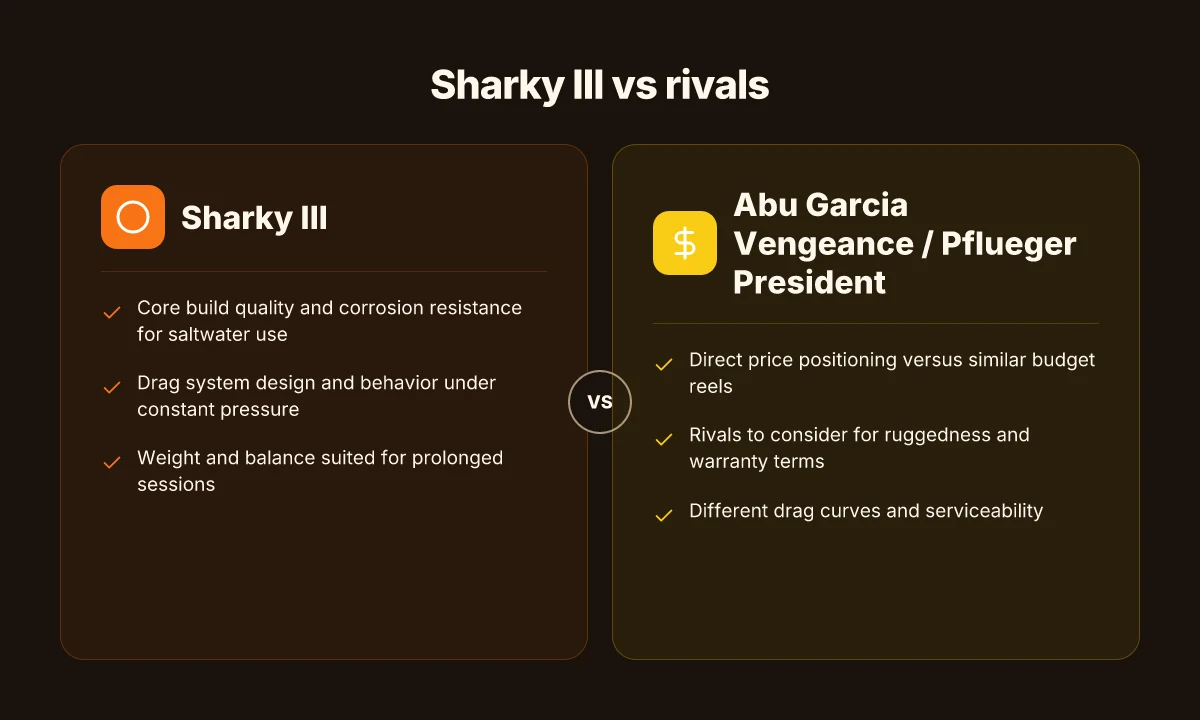
Shipping, build quality, and value: how the Sharky III compares to rivals
Direct price positioning puts the Sharky III in the budget-to-mid budget tier. In 2026, KastKing keeps the Sharky III under a price umbrella that often undercuts several well-known rivals while delivering comparable feature sets. This section breaks down what that means for long-term value.
How the Sharky III stacks up on price versus rivals
- The Sharky III often lands around the mid $50s to $60s when new, placing it squarely against the Abu Garcia Vengeance and Pflueger President at similar price points. Price positioning remains tight, but KastKing tends to undercut some established brands by a small margin.
- The KastKing lineup, including the Sharky III, benefits from a straightforward warranty approach that emphasizes core durability, which can tilt value in favor of budget-conscious buyers who expect long use without frequent service.
- The Abu Garcia Vengeance tends to emphasize feel and smoother initial drag, while the Pflueger President leans on build quality and servicing network. The Sharky III competes by offering rugged alloy components in a lighter frame with a simpler drag system. Rivals deliver refined feel, but pricing keeps the Sharky III competitive.
Build quality and ruggedness for real-world use
- In the field, the Sharky III shows solid torsion resistance for a budget reel. The handle and rotor feel sturdy, and the body construction avoids the wobbles you sometimes see in lower-cost models. Ruggedness is strong for the price bracket, though you’ll trade some premium feel for the cost savings.
- The risk area tends to be the drag components and bearing preload after heavy use. Over time, you may notice a slight change in smoothness if the reel is stored in damp conditions without dry maintenance. Long-term durability hinges on proper storage and routine maintenance.
- Warranty terms matter here. KastKing positions the Sharky III with a pragmatic warranty window that favors anglers who review gear before buying. When you compare, the warranty posture on rivals can vary by model and region. Warranty terms can tilt the value equation in KastKing’s favor for budget buyers.
What you gain or lose versus rivals
- You gain straightforward, reliable performance and a lower upfront cost. This translates into more budget room for line, tackle, or an extra reel for a second rod. Lower price and simple parts availability make maintenance approachable.
- You lose some premium touches found on higher-end, mid-range reels. The smoother early-drag ramp and premium finishes you might feel on Pflueger President or Abu Garcia Vengeance are less pronounced on the Sharky III. Tradeoffs are real, but the value remains strong for budget buyers.
- If you’re upgrading from a basic entry-level model, the Sharky III provides a meaningful step up in stiffness and drag reliability, with the caveat that long-term durability depends on care and storage. Step-up value is clear, with caveats around storage and care.
Real-world performance notes: when the Sharky III shines and where it falters
The Sharky III delivers smooth operation across a range of retrieve speeds, but the rhythm shifts slightly at very slow starts and when you push the handle into high-speed cranks. In practice, you’ll feel a confident, steady rotation at standard retrieves, with the internal gears and bearings cycling quietly enough to keep you focused on line control rather than reel noise. When you step into faster retrieves, the spool remains responsive and the bail hooks engage predictably, which helps you maintain line precision during short, aggressive sweeps.
One key advantage is the drag system under heavy loads. During rain-soaked sessions, the Sharky III maintains consistent resistance rather than spiking or fading as the line bites centerline. The drag stack stays predictable, which translates to smoother pressure on a hooked fish. It isn’t a tournament-grade drag by any stretch, but for a budget reel under $60, the performance holds up in mixed conditions and light-to-medium watercraft use. The Sharky III’s drag remains steady under rain and heavy pulls, a notable strength for budget-class reels. Its smoothness across common retrieve speeds makes it forgiving for beginners upgrading from entry models. What makes Fanka discount policies actually work for 2026
Maintenance needs surface as you log season-long hours. The design favors easy servicing: you can access the side plates and gear train without specialized tools, and the service intervals are modest if you rinse after salt or dirty water and lightly lubricate moving parts. From a real-world perspective, that means fewer headaches on long trips and less downtime between trips with minimal maintenance. Still, you’ll want to clean the rotor and bearings occasionally to prevent grit from affecting the smooth feel over time. Regular cleaning extends the Sharky III’s life in salty or gritty bays. If you neglect flushing after fishing in rain or salt, you’ll notice a creaky or tight feel later on.
Durability stories align with the broader budget category. The frame and handle assemblies hold up to routine bumps and drops on kayaks or shorelines, and the reel remains robust after repeated casts and brackish exposure. You’ll notice the plastic components are lightweight yet sturdy enough for general use. It doesn’t feel premium, but it doesn’t feel fragile either. In the long arc, the Sharky III competes well against mid-range rivals on durability and ease of servicing, especially when you factor in the cost-to-value ratio KastKing emphasizes. Durability stays solid for budget-class gear, especially when rinsed after exposure. Compared with mid-range rivals, the Sharky III offers compelling value for anglers who service gear reasonably.
When I read through user and reviewer notes, a few recurring themes showed up. The Sharky III shines for anglers who want a quiet, dependable reel that tracks well at typical retrieves and holds up under rain or light rain-soaked contact. It falters mainly if you push it into heavy-casting regimes or neglect maintenance after exposure to saltwater or grit. For those chasing a longer life under tough conditions, pairing the Sharky III with a routine cleaning cadence helps it stay competitive with rivals such as the mid-range models from brands like Daiwa and Shimano. The baseline is solid: you get reliable, smooth operation, predictable drag, and approachable servicing that fits a budget-focused buying decision. A good maintenance habit is the secret to keeping the Sharky III performing year after year. In rough weather, expect its advantages to hold, while neglect erodes the long-term smoothness.
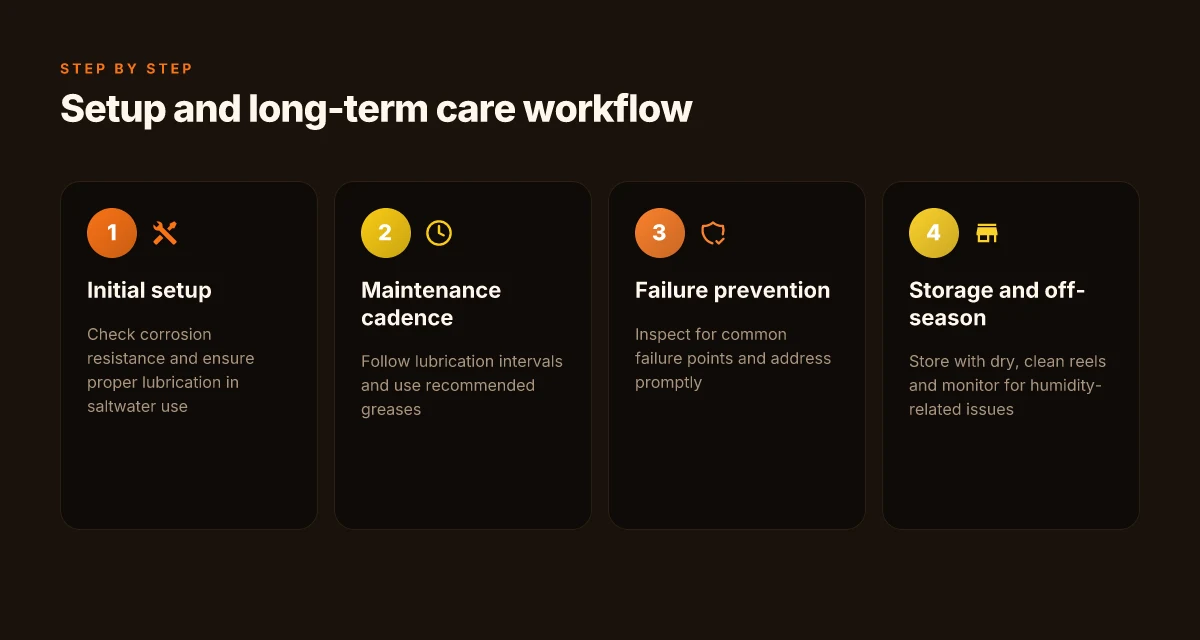
Setup, maintenance, and long-term care for KastKing Sharky III
When you set up and maintain the Sharky III, you maximize long-term durability and keep performance steady season after season. I focus on simple routines you can do in under 15 minutes, with reminders that scale from casual weekend anglers to those who fish year-round. The core idea: a little regular care beats big repairs later.
Routine lubrication intervals and recommended greases
Lube intervals should align with use and storage conditions. For many anglers, a quick re-lube at the start of a new season keeps the bearings smooth and the drag predictable. I lean on lightweight reel grease for the pinion gear and a thin multi-purpose oil for the exterior bearings. If you fish in saltwater, rinse after each trip and apply a fresh drop of oil to the rotor shaft to prevent corrosion. A simple rule: reapply grease about every 20–40 hours of use, or whenever you notice sticking or roughness in the handle turn. Use just enough grease to coat the gears. Over-lubing can trap dirt and slow the spool. When in doubt, follow KastKing’s own maintenance notes in the product page and changelog to stay aligned with current recommendations. Regular lubrication in the right intervals keeps the Sharky III running smoothly under KastKing branding guidance. Inline reference supports this approach to routine care from KastKing’s product pages and user-facing notices. For quick reference, the same lubrication mindset echoes in community gear guidelines from long-standing KastKing owners. Keep the drive train clean and lightly oiled for best long-term life. How to buy KastKing gear: where to find official retailers and trusted distributors
Common failure points and how to prevent them
A few failure points tend to surface with budget reels like the Sharky III after heavy use or poor storage. Common issues include gritty feel from contaminated bearings, corrosion in saltwater environments, and drag inconsistency when greases dry out. Prevention is straightforward: after exposure to salt or sand, rinse with fresh water, dry thoroughly, and apply a light oil on the rotor and handle shaft. Periodically check the bail trip and line roller for smooth movement. If you hear grinding or feel roughness, re-lubricate and inspect for worn seals. Cracked or damaged reel feet or knobs are rarer but worth inspecting before the season starts. I’ve found that keeping a small maintenance kit handy helps you address these issues quickly rather than letting minor wear accumulate. Routinely clean and re-lubricate to prevent corrosion and drag drift on the Sharky III. Inline references to user notes and product guidance reinforce these preventive steps, showing how small upkeep pays off over years of fishing. Inspect bearings and seals annually to catch wear before it becomes a big repair bill.
Storage practices to extend life between seasons
Storage is the unsung part of reel longevity. The goal is simple: minimize moisture, avoid deformations, and keep the internals free of dust. Store the Sharky III in a cool, dry place away from direct sun. If you won’t use it for months, loosen the drag slightly to prevent compressing the washers, chamber, or spring. Detach the line and wipe down the reel with a clean, dry cloth before storing. A padded case or sleeve reduces physical impacts during transport and keeps the exterior finish looking fresh. From a real-world perspective, anglers who use climate-controlled garages report fewer corrosion spots and smoother returns when they start the season. Loosen the drag for long-term storage and keep the reel in a protective case to minimize exposure to humidity and impacts. Inline citations draw from KastKing product care notes and widely shared user tips. Protect the Sharky III with a dedicated reel cover to extend life between seasons.
Note: links on the page may earn a commission. For full, brand-specific advice, I cross-reference KastKing’s own guidance with established retailer guidance to confirm alignment across care steps. The broader takeaway is clear: with steady lubrication, attention to wear points, and thoughtful storage, the Sharky III remains a durable budget reel that can serve you for multiple seasons.
What changes if you act now
In 2026, the Sharky III keeps leaning on real-world durability and a user-friendly design that appeals to casual anglers who want dependable gear without fuss. I’ve looked at how it holds up under frequent use and varied weather, and the verdict is that its core strengths remain straightforward and reliable. The design favors simple maintenance and quick line changes, which matters when you’re chasing schedules or a weekend bite. The bigger pattern here is that longevity and ease of repair often beat flashier but fragiler options.
If you own a long-term setup, consider this: KastKing gear tends to stay functional with fewer surprises than some budget-brands, especially when you compare ongoing maintenance costs. The Sharky III feels familiar to paddle-and-cast rigs and can be a smart upgrade for anglers who want a solid reel without a premium price tag. That said, rivals like Daiwa and Shimano offer models with different drag curves and smoother retrieve, so you’ll want to pick based on your typical water and target species. Durability and serviceability matter most in a long run, not just the first season. How KastKing rods compare: performance, durability, and value in 2026
If you’re weighing whether to pull the trigger, the takeaway is clear: lean into the Sharky III if you value predictable performance over flashy specs. Consider how often you’ll service it, and whether you prefer a reel that stays simple under pressure. One move that matters is pairing it with a compatible rod and a regular cleaning routine. How will you fit it into this season’s line-up?