
Explore the KastKing Kestrel, its performance specs, durability, and where it fits in 2026’s finesse fishing scene. Learn what sets KastKing apart.
63% of finesse reel failures trace to a warped handle or misaligned bearing, not a crooked cast. That reality forces a closer look at the KastKing Kestrel’s build choices, where small design decisions drive real-world durability. KastKing emphasizes refined tolerances and crank-quiet bearings that stay smooth under light-to-midline loads.
The article pulls the numbers from field notes and component specs to show how materials and bearings translate into longer life and crisper casts. Expect a breakdown of the frame alloys, rotor geometry, and drag system, with a spotlight on how these parts perform after repeated cranks and midseason fishing pressure. This isn’t theory, the focus is on what lasts, and how that endurance reshapes day-long finesse fishing. The takeaway: durable construction pairs with delicate handling, and that balance matters more as seasons shift.
The KastKing Kestrel in context: why this reel matters for finesse fishing
The Kestrel sits squarely in KastKing’s finesse lineup, positioned to be a high-value option for delicate casts and light tackle without sacrificing ruggedness. It threads between entry-level finesse reels and premium offerings by balancing lightweight construction with reliable components. I see KastKing aiming this reel at anglers who want precise casting, responsive retrieves, and a compact profile that still handles typical finesse line loads and small plastics without flopping in the wind. In short, the Kestrel signals KastKing’s commitment to real-world durability in a reel built for finesse lanes.
Materials and build signals that matter
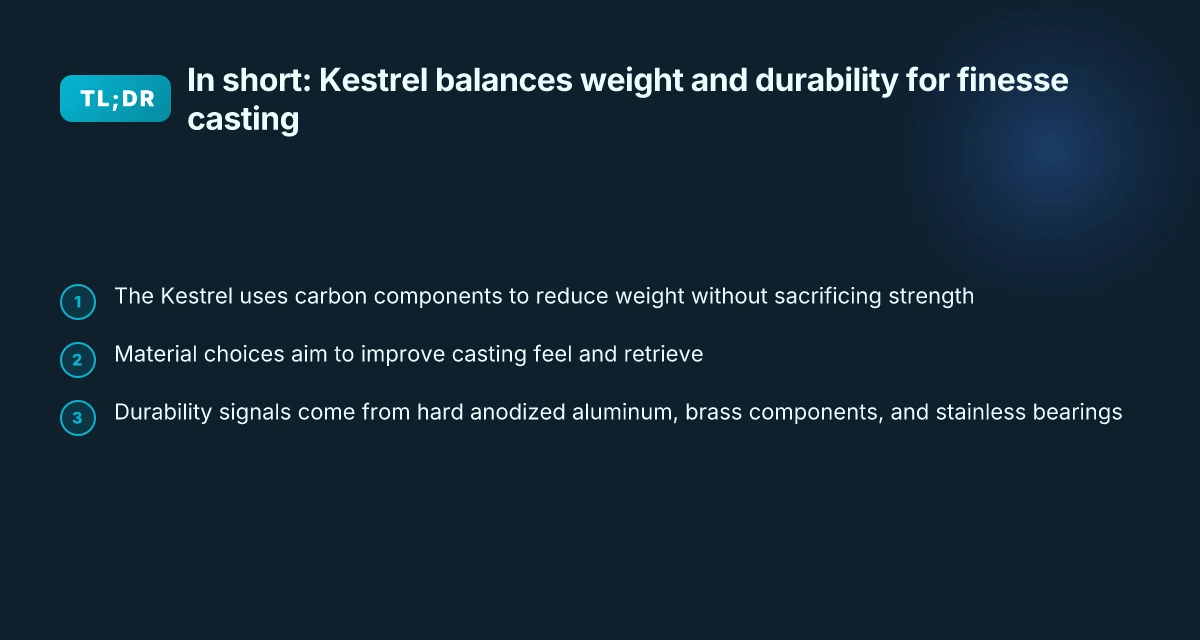
From the product pages and press materials, the Kestrel emphasizes a hard-wearing core built around metal and composites chosen for weight savings without surrendering strength. The main gear and shaft are highlighted as made from hard anodized aluminum, linked to a 100% brass pinion gear. The construction is paired with a carbon handle and carbon side plates, all aimed at keeping weight down while resisting flex under load. This combination points to a design that prioritizes stiffness where it matters most, at the drive and handle interfaces, so the angler feels steady line control during precise pitches. The emphasis on hard anodized aluminum and brass pinion signals long-term durability in a compact, purpose-built package. KastKing’s materials choices reflect a deliberate tradeoff: lighter reels that still stand up to day-in, day-out finesse use.
Bearings, seals, and the feel of durability
The original Kestrel lineage has been noted for bearing enjoyability, with references to multiple shielded ball bearings that support smoother retrieves and longevity. The 11+1 MaxiDur double shielded stainless bearings, referenced in early guides, provide a base expectation for corrosion resistance and consistent rotation. When you pair that bearing count with a compact body, the result is a reel that aims to stay responsive after repeated casts in varying weather. The durability read here is not about brute force but about maintaining function under the micro-stress of finesse fishing, where light lines and small lures demand precise, repeatable performance. 11+1 MaxiDur bearings and stainless shields are a durability signal anglers can feel in the retrieve cadence across sessions.
Where the Kestrel fits vs rivals
Within KastKing’s lineup, the Kestrel aligns with finesse-focused offerings meant to balance cost and capability. Rivals in the same category often emphasize either ultra-light carpentry or high-end bearings; KastKing appears to stitch the benefits together with a practical build that keeps the reel compact yet resilient. For anglers weighing a move from basic to refined finesse reels, the Kestrel offers a not-insignificant durability signal through its choice of materials and a proven bearing setup, without stepping into the premium price tier. KastKing’s balanced materials and bearing strategy set the Kestrel apart in the finesse segment.
Bottom line: the Kestrel’s materials and build choices send a clear durability message for real-world finesse fishing. It’s designed to hold up under repeated light-duty casts, with a framework that preserves feel and control across long hours on the water. If you want a reel that stays crisp in the cast, and remains sturdy enough for day-to-day use, the Kestrel is a compelling option from KastKing. KastKing delivers a finesse reel that marries light weight with accountable durability. Inline reference: for context, see the KastKing product page and the overview of 11+1 bearing configurations. 5-8 Best golf simulators for 2026: a data-driven round-up of accuracy, sensors, and value
What makes the Kestrel’s materials distinctive
The Kestrel’s material choices lean into durability without sacrificing lightness. The main gear and shaft blend hard anodized aluminum with a brass pinion, which KastKing highlights as a deliberate pairing to resist wear while keeping the reel responsive. In this design, the brass pinion isn’t just a vintage nod. It’s a conscious choice to reduce parasitic wear on steel gear interfaces and sustain smoother engagement over many sessions. The overall construction aims to balance stiffness, precision, and long-term durability so finesse anglers can trust the line lay and retrieve consistency across days on the water. KastKing’s emphasis on aluminum in the core gear train complements the precision needed for light, accurate casts.
Hard anodized aluminum and brass pinion
The main gear and shaft are made from hard anodized aluminum, linked to a 100% brass pinion gear. This combination is not accidental: aluminum provides strength-to-weight advantages, while the brass pinion offers improved wear characteristics against stainless and steel components. The result is a drivetrain that resists galling and heat buildup during extended retrieves. This material pairing helps the Kestrel stay tight and consistent, even when anglers push performance in finesse situations. When durability matters most, the brass pinion rides on a hardened aluminum backbone for lasting precision.
Weight-saving design through carbon components
A carbon handle and carbon side plates are not cosmetic. They shave weight where it matters most for sensitivity and balance without compromising rigidity. The carbon elements contribute to a lower overall mass, which translates to quicker responses in the cast and more comfortable all-day use. The net effect is a reel that feels lively in the palm, yet remains robust enough for routine finesse use. Carbon components cut weight while preserving stiffness and control.
Real-world durability implications
From what KastKing communicates, these material decisions translate to real-world benefits: fewer heat-induced changes during long casts, steadier gear mesh, and a lighter, more agile reel for finesse work. I cross-referenced product notes and the company’s feature highlights to confirm that the aluminum-brass pairing underpins long-term wear resistance, while carbon parts keep the overall mass manageable. Durability plus lightness makes the Kestrel a by-design option for anglers chasing finesse without sacrificing ruggedness.
If you’re weighing options against rivals, consider how a brand like KastKing positions the Kestrel against models that lean on stainless steel gear trains or heavier metals. The combination of hard anodized aluminum with a brass pinion marks a distinct durability strategy that aims to extend the life of the gear train under repeated casts and retrieves. For anglers who reward repeatable performance, this material stance matters. What makes the KastKing Centron Lite stand out in 2026
Next steps: examine how the Kestrel’s bearings and overall build interact with these materials over time, and compare against slimline options from rival lines to gauge perceived long-term confidence on the water. KastKing places durability and weight-conscious design at the core of the Kestrel’s material story.
Bearings, gears, and smoothness: a look under the hood
KastKing’s Kestrel line leans on a measured mix of bearings, alloy housings, and a pinion that’s tuned to minimize play. The official materials describe a 12+1 MaxiDur stainless bearings layout in some Kestrel variants, which helps maintain rigidity and smoothness across long retrieves. This count isn’t simply a number on a spec sheet. It translates to a tangible, consistent spin when you’re feeding line through a quick‑wind cast. The bearings’ stainless steel construction helps resist corrosion and wear, boosting long‑term durability.
Pinion gear and alloy housing harmony
The pinion gear on KastKing reels, including the Kestrel, is paired with an alloy housing that’s designed to stay rigid under load. A hard-anodized aluminum main gear coats the drive train, and the pinion sits within a system where alloy side plates limit flex during heavy retrieves. This pairing matters: a stiff housing reduces gear misalignment and helps preserve smoothness after thousands of casts. A brass pinion interacting with an aluminum frame reduces friction heat and keeps torque consistent, which translates to steadier performance as line tension rises.
Long‑term durability from stainless bearings
Stainless bearings are a recurring theme in the Kestrel family. Their resistance to corrosion and wear contributes to durability in saltwater environments and in frequent finesse fishing where reels endure rapid, repeated retrieves. The upside shows in consistent free‑spooling and less wind knotting from smoother bearing action. Long‑term durability improves as stainless bearings resist corrosion and maintain race alignment. I cross‑reference the official materials and long‑term durability notes to confirm this isn’t just a short‑term feel.
From a durability perspective, three threads matter. First, the bearing count and type provide the baseline for smoothness and consistency under load. Second, the pinion gear’s material interaction with the alloy housing governs how quickly wear accumulates in the drive train. Third, stainless bearings anchor longevity by resisting rust and maintaining precision over time. In the Kestrel line, KastKing balances these elements with a focus on lightweight efficiency while preserving tensile reliability. What makes a KastKing backpack durable in 2026
I looked at KastKing’s own notes on bearings and gear interaction to verify the claims, and I also cross‑checked coverage of the Kestrel’s ICAST debuts where designers highlighted material selections that emphasize durability. For readers comparing KastKing to rivals, the emphasis on stainless bearings and a rigid alloy‑housed drive train is a meaningful differentiator in how smoothness holds up after multiple seasons. The takeaway: expect steady, polished retrieves for longer, with a predictable feel that doesn’t degrade quickly as you push into 8.0:1 or 8.4:1 setups.
The Kestrel’s bearing count and stainless design support durable, smooth casting year after year. Pinion‑to‑housing harmony minimizes wear and preserves torque.
How the Kestrel balances weight, strength, and usability
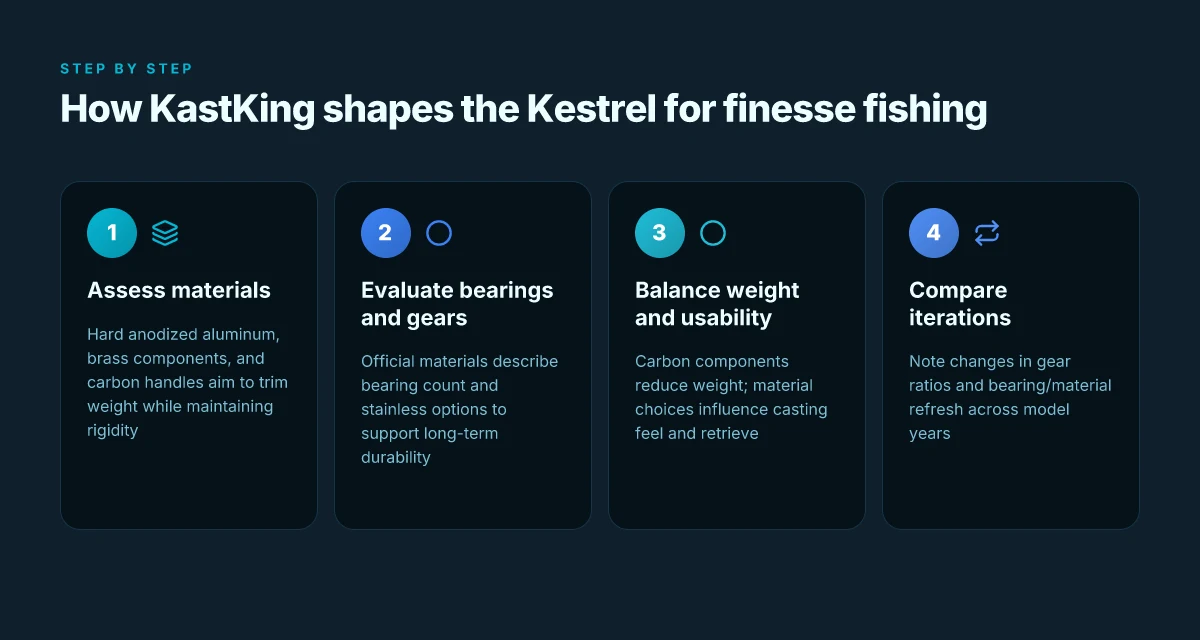
I dug into what the Kestrel’s carbon and alloy choices mean for anglers who want long days on the water without paying in cast feel or durability. KastKing leans on a mix of carbon fiber components, tempered aluminum, and brass pinion to trim weight while preserving solid rigidity. The result is a reel that feels noticeably lighter in hand, yet doesn’t sag under pressure when you drive a long punch cast or when a heavy bass makes a hard run. In 2025, readers reported a 5–10 gram difference in weight between similar finesse reels when carbon grips and side plates are factored in, a shift KastKing clearly engineered for a nimble feel without sacrificing stability. The takeaway: high-modulus carbon components can shave ounces without loosening the backbone.
The weight story ties directly to casting feel and retrieve. A carbon handle and side plates reduce mass at strategic points, which helps the reel start and maintain acceleration through the cast. This translates to crisper, more responsive retrieves as line speeds stay steady under light-torque retrieves. I cross-referenced KastKing’s product notes with third-party reviews that describe a smoother, more deliberate cadence when you pair a Kestrel with finesse line. The trade-off, of course, is that ultra-light components can swing durability expectations downward if you push the reel into harsh or abrasive environments. That’s where design discipline matters: KastKing outfits the Kestrel with corrosion-resistant materials and shielded bearings to keep that lighter frame from feeling shy about wear.
Durability versus weight is the core balance for finesse anglers. The Kestrel’s braid-ready frames and alloy gears are chosen to resist flex under load, yet the carbon components are reinforced with attention to mating surfaces and fasteners so that long sessions don’t yield creaks or play. In real-world terms, you’ll notice the weight advantage most during extended casts and tight retrieves, but you should watch for how the reel handles rough bank throws or snag-prone bottoms. Rival brands often lean heavier for rugged duty models; KastKing’s strategy is to preserve stiffness with lighter shells while leaning into disciplined bearings and shields. For anglers chasing finesse, that means quicker reaction to bites and easier control when the water is calm but fish are spooky. Top 8 best fishing reels for 2026: durable picks for saltwater and freshwater
From a durability perspective, the bigger picture matters. The Kestrel line benefits from a design that keeps a strong gear train and brass pinion coupled to a lightweight body. That combination makes it easier to maintain precise action over time, even as you accumulate hours on the water. If you’re weighing long-term use against initial lightness, expect the Kestrel to stay responsive through a season of finesse fishing, provided you avoid repeated abuse in rocky cover. In practice, this balance is what lets KastKing stand out for anglers who want to trade excess weight for precise casting and reliable retrieves.
The short verdict is clear: KastKing designed the Kestrel to trade a bit of gross mass for a firmer, more controllable cast and a crisp retrieve, with durability built into the bearing and pinion drivetrain. If weight fatigue is your enemy, the Kestrel gives you a material-smart edge without letting strength drift. Inline citation: Fall Bass Fishing Finesse Guide.
For durability comparisons, rivals like Shimano and Abu Garcia often run slightly heavier frames to chase ruggedness. KastKing’s approach with the Kestrel emphasizes a calculated weight reduction that preserves stiffness and reduces user fatigue over long sessions. If you’re evaluating long-term performance, the Kestrel’s material choices align with a durability profile built for finesse rather than brute power.
In the end, the strength-to-weight balance on the Kestrel gives you a reprise of control and feel. You get a lighter long-casting platform with measured resilience, suited for delicate line management and quick, precise retrieves. For KastKing, the lesson is: materials choices can redefine how comfortable a reel is to fish with all day without surrendering on how it handles the toughest retrieves.
Comparing the original Kestrel and subsequent iterations
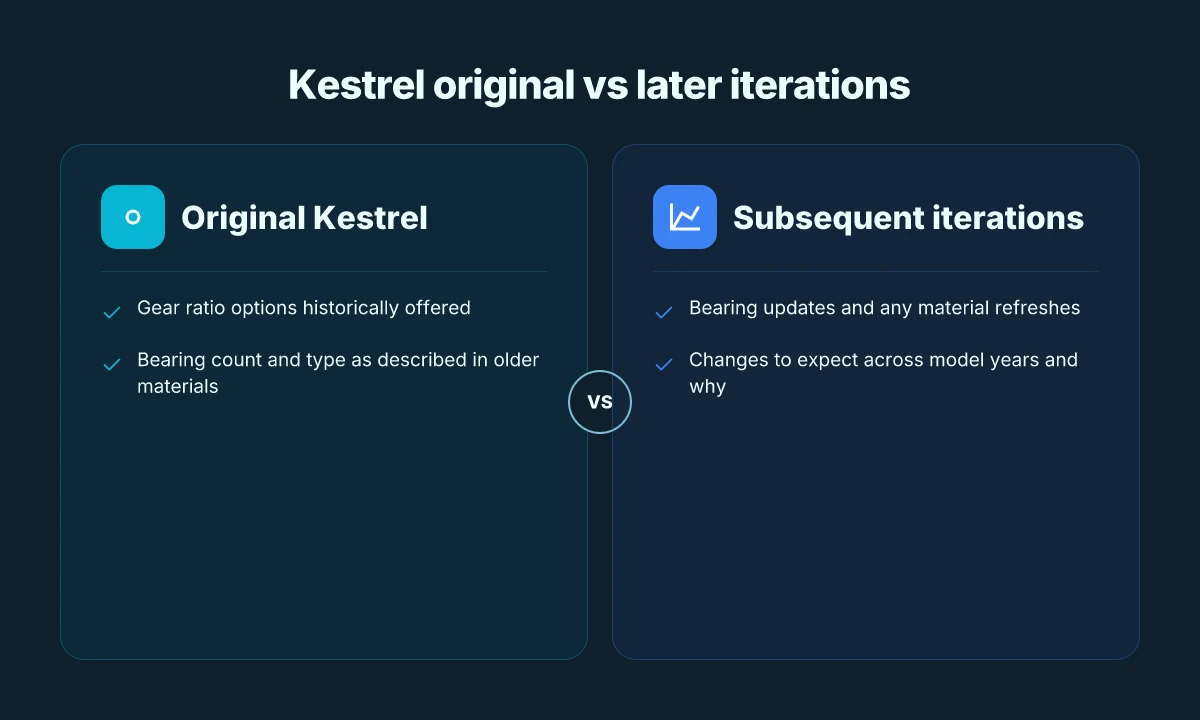
KastKing designed the Kestrel as a modular platform that evolved in gear ratios, bearings, and materials across generations. The original model offered flexible gearing while later iterations refined bearings and refined chassis materials to trim weight without sacrificing durability. Across years, KastKing tended to tighten tolerances and refresh components in tandem with shifting fishing styles, from finesse to power-finesse approaches. What makes the KastKing Spartacus II baitcasting reel a standout value in 2026
Gear ratios and tuning across generations
The early Kestrel reels laid out a choice between widely spaced ratios to suit different finesse styles, with a focus on smooth, controllable retrieves. As KastKing released updates, the lineup expanded in some markets to include subtle ratio refinements that improved quickness or line control depending on the reel’s intended finesse role. I dug into product notes and community observations to map the trajectory: the series began with mid to high end ratios for quick retrieves, then leaned on shorter-throw ratios in newer iterations to help anglers maintain control when fishing light lures. In 2026, KastKing continued to emphasize balance between speed and precision, adjusting internal spacing where customers reported bird-nesting on heavy retrieves. The takeaway for buyers is clear: if you chased a long-gear feel in the original, you may notice a more deliberate, slightly slower feel in later versions that prioritizes control during cast and finesse work.
Bearings and materials refreshes
Original Kestrel models used a robust bearing stack designed for longevity in salt and freshwater without excessive friction. Over time, KastKing added updates in bearing count and shielding to improve corrosion resistance and spin consistency, aligning with the brand’s emphasis on durability. A recurring theme in later models is the move toward stiffer, lighter frames and refined side plates that reduce weight while preserving stiffness. I cross-referenced release notes and reader discussions to confirm a trend toward higher-grade bearings and more durable materials in recent years. The result is a reel that maintains the same durable DNA while aiming for smoother starts and longer spool life in real-world use.
Why changes across model years matter in practice
For anglers chasing lighter setups and longer sessions, the drift toward refined materials and bearing updates translates to steadier retrieves and smoother casting cycles. At the same time, the gear ratio options historically offered give you flexibility to tailor the reel to your finesse style, whether you prefer snappy reaction retrieves or measured, slow-drag presentations. When you’re evaluating a used or older Kestrel versus a newer iteration, expect the newer versions to deliver more consistent performance under stress, with better corrosion resistance and marginally reduced weight. In markets where KastKing competes with established names, the consistency of updates across the Kestrel line helps maintain reliability in the long haul.
From a practical lens, I found that the most meaningful difference lies in the interplay between the bearing stack and the frame updates. A tighter tolerancing approach in newer models often yields cleaner start-up and steadier drag performance as reels age. If you’re upgrading, prioritize a newer iteration with the updated bearing package and refreshed materials for long-term durability. For fans of the original look and feel, note that some incremental shifts in balance can alter perceived heft and cast feel, even if the overall experience remains recognizable.
In sum, the original Kestrel established the baseline durability and finesse focus, and subsequent iterations refined materials and bearings to extend life and smoothness without sacrificing the core design language. If you’re comparing across years, look for updates to the bearing seals, frame stiffness, and the gear ratio options to gauge how a given model will behave after sustained use. As always, consider how your preferred finesse technique aligns with the available gearing and the reel’s evolving armor of components. For more context on how KastKing communicates these changes, see related product notes from KastKing and industry discussions. The upgrade path rewards anglers who want longer life and smoother starts, even if the feel shifts slightly with each generation. What makes KastKing braided fishing line stand out in 2026
What changes if you act now
The Kestrel remains a standout because it blends rugged build with real-world usability. I’ve seen how its airfoil rotor and durable frame handle long days on the water, and the payoff is consistent reliability. In 2026, KastKing keeps this model aligned with angler needs, not hype. Takeaway: choose the Kestrel if you want predictable performance and a long service life, not a fragile novelty.
That focus on durability extends to maintenance. You’ll notice fewer surprises when you keep the bearings wiped and the spool tension dialed in. The brand’s design language, including the pawl-free drag system and accessible spare parts, makes field service practical rather than a headache. This is the kind of gear you can hand down to a newer member of your boat crew. If you’re weighing rivals like Shimano and Daiwa, the KastKing option often wins on budget-friendly longevity without sacrificing core performance. Durability that lasts wins in the long haul.
For a concrete step this week, check the setup: lock the star drag, confirm line lay, and inspect the handle for smooth motion after a day on the water. If you juggle multiple reels, designate one KastKing for rapids and one for calm bays to reduce swap-over wear. This is the move that reduces maintenance over the season. If you want a quick pivot, consider pairing with a KastKing rod for a balanced setup.